Center for Occupational and Environmental Health at Hunter College
Item set
Collection
Center for Occupational and Environmental Health at Hunter College
Time Periods
1978-1992 Retrenchment - Austerity - Tuition
1993-1999 End of Remediation and Open Admissions in Senior Colleges
2000-2010 Centralization of CUNY
Items
1–25 of 34
Advanced search
-
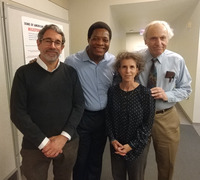 Center for Occupational and Environmental Health - Oral History Interview In this group interview, Dave Kotelchuck, Andrew Burgie, Amy Manowitz, and Dan Kass document their involvement with the Center for Occupational and Environmental Health (COEH) based out of Hunter College, CUNY. Conducted by Andrea Vásquez on March 9, 2018, it details the origin of the COEH, how each interviewee became involved, what their roles were, and how the COEH evolved over its 27 years, from 1990 to 2017. Kotelchuck, founder with Steve Zoloff of the COEH, explains how the Center was an embodiment of the values that grew out of the civil rights era in the 1960s and 70s and how the spirit of that time revived the discourse surrounding public health, especially as an academic discipline. Andrew Burgie, project manager, associate director, and eventually co-director of the COEH, explains some of the projects he worked on and the importance of community outreach. Amy Manowitz, project manager until 2000, describes the rigorous trainings the COEH gave to workers across the country, as well as several notable successes in occupational health. Dan Kass, staff coordinator and director of the COEH until 2000, describes the center’s transition from working with unions and job site risk to community health workers and organizations.
 -
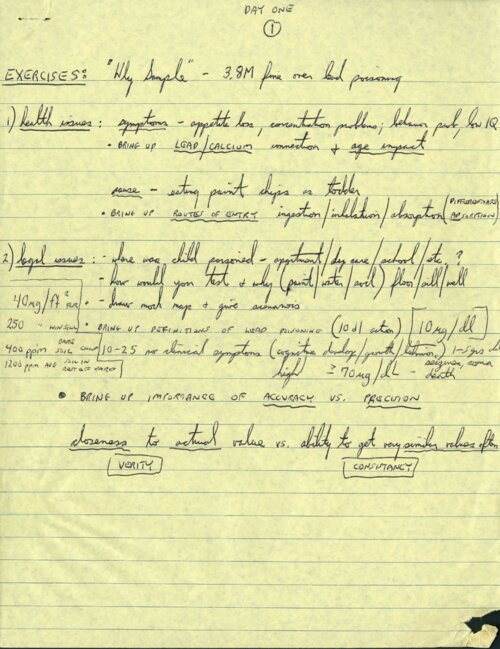 "Why Sample?" and other classroom exercises These handwritten instructor's notes from a 1999 training session were prepared for a one-day course taught by Hunter College's Center for Occupational and Environmental Health (COEH). The notes outline various classroom exercises designed to engage students collaboratively, often encouraging them to think about the health and legal implications of various occupational health issues, including lead poisoning and air pollution. In addition to the notes is an annotated newspaper article handed out to the class. Its markup reflects the instructor's intended instruction and interpretation of the article. Officially founded in 1990, the COEH spent decades dedicating itself to promoting community and workplace health throughout the New York area. It offered courses on topics ranging from asthma to ergonomics for unions, neighborhood groups, public employees, and others.
 -
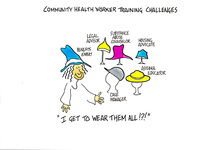 Community Health Worker Training Artwork Created in 2000 by Ted Outwater, then associate director and environmental specialist for Hunter College's Center for Occupational and Environmental Health (COEH), these illustrations reflect some of the challenges that faced community health workers. One of COEH's major initiatives, the Community Health Worker Training Program recruited local residents from New York City neighborhoods for an extensive 350-hour curriculum that educated participants on the topic of asthma, its management, assessment, and remediation. Following their training, these health workers where entrusted with providing outreach to their communities, serving as a "vital link between health care providers, community organizations, and the communities they serve." In April 2000, the program commenced with an initial class of 15 health workers from a variety of community groups. Officially founded in 1990, the COEH spent decades dedicating itself to promoting community and workplace health throughout the New York area. It did so by offering courses on topics ranging from asthma to ergonomics for unions, neighborhood groups, public employees, and more.
 -
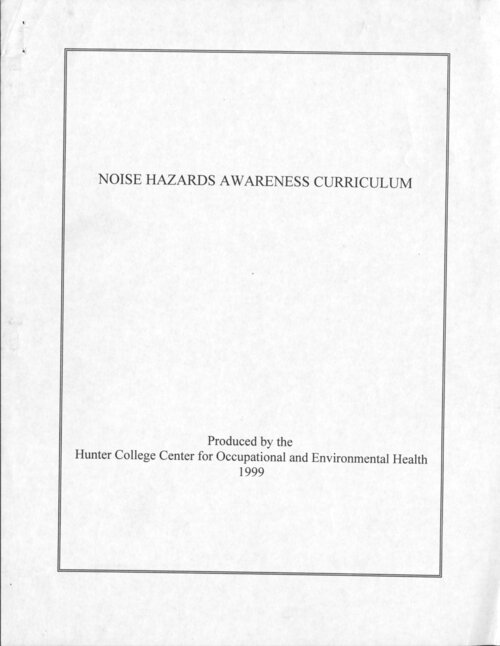 Noise Hazards Awareness Curriculum Created in 1999 by Hunter College's Center for Occupational and Environmental Health (COEH), this curriculum packet was designed to prepare instructors teaching noise hazard awareness. Broken into five sections with suggested time allocations for each, the packet was meant as a guide to be adjusted and adapted depending upon one's audience. Several pages include placeholders intended to be replaced by company or department specific detail/statistics. Officially founded in 1990, the COEH spent decades dedicating itself to promoting community and workplace health throughout the New York area. It offered courses on topics ranging from asthma to ergonomics for unions, neighborhood groups, public employees, and others.
 -
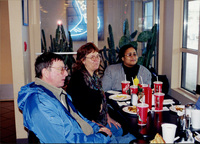 Photos of a COEH Bowling Party At a bowling party in 1999, these photos capture several key members of Hunter College's Center for Occupational and Environmental Health (COEH). In the first photo, they are (from left to right): Ted Outwater, Elena Schwolsky-Fitch, Ellen Kirrane, Dawn Mays Hardy, Andrew Burgie, Sergio Matos, and Dave Kotelchuck. Officially founded in 1990, the COEH spent decades dedicating itself to promoting community and workplace health throughout the New York area. It offered courses on topics ranging from asthma to ergonomics for unions, neighborhood groups, public employees, and others.
 -
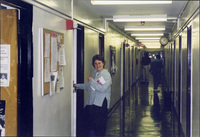 Photos from COEH Office Taken in and around the offices of Hunter College's Center for Occupational and Environmental Health, these photographs capture several lighthearted moments amongst Center staffers in the late 1990s. Pictured from top to bottom are: Bill Capune, Ted Outwater, Elena Schwolsky-Fitch, and Sergio Matos (on right). Officially founded in 1990, the COEH spent decades dedicating itself to promoting community and workplace health throughout the New York area. It offered courses on topics ranging from asthma to ergonomics for unions, neighborhood groups, public employees, and others.
 -
 COEH & NYCHA Proposal This document from July 2000 offers the terms for a proposal between Hunter College's Center for Environmental and Occupational Health and New York City's Housing Authority. The plan to train 100 NYCHA residents on environmental clean up included benchmarks for course enrollment and certifications required for graduating participants. The proposal is just one example of the many different avenues through which the COEH worked with communities in the city. Officially founded in 1990, the COEH spent decades dedicating itself to promoting community and workplace health throughout the New York area. It offered courses on topics ranging from asthma to ergonomics for unions, neighborhood groups, public employees, and others.
 -
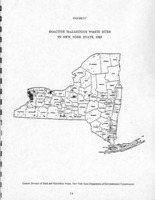 Training Agenda for Safety and Health for Hazardous Waste Site Personnel This extract from a 1985 training manual offers the agenda for a three-day training course on 'Safety and Health for Hazardous Waste Site Personnel' at Hunter College's School of Health Science. The focus on hazardous waste would become an important component of the college's Center for Occupational and Environmental Health, which would begin to take form in the late 1980s under the direction of Dr. David Kotelchuck, a frequent presenter during this course. Officially founded in 1990, the COEH spent decades dedicating itself to promoting community and workplace health throughout the New York area. It offered courses on topics ranging from asthma to ergonomics for unions, neighborhood groups, public employees, and others.
 -
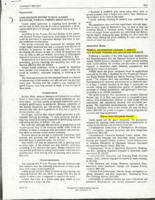 "Federal Government Awards 11 Grants for Worker Training and Education Projects" This article from the Occupational Health & Safety Reporter announces a number of grants awarded by the National Institute for Environmental Health Sciences in 1987. Included among these was one grant for a consortium based out of Rutgers that focused on hazardous waste worker training and education. The New York affiliate of this group was a nascent collective out of Hunter College that would shortly become the college's Center for Occupational and Environmental Health (COEH). Officially founded in 1990, the COEH spent decades dedicating itself to promoting community and workplace health throughout the New York area. It offered courses on topics ranging from asthma to ergonomics for unions, neighborhood groups, public employees, and others.
 -
 Notice of Grant Award (1989) In the late 1980s, a group at Hunter College led by Professor David Kotelchuck joined a New Jersey-based consortium working on hazardous materials and emergency response training. This grant award notice for that group--with $63,816 allotted to Hunter College--came from the National Institute of Environmental Health Sciences and marked a continuation of the group's first large grant received in 1987. The award was later used to demonstrate that the future center had a secure funding stream. Shortly thereafter, in 1990, it was officially named the Center for Occupational and Environmental Health (COEH). The group spent decades dedicating itself to promoting community and workplace health throughout the New York area. It offered courses on topics ranging from asthma to ergonomics for unions, neighborhood groups, public employees, and others.
 -
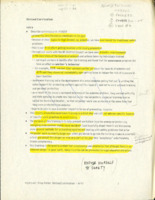 Revised Curriculum for Carpenter's Training This sheet, annotated by an instructor at Hunter College's Center for Environmental and Occupational Health (COEH), offers the breakdown of an introduction prepared for a carpenters' training course in the Spring of 1991. The purpose of the training was to help prevent workplace injuries by discussing some of the myths surrounding accidents within the trade and ways in which to prevent them. The Center's work with the carpenters comprised just one group out of many with which they worked with over the years. Officially founded in 1990, the COEH spent decades dedicating itself to promoting community and workplace health throughout the New York area. It offered courses on topics ranging from asthma to ergonomics for unions, neighborhood groups, public employees, and others.
 -
 "Right to Breathe/Right to Know: Industrial Air Pollution in Greenpoint-Williamsburg" This executive summary is an excerpt from a larger report on industrial air pollution in Greenpoint-Williamsburg produced by Hunter College's Center for Occupational and Environmental Health (COEH) in 1992. In addition to a brief analysis of the Brooklyn neighborhood's air quality, the report offers suggestions for clean-up. Officially founded in 1990, the COEH spent decades dedicating itself to promoting community and workplace health throughout the New York area. It offered courses on topics ranging from asthma to ergonomics for unions, neighborhood groups, public employees, and others.
 -
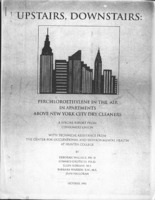 "Upstairs, Downstairs: Perchloroethylene in the Air in Apartments above New York City Dry Cleaners" This is an extract from an October 1995 report detailing the prevalence of perchloroethylene (or "perc") in the air in New York City apartments situated above dry cleaners. Perc, a potentially toxic chemical, had been the main solvent used for dry cleaning. Though written by the Consumers Union, Hunter College's Center for Environmental and Occupational Health (COEH) provided the technical assistance for the report which included measuring the data analyzed in the paper. Officially founded in 1990, the COEH spent decades dedicating itself to promoting community and workplace health throughout the New York area. It offered courses on topics ranging from asthma to ergonomics for unions, neighborhood groups, public employees, and others.
 -
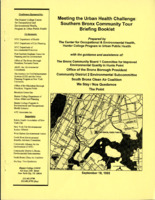 Meeting the Urban Health Challenge: Southern Bronx Community Tour Briefing Booklet Prepared by Hunter College's Center for Occupational and Environmental Health (COEH) in 1998, this booklet was created to introduce residents of two community districts in the Southern Bronx to important issues of public health in their neighborhoods. In addition to selected health facts (e.g. asthma, lead poisoning prevalence), the book offers a brief overview of the area's physical environment. Though the Center frequently worked with labor unions, public employees, and college students, its community outreach efforts--particularly in underserved areas such as the South Bronx--marked its most direct work with the general public in the New York City area. Officially founded in 1990, the COEH spent decades dedicating itself to promoting community and workplace health throughout the New York area. It offered courses on topics ranging from asthma to ergonomics for unions, neighborhood groups, public employees, and others.
 -
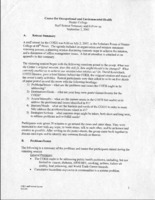 COEH Staff Retreat Summary and Follow-up (2002) This document offers summary of a 2002 staff retreat of members of Hunter College's Center for Occupational and Environmental Health (COEH). At the retreat, staff members outlined what they considered to be the Center's largest issues, their future goals, and proposed strategies for achieving them. Though the Center was active for decades, it reached its peak (in terms of projects and team size) around the time of this retreat in the early-2000s. Officially founded in 1990, the COEH spent decades dedicating itself to promoting community and workplace health throughout the New York area. It offered courses on topics ranging from asthma to ergonomics for unions, neighborhood groups, public employees, and others.
 -
 COEH Project Funding from 1999-2001 These pages document the various projects that Hunter College's Center for Occupational and Environmental Health (COEH) worked on between 1999 and 2001. In addition to listing funding totals and sources, the sheet includes the Center's various partners, the goals of each project, and the progress made as of July 1999. As made evident here, COEH was involved in a variety of efforts that teamed them with labor unions, public employees, college students, and community groups, all in pursuit of increasing public health awareness at work and home. Projects covered such diverse topics as asthma and childhood lead poisoning to hazardous materials disposal.
 -
 Center for Occupational and Environmental Health ( COEH) Brochure This brochure from the early 2000s outlines many of the programs offered by Hunter College's Center for Occupational and Environmental Health (COEH). Included among these were asthma education, community health worker training, and lead poisoning prevention programs. The Center, formally created in 1990, worked with community groups, unions, public employees, CUNY students, and more throughout their many initiatives across New York City and state.
 -
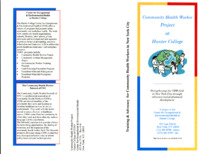 Community Health Worker Project Brochure This brochure advertises the "Community Health Worker Project" run by Hunter College's Center for Environmental and Occupational Health (COEH). The project, one of COEH's major initiatives, recruited local residents from New York City neighborhoods for an extensive 350-hour curriculum that educated participants on the topic of asthma, its management, assessment, and remediation. Following their training, these health workers were entrusted with providing outreach to their communities, serving as a "vital link between health care providers, community organizations, and the communities they serve." In April 2000, the program commenced with an initial class of 15 health workers from a variety of community groups. Formally established in 1990 by CUNY's Board of Trustees, the Hunter College Center for Occupational and Environmental Health (COEH) was founded with the mission "to promote community and workplace health" across the New York metropolitan area. Working with community groups, unions, governmental agencies, private employers, and educational institutions, the Center educated hundreds of thousands over the course of its history.
 -
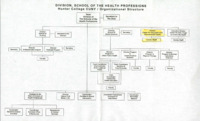 Organizational Structure of Hunter College School of Health Professions This chart offers an overview of the organizational structure of Hunter College's School of Health Professions. The Center for Occupational and Environmental Health (COEH), officially formed in 1990, was granted a fair degree of autonomy over its direction with most of its efforts aimed towards groups and individuals outside of CUNY. Housed at Hunter College's Brookdale campus, COEH actively worked with labor unions, public employees, students, and community groups across a range of programs. These included minority worker training efforts, pest management research, and asthma education initiatives, among several others.
 -
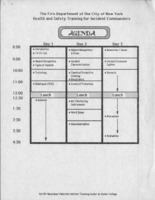 FDNY Health and Safety Training for Incident Commanders In the late-1990s, Hunter College's Center for Occupational and Environmental Health (COEH) trained the entirety of FDNY's leadership over the course of 24 hours on the topics of health and safety for (emergency) incident commanders. These documents come from those sessions, and include several annotated agendas for participants and Center staff, training scenarios, and an organizational chart of the FDNY. Formally established in 1990 by CUNY's Board of Trustees, the Hunter College Center for Occupational and Environmental Health (COEH) was founded with the mission "to promote community and workplace health" across the New York metropolitan area. Working with community groups, unions, governmental agencies, private employers, and educational institutions, the Center educated hundreds of thousands over the course of its history.
 -
 Meeting with Founding Dean Dr. Kenneth Olden Prepared for an October 2009 meeting with Dr. Kenneth Olden, the founding dean of the CUNY School of Public Health at Hunter College, this document highlights many of the past successes and efforts of Hunter College's Center for Occupational and Environmental Health. Formally established in 1990 by CUNY's Board of Trustees, the Hunter College Center for Occupational and Environmental Health (COEH) was founded with the mission "to promote community and workplace health" across the New York metropolitan area. Working with community groups, unions, governmental agencies, private employers, and educational institutions, the Center educated hundreds of thousands over the course of its history.
 -
 Weapons of Mass Destruction (WMD) Train-the-Trainer Course and Cover Letter This cover letter addressed to Jean Edouard, the Director of Education and Training in the NY State Department of Environmental Conservation is requesting a letter of support for further federal funding. The letter broadly presents the main tenants of the Weapons of Mass Destruction (WMD) Training program, which the Center for Occupational and Environmental Health (COEH) proposed to develop and conduct during the 2003-2004 academic year. The proposed curriculum was a modular three-day course, with one day each devoted to WMD Chemical, Biological and Radiological Hazards, followed by a single, final day devoted to a Train-the-Trainers module. Formally established in 1990 by CUNY's Board of Trustees, the Hunter College Center for Occupational and Environmental Health (COEH) was founded with the mission "to promote community and workplace health" across the New York metropolitan area. Working with community groups, unions, governmental agencies, private employers, and educational institutions, the Center educated hundreds of thousands over the course of its history.
 -
 EPA-HWWT Training Summary 2004-2009 The Center for Occupational and Environmental Health compiled these tables breaking down the Health and Safety Training programs for Hazardous Waste Workers offered from the years 2004-2009 by type of class, number of classes, number of people trained and contact hours. In addition to "open enrollment" courses, the Center catered specific courses for New York State's Departments of Health (NYSDOH), and Environmental Conservation (NYSDEC), New York City's Department of Environmental Protection (NYCDEP), and Minority Worker Training Programs (MWTP). Between 2004 and 2009, the Center offered 163 classes, training 3,304 people in total. Formally established in 1990 by CUNY's Board of Trustees, the Hunter College Center for Occupational and Environmental Health (COEH) was founded with the mission "to promote community and workplace health" across the New York metropolitan area. Working with community groups, unions, governmental agencies, private employers, and educational institutions, the Center educated hundreds of thousands over the course of its history.
 -
 Final Report for Susan Harwood Training Grant This report, produced by Hunter College's Center for Occupational and Environmental Health and the Paper, Allied-Industrial, Chemical and Energy Workers International Union (PACE), was created at the conclusion of their three-year, Susan Harwood Training Grant (10/1997 - 9/2000). The grant funded a "Train-the-Trainer and Leadership Ergonomics Program" and allowed the Center and union to train over 600 workers across 13 states on ergonomic issues in the "papermaking and processing industry." Those trained by the Center went on to train 6000 additional workers during the same three year period. The report includes training materials used, course and participant evaluations, and discussion of project goals and effects. Formally established in 1990 by CUNY's Board of Trustees, the Hunter College Center for Occupational and Environmental Health was founded with the mission "to promote community and workplace health" across the New York metropolitan area. Working with community groups, unions, governmental agencies, private employers, and educational institutions, the Center educated hundreds of thousands over the course of its history.
 -
 EPA-HWWT Training Summary 1999-2004 The Center for Occupational and Environmental Health compiled these tables breaking down the programs for Hazardous Waste Workers Training (HWWT) offered from the years 1999-2004 by type of class, number of classes, number of people trained and contact hours. In addition to "open enrollment" courses, the Center tailored specific courses for New York State's Departments of Health, the Environmental Conservation, New York City's Department of Environmental Protection, and Minority Worker Training Programs. Between 1999 and 2004, the Center offered 106 classes, training 2,182 people in total. Formally established in 1990 by CUNY's Board of Trustees, the Hunter College Center for Occupational and Environmental Health (COEH) was founded with the mission "to promote community and workplace health" across the New York metropolitan area. Working with community groups, unions, governmental agencies, private employers, and educational institutions, the Center educated hundreds of thousands over the course of its history.
1–25 of 34