CUNY Digital History Archive
Item set
Collection
CUNY Digital History Archive
Items
301–325 of 1046
Advanced search
-
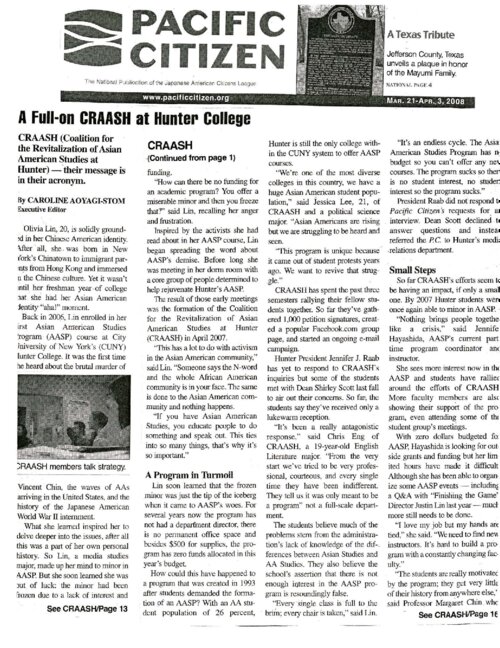 "A Full-on CRAASH at Hunter College" This article profiling the Coalition for the Revitalization of Asian American Studies at Hunter (CRAASH) appeared in the March/April 2008 issue of Pacific Citizen, the national publication of the Japanese American Citizens League (JACL). Founded in 1929, the JACL is the oldest and largest Asian American civil rights organization in the United States. Amongst CRAASH's strategies for putting pressure on the Hunter College administration to increase institutional support for the Asian American Studies Program included a coordinated media campaign. CRAASH received coverage from multiple media outlets, including school newspapers, Asian American publications, and ethnic newspapers. The Hunter College Asian American Studies Program (AASP) was established in 1993. As the only academic program in Asian American studies in the CUNY system, the AASP offers a minor in Asian American Studies and other resources and programming. The AASP supports scholars, artists, and activists advancing scholarship in the fields of Asian American studies and critical ethnic studies and serves as a resource for New York City's Asian American communities. In 2006, the program was at risk of being cut due to a lack of funding. Students formed the Coalition for the Revitalization of Asian American Studies at Hunter (CRAASH) and saved the program within a year. CRAASH is now a student-run club that continues to advocate for the AASP.
 -
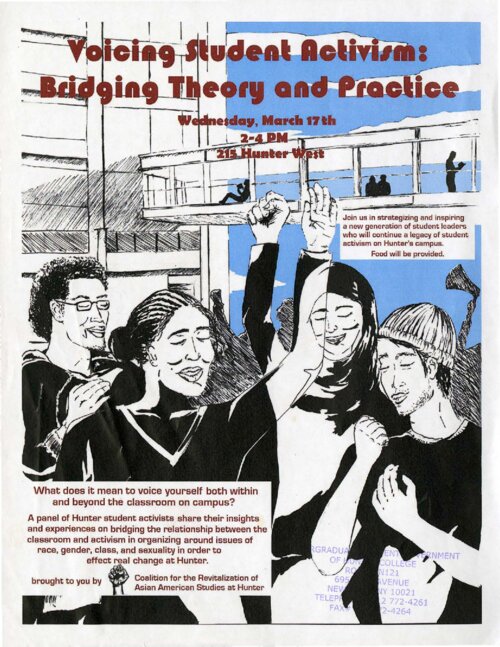 Voicing Student Activism: Bridging Theory and Practice This poster advertises a panel titled "Voicing Student Activism: Bridging Theory and Practice," which the Coalition for the Revitalization of Asian American Studies at Hunter hosted on March 17, 2010, at Hunter College. The panel brought together Hunter student activists speaking about their experiences organizing on campus around issues of race, gender, class, and sexuality to strategize and inspire "a new generation of student leaders who will continue a legacy of student activism on Hunter's campus." The poster's illustration depicts four individuals, two with fists raised, in front of Hunter's sky bridge. The Hunter College Asian American Studies Program (AASP) was established in 1993. As the only academic program in Asian American studies in the CUNY system, the AASP offers a minor in Asian American Studies and other resources and programming. The AASP supports scholars, artists, and activists advancing scholarship in the fields of Asian American studies and critical ethnic studies and serves as a resource for New York City's Asian American communities. In 2006, the program was at risk of being cut due to a lack of funding. Students formed the Coalition for the Revitalization of Asian American Studies at Hunter (CRAASH) and saved the program within a year. CRAASH is now a student-run club that continues to advocate for the AASP.
 -
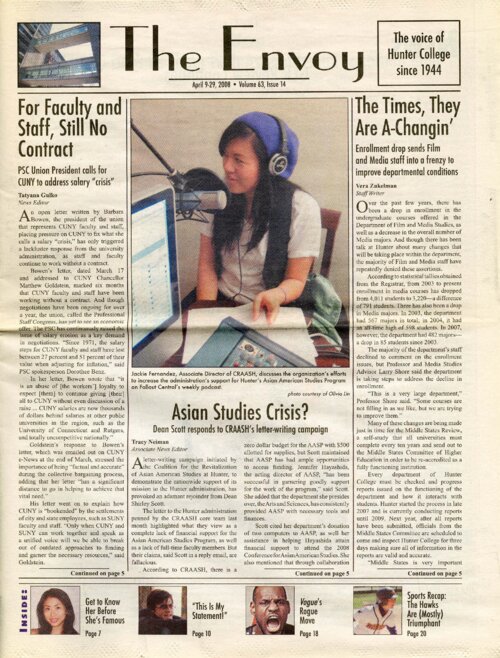 "Asian Studies Crisis?" This article in the Hunter Envoy from April 2008 covers Dean Shirley Scott's response to claims made by the Coalition for the Revitalization of Asian American Studies at Hunter (CRAASH) about the lack of financial support from the Hunter administration for the Asian American Studies Program (AASP). Scott cited the program's success in order to disprove the claims and further used the AASP's status as an interdisciplinary program, rather than a free-standing department, to justify the administration's lack of investment. CRAASH insisted that the program's success was a result of efforts by AASP students, faculty, and acting director Jennifer Hayashida, and not the Hunter administration, and also refused Scott's use of the program's status as justification for its present condition. The Hunter College Asian American Studies Program (AASP) was established in 1993. As the only academic program in Asian American studies in the CUNY system, the AASP offers a minor in Asian American Studies and other resources and programming. The AASP supports scholars, artists, and activists advancing scholarship in the fields of Asian American studies and critical ethnic studies and serves as a resource for New York City's Asian American communities. In 2006, the program was at risk of being cut due to a lack of funding. Students formed the Coalition for the Revitalization of Asian American Studies at Hunter (CRAASH) and saved the program within a year. CRAASH is now a student-run club that continues to advocate for the AASP.
 -
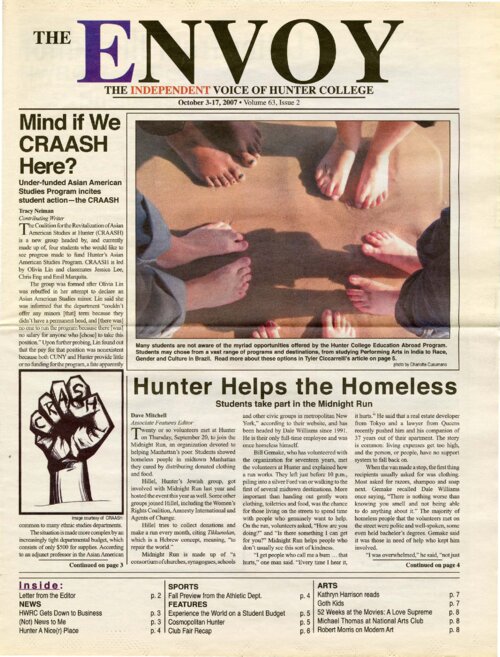 "Mind if We CRAASH Here?" This article in the Hunter Envoy from October 2007 profiles the Coalition for the Revitalization of Asian American Studies at Hunter (CRAASH) during the semester of its founding. CRAASH was founded by four Hunter College students—Olivia Lin, Jessica Lee, Christopher Eng, and Emil Marquita—after Lin tried to declare an Asian American Studies minor in the Spring of 2007 and was told that the program could not offer minors because there was no acting head or budget. The article reports that CRAASH was working on flyering, petitioning, and meeting with key administrators in order to organize the Hunter community and spread awareness about the inadequate conditions facing the AASP. The Hunter College Asian American Studies Program (AASP) was established in 1993. As the only academic program in Asian American studies in the CUNY system, the AASP offers a minor in Asian American Studies and other resources and programming. The AASP supports scholars, artists, and activists advancing scholarship in the fields of Asian American studies and critical ethnic studies and serves as a resource for New York City's Asian American communities. In 2006, the program was at risk of being cut due to a lack of funding. Students formed the Coalition for the Revitalization of Asian American Studies at Hunter (CRAASH) and saved the program within a year. CRAASH is now a student-run club that continues to advocate for the AASP.
 -
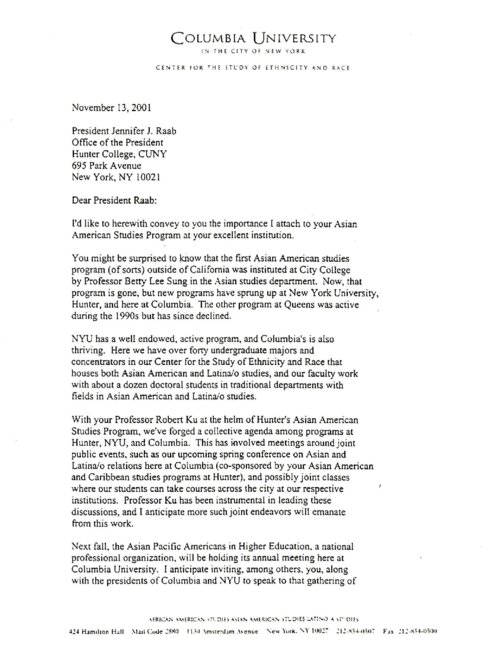 Letter from Dr. Gary Okihiro to Hunter President Jennifer J. Raab This is a letter written by Dr. Gary Okihiro, dated November 13, 2001, and addressed to Hunter College President Jennifer J. Raab. In the letter, Dr. Okihiro urges Raab to invest in Asian American studies faculty, including a stable director, "to continue to build on Hunter's pioneering position in Asian American studies." Dr. Gary Okihiro was the director of the Asian American Studies Program at Cornell University from 1992-1999, after which he was recruited to Columbia University to be the founding director of their Asian American Studies Program as well the founding director of the Center for the Study of Ethnicity and Race. He and Dr. Betty Lee Sung (City College/CUNY) have both received Lifetime Achievement Awards from the Association for Asian American Studies. His letter of support indicates the important role of the Hunter Asian American Studies Program in the vitality of the discipline at large. The Hunter College Asian American Studies Program (AASP) was established in 1993. As the only academic program in Asian American studies in the CUNY system, the AASP offers a minor in Asian American Studies and other resources and programming. The AASP supports scholars, artists, and activists advancing scholarship in the fields of Asian American studies and critical ethnic studies and serves as a resource for New York City's Asian American communities. In 2006, the program was at risk of being cut due to lack of funding. Students formed the Coalition for the Revitalization of Asian American Studies at Hunter (CRAASH) and saved the program within a year. CRAASH is now a student-run club that continues to advocate for the AASP.
 -
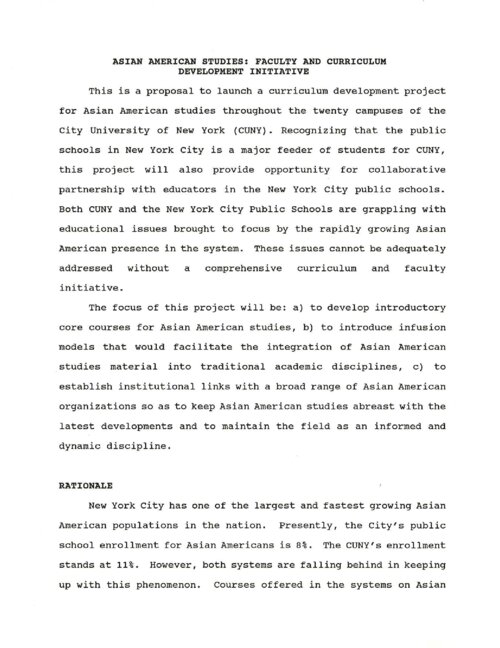 Asian American Studies Faculty and Curriculum Development Initiative Proposal This is the successful proposal for a 3-year Asian American Studies Faculty and Curriculum Development Initiative which began in the Spring of 1994. The initiative received $15,000 in funding from the CUNY Office of Faculty Development. Its primary goal was to establish a plan for the development of Asian American studies curricula throughout the CUNY system. Its deliverables included seminars for teams of faculty across CUNY campuses and New York City public schools to develop curriculum and pedagogy as well as conferences, curriculum guides, and institutional plans, which resulted in the publication of the Asian American Studies Guidebook. The initiative was led by Dr. Julia To-Dutka (Baruch College), Dr. Peter Kwong (Hunter College), Dr. John (Jack) Tchen (Queens College), and Dr. Jacob Wong (NYC Board of Education). The Hunter College Asian American Studies Program (AASP) was established in 1993. As the only academic program in Asian American studies in the CUNY system, the AASP offers a minor in Asian American Studies and other resources and programming. The AASP supports scholars, artists, and activists advancing scholarship in the fields of Asian American studies and critical ethnic studies and serves as a resource for New York City's Asian American communities. In 2006, the program was at risk of being cut due to a lack of funding. Students formed the Coalition for the Revitalization of Asian American Studies at Hunter (CRAASH) and saved the program within a year. CRAASH is now a student-run club that continues to advocate for the AASP.
 -
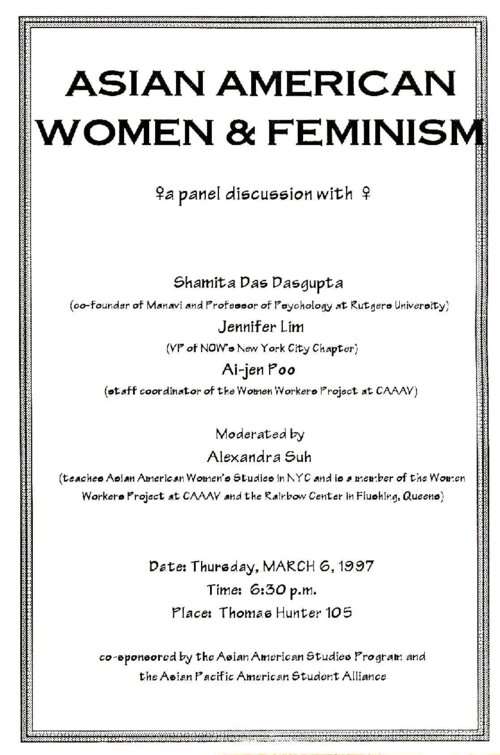 Asian American Women and Feminism This program is for a panel event titled "Asian American Women and Feminism," which took place on March 6, 1997. The event was sponsored by the Hunter Asian American Studies Program and the Asian Pacific American Student Association. The panel featured Shamita Das Dasgupta, Jennifer Lim, Ai-Jen Poo, and Alexandra Suh. The panelists discussed the existence, lineages, and directions of a burgeoning Asian American women's movement and Asian American feminism, speaking from their experiences working with CAAAV's Women Workers Project, Manavi, and the National Organization of Women. Poo, went on to win a MacArthur Fellowship in 2014 for her work as director of the National Domestic Workers Alliance and her long history of community organizing, which began with organizing domestic workers at CAAAV in 1996. The Hunter College Asian American Studies Program (AASP) was established in 1993. As the only academic program in Asian American studies in the CUNY system, the AASP offers a minor in Asian American Studies and other resources and programming. The AASP supports scholars, artists, and activists advancing scholarship in the fields of Asian American studies and critical ethnic studies and serves as a resource for New York City's Asian American communities. In 2006, the program was at risk of being cut due to a lack of funding. Students formed the Coalition for the Revitalization of Asian American Studies at Hunter (CRAASH) and saved the program within a year. CRAASH is now a student-run club that continues to advocate for the AASP.
 -
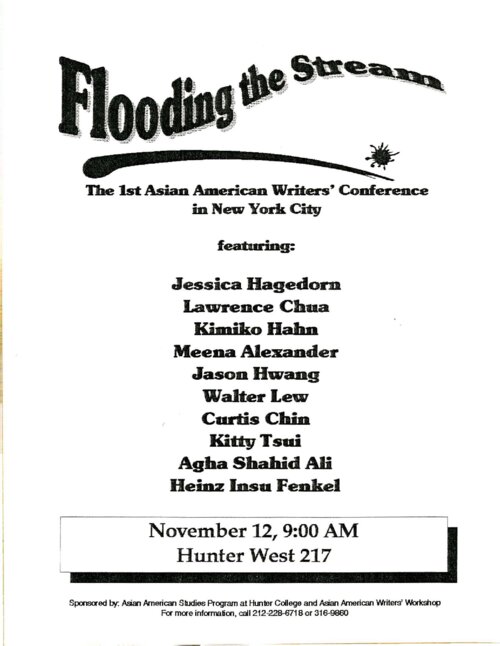 Flooding the Stream: Asian American Writers' Conference This poster and program features "Flooding the Stream," the first Asian American writers' conference in New York City. The conference took place from November 11-12, 1994 at Hunter College and was sponsored by the Asian American Studies Program and the Asian American Writers' Workshop. The conference featured prominent writers, poets, artists, and cultural workers, including CUNY's own Kimiko Hahn (Queens College) and Meena Alexander (Hunter College/Graduate Center). The Hunter College Asian American Studies Program (AASP) was established in 1993. As the only academic program in Asian American studies in the CUNY system, the AASP offers a minor in Asian American Studies and other resources and programming. The AASP supports scholars, artists, and activists advancing scholarship in the fields of Asian American studies and critical ethnic studies and serves as a resource for New York City's Asian American communities. In 2006, the program was at risk of being cut due to a lack of funding. Students formed the Coalition for the Revitalization of Asian American Studies at Hunter (CRAASH) and saved the program within a year. CRAASH is now a student-run club that continues to advocate for the AASP.
 -
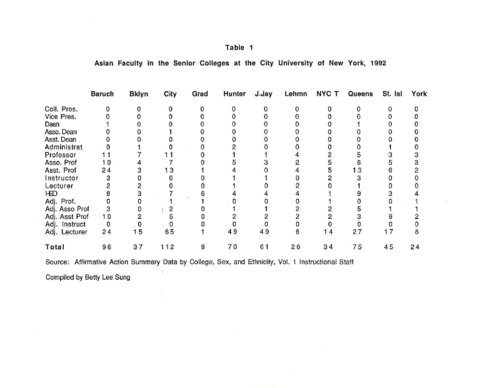 Counting the Number of Asian Faculty at CUNY These tables were compiled by Dr. Betty Lee Sung, who taught the first courses in Asian American studies at CUNY in 1970 in the City College Asian Studies Department. They indicate the racial demographics of faculty, with special attention to the number of Asian faculty, in the senior colleges, community colleges, and central office at CUNY in the Fall of 1992. Dr. Betty Lee Sung laid the foundation for Asian American studies at CUNY and remained at the college until her retirement in 1992, which effectively ended the Asian American studies presence within the Asian Studies departmental curriculum at CCNY. In 2016, the Asian American/Asian Research Institute (AAARI) at CUNY, which Sung also co-founded, together with the CUNY Asian American Leadership Initiative, an ad hoc initiative established to address the lack of Asian Pacific American (APA) representation in leadership roles at CUNY, published a report titled "Asian American Leadership in CUNY and Higher Education." Notably, the report found there were no APAs at the highest levels of leadership at CUNY and that APAs constituted only 12.8% of full-time faculty. Taken together with Sung's research from 1992, the report identifies a lack of diversity in leadership as a deeply structural issue at CUNY. The Hunter College Asian American Studies Program (AASP) was established in 1993. As the only academic program in Asian American studies in the CUNY system, the AASP offers a minor in Asian American Studies and other resources and programming. The AASP supports scholars, artists, and activists advancing scholarship in the fields of Asian American studies and critical ethnic studies and serves as a resource for New York City's Asian American communities. In 2006, the program was at risk of being cut due to a lack of funding. Students formed the Coalition for the Revitalization of Asian American Studies at Hunter (CRAASH) and saved the program within a year. CRAASH is now a student-run club that continues to advocate for the AASP.
 -
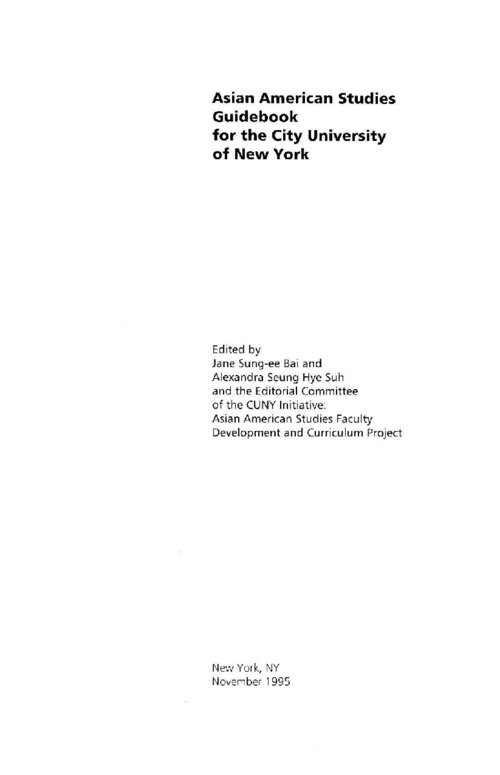 Guidebook for the Implementation of Asian American Studies at CUNY This guidebook, published in November of 1995, was assembled by members of the Asian American Studies Faculty Development and Curriculum Project, a $15,000 initiative funded by the CUNY Office for Faculty Development. The guidebook provides practical and structural guidelines for how to implement Asian American studies across the CUNY system. The Hunter College Asian American Studies Program (AASP) was established in 1993. As the only academic program in Asian American studies in the CUNY system, the AASP offers a minor in Asian American Studies and other resources and programming. The AASP supports scholars, artists, and activists advancing scholarship in the fields of Asian American studies and critical ethnic studies and serves as a resource for New York City's Asian American communities. In 2006, the program was at risk of being cut due to a lack of funding. Students formed the Coalition for the Revitalization of Asian American Studies at Hunter (CRAASH) and saved the program within a year. CRAASH is now a student-run club that continues to advocate for the AASP.
 -
 Third Community Advisory Board Meeting Minutes These minutes document the Hunter Asian American Studies Program (AASP)’s third Community Advisory Board meeting which took place on January 18th, 1994. In attendance included representatives from prominent community organizations including the David Wong Support Committee, New York Asian Women's Center, Chinese Staff Association, and Asian American Writers' Workshop. The meeting focused on planning a series of forums that would focus on important issues concerning Asian American communities, including supporting Asian Americans in the arts, labor and immigration issues, and women's issues. The purpose of the Community Advisory Board was to advise the AASP on how to best serve the needs and interests of the Asian American community in New York City as well as to bridge the gap between scholars of Asian American studies and the community. The Hunter College Asian American Studies Program (AASP) was established in 1993. As the only academic program in Asian American studies in the CUNY system, the AASP offers a minor in Asian American Studies and other resources and programming. The AASP supports scholars, artists, and activists advancing scholarship in the fields of Asian American studies and critical ethnic studies and serves as a resource for New York City's Asian American communities. In 2006, the program was at risk of being cut due to a lack of funding. Students formed the Coalition for the Revitalization of Asian American Studies at Hunter (CRAASH) and saved the program within a year. CRAASH is now a student-run club that continues to advocate for the AASP.
 -
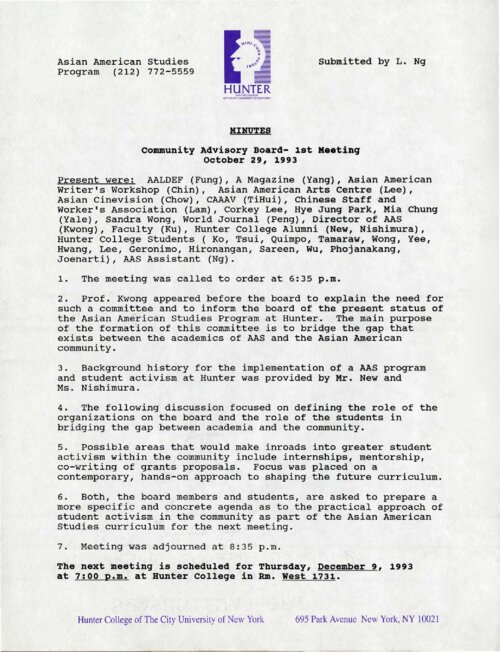 First Community Advisory Board Meeting Minutes These minutes document the Hunter Asian American Studies Program (AASP)'s first Community Advisory Board meeting which took place on October 29th, 1993. In attendance included representatives from prominent community organizations including The Asian American Legal Defense and Education Fund (AALDEF), A Magazine, Asian American Writers' Workshop, Asian American Arts Centre, Cinevision, Committee Against Anti-Asian Violence (CAAAV), and Chinese Staff and Workers' Association. During the meeting, students Woei-Ming New and Kelly Nishimura shared background history on the implementation of the AASP and student activism. There was also a discussion about how Hunter students could engage in activism in the broader New York City Asian American community. The purpose of the Community Advisory Board was to advise the AASP on how to best serve the needs and interests of the Asian American community in New York City as well as to bridge the gap between scholars of Asian American studies and the community. The Hunter College Asian American Studies Program (AASP) was established in 1993. As the only academic program in Asian American studies in the CUNY system, the AASP offers a minor in Asian American Studies and other resources and programming. The AASP supports scholars, artists, and activists advancing scholarship in the fields of Asian American studies and critical ethnic studies and serves as a resource for New York City's Asian American communities. In 2006, the program was at risk of being cut due to a lack of funding. Students formed the Coalition for the Revitalization of Asian American Studies at Hunter (CRAASH) and saved the program within a year. CRAASH is now a student-run club that continues to advocate for the AASP.
 -
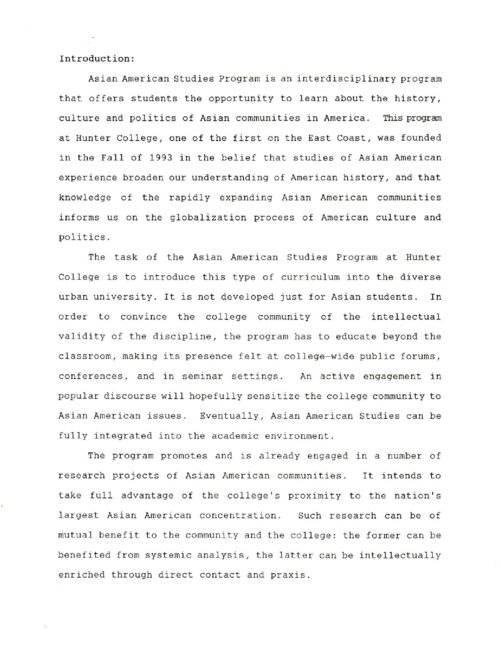 Asian American Studies Program Curriculum Proposal This is a draft of the curriculum proposal for the Hunter Asian American Studies Program (AASP) from 1994. The proposal emphasizes the AASP's role in the Hunter community, the New York City Asian American community, and within Asian American studies as a discipline. The program began with one full-time tenured faculty member (the director) and four adjunct courses per year, lacking enough faculty lines to offer a major or a minor. The proposal includes a listing and sample syllabi of the program's courses, which range from Gender in Asian American Literature to Asian American History of Labor and Politics. The Hunter College Asian American Studies Program (AASP) was established in 1993. As the only academic program in Asian American studies in the CUNY system, the AASP offers a minor in Asian American Studies and other resources and programming. The AASP supports scholars, artists, and activists advancing scholarship in the fields of Asian American studies and critical ethnic studies and serves as a resource for New York City's Asian American communities. In 2006, the program was at risk of being cut due to a lack of funding. Students formed the Coalition for the Revitalization of Asian American Studies at Hunter (CRAASH) and saved the program within a year. CRAASH is now a student-run club that continues to advocate for the AASP.
 -
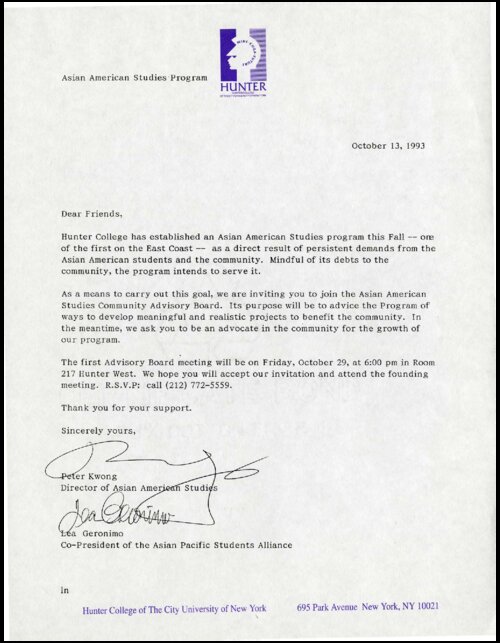 Letter from Dr. Peter Kwong to Asian American Studies Community Advisory Board In this letter dated October 13, 1993, inaugural director Peter Kwong announces the formal establishment of the Hunter Asian American Studies Program (AASP)—one of the first programs in Asian American studies on the East Coast. The letter invites community members to join an Asian American Studies Community Advisory Board. The purpose of the Community Advisory Board was to advise the AASP on how to best serve the needs and interests of the Asian American community in New York City as well as to bridge the gap between scholars of Asian American studies and the community. The Hunter College Asian American Studies Program (AASP) was established in 1993. As the only academic program in Asian American studies in the CUNY system, the AASP offers a minor in Asian American Studies and other resources and programming. The AASP supports scholars, artists, and activists advancing scholarship in the fields of Asian American studies and critical ethnic studies and serves as a resource for New York City's Asian American communities. In 2006, the program was at risk of being cut due to a lack of funding. Students formed the Coalition for the Revitalization of Asian American Studies at Hunter (CRAASH) and saved the program within a year. CRAASH is now a student-run club that continues to advocate for the AASP.
 -
 Response to the Adjunct and Part-time Faculty Caucus This letter, dated May 14th, 1973, was addressed to David Allen and signed by David Newton of Chancellor Kibbee’s office. In the letter, Newton responded to a request to a meeting by asking for identification and affiliation, explaining that the Chancellor’s office is only able to meet entities of the Professional Staff Congress (PSC) through the “regular channels” of collective bargaining.
 -
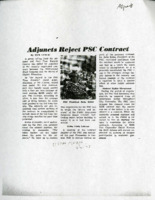 Adjuncts Reject PSC Contract Tom Lynch's 1973 article, “Adjuncts Reject PSC Contract,” published in The Meridian, The Student Voice of Lehman College, argued that the raise was inadequate in so far as it was lower than the cost of living and was less than what full-time faculty had received. Also mentioned were the comments of Aaron Alexander, a spokesperson with the Professional Staff Congress, on the Public Employees Relations Board (PERB) fact-finding report that was still being "considered" by the PSC leadership.
 -
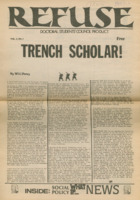 Trench Scholar! Will Petry, an adjunct who had recently been elected Chairperson of the Doctoral Students' Council (DSC) at the Graduate Center, wrote this 1986 editorial in Refuse. Petry recounted a series of specific events in relation to his employment as an adjunct at Hofstra University and Nassau Community College and lamented the inconsistencies of the “the phony credentials racket,” his inability to receive unemployment benefits, and the sacrifices he has made in order to be able to teach.
 -
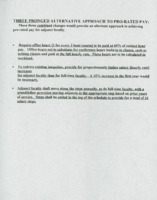 Three Pronged Alternative Approach to Pro-Rated Pay This information sheet compiled in 1995 addressed the income disparity between adjuncts and full-time faculty and proposed a three-pronged approach to lessen the income disparity. The rationale and calculation of pro-rated pay for adjunct faculty were explained in a graphic representation of a dollar, visually illustrating the proportional difference in pay.
 -
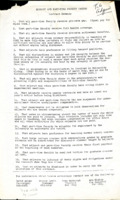 Adjunct and Part-Time Faculty Caucus Contract Demands Compiled by the "Adjunct and Part-Time Faculty Caucus", this twenty-item list included a number of contract demands specific to CUNY's large adjunct teaching population. The “Adjunct and Part-time Faculty Caucus” was a group formed in 1973. Chaired by David Allen the group published and circulated challenges to the contract the PSC had negotiated, which allegedly failed to advocate sufficiently for the rights of adjunct faculty.
 -
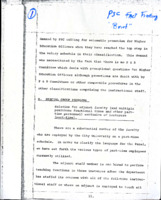 Fact Finding "Brief" This excerpt from a Fact Finding "Brief" focused on CUNY's exploitative use of adjunct faculty following the advent in 1970 of open enrollment. Following a clarification of the types of part-time positions, the brief criticized low adjunct pay, large course loads, and unequal treatment when compared to full-time faculty. Included in the excerpt is the proposal that adjuncts' compensation be commensurate with what full-time equivalent faculty would make (e.g. 1/3 teaching load = 1/3 full professor's salary).
 -
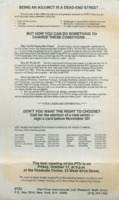 Being an Adjunct is a Dead-End Street Flyer Created by the Part-Time Instructional and Research Staff Union (PTU) in October 1986, this flyer bemoaned the status of adjunct faculty on CUNY campuses and argued for the election of the developing part-timers' "union". While acknowledging that the Professional Staff Congress (PSC) had made an effort to increase part-timer participation, the PTU argued that part-timers would be best represented by their own union. The Part-Time Instructional and Research Staff Union (PTU) was a group of part-time faculty from across CUNY who challenged the Professional Staff Congress (PSC) for the right to represent adjuncts.
 -
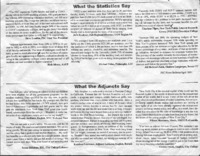 "What the Statistics Say...What the Adjuncts Say" This April 2001 piece from the Professional Staff Congress's (PSC) New Bulletin gave statistical accounts of the shortcomings in funding for CUNY colleges and the adjuncts who worked there in addition to personal stories that illustrated the consequences of austerity policies in higher education.
 -
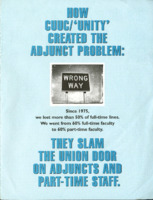 "How CUUC/Unity Created the Adjunct Problem" This flyer, produced by the New Caucus and entitled "How the CUUC/Unity Created the Adjunct Problem," highlighted the New Caucus's commitment to part-time adjunct faculty. The flyer claimed that the City University Unity Caucus (CUUC/Unity) slate, the group that had controlled the PSC for a quarter century, had divided the faculty within the bargaining unit. Structured as an FAQ, the flyer explained how adjunct labor affected full-time faculty negatively and clarified frequent misconceptions. Furthermore, the flyer featured biographies and photographs of the New Caucus officers who were running for election.
 -
 "Another step in an ongoing international campaign for parity in adjunct pay and working conditions" – Campus Equity Week 2001 Memo Written by Marcia Newfield, this 2001 memo reported on the "historic" meeting of unions in the USA and Canada to discuss adjunct labor. The Professional Staff Congress (PSC) held a roundtable at the Graduate Center called "Adjunct Equity in the University." Moderated by Eric Marshall, the panel included Barbara Bowen of the PSC and Rich Moser of the American Association of University Professors (AAUP), among others. Of particular interest, the panel discussed "whether a move towards equity would be counterproductive to developing careers."
301–325 of 1046