CUNY Digital History Archive
Item set

Collection
CUNY Digital History Archive
Items
426–450 of 1046
Advanced search
-
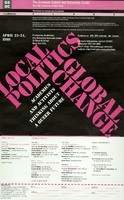 Queer Futures: Local Politics Global Change Conference Poster This poster promotes the Local Politics Global Change conference which was held on April 23rd and 24th, 1999 under the sponsorship of CLAGS and the NYU Faculty Working Group on Queer Studies. The central aim of the conference was to explore the possibilities of a queer future as imagined by academics and activists. As part of the conference, Barbara Smith, lesbian and black feminist scholar known for her work with the Combahee River Collective and the founder of Kitchen Table: Women of Color Press, presented on issues of queer politics. José Muñoz presented on Violence and Policing. A decade later, Muñoz went on to publish Cruising Utopia, a critical look at modern queer movements and a call for queer activism beyond assimilationist issues such as marriage equality. Although formally instituted at the CUNY Graduate Center in 1991, CLAGS: The Center for LGBTQ Studies was first conceived 5 years earlier by Martin, Duberman, one of the first historians to embrace the, then infantile, field of Queer Studies. Duberman sensed the need for a formal center devoted to queer research. As the first university-based center for LGBTQ research, CLAGS continues to demonstrate its dedication to advancing Queer Studies, by hosting public events showcasing queer research and sponsoring fellowships to support queer scholars. Among its many notable contributions, CLAGS annually puts on at least one major conference and holds the Kessler Award Lecture every fall to celebrate a queer scholar who has made a notable contribution to the field of queer studies.
 -
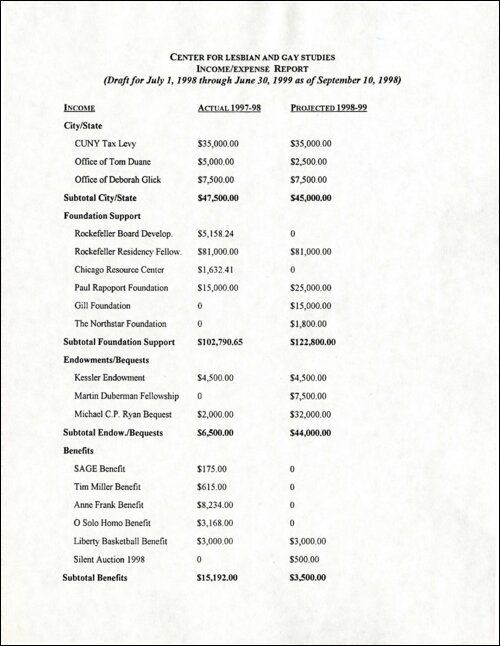 1998 Financial Report This draft of the Income/Expense Report for CLAGS from July 1, 1998, to June 30th, 1999 outlines CLAGS' financial situation over the course of a year. This document is useful in shedding light on the way that the Center operates. As the document shows, CLAGS primary income stems from foundation support and donations. The expense portion of the report highlights the various tasks performed by CLAGS including programming, advocacy, and fellowship. Every year, CLAGS provides financial support to burgeoning queer scholars. Although formally instituted at the CUNY Graduate Center in 1991, CLAGS: The Center for LGBTQ Studies was first conceived 5 years earlier by Martin, Duberman, one of the first historians to embrace the, then infantile, field of Queer Studies. Duberman sensed the need for a formal center devoted to queer research. As the first university-based center for LGBTQ research, CLAGS continues to demonstrate its dedication to advancing Queer Studies, by hosting public events showcasing queer research and sponsoring fellowships to support queer scholars. Among its many notable contributions, CLAGS annually puts on at least one major conference and holds the Kessler Award Lecture every fall to celebrate a queer scholar who has made a notable contribution to the field of queer studies.
 -
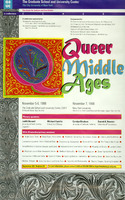 Queer Middle Ages Poster This poster advertises the Queer Middle Ages conference, which was held by CLAGS on November 5th and 6th 1998 at the CUNY Graduate Center and on November 7th, 1998 at New York University. The conference was one of the first to address the growing interest in gender and sexuality in the Middle Ages on such a large scale, with over 150 individuals in attendance. Twenty-five distinct sessions were held over the course of the three-day conference, covering a large variety of topics such as “Queering Medieval Institutions,” “Medieval Jewish Homoerotic Desire,” “Queering Queer” and “Same-Sex Desire and Medieval Religion.” Carolyn Dinshaw, one of the conferences four plenary speakers, has become one of the leading experts in this field. Although formally instituted at the CUNY Graduate Center in 1991, CLAGS: The Center for LGBTQ Studies was first conceived 5 years earlier by Martin, Duberman, one of the first historians to embrace the, then infantile, field of Queer Studies. Duberman sensed the need for a formal center devoted to queer research. As the first university-based center for LGBTQ research, CLAGS continues to demonstrate its dedication to advancing Queer Studies, by hosting public events showcasing queer research and sponsoring fellowships to support queer scholars. Among its many notable contributions, CLAGS annually puts on at least one major conference and holds the Kessler Award Lecture every fall to celebrate a queer scholar who has made a notable contribution to the field of queer studies.
 -
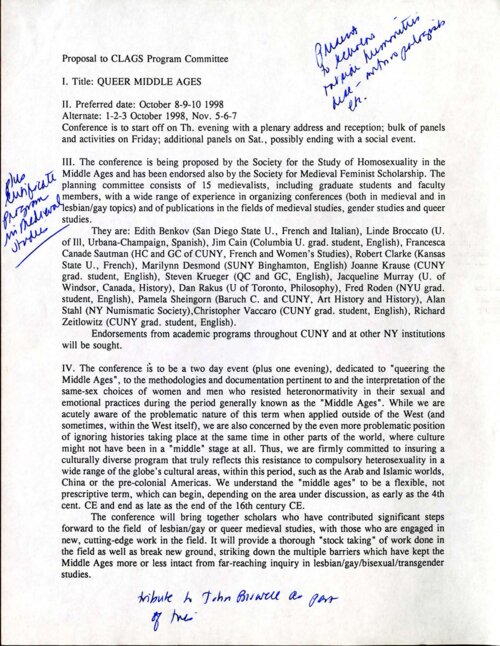 Queer Middle Ages Conference Proposal This proposal was written in advance of CLAGS’ Queer Middle Ages conference that was held on November 5-7, 1998. The conference was created by a panel of 15 graduate students and faculty. Perhaps the most notable of whom was Steven Kreuger, a leading Queer Medievalist who teaches in the English Department at Queens College as well as the Graduate Center. This hugely successful conference, held in co-sponsorship with New York University, was the first large-scale conference to focus on the growing academic field of queering the Middle Ages. Although formally instituted at the CUNY Graduate Center in 1991, CLAGS: The Center for LGBTQ Studies was first conceived 5 years earlier by Martin, Duberman, one of the first historians to embrace the, then infantile, field of Queer Studies. Duberman sensed the need for a formal center devoted to queer research. As the first university-based center for LGBTQ research, CLAGS continues to demonstrate its dedication to advancing Queer Studies, by hosting public events showcasing queer research and providing fellowships to support queer scholars. Among its many notable contributions, CLAGS annually puts on at least one major conference and holds the Kessler Award Lecture every fall to celebrate a queer scholar who has made a notable contribution to the field of queer studies.
 -
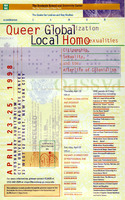 Queer Globalization/Local Homosexualities conference This poster advertises CLAGS’ Queer Globalization/Local Homosexualities conference, which was held from April 23rd to 25th, 1998 at the CUNY Graduate Center. This groundbreaking conference brought together scholars and activists from around the globe who were working at the confluence of post-colonial and queer studies. The conference, consisting of twenty distinct panels, addressed issues such as the influence of American imperialism on the global field of queer studies and the significance of queer diasporic identity. It was the first in a series of conferences held by CLAGS that was made possible through Rockefeller Foundation.'s sponsorship. Roughly 300 scholars attended this three-day conference. Although formally instituted at the CUNY Graduate Center in 1991, CLAGS: The Center for LGBTQ Studies was first conceived 5 years earlier by Martin, Duberman, one of the first historians to embrace the, then infantile, field of Queer Studies. Duberman sensed the need for a formal center devoted to queer research. As the first university-based center for LGBTQ research, CLAGS continues to demonstrate its dedication to advancing Queer Studies, by hosting public events showcasing queer research and sponsoring fellowships to support queer scholars. Among its many notable contributions, CLAGS annually puts on at least one major conference and holds the Kessler Award Lecture every fall to celebrate a queer scholar who has made a notable contribution to the field of queer studies.
 -
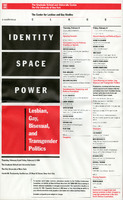 Identity Space Power This poster promotes the Identity Space Power conference that was held by CLAGS on February 8th and 9th, 1996. The conference discussed political issues related to the queer community including how to create a political agenda, how to organize, and the role of sexual identity within the political space. Among the many distinguished speakers at the conference was Cathy Cohen whose essay “Punks, Bulldaggers, and Welfare Queens” explored queer politics, and writer and activist Larry Kramer, whose largely autobiographical play The Normal Heart was recently turned into an HBO movie by Ryan Murphy. Although formally instituted at the CUNY Graduate Center in 1991, CLAGS: The Center for LGBTQ Studies was first conceived 5 years earlier by Martin, Duberman, one of the first historians to embrace the, then infantile, field of Queer Studies. Duberman sensed the need for a formal center devoted to queer research. As the first university-based center for LGBTQ research, CLAGS continues to demonstrate its dedication to advancing Queer Studies, by hosting public events showcasing queer research and sponsoring fellowships to support queer scholars. Among its many notable contributions, CLAGS annually puts on at least one major conference and holds the Kessler Award Lecture every fall to celebrate a queer scholar who has made a notable contribution to the field of queer studies.
 -
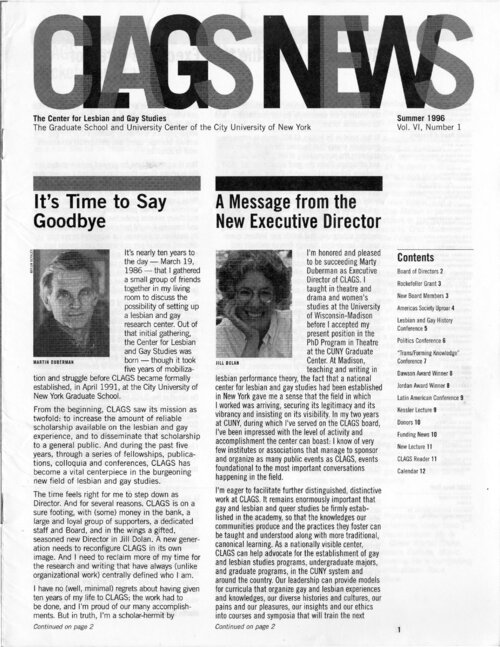 CLAGS NEWS This newsletter, dated Summer 1996, was sent to the members of CLAGS to keep them abreast of information regarding the center, including changes to the board, current news, and upcoming events. This particular issue of the newsletter is significant for two reasons. First, it contains the farewell address of CLAGS’ founder and original executive director Martin Duberman, the driving force of CLAGS from the center’s inception. A second notable article, “Uproar at Americas Society Conference,” highlights the homophobia that CLAGS was facing at the time. While CLAGS had initially helped in the planning of the Margin/Center Conference that was held at Americas Society on March 21st and 22nd 1996, the Americas Society decided to censor CLAGS’ involvement and remove the center as a co-sponsor. This issue of censorship ultimately became a focal discussion at the conference itself, but this did little to convince the Americas Society to apologize for their homophobic sleight. Although formally instituted at the CUNY Graduate Center in 1991, CLAGS: The Center for LGBTQ Studies was first conceived 5 years earlier by Martin, Duberman, one of the first historians to embrace the, then infantile, field of Queer Studies. Duberman sensed the need for a formal center devoted to queer research. As the first university-based center for LGBTQ research, CLAGS continues to demonstrate its dedication to advancing Queer Studies, by hosting public events showcasing queer research and sponsoring fellowships to support queer scholars. Among its many notable contributions, CLAGS annually puts on at least one major conference and holds the Kessler Award Lecture every fall to celebrate a queer scholar who has made a notable contribution to the field of queer studies.
 -
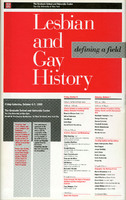 Lesbian and Gay History: Defining a Field This poster promotes a conference entitled Lesbian and Gay History: Defining a Field, which was held by CLAGS in association with the Doctoral Program in History at the CUNY Graduate Center on October 6th and 7th, 1995. As the name suggests, this conference took on the task of helping to shape the still-developing field of lesbian and gay history. Topics of discussion included the role and importance of archives, how to teach lesbian and gay history, and a number of biographies of queer individuals. Among the speakers were George Chauncey, whose book Gay New York offers an in-depth look at New York City’s queer communities from 1890-1940 and Polly Thistlethwaite, an archivist, who has worked in the library at the CUNY Graduate Center since 2002 and became Chief Librarian in 2011. Although formally instituted at the CUNY Graduate Center in 1991, CLAGS: The Center for LGBTQ Studies was first conceived 5 years earlier by Martin, Duberman, one of the first historians to embrace the, then infantile, field of Queer Studies. Duberman sensed the need for a formal center devoted to queer research. As the first university-based center for LGBTQ research, CLAGS continues to demonstrate its dedication to advancing Queer Studies, by hosting public events showcasing queer research and sponsoring fellowships to support queer scholars. Among its many notable contributions, CLAGS annually puts on at least one major conference and holds the Kessler Award Lecture every fall to celebrate a queer scholar who has made a notable contribution to the field of queer studies.
 -
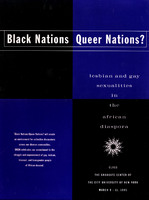 Black Nations/Queer Nations? Poster This poster promotes one of the early conferences sponsored by CLAGS, Black Nations/Queer Nations?. The conference was held at the CUNY Graduate Center over the course of three days from March 9th to 11th, 1995. This conference was among the first large-scale events to use an intersectional approach and look at "queerness" and "blackness" together, to discuss the unique experiences of queer individuals of African descent. The conference brought together famed scholars such as Essex Hemphill, Barbara Smith, and Jacqui Alexander to hold seminars and workshops on a variety of topics such as the dynamic interplay of black and queer identities and the prevalence of homophobia among Black communities. Although formally instituted at the CUNY Graduate Center in 1991, CLAGS: The Center for LGBTQ Studies was first conceived 5 years earlier by Martin, Duberman, one of the first historians to embrace the, then infantile, field of Queer Studies. Duberman sensed the need for a formal center devoted to queer research. As the first university-based center for LGBTQ research, CLAGS continues to demonstrate its dedication to advancing Queer Studies, by hosting public events showcasing queer research and sponsoring fellowships to support queer scholars. Among its many notable contributions, CLAGS annually puts on at least one major conference and holds the Kessler Award Lecture every fall to celebrate a queer scholar who has made a notable contribution to the field of queer studies.
 -
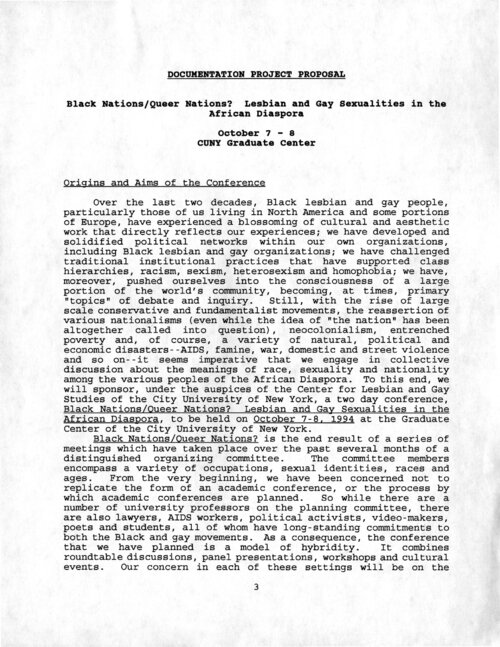 Black Nations/Queer Nations? Proposal This draft of a proposal for the Black Nations/Queer Nations? (BNQN) conference highlights the importance of having such a conference as well as the way that the event was conceived of early on. According to the proposal, BNQN was the result of several meetings of an organizing committee comprised of individuals of various backgrounds, resulting in a highly diverse conference. Leading the committee was M. Jacqui Alexander, one of the leading scholars of transnational feminism. As stated in the proposal, the aims of the conference were to propose questions such as “What is the relationship between anti-racist, anti-sexist, anti-colonialist and anti-heterosexist political struggles?” and “Is a global political movement among lesbian and gay men in the African Diaspora possible or desirable?” While the conference was originally planned for October 1994, due to unforeseen complications, it was not held until March of the following year. Although formally instituted at the CUNY Graduate Center in 1991, CLAGS: The Center for LGBTQ Studies was first conceived 5 years earlier by Martin, Duberman, one of the first historians to embrace the, then infantile, field of Queer Studies. Duberman sensed the need for a formal center devoted to queer research. As the first university-based center for LGBTQ research, CLAGS continues to demonstrate its dedication to advancing Queer Studies, by hosting public events showcasing queer research and sponsoring fellowships to support queer scholars. Among its many notable contributions, CLAGS annually puts on at least one major conference and holds the Kessler Award Lecture every fall to celebrate a queer scholar who has made a notable contribution to the field of queer studies.
 -
 CLAGS Directory of Lesbian and Gay Studies “We believe this directory will prove an important tool for facilitating communication between scholars already working in the field or hoping to enter it. And that, in turn, will help to guarantee the secure place of lesbian and gay studies in academic life–and in the consciousness of the country at large.” – Martin Duberman July 1994 This item is an excerpt from the CLAGS Directory of Lesbian and Gay Studies. Produced by CLAGS, this directory was an attempt to create a comprehensive list of all scholars actively working within the burgeoning field of gay and lesbian studies. In this early era of the Internet, this directory, the first of its kind offered a way for lesbian and gay scholars to learn about and contact one another. In this excerpt, roughly 600 scholars are organized by academic discipline. Other sections of the directory organize the scholars by institution and offer a more comprehensive look at the research of the individual scholars. Although formally instituted at the CUNY Graduate Center in 1991, CLAGS: The Center for LGBTQ Studies was first conceived 5 years earlier by Martin, Duberman, one of the first historians to embrace the, then infantile, field of Queer Studies. Duberman sensed the need for a formal center devoted to queer research. As the first university-based center for LGBTQ research, CLAGS continues to demonstrate its dedication to advancing Queer Studies, by hosting public events showcasing queer research and sponsoring fellowships to support queer scholars. Among its many notable contributions, CLAGS annually puts on at least one major conference and holds the Kessler Award Lecture every fall to celebrate a queer scholar who has made a notable contribution to the field of queer studies.
 -
 Homo Economics This poster advertises Homo Economics: Market and Community in Lesbian and Gay Life, a conference sponsored by CLAGS and held on May 7th, 1994. Like many other CLAGS events, Homo Economics was groundbreaking in that it was the first ever conference to address the unique economic circumstances faced by lesbian and gay individuals. Participants in the conference came from a number of different backgrounds, including professors, cooperate executives fundraising consultants, the National Gay and Lesbian Task Force, and the Gay Men’s Health Crisis. Some of the topics discussed include explorations of the economic effects of HIV, various conversations concerning “the gay market,” and the lived experiences of gay and lesbian professionals. Although formally instituted at the CUNY Graduate Center in 1991, CLAGS: The Center for LGBTQ Studies was first conceived 5 years earlier by Martin, Duberman, one of the first historians to embrace the, then infantile, field of Queer Studies. Duberman sensed the need for a formal center devoted to queer research. As the first university-based center for LGBTQ research, CLAGS continues to demonstrate its dedication to advancing Queer Studies, by hosting public events showcasing queer research and sponsoring fellowships to support queer scholars. Among its many notable contributions, CLAGS annually puts on at least one major conference and holds the Kessler Award Lecture every fall to celebrate a queer scholar who has made a notable contribution to the field of queer studies.
 -
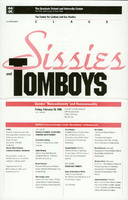 Sissies and Tomboys This poster advertises Sissies and Tomboys, CLAGS’ one-day conference, which was held at the CUNY Graduate Center on February 10th, 1995. The conference explored the relationship between homosexuality and gender “nonconformity,” how and why queer individuals are more likely to defy stereotypical masculine/feminine gender expressions. Among the conference’s speakers were Leslie Feinberg, whose 1996 book, Transgender Warriors: A History of Resistance was one of the first texts to bring transgender awareness and Gender Studies into the mainstream, and Anne Fausto-Sterling, whose work on the biology of gender is still widely taught in queer and feminist theory classes today. Although formally instituted at the CUNY Graduate Center in 1991, CLAGS: The Center for LGBTQ Studies was first conceived 5 years earlier by Martin, Duberman, one of the first historians to embrace the, then infantile, field of Queer Studies. Duberman sensed the need for a formal center devoted to queer research. As the first university-based center for LGBTQ research, CLAGS continues to demonstrate its dedication to advancing Queer Studies, by hosting public events showcasing queer research and sponsoring fellowships to support queer scholars. Among its many notable contributions, CLAGS annually puts on at least one major conference and holds the Kessler Award Lecture every fall to celebrate a queer scholar who has made a notable contribution to the field of queer studies.
 -
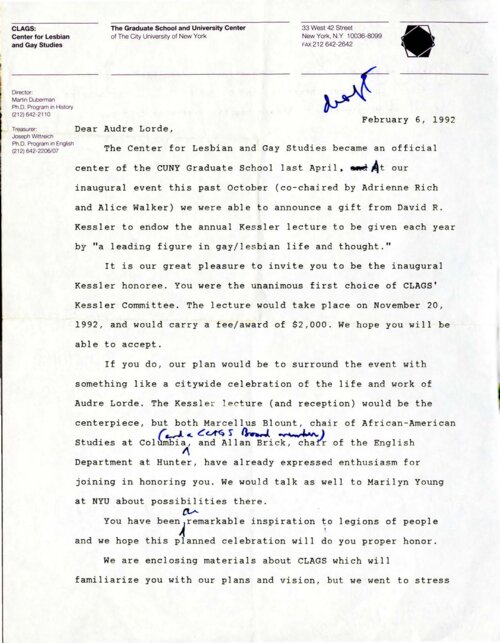 Letter to Audre Lorde The letter dated February 6, 1992, from CLAGS is addressed to Audre Lorde and invites her to be the first recipient of CLAGS’ annual Kessler award. The Kessler award, given by CLAGS each year since its sophomore year in 1992, was created with an endowment by Doctor David R. Kessler to award “a leading figure in gay/lesbian life and thought.” The recipient of the Kessler award is invited to give a lecture. Audre Lorde was a much celebrated black, lesbian, and feminist icon, who taught at multiple CUNY colleges throughout the 1970s and 1980s. She helped to create John Jay’s Black studies department and went on to become the distinguished Thomas Hunter chair at Hunter College. While it is unclear if any version of this draft was ever sent, the first Kessler award was ultimately awarded to Joan Nestle. Lorde passed away from breast cancer on November 17, 1992, just three days before the Kessler award ceremony had been scheduled. Although formally instituted at the CUNY Graduate Center in 1991, CLAGS: The Center for LGBTQ Studies was first conceived 5 years earlier by Martin, Duberman, one of the first historians to embrace the, then infantile, field of Queer Studies. Duberman sensed the need for a formal center devoted to queer research. As the first university-based center for LGBTQ research, CLAGS continues to demonstrate its dedication to advancing Queer Studies, by hosting public events showcasing queer research and sponsoring fellowships to support queer scholars. Among its many notable contributions, CLAGS annually puts on at least one major conference and holds the Kessler Award Lecture every fall to celebrate a queer scholar who has made a notable contribution to the field of queer studies.
 -
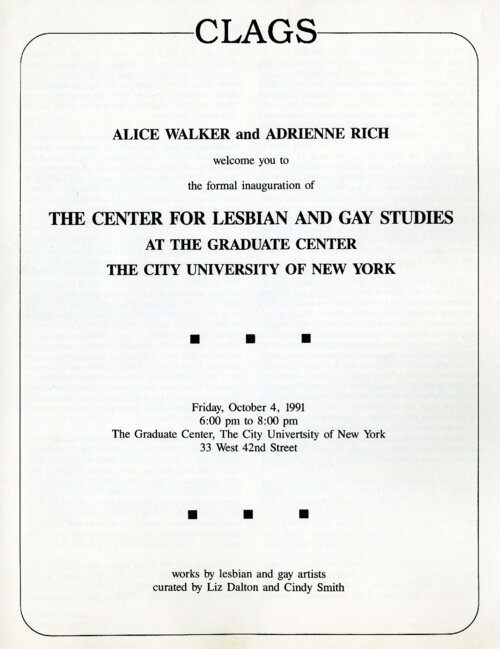 CLAGS Inauguration Event Program This program was given to those who attended CLAGS inaugural event at the CUNY Graduate Center, which was held on Friday, October 4, 1991. Hosted by esteemed queer and feminist scholars, Alice Walker and Adrienne Rich, the celebration doubled as an art exhibition, All Grown Up, curated by Liz Dalton and Cindy Smith, who included an exhibition text in the program. The exhibition featured various forms of artwork by lesbian and gay artists and raised questions around what a lesbian and gay art show should look like — questions strikingly similar to those that were being asked by CLAGS' founding members. Although formally instituted at the CUNY Graduate Center in 1991, CLAGS: The Center for LGBTQ Studies was first conceived 5 years earlier by Martin, Duberman, one of the first historians to embrace the, then infantile, field of Queer Studies. Duberman sensed the need for a formal center devoted to queer research. As the first university-based center for LGBTQ research, CLAGS continues to demonstrate its dedication to advancing Queer Studies, by hosting public events showcasing queer research and sponsoring fellowships to support queer scholars. Among its many contributions, CLAGS annually puts on at least one major conference and holds the Kessler Award Lecture every fall to celebrate a queer scholar who has made a notable contribution to the field of queer studies.
 -
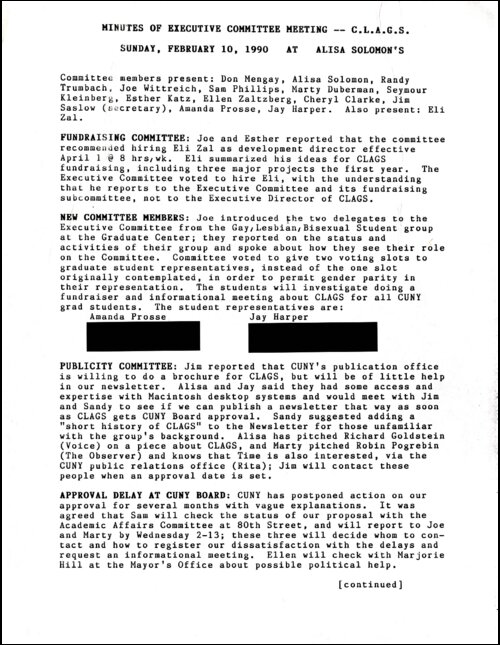 Forming CLAGS' Board: The Minutes These minutes were taken during CLAGS' executive committee meetings and are dated February 10th and December 16th, 1990. They highlight CLAGS' development process prior to its institutionalization at the CUNY Graduate Center in the spring of 1991. Both the February 10th and December 16th minutes openly discuss the relationship between CLAGS and CUNY underscoring CUNY’s hesitance to hosting a gay and lesbian focused institution. However, the meetings were primarily devoted to organizing the board and determining what needed to be addressed in order to form a functioning center. Although formally instituted at the CUNY Graduate Center in 1991, CLAGS: The Center for LGBTQ Studies was first conceived 5 years earlier by Martin Duberman, one of the first historians to embrace the, then infantile, field of Queer Studies. Duberman sensed the need for a formal center devoted to queer research. As the first university-based center for LGBTQ research, CLAGS continues to demonstrate its dedication to advancing Queer Studies, by hosting public events showcasing queer research and sponsoring fellowships to support queer scholars. Among its many notable contributions, CLAGS annually puts on at least one major conference and holds the Kessler Award Lecture every fall to celebrate a queer scholar who has made a notable contribution to the field of queer studies.
 -
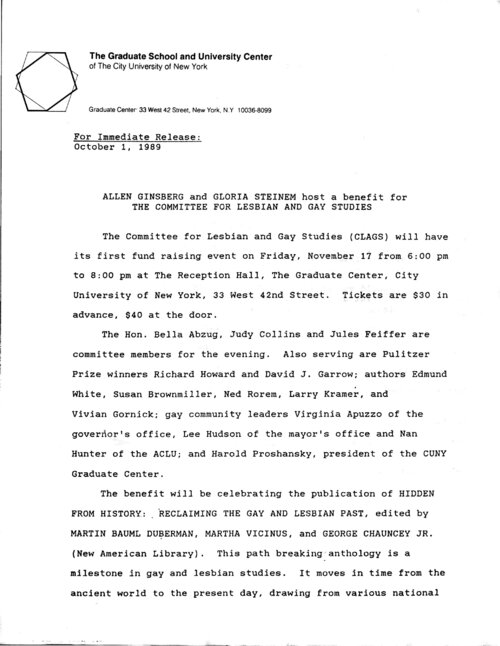 First CLAGS Benefit Proposal This press release for CLAGS’ first fundraising event was published on October 1st, 1989. The event, hosted by Beat poet Allen Ginsberg and feminist icon Gloria Steinem was part of CLAGS' effort to raise the $50,000 required to formally operate as an institution at the CUNY Graduate Center. The benefit served as a celebration for the recent book launch of Hidden from History: Reclaiming the Gay and Lesbian Past, which was edited by the founding director of CLAGS, Martin Duberman, as well as noteworthy queer scholars Martha Vicinus and George Chauncey. The book was widely successful, earning two Lambda Literary Awards, an award from the American Library Association, and a Stonewall Books Award nomination. Held on November 17th, the event was successful in raising over $11,000. Although formally instituted at the CUNY Graduate Center in 1991, CLAGS: The Center for LGBTQ Studies was first conceived 5 years earlier by Martin Duberman, one of the first historians to embrace the field of Queer Studies, then in its infancy. As the first university-based center for LGBTQ research, CLAGS continues to demonstrate its dedication to advancing Queer Studies by hosting public events showcasing queer research and sponsoring fellowships to support queer scholars. Among its many contributions, CLAGS annually puts on at least one major conference and holds the Kessler Award Lecture every fall to celebrate a queer scholar who has made a notable contribution to the field of queer studies.
 -
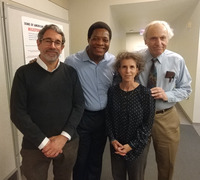 Center for Occupational and Environmental Health - Oral History Interview In this group interview, Dave Kotelchuck, Andrew Burgie, Amy Manowitz, and Dan Kass document their involvement with the Center for Occupational and Environmental Health (COEH) based out of Hunter College, CUNY. Conducted by Andrea Vásquez on March 9, 2018, it details the origin of the COEH, how each interviewee became involved, what their roles were, and how the COEH evolved over its 27 years, from 1990 to 2017. Kotelchuck, founder with Steve Zoloff of the COEH, explains how the Center was an embodiment of the values that grew out of the civil rights era in the 1960s and 70s and how the spirit of that time revived the discourse surrounding public health, especially as an academic discipline. Andrew Burgie, project manager, associate director, and eventually co-director of the COEH, explains some of the projects he worked on and the importance of community outreach. Amy Manowitz, project manager until 2000, describes the rigorous trainings the COEH gave to workers across the country, as well as several notable successes in occupational health. Dan Kass, staff coordinator and director of the COEH until 2000, describes the center’s transition from working with unions and job site risk to community health workers and organizations.
 -
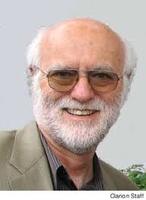 Oral History Interview with Bill Friedheim After completing his undergraduate and graduate degrees at Princeton and the University of Wisconsin, Bill Friedheim was hired at BMCC (Borough Manhattan Community College) in 1965 and retired 41 years later in 2006. Friedheim was politically active at BMCC and in the union, where he had many roles throughout the years including chapter chair of BMCC and PSC Webmaster. In this interview, Friedheim provides a wealth of information about the formation of the PSC in the early 1970s and the rise of the New Caucus in 2000. He discusses the New Caucus approach to organizing members and its earliest goals and strategies for building member activism. He states that a “hallmark of the New Caucus was really organizing from the bottom up.” Friedheim discusses organizing faculty at BMCC during the Edward Draper presidency in the 1970s and some of the challenges BMCC has faced during the Perez presidency beginning in the mid-1990s. In addition, the interview covers how BMCC – given its proximity to The World Trade Center – was affected by the attacks of 9/ll. Friedheim ends with a discussion of the dynamic PSC retiree’s chapter that he has been chairing for several years.
 -
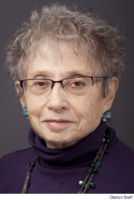 Oral History Interview with Marcia Newfield Conducted January 31, 2017, as part of the Professional Staff Congress's (PSC) oral history initiative, this interview, conducted by Irwin Yellowitz with Marcia Newfield, covered her time at the Borough of Manhattan Community College (BMCC) as an adjunct faculty member and her years as the vice president for part-time instructors (2003-2015) at the PSC. Hired as an adjunct at Borough Manhattan Community College (BMCC) in 1988, Newfield quickly became involved with the PSC and worked on issues such as healthcare, contract negotiations, and adjunct pay. In addition to her varied personal experiences at CUNY, Newfield touched on a variety of other topics, including the history of adjuncts at CUNY and the efforts of the New Caucus leadership beginning in 2000.
 -
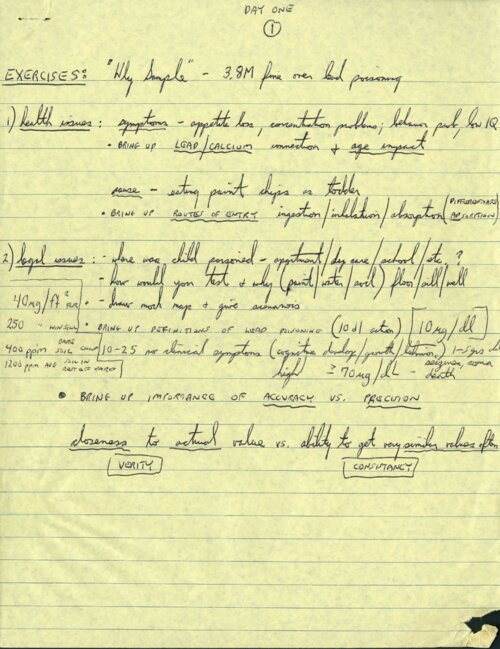 "Why Sample?" and other classroom exercises These handwritten instructor's notes from a 1999 training session were prepared for a one-day course taught by Hunter College's Center for Occupational and Environmental Health (COEH). The notes outline various classroom exercises designed to engage students collaboratively, often encouraging them to think about the health and legal implications of various occupational health issues, including lead poisoning and air pollution. In addition to the notes is an annotated newspaper article handed out to the class. Its markup reflects the instructor's intended instruction and interpretation of the article. Officially founded in 1990, the COEH spent decades dedicating itself to promoting community and workplace health throughout the New York area. It offered courses on topics ranging from asthma to ergonomics for unions, neighborhood groups, public employees, and others.
 -
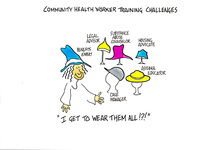 Community Health Worker Training Artwork Created in 2000 by Ted Outwater, then associate director and environmental specialist for Hunter College's Center for Occupational and Environmental Health (COEH), these illustrations reflect some of the challenges that faced community health workers. One of COEH's major initiatives, the Community Health Worker Training Program recruited local residents from New York City neighborhoods for an extensive 350-hour curriculum that educated participants on the topic of asthma, its management, assessment, and remediation. Following their training, these health workers where entrusted with providing outreach to their communities, serving as a "vital link between health care providers, community organizations, and the communities they serve." In April 2000, the program commenced with an initial class of 15 health workers from a variety of community groups. Officially founded in 1990, the COEH spent decades dedicating itself to promoting community and workplace health throughout the New York area. It did so by offering courses on topics ranging from asthma to ergonomics for unions, neighborhood groups, public employees, and more.
 -
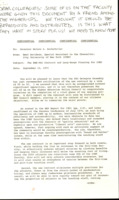 Newt Davidson Parody: Memo to Gov. Rockefeller on CUNY Planning This recently discovered (August 2017) document from the papers of historian Judith Stein, is the only extant example of what preceded the Crisis at CUNY brochure. As explained in the interview done with four members of the Newt Davidson Collective, a series of lengthy pamphlets were written anonymously and distributed across the university. They mocked the university administration for the direction it was taking, accusing them of corporatizing the university, automating teaching, and relying on adjunct labor, among other things. Crisis at CUNY and the documents that parodied CUNY administrators grew out of the research of the Newt Davidson Collective, an ad hoc group of faculty from several campuses who sought to understand reasons for this new climate of austerity in the 1970s. Their search for answers took them deep into the complex bureacracy of the City University and its links with other key institutions. The booklet and pamphlets produced by the Newt Davidson Collective would go on to circulate among CUNY faculty members and others.
 -
 Noise Hazards Awareness Curriculum Created in 1999 by Hunter College's Center for Occupational and Environmental Health (COEH), this curriculum packet was designed to prepare instructors teaching noise hazard awareness. Broken into five sections with suggested time allocations for each, the packet was meant as a guide to be adjusted and adapted depending upon one's audience. Several pages include placeholders intended to be replaced by company or department specific detail/statistics. Officially founded in 1990, the COEH spent decades dedicating itself to promoting community and workplace health throughout the New York area. It offered courses on topics ranging from asthma to ergonomics for unions, neighborhood groups, public employees, and others.
 -
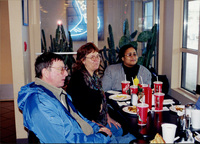 Photos of a COEH Bowling Party At a bowling party in 1999, these photos capture several key members of Hunter College's Center for Occupational and Environmental Health (COEH). In the first photo, they are (from left to right): Ted Outwater, Elena Schwolsky-Fitch, Ellen Kirrane, Dawn Mays Hardy, Andrew Burgie, Sergio Matos, and Dave Kotelchuck. Officially founded in 1990, the COEH spent decades dedicating itself to promoting community and workplace health throughout the New York area. It offered courses on topics ranging from asthma to ergonomics for unions, neighborhood groups, public employees, and others.
426–450 of 1046