CUNY Digital History Archive
Item set
Collection
CUNY Digital History Archive
Items
451–475 of 1046
Advanced search
-
 Oral History Interview with Debra Bergen In this oral history interview Debra Bergen, Director of Contract Administration at the PSC (Professional Staff Congress) from 1991 to 2017, discusses her early influences, the trajectory of her career and her contributions to the PSC. Born into a family with left political beliefs, Bergen was initially exposed to the importance of the labor movement while working at Syracuse University in 1978, when the UAW (United Automobile Workers) organized a campaign for the university’s clerical workers. In 1986, after having worked as an organizer at 1199 SEIU (United Health Care Workers), she enrolled in a joint master's program at Baruch College (CUNY) and Cornell for a degree in Labor and Industrial Relations. Upon graduation, Debra Bergen was hired as Director of Contract Administration at the PSC As the union matured, and the top union leadership changed in 2000, chapter leaders and members became more involved in contract enforcement. Bergen’s department expanded and a PSC organizing department was formed. Bergen describes how grievances were handled under two PSC administrations and how the union transitioned into one in which members were included in handling grievances and making decisions on grievances and arbitration. Bergen was responsible for training and hiring contract coordinators, working with member grievance counselors and PSC organizing staff, and developing training programs for the membership to more fully understand and participate in contract enforcement. As new contracts were ratified and new benefits implemented, she continued to supervise and work closely with chapter leaders on grievance counseling, and contract enforcement.
 -
 Oral History Interview with Nick Russo, PSC attorney In this interview, conducted by Irwin Yellowitz, Nick Russo, the Professional Staff Congress (PSC) lawyer of 28 years discusses many of the technical aspects of his career. He was hired in 1975 shortly after the Select Faculty Committee was instituted as a result of collective bargaining. In addition to being the union’s lawyer during arbitrations, Russo describes his legal role in navigating retrenchments, agency fee rebates, house council internal issues and disciplinary cases. The interview also covers other aspects of his profession, which included the training of grievance counselors, and professionalizing arbitration process through advance meetings. Beyond the informative nature of this interview, Russo warmly remembers working with what he called one the most “educated collective bargaining units.”
 -
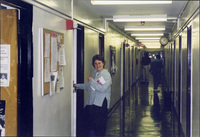 Photos from COEH Office Taken in and around the offices of Hunter College's Center for Occupational and Environmental Health, these photographs capture several lighthearted moments amongst Center staffers in the late 1990s. Pictured from top to bottom are: Bill Capune, Ted Outwater, Elena Schwolsky-Fitch, and Sergio Matos (on right). Officially founded in 1990, the COEH spent decades dedicating itself to promoting community and workplace health throughout the New York area. It offered courses on topics ranging from asthma to ergonomics for unions, neighborhood groups, public employees, and others.
 -
 A College in the City This report, commissioned by Dr. William Birenbaum, then the president of the Educational Affiliate of the Bedford-Stuyvesant Restoration Corporation and later the first president of Staten Island Community College, argues that urban institutions of higher education should be re-envisioned and integrated into the communities that they are serving. A direct response to student activism and community pressure, the report suggests that both the social dissatisfaction of students and “poverty-stricken” neighborhoods in the city could benefit from new urban college campuses that would educate disenfranchised people and function as cultural as well as educational hubs. Although offered as a hypothetical model that would be applicable to cities across the United States, it further argued that a community-controlled college in the Bedford-Stuyvesant community in Brooklyn would be a catalyst for urban renewal there.
 -
 CUNY Edu-Factory “CUNY is becoming an Edu-Factory… and we need to be talking about it.” In conjunction with Equity Week, this poster was created as a teaching-resource. Using the factory as a way to visualize the precarity of contingent labor and how it affects education, this poster likens adjunct professors to cogs in a credential-producing machine. In addition, CUNY Faculty, and Adjunct pay are compared to the much higher salaries of the presidents and chancellors. Likewise a graph shows CUNY's budget increasingly coming from tuition rather than the city or state, Campus Equity Week is an annual event started by the Coalition of Contingent Academic Labor, a grassroots coalition of activists in North America working for contingent faculty: adjunct, part-time, non-tenured, and graduate teaching faculty working to bring greater awareness to the precarious situation for contingent faculty in higher education, organize for action, and build solidarity among our colleagues. Since it was first organized in 1999, Campus Equity Week’s diverse organizing committees have sought to offer a voice to faculty nation wide
 -
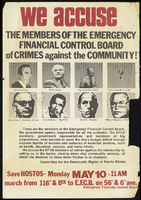 "We Accuse" “We Accuse The Members of the Emergency Financial Control Board of Crimes Against the Community” flyer was created by the Community Coalition to Save Hostos (CCSH) for the May 10, 1976 march that proceeded from El Barrio to the headquarters of the Emergency Financial Control Board located at 56th Street and Sixth Avenue in Manhattan. The Emergency Financial Control Board (EFCB) was formed in fall 1975 to make difficult funding decisions regarding city expenses. Many measures were taken to control spending, including cutting the budget of the City University of New York (CUNY). One of the EFCB’s decisions was to close Hostos Community College and merge it with Bronx Community College which clergy, students, faculty and community members actively opposed. Ultimately, through actions such as letter writing and community outreach, CCSH, Save Hostos Committee and several subcommittees were successful in saving the college from being closed.
 -
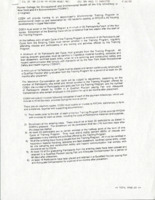 COEH & NYCHA Proposal This document from July 2000 offers the terms for a proposal between Hunter College's Center for Environmental and Occupational Health and New York City's Housing Authority. The plan to train 100 NYCHA residents on environmental clean up included benchmarks for course enrollment and certifications required for graduating participants. The proposal is just one example of the many different avenues through which the COEH worked with communities in the city. Officially founded in 1990, the COEH spent decades dedicating itself to promoting community and workplace health throughout the New York area. It offered courses on topics ranging from asthma to ergonomics for unions, neighborhood groups, public employees, and others.
 -
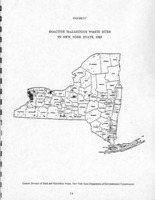 Training Agenda for Safety and Health for Hazardous Waste Site Personnel This extract from a 1985 training manual offers the agenda for a three-day training course on 'Safety and Health for Hazardous Waste Site Personnel' at Hunter College's School of Health Science. The focus on hazardous waste would become an important component of the college's Center for Occupational and Environmental Health, which would begin to take form in the late 1980s under the direction of Dr. David Kotelchuck, a frequent presenter during this course. Officially founded in 1990, the COEH spent decades dedicating itself to promoting community and workplace health throughout the New York area. It offered courses on topics ranging from asthma to ergonomics for unions, neighborhood groups, public employees, and others.
 -
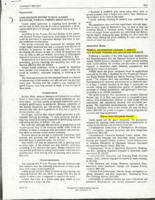 "Federal Government Awards 11 Grants for Worker Training and Education Projects" This article from the Occupational Health & Safety Reporter announces a number of grants awarded by the National Institute for Environmental Health Sciences in 1987. Included among these was one grant for a consortium based out of Rutgers that focused on hazardous waste worker training and education. The New York affiliate of this group was a nascent collective out of Hunter College that would shortly become the college's Center for Occupational and Environmental Health (COEH). Officially founded in 1990, the COEH spent decades dedicating itself to promoting community and workplace health throughout the New York area. It offered courses on topics ranging from asthma to ergonomics for unions, neighborhood groups, public employees, and others.
 -
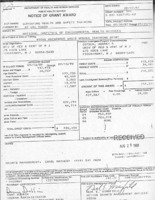 Notice of Grant Award (1989) In the late 1980s, a group at Hunter College led by Professor David Kotelchuck joined a New Jersey-based consortium working on hazardous materials and emergency response training. This grant award notice for that group--with $63,816 allotted to Hunter College--came from the National Institute of Environmental Health Sciences and marked a continuation of the group's first large grant received in 1987. The award was later used to demonstrate that the future center had a secure funding stream. Shortly thereafter, in 1990, it was officially named the Center for Occupational and Environmental Health (COEH). The group spent decades dedicating itself to promoting community and workplace health throughout the New York area. It offered courses on topics ranging from asthma to ergonomics for unions, neighborhood groups, public employees, and others.
 -
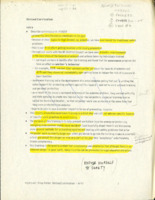 Revised Curriculum for Carpenter's Training This sheet, annotated by an instructor at Hunter College's Center for Environmental and Occupational Health (COEH), offers the breakdown of an introduction prepared for a carpenters' training course in the Spring of 1991. The purpose of the training was to help prevent workplace injuries by discussing some of the myths surrounding accidents within the trade and ways in which to prevent them. The Center's work with the carpenters comprised just one group out of many with which they worked with over the years. Officially founded in 1990, the COEH spent decades dedicating itself to promoting community and workplace health throughout the New York area. It offered courses on topics ranging from asthma to ergonomics for unions, neighborhood groups, public employees, and others.
 -
 "Right to Breathe/Right to Know: Industrial Air Pollution in Greenpoint-Williamsburg" This executive summary is an excerpt from a larger report on industrial air pollution in Greenpoint-Williamsburg produced by Hunter College's Center for Occupational and Environmental Health (COEH) in 1992. In addition to a brief analysis of the Brooklyn neighborhood's air quality, the report offers suggestions for clean-up. Officially founded in 1990, the COEH spent decades dedicating itself to promoting community and workplace health throughout the New York area. It offered courses on topics ranging from asthma to ergonomics for unions, neighborhood groups, public employees, and others.
 -
 "Upstairs, Downstairs: Perchloroethylene in the Air in Apartments above New York City Dry Cleaners" This is an extract from an October 1995 report detailing the prevalence of perchloroethylene (or "perc") in the air in New York City apartments situated above dry cleaners. Perc, a potentially toxic chemical, had been the main solvent used for dry cleaning. Though written by the Consumers Union, Hunter College's Center for Environmental and Occupational Health (COEH) provided the technical assistance for the report which included measuring the data analyzed in the paper. Officially founded in 1990, the COEH spent decades dedicating itself to promoting community and workplace health throughout the New York area. It offered courses on topics ranging from asthma to ergonomics for unions, neighborhood groups, public employees, and others.
 -
 Meeting the Urban Health Challenge: Southern Bronx Community Tour Briefing Booklet Prepared by Hunter College's Center for Occupational and Environmental Health (COEH) in 1998, this booklet was created to introduce residents of two community districts in the Southern Bronx to important issues of public health in their neighborhoods. In addition to selected health facts (e.g. asthma, lead poisoning prevalence), the book offers a brief overview of the area's physical environment. Though the Center frequently worked with labor unions, public employees, and college students, its community outreach efforts--particularly in underserved areas such as the South Bronx--marked its most direct work with the general public in the New York City area. Officially founded in 1990, the COEH spent decades dedicating itself to promoting community and workplace health throughout the New York area. It offered courses on topics ranging from asthma to ergonomics for unions, neighborhood groups, public employees, and others.
 -
 COEH Staff Retreat Summary and Follow-up (2002) This document offers summary of a 2002 staff retreat of members of Hunter College's Center for Occupational and Environmental Health (COEH). At the retreat, staff members outlined what they considered to be the Center's largest issues, their future goals, and proposed strategies for achieving them. Though the Center was active for decades, it reached its peak (in terms of projects and team size) around the time of this retreat in the early-2000s. Officially founded in 1990, the COEH spent decades dedicating itself to promoting community and workplace health throughout the New York area. It offered courses on topics ranging from asthma to ergonomics for unions, neighborhood groups, public employees, and others.
 -
 COEH Project Funding from 1999-2001 These pages document the various projects that Hunter College's Center for Occupational and Environmental Health (COEH) worked on between 1999 and 2001. In addition to listing funding totals and sources, the sheet includes the Center's various partners, the goals of each project, and the progress made as of July 1999. As made evident here, COEH was involved in a variety of efforts that teamed them with labor unions, public employees, college students, and community groups, all in pursuit of increasing public health awareness at work and home. Projects covered such diverse topics as asthma and childhood lead poisoning to hazardous materials disposal.
 -
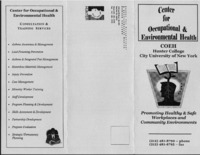 Center for Occupational and Environmental Health ( COEH) Brochure This brochure from the early 2000s outlines many of the programs offered by Hunter College's Center for Occupational and Environmental Health (COEH). Included among these were asthma education, community health worker training, and lead poisoning prevention programs. The Center, formally created in 1990, worked with community groups, unions, public employees, CUNY students, and more throughout their many initiatives across New York City and state.
 -
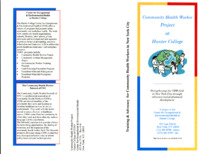 Community Health Worker Project Brochure This brochure advertises the "Community Health Worker Project" run by Hunter College's Center for Environmental and Occupational Health (COEH). The project, one of COEH's major initiatives, recruited local residents from New York City neighborhoods for an extensive 350-hour curriculum that educated participants on the topic of asthma, its management, assessment, and remediation. Following their training, these health workers were entrusted with providing outreach to their communities, serving as a "vital link between health care providers, community organizations, and the communities they serve." In April 2000, the program commenced with an initial class of 15 health workers from a variety of community groups. Formally established in 1990 by CUNY's Board of Trustees, the Hunter College Center for Occupational and Environmental Health (COEH) was founded with the mission "to promote community and workplace health" across the New York metropolitan area. Working with community groups, unions, governmental agencies, private employers, and educational institutions, the Center educated hundreds of thousands over the course of its history.
 -
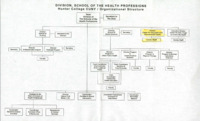 Organizational Structure of Hunter College School of Health Professions This chart offers an overview of the organizational structure of Hunter College's School of Health Professions. The Center for Occupational and Environmental Health (COEH), officially formed in 1990, was granted a fair degree of autonomy over its direction with most of its efforts aimed towards groups and individuals outside of CUNY. Housed at Hunter College's Brookdale campus, COEH actively worked with labor unions, public employees, students, and community groups across a range of programs. These included minority worker training efforts, pest management research, and asthma education initiatives, among several others.
 -
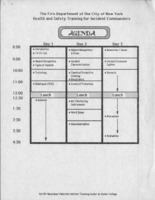 FDNY Health and Safety Training for Incident Commanders In the late-1990s, Hunter College's Center for Occupational and Environmental Health (COEH) trained the entirety of FDNY's leadership over the course of 24 hours on the topics of health and safety for (emergency) incident commanders. These documents come from those sessions, and include several annotated agendas for participants and Center staff, training scenarios, and an organizational chart of the FDNY. Formally established in 1990 by CUNY's Board of Trustees, the Hunter College Center for Occupational and Environmental Health (COEH) was founded with the mission "to promote community and workplace health" across the New York metropolitan area. Working with community groups, unions, governmental agencies, private employers, and educational institutions, the Center educated hundreds of thousands over the course of its history.
 -
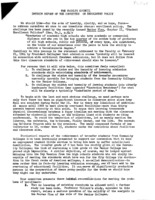 "The Faculty Council Interim Report of the Committee on Enrollment Policy" This April 1964 report shows the deep conflicts within the CCNY faculty with regards to expanding access to new students. Complaining about limited facilities and student unreadiness, the faculty committee resisted both loosening admissions requirements and admitting many of the transfer students coming from CUNY’s new community colleges. At the same time, the committee supported a limited desegregation program, arguing euphemistically for admission of a “special group of pre-matriculated students to be selected from underprivileged areas.”
 -
 "Will Everyman Destroy the University?" In this article, CUNY’s new Vice Chancellor Timothy Healy writes of SEEK as both a practical and theoretical model for open admissions. He cites the success of the program--intended to improve higher education access for the underserved--as proof to skeptical community leaders that the newly expanded CUNY would not become a revolving door that further victimized disadvantaged black and Latino students. In Healy’s view, without “SEEK the idea of open admissions would never have been born [and] without SEEK the operation could well fail.” Short for "Search for Education, Elevation, and Knowledge," SEEK was formally established in 1966 as a CUNY-wide program to assist disadvantaged students who might otherwise lack the opportunity to study at a four-year college.
 -
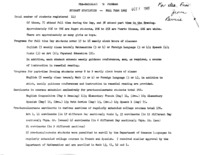 "Pre-Baccalaureate Program Student Statistics -- Fall Term 1965" This early summary of the first semester of SEEK (then known as the Pre-Baccalaureate Program) details the courses, schedules and teachers for the 113 SEEK students in Fall 1965 at CCNY. These first SEEK students took a mix of mainstream and special SEEK course sections. The only course taken by everyone was the 5-credit stretched version of English One (Composition). Anthony Penale and Toni Cade each taught three section of these writing courses. Short for "Search for Education, Elevation, and Knowledge," SEEK was established as a CUNY-wide program to assist disadvantaged students who might otherwise lack the opportunity to study at a four-year college.
451–475 of 1046