CUNY Digital History Archive
Item set
Collection
CUNY Digital History Archive
Items
701–725 of 1046
Advanced search
-
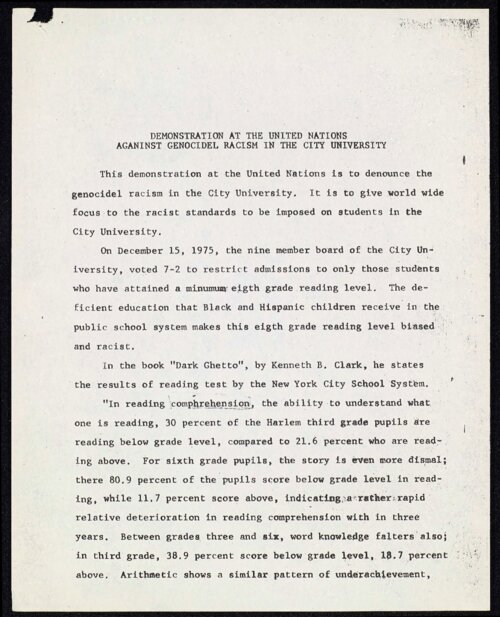 Demonstration at the United Nations Against Genocidal Racism in the City University Demonstrating at the United Nations, the President of the Black Student Union wrote this leaflet to explain how systemic racism in public education denies black and Latino students equal rights to obtain a degree. He pulls from Kenneth Clark's "Dark Ghetto" and studies conducted by David E. Lavin to build the case that admissions rules that disparately bar minority students from admission to CUNY schools tether these students to a cycle of poverty and an infringement of their human rights.
 -
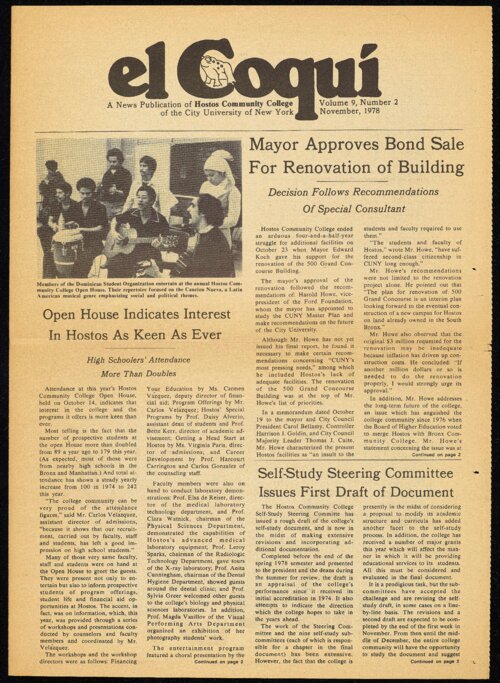 el Coquí, Volume 9, Number 2, November 1978 El Coquí was a college newspaper published monthly by the Office of College Relations and Development at Hostos Community College. This November 1978 issue featured stories including an announcement that funding for the renovation of 500 Grand Concourse was finally approved, an article about how the interest in Hostos Community College dramatically increased amongst high school students, and a discussion about the reaction to debates regarding curriculum decisions. By 1977, the third part of the campaign to save Hostos Community College had picked up momentum. Having extremely poor facilities, the college had acquired a second building across the street from its original location to allow for the expansion of Hostos. However, the 500 Grand Concourse building needed renovations to be useable and the college was denied the funds necessary to prepare and occupy this second building. A fresh wave of organizing by students and faculty drove efforts to enable Hostos to continue to be a hub of opportunity for residents in the South Bronx.
 -
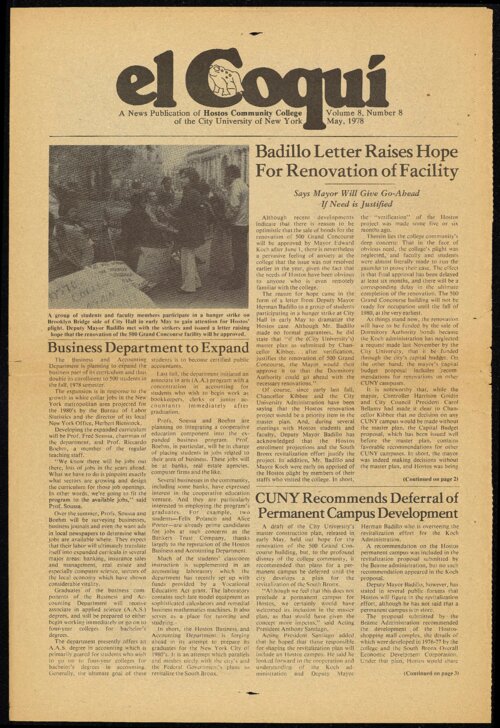 el Coquí, Volume 8, Number 8, May 1978 El Coquí was a college newspaper published monthly by the Office of College Relations and Development at Hostos Community College. This May 1978 issue featured a story announcing that Deputy Mayor Badillo had written a letter that offered some cause for optimism regarding the efforts to secure funding for the renovation of 500 Grand Concourse, a second building for the college. It also announced that the City University Master Plan recommended that the plans for a permanent Hostos campus be deferred to account for broader revitalization plans for the South Bronx. By 1977, the third part of the campaign to save Hostos Community College had picked up momentum. Having extremely poor facilities, the college had acquired a second building across the street from its original location that would allow Hostos to expand. However, the 500 Grand Concourse building needed renovations to be useable but the college had been denied the funds necessary to prepare and occupy their second building. A fresh wave of organizing by students and faculty drove efforts to enable Hostos to continue to be a hub of opportunity for residents of the South Bronx.
 -
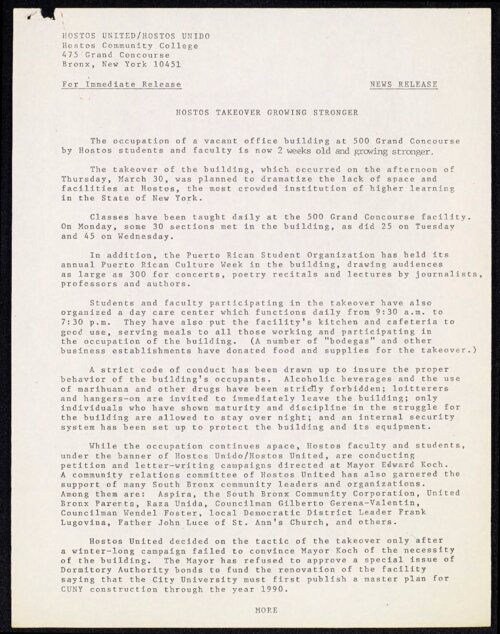 Hostos Takeover Growing Stronger, News Release, Hostos United/Hostos Unido Hostos United/Hostos Unido issued this news release on April 14th of 1978 to describe the current state of the occupation of the 500 Grand Concourse building and to offer context for how the occupation fit into a larger strategy to achieve their goals. The release describes the ways that the space was being used for classes and childcare. It also describes letter writing campaigns and other actions involved in pressuring the Mayor to acquiesce. To draw more public attention to their cause, and to demand needed funding to complete renovations to the building, students and faculty occupied the property to pressure Mayor Koch and other officials to enable bond sales and renovations to proceed. By 1977, the third part of the campaign to save Hostos Community College had picked up momentum. Having extremely poor facilities, the college had acquired a second building across the street from its original location that would allow Hostos to expand. However, the 500 Grand Concourse building needed renovations to be useable but the college had been denied the funds necessary to prepare and occupy their second building. A fresh wave of organizing by students and faculty drove efforts to enable Hostos to continue to be a hub of opportunity for residents of the South Bronx.
 -
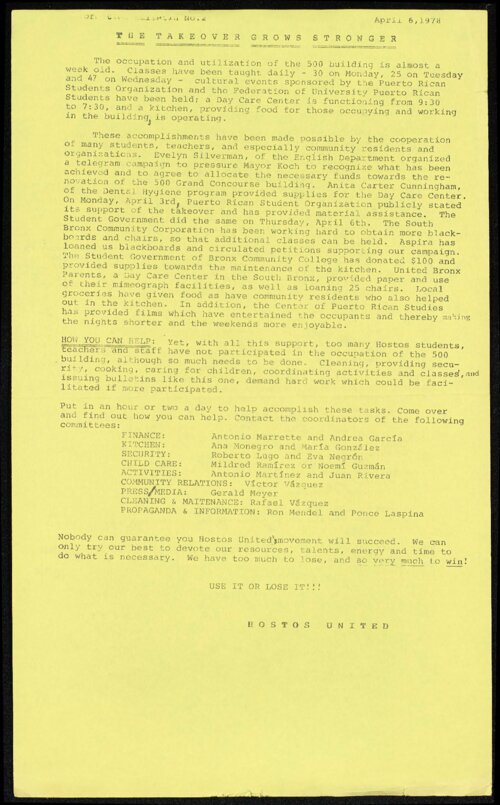 The Takeover Grows Stronger / La Toma del Edificio Está Más Fuerte Hostos United/Hostos Unido issued this bilingual bulletin on April 6, 1978 offering updates on the occupation of the 500 Grand Concourse building. The bulletin describes the ways that the space was being used for classes and childcare. It also implores more members of the Hostos community to participate in the occupation. To draw more public attention to their cause, and to demand needed funding to complete renovations to the building, students and faculty occupied the property to pressure Mayor Koch and other officials to enable bond sales and renovations to proceed. By 1977, the third part of the campaign to save Hostos Community College had picked up momentum. Having extremely poor facilities, the college had acquired a second building across the street from its original location that would allow Hostos to expand. However, the 500 Grand Concourse building needed renovations to be useable and the college was denied the funds necessary to prepare and occupy their second building. A fresh wave of organizing by students and faculty drove efforts to enable Hostos to continue to be a hub of opportunity for residents of the South Bronx.
 -
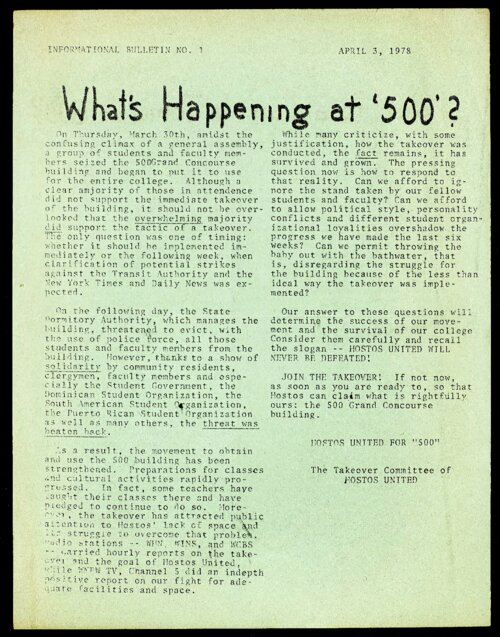 What's Happening at '500'? / Qué Pasa Con la Toma de 500? Hostos United/Hostos Unido issued this bulletin in April of 1978 to explain the occupation of the 500 Grand Concourse building. The bulletin not only encouraged members of the Hostos community to participate in and assist with the effort, but it also alluded to conflict between activists over the timing of the actual takeover. This bulletin encouraged community members to move beyond such conflict to strengthen their efforts. To draw more public attention to their cause, and to demand needed funding to complete renovations to the building, students and faculty occupied the property to run classes and activities to pressure Mayor Koch and other officials to enable bond sales and renovations to proceed. By 1977, the third part of the campaign to save Hostos Community College had picked up momentum. Having extremely poor facilities, the college had acquired a second building across the street from its original location that would allow Hostos to expand. However, the 500 Grand Concourse building needed renovations to be useable but the college had been denied the funds necessary to prepare and occupy their second building. A fresh wave of organizing by students and faculty drove efforts to enable Hostos to continue to be a hub of opportunity for residents of the South Bronx.
 -
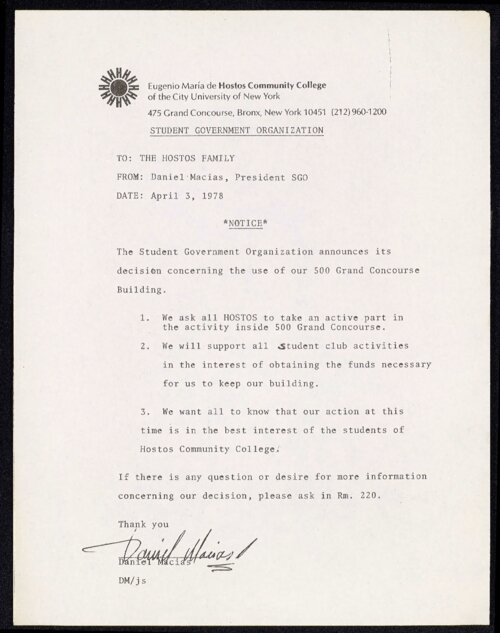 Notice of Support from Student Government Organization Daniel Macias, President of the Student Government Organization, wrote this memo in April 1978 to show support for the occupation of the 500 Grand Concourse building. Macias encouraged members of the Hostos community to participate in and assist with the effort. To draw public attention to their cause, and to demand needed funding to complete renovations to the building, students and faculty occupied the property to run classes and activities to pressure Mayor Koch and other officials to enable bond sales and renovations to proceed. By 1977, the third part of the campaign to save Hostos Community College had picked up momentum. Having extremely poor facilities, the college had acquired a second building across the street from its original location that would allow Hostos to expand. However, the 500 Grand Concourse building needed renovations to be useable but the college had been denied the funds necessary to prepare and occupy their second building. A fresh wave of organizing by students and faculty drove efforts to enable Hostos to continue to be a hub of opportunity for residents of the South Bronx.
 -
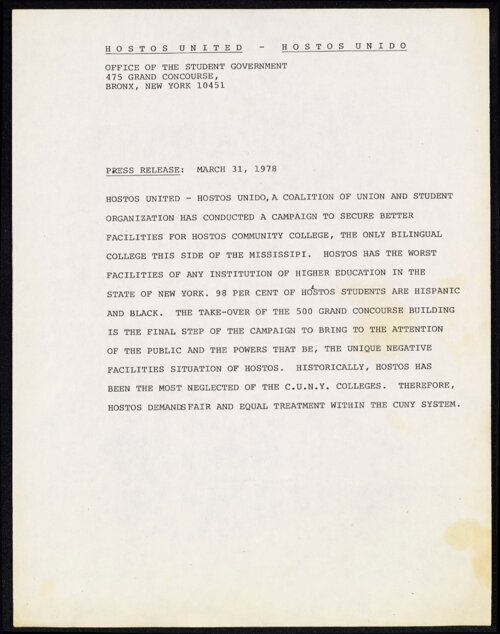 Hostos United/Hostos Unido March 1978 Press Release In March 1978, Hostos United/Hostos Unido issued this press release about the decision to occupy the 500 Grand Concourse building. To draw public attention to their cause and to demand needed funding to complete renovations to the building, students and faculty occupied the property to run classes and activities to pressure Mayor Koch and other officials to enable bond sales and renovations to proceed. By 1977, the third part of the campaign to save Hostos Community College had picked up momentum. Having extremely poor facilities, the college had acquired a second building across the street from its original location that would offer the opportunity for Hostos to expand. However, the 500 Grand Concourse building needed renovations to be useable but the college had been denied the funds necessary to prepare and occupy their second building. A fresh wave of organizing by students and faculty drove efforts to enable Hostos to continue to be a hub of opportunity for residents of the South Bronx.
 -
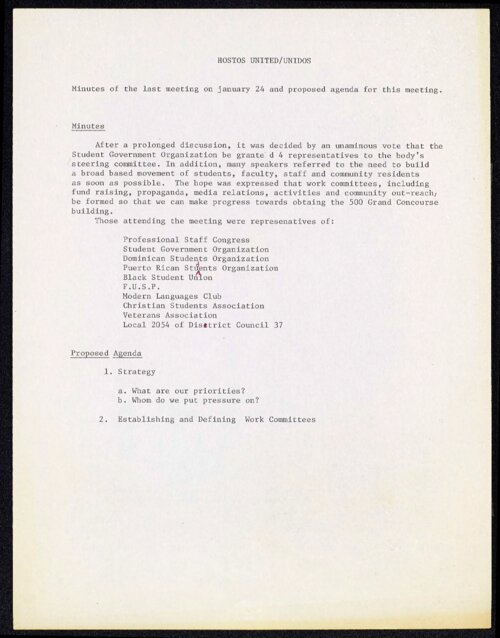 Hostos United/Hostos Unido Meeting Minutes and Proposed Agenda, January 24, 1978 These meeting minutes of the January 24th meeting of Hostos United/Hostos Unido show the plan to assess the group’s priorities and assign work to various committees. This was one of the first working meetings held by Hostos United/Hostos Unido. The group became the central activist group that led much of the campaign to expand to 500 Grand Concourse. It was organized by the Student Government Organization, the Puerto Rican Student Organization, the Dominican Student Organization, the South American Student Union, the Black Student Union, FUSP, the Professional Staff Congress and other unions representing college staff. In 1977, the third part of the campaign to save Hostos Community College was picking up momentum. Having extremely poor facilities, the college had acquired a second building across the street from its original location that would offer the opportunity for Hostos to expand. However, the 500 Grand Concourse building needed renovations to be useable but the college was denied the funds necessary to prepare and occupy their second building. A fresh wave of organizing by students and faculty drove efforts to enable Hostos to continue to be a hub of opportunity for residents of the South Bronx.
 -
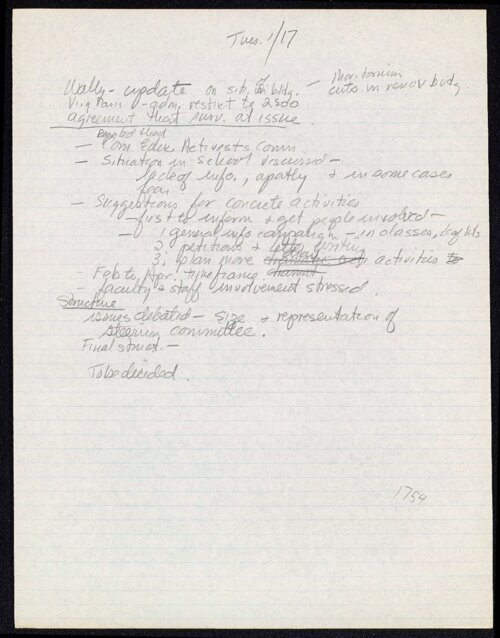 Hostos United/Hostos Unido, January 17, 1978 Meeting Notes These handwritten notes were taken during the meeting in which leaders of student and labor groups decided to form Hostos United/Hostos Unido. The group became the central activist organization that led much of the campaign to expand the college to 500 Grand Concourse. It was organized by the Student Government Organization, the Puerto Rican Student Organization, the Dominican Student Organization, the South American Student Union, the Black Student Union, FUSP, the Professional Staff Congress and other unions representing college staff. These notes capture the various positions of different organization leaders and the distribution of labor that was agreed upon by the participants. They also describe the debates about governing structure, and the initial strategic decisions that would inform activist efforts in the coming three months. In 1977, the third part of the campaign to save Hostos Community College was picking up momentum. Having extremely poor facilities, the college had acquired a second building across the street from its original location that would allow Hostos to expand. However, the 500 Grand Concourse building needed renovations to be useable but the college had been denied the funds necessary to prepare and occupy their second building. A fresh wave of organizing by students and faculty drove efforts to enable Hostos to continue to be a hub of opportunity of residents of the South Bronx.
 -
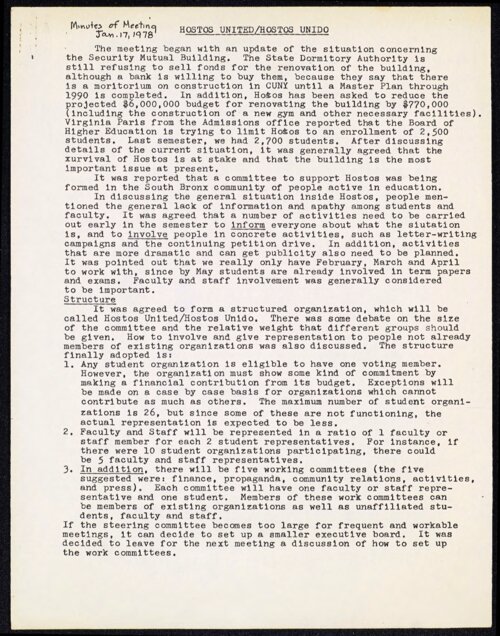 Hostos United/Hostos Unido, January 17, 1978 Meeting Minutes These meeting minutes document the decision to form Hostos United/Hostos Unido on January 17th, 1978. Hostos United/Hostos Unido became the central activist group that led much of the campaign to expand to 500 Grand Concourse. It was organized by the Student Government Organization, the Puerto Rican Student Organization, the Dominican Student Organization, the South American Student Union, the Black Student Union, FUSP, the Professional Staff Congress and other unions representing college staff. These minutes describe the issue about which the group was formed, the debates about governing structure, and the initial strategic decisions that would inform activist efforts in the coming three months. In 1977, the third part of the campaign to save Hostos Community College was picking up momentum. Having extremely poor facilities, the college had acquired a second building across the street from its original location that would allow Hostos to expand. However, the 500 Grand Concourse building needed renovations to be useable but the college had been denied the funds necessary to prepare and occupy their second building. A fresh wave of organizing by students and faculty drove efforts to enable Hostos to continue to be a hub of opportunity for residents in the South Bronx.
 -
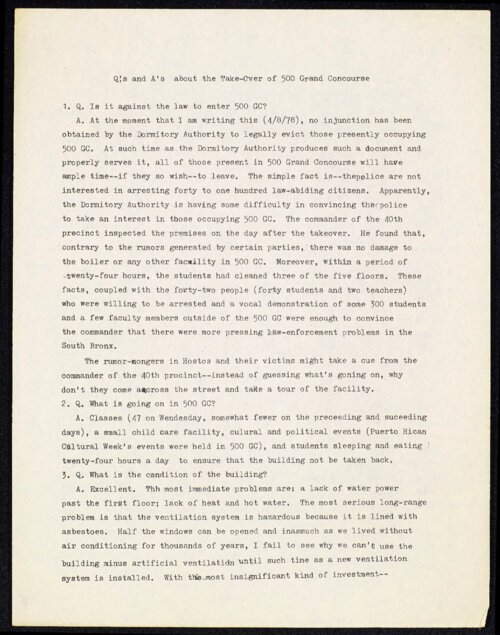 Q's and A's about the Take-Over of 500 Grand Concourse This information sheet produced by Hostos United/Hostos Unido offers students, faculty, and community members basic information about the occupation of the 500 Grand Concourse building in the Spring of 1978. To demand needed funding to complete renovations to the building, students and faculty occupied the property to run classes and activities to pressure Mayor Koch and other officials to enable bond sales and renovations to proceed. By 1977, the third part of the campaign to save Hostos Community College had picked up momentum. Having extremely poor facilities, the college had acquired a second building across the street from its original location that would allow Hostos to expand. However, the 500 Grand Concourse building needed renovations to be useable but the college had been denied the funds necessary to prepare and occupy their second building. A fresh wave of organizing by students and faculty drove efforts to enable Hostos to continue to be a hub of opportunity for residents of the South Bronx. Hostos United/Hostos Unido was an umbrella activist group that led much of the campaign to expand to 500 Grand Concourse. It was organized in January of 1978 by the Student Government Organization, the Puerto Rican Student Organization, the Dominican Student Organization, the South American Student Union, the Black Student Union, FUSP, the Professional Staff Congress and other unions representing college staff.
 -
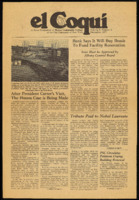 El Coquí, Volume 8, Number 3, December 1977 El Coquí was a college newspaper published monthly by the Office of College Relations and Development at Hostos Community College. This December 1977 issue featured stories describing President Jimmy Carter’s recent visit to the South Bronx as well as a discussion of Bankers Trust intention to purchase bonds in order to finance the renovation of the 500 Grand Concourse building. By 1977, the third part of the campaign to save Hostos Community College had picked up momentum. Having extremely poor facilities, the college had acquired a second building across the street from its original location that would allow Hostos to expand. However, the 500 Grand Concourse building needed renovations to be useable but the college had been denied the funds necessary to prepare and occupy their second building. A fresh wave of organizing by students and faculty drove efforts to enable Hostos to continue to be a hub of opportunity for residents of the South Bronx.
 -
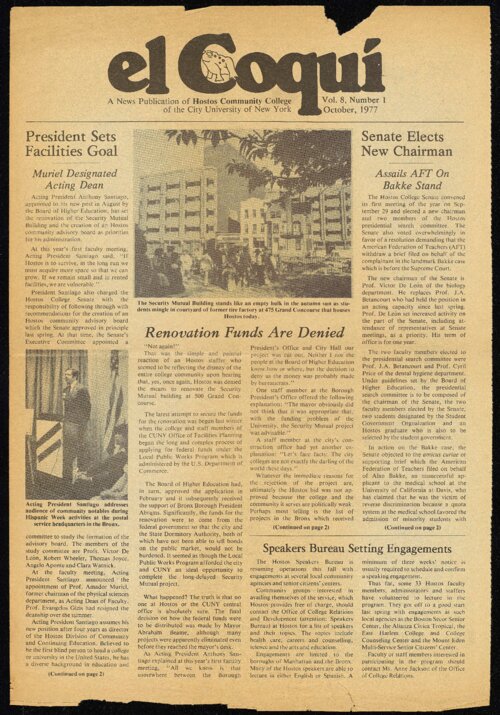 El Coquí, Volume 8, Number 1, October 1977 El Coquí was a college newspaper published monthly by the Office of College Relations and Development at Hostos Community College. This October 1977 issue featured stories on the new agenda of the incoming Acting President of the college Anthony Santiago, in the wake of Candido Antonio de Leon’s resignation. Additionally, this issue described the failure of the school to secure federal funds for the renovation of the 500 Grand Concourse building through the Local Public Works Program. The school had hoped that an application for federal assistance would bring the college needed funding to move forward on its expansion. By 1977, the third part of the campaign to save Hostos Community College had picked up momentum. Having extremely poor facilities, the college had acquired a second building across the street from its original location that would allow Hostos to expand. However, the 500 Grand Concourse building needed renovations to be useable but the college had been denied the funds necessary to prepare and occupy their second building. A fresh wave of organizing by students and faculty drove efforts to enable Hostos to continue to be a hub of opportunity for residents of the South Bronx.
 -
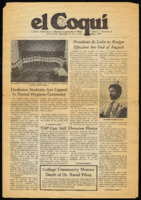 El Coquí, Volume 7, Number 8, May 1977 El Coquí was a college newspaper published monthly by the Office of College Relations and Development at Hostos Community College. This 1977 issue features a story announcing the resignation of Candido Antonio de Leon from his post as President of the college. Having been with the college since its inception, and having played a frequently controversial role in the various campaigns at Hostos, de Leon’s resignation marked an important historical moment for the school.
 -
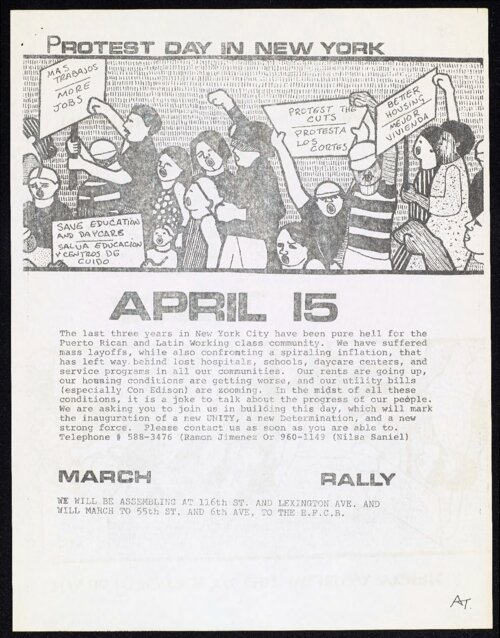 Protest Day in New York / Dia de Protesta en Nueva York This flier announces a citywide protest to the headquarters of the Emergency Financial Control Board (EFCB) in April of 1977. Targeted specifically to Puerto Ricans and the Latino American community, the flier describes rampant financial hardship and the need to protest worsening conditions. The EFCB was the body put in place to manage the budget crisis plaguing New York City. Made up largely of business people and bankers alongside city and state officials, the board was viewed as the driving force behind the massive cuts to public services New Yorkers sustained, including cuts to funding for CUNY. This flier articulates the need for Puerto Ricans and other members of the Latino community to come together to oppose the actions of the EFCB.
 -
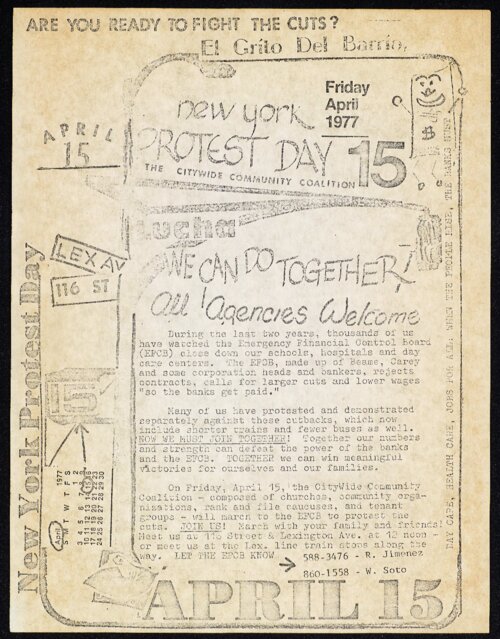 New York Protest Day Announcement This flier, distributed by the Citywide Community Coalition, announces a citywide protest to the headquarters of the Emergency Financial Control Board (EFCB) in April of 1977. The EFCB was the body put in place to manage the budget crisis plaguing New York City. Made up largely of business people and bankers alongside city and state officials, the board was viewed as the driving force behind the massive cuts to public services New Yorkers sustained, including cuts to funding for CUNY. This flier articulates the need for groups from all across the city who have independently been fighting cuts to come together to oppose the actions of the EFCB.
 -
 Gerald Meyer Statement on the 500 Grand Concourse Building Gerald Meyer, a founding faculty member at Hostos Community College and President of the Hostos chapter of the Professional Staff Congress made this statement at a press conference held on March 30, 1976. The statement articulates that facilities at the college are woefully inadequate for the needs of the student body and are inferior to facilities at other City University of New York campuses. Meyer points out that while the 500 Grand Concourse building across the street from the existing college had already been designated for Hostos, the college had not been allowed to move forward on acquiring and renovating the building. By 1977, the third part of the campaign to save Hostos Community College had picked up momentum. Having extremely poor facilities, the college had acquired a second building across the street from its original location that would allow Hostos to expand. However, the 500 Grand Concourse building needed renovations to be useable but the college had been denied the funds necessary to prepare and occupy their second building. A fresh wave of organizing by students and faculty drove efforts to enable Hostos to continue to be a hub of opportunity for residents of the South Bronx.
 -
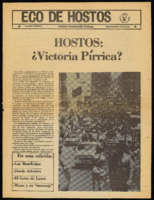 Eco de Hostos: September 1976 / Eco de Hostos: Septiembre 1976 Eco de Hostos is the Hostos Community College bilingual student newspaper. This September-October 1976 issue features stories on the victory of keeping Hostos open alongside massive cuts to its budget. Also included in this issue are discussions of the impacts of retrenchment on the school, an account of the efforts to save the school, veterans’ issues with their benefits, and editorials critiquing the actions of the college’s President, Candido Antonio de Leon.
 -
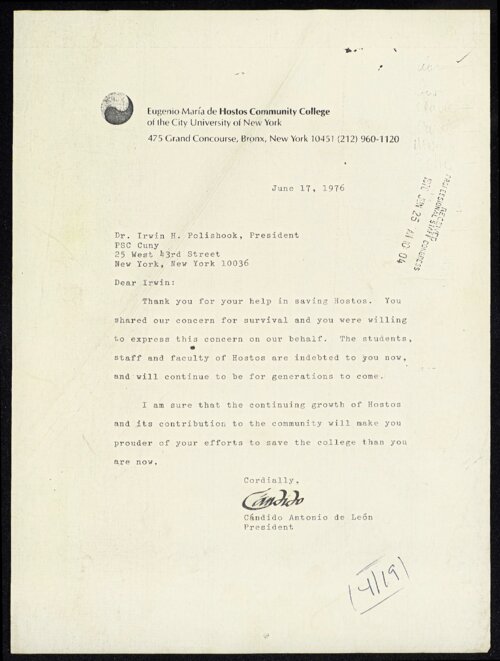 Letter to PSC President Irwin H. Polishook from Candido Antonio de Leon, Hostos President By June of 1976, when it became clear that Hostos Community College would be saved from closure, the President of the college, Candido Antonio de Leon wrote a letter to the President of the Professional Staff Congress, Irwin Polishook, thanking him for his efforts in saving the school. The Professional Staff Congress is the union that represents City University of New York faculty and staff, and they were instrumental in the campaign to prevent Hosotos Community College from closing. In 1975, in response to the New York City fiscal crisis, the City University of New York proposed massive cuts and closures across the campuses in order to dramatically cut spending. Of all the campuses in the system, the administration targeted campuses primarily serving minority communities for their most extreme measures. Hostos Community College was slated to merge with Bronx Community College in order to dramatically cut spending. It was this threat that led to the second iteration of organizing to save Hostos. Determined to preserve Hostos for the South Bronx as a place for students to pursue a bilingual higher education, students, faculty, staff, and community groups joined forces to keep Hostos open for the community.
 -
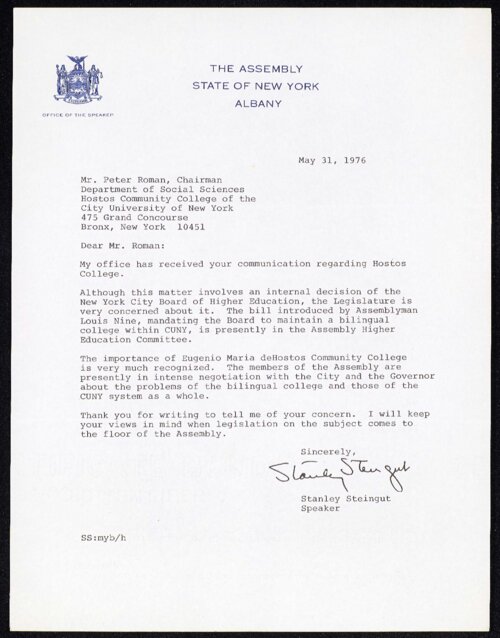 Letter from Assembly Speaker Stanley Steingut to Peter Roman The Speaker of the New York State Assembly, Stanley Steingut, wrote this letter as a response to the chairman of the Social Sciences department at Hostos Community College, Peter Roman. His letter conveys that there is a bill in the Assembly’s Higher Education Committee that would mandate the continuation of a campus dedicated to bilingual higher education. Steingut also conveys that the future of Hostos Community College is important to the legislature. In 1975, in response to the New York City fiscal crisis, the City University of New York proposed massive cuts and closures across the campuses in order to dramatically cut spending. Of all the campuses in the system, the administration targeted campuses primarily serving minority communities for their most extreme measures. Hostos Community College was slated to merge with Bronx Community College in order to dramatically cut spending. It was this threat that led to the second iteration of organizing to save Hostos. Determined to preserve Hostos for the South Bronx as a place for students to pursue a bilingual higher education, students, faculty, staff, and community groups joined forces to keep Hostos open for the community.
 -
 Community Coalition to Save Hostos Organizing Workshop The Community Coalition to Save Hostos hosted an all-day workshop to train members of the South Bronx community in organizing skills, strategies, and challenges in April of 1976. This program outlines the events of the day. The Community Coalition to Save Hostos was a collaboration between student and faculty groups and community organizations dedicated to preventing the closure of Hostos Community College. In 1975, in response to the New York City fiscal crisis, the City University of New York proposed massive cuts and closures across the campuses in order to dramatically cut spending. Of all the campuses in the system, the administration targeted campuses primarily serving minority communities for their most extreme measures. Hostos Community College was slated to merge with Bronx Community College in order to dramatically cut spending. It was this threat that led to the second iteration of organizing to save Hostos. Determined to preserve Hostos for the South Bronx as a place for students to pursue a bilingual higher education, students, faculty, staff, and community groups joined forces to keep Hostos open for the community.
 -
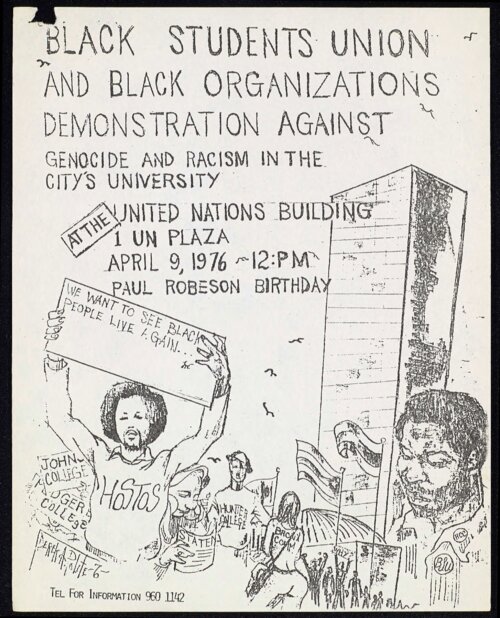 "Black Students Union and Black Organizations Demonstration Against Genocide and Racism" The Black Students Union and other supportive organizations sponsored a demonstration at the United Nations in April of 1976 to oppose the City University of New York’s proposals to close and merge colleges that mainly served minority communities. In 1975, in response to the New York City fiscal crisis, the City University of New York had proposed massive cuts and closures across the campuses in order to dramatically cut spending. The most severe cuts and closures were targeted at campuses that primarily served minority communities. Attempts to close Medgar Evers College, John Jay College, and Hostos Community College sparked widespread activism and numerous demonstrations. This flier advertised one such demonstration.
 -
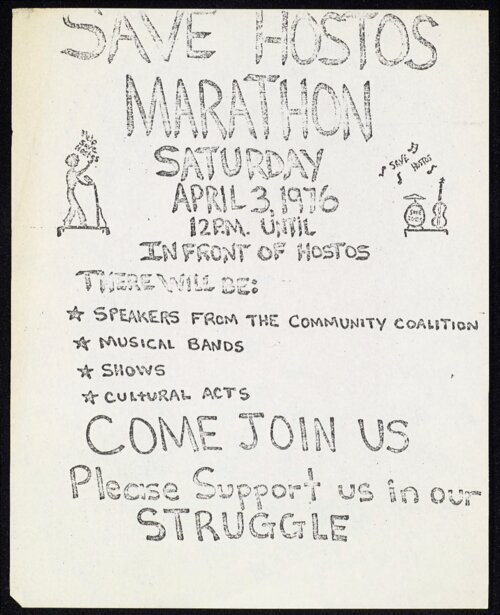 "Save Hostos Marathon" The Community Coalition to Save Hostos deployed a variety of strategies to build awareness and organize against the proposed closure of Hostos Community College. The Community Coalition was comprised of student and faculty groups and community organizations dedicated to keeping the school open. This flier promotes an April 1976 event, featuring speeches and entertainment. In 1975, in response to the New York City fiscal crisis, Hostos Community College was slated to merge with Bronx Community College in order to dramatically cut spending. It was this threat that led to the second iteration of organizing to save Hostos. Determined to preserve Hostos for the South Bronx as a place for students to pursue a bilingual higher education, students, faculty, staff, and community groups joined forces to keep Hostos open for the community.
 -
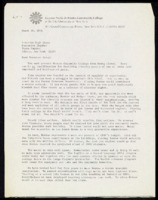 Letter to Governor Carey from Peter Roman, Chairman of Hostos Social Sciences Department The chairman of the Social Sciences department at Hostos Community College penned this letter to Governor Hugh Carey asking him to prevent the closure of Hostos and the merger with Bronx Community College. Professor Peter Roman argues that the college is a crucial part of the South Bronx community, that its success depends on its proximity to people who need it, and that a closure or merger will actually create more costs for the city than savings by depriving the most vulnerable New Yorkers of avenues out of poverty and dependency. In 1975, in response to the New York City fiscal crisis, Hostos Community College was slated to merge with Bronx Community College in order to dramatically cut spending. It was this threat that led to the second iteration of organizing to save Hostos. Determined to preserve Hostos for the South Bronx as a place for students to pursue a bilingual higher education, students, faculty, staff, and community groups joined forces to keep Hostos open for the community.
701–725 of 1046