CUNY Digital History Archive
Item set
Collection
CUNY Digital History Archive
Items
151–175 of 1046
Advanced search
-
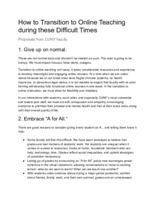 How to Transition to Online Teaching During These Difficult Times: Proposals from the Rank and File Action Group Distributed on March 16, 2020, this online teaching resource was developed by CUNY faculty members from the Rank and File Action group. It offered a series of recommended approaches to the transition to distance learning during the Covid-19 pandemic. Suggestions included rethinking the relationship between onsite and online teaching during times of student anxiety and struggle, with particular attention paid to the role of trauma-informed pedagogy and asynchronous learning styles. Additional recommendations called on faculty to embrace an "A" grade for all students enrolled in their courses, as well as to resist problematic notions of educational normalcy during times of public distress and precarity This item is part of the City University of New York (CUNY) Distance Learning Archive, a group project developed as part of Prof. Matthew K. Gold's Spring 2020 Knowledge Infrastructures seminar in the Ph.D. Program in English at The Graduate Center, CUNY, in partnership with the Interactive Technology and Pedagogy Certificate Program. The project's goal was to resist or trouble the discourse of catastrophe around the shift to online learning caused by the COVID-19 pandemic by documenting the lived experiences of students, faculty, and staff across CUNY's 25 campuses. Further, the project wanted to document the moment of crisis response by taking a critical approach to educational technology.
 -
 John Jay College of Criminal Justice Law and Society Class Project: COVID-19 at CUNY Developed at CUNY's John Jay College of Criminal Justice during the Spring 2020 semester, this Law and Society class project documented the ongoing relationship of student contributors and the broader City University of New York (CUNY) community to the COVID-19 pandemic. The project included multiple themed clusters built around student research groups within the class. Students compiled a timeline comprised of personal reflections on the public health crisis during its first wave of community spread in New York City. Research groups also presented short summaries of critical thematic patterns drawn from interview data, among other resources and contributions related to the intersection of COVID-19 and the CUNY community. This item is part of the City University of New York (CUNY) Distance Learning Archive, a group project developed as part of Prof. Matthew K. Gold's Spring 2020 Knowledge Infrastructures seminar in the Ph.D. Program in English at The Graduate Center, CUNY, in partnership with the Interactive Technology and Pedagogy Certificate Program. The project's goal was to resist or trouble the discourse of catastrophe around the shift to online learning caused by the COVID-19 pandemic by documenting the lived experiences of students, faculty, and staff across CUNY's 25 campuses. Further, the project wanted to document the moment of crisis response by taking a critical approach to educational technology.
 -
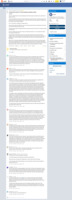 "I really don't know if I can do another semester online" Posted on November 2, 2020, this Reddit thread documented responses to one student's post on the mental and emotional toll that online learning had on them and how their needs have neither been met by their instructors nor the CUNY system. Ensuing responders also questioned whether or not they should put their education on hold and leave New York City altogether. This item is part of the City University of New York (CUNY) Distance Learning Archive, a group project developed as part of Prof. Matthew K. Gold's Spring 2020 Knowledge Infrastructures seminar in the Ph.D. Program in English at The Graduate Center, CUNY, in partnership with the Interactive Technology and Pedagogy Certificate Program. The project's goal was to resist or trouble the discourse of catastrophe around the shift to online learning caused by the COVID-19 pandemic by documenting the lived experiences of students, faculty, and staff across CUNY's 25 campuses. Further, the project wanted to document the moment of crisis response by taking a critical approach to educational technology.
 -
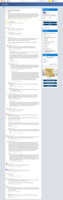 "CUNY should cut the tuition." Posted on July 24, 2020, this Reddit thread recorded conversations around students' desire for the City University of New York (CUNY) to reduce the cost of tuition given the pitfalls of online learning and the diminished return on investment concerning CUNY students' educational experiences during the Covid-19 pandemic. This item is part of the City University of New York (CUNY) Distance Learning Archive, a group project developed as part of Prof. Matthew K. Gold's Spring 2020 Knowledge Infrastructures seminar in the Ph.D. Program in English at The Graduate Center, CUNY, in partnership with the Interactive Technology and Pedagogy Certificate Program. The project's goal was to resist or trouble the discourse of catastrophe around the shift to online learning caused by the COVID-19 pandemic by documenting the lived experiences of students, faculty, and staff across CUNY's 25 campuses. Further, the project wanted to document the moment of crisis response by taking a critical approach to educational technology.
 -
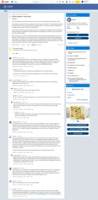 "Online classes = more work" Posted on September 28, 2020, this Reddit thread featured a discussion among City University of New York (CUNY) students about how instructors have disproportionately compensated for the limitations of distance learning by increasing the rigor and volume of their assigned coursework during the Covid-19 pandemic. This item is part of the City University of New York (CUNY) Distance Learning Archive, a group project developed as part of Prof. Matthew K. Gold's Spring 2020 Knowledge Infrastructures seminar in the Ph.D. Program in English at The Graduate Center, CUNY, in partnership with the Interactive Technology and Pedagogy Certificate Program. The project's goal was to resist or trouble the discourse of catastrophe around the shift to online learning caused by the COVID-19 pandemic by documenting the lived experiences of students, faculty, and staff across CUNY's 25 campuses. Further, the project wanted to document the moment of crisis response by taking a critical approach to educational technology.
 -
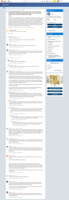 "Is anyone else finding this online semester to be more difficult than usual? I find it to be 3x more harder than regular in-person classes" Posted on September 3, 2020, this Reddit thread featured discussion and critiques of the ways CUNY instructors have increased the workload for students in their classes and rendered classes far more difficult to pass during the pandemic. This item is part of the City University of New York (CUNY) Distance Learning Archive, a group project developed as part of Prof. Matthew K. Gold's Spring 2020 Knowledge Infrastructures seminar in the Ph.D. Program in English at The Graduate Center, CUNY, in partnership with the Interactive Technology and Pedagogy Certificate Program. The project's goal was to resist or trouble the discourse of catastrophe around the shift to online learning caused by the COVID-19 pandemic by documenting the lived experiences of students, faculty, and staff across CUNY's 25 campuses. Further, the project wanted to document the moment of crisis response by taking a critical approach to educational technology.
 -
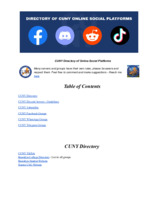 Directory of CUNY Online Social Platforms Created in the form of an open-access Google Document on July 12, 2020, this public directory compiled a list of online social platforms associated with the City University of New York (CUNY) (e.g., Discord servers, Subreddits, Facebook groups, WhatsApp groups, and Telegram) during the COVID-19 pandemic. With a lack of clear guidance from CUNY administration, students turned to each other to crowdsource resources and cope with the emotional and practical challenges of the shift to remote learning. This item is part of the City University of New York (CUNY) Distance Learning Archive, a group project developed as part of Prof. Matthew K. Gold's Spring 2020 Knowledge Infrastructures seminar in the Ph.D. Program in English at The Graduate Center, CUNY, in partnership with the Interactive Technology and Pedagogy Certificate Program. The project's goal was to resist or trouble the discourse of catastrophe around the shift to online learning caused by the COVID-19 pandemic by documenting the lived experiences of students, faculty, and staff across CUNY's 25 campuses. Further, the project wanted to document the moment of crisis response by taking a critical approach to educational technology.
 -
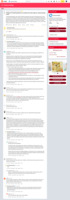 A Professor's Threat: Cameras during Testing Situations Posted on May 5, 2020, this Reddit posts featured student dialogue around whether or not instructors can viably take action against CUNY students who refused to enable their cameras during testing situations. Responders then negotiated the classroom politics and privacy issues that arose during the shift to distance learning, with professors who insisted that their students show their faces during exams to prevent academic dishonesty. This item is part of the City University of New York (CUNY) Distance Learning Archive, a group project developed as part of Prof. Matthew K. Gold's Spring 2020 Knowledge Infrastructures seminar in the Ph.D. Program in English at The Graduate Center, CUNY, in partnership with the Interactive Technology and Pedagogy Certificate Program. The project's goal was to resist or trouble the discourse of catastrophe around the shift to online learning caused by the COVID-19 pandemic by documenting the lived experiences of students, faculty, and staff across CUNY's 25 campuses. Further, the project wanted to document the moment of crisis response by taking a critical approach to educational technology.
 -
 "An Open Letter to CUNY Admins" Posted on July 7, 2020, this Reddit thread recorded one unnamed student's open letter to the City University of New York (CUNY) administration in the interest of drawing critical attention to the persistent mix of unclear, conflicting, or otherwise discordant signals received by CUNY leadership and its student populations following the outbreak of the COVID-19 across the greater NYC area. Scrutinizing CUNY administrators amid a persistent lack of institutional transparency, the student portrayed university communications as "wrought with uncertainty" which contributed to the confusion regarding CUNY's plans for the future. The letter emphasized the effects of these student anxieties and struggles, calling attention in particular to instructors who have reduplicated their teaching practices and set rigid expectations for their online courses. The student also noted the tendency for faculty to compensate for the loss of in-person learning by increasing the workload in their courses, failing to acknowledge the ongoing struggles and embodied learning experiences of their students in the process. This item is part of the City University of New York (CUNY) Distance Learning Archive, a group project developed as part of Prof. Matthew K. Gold's Spring 2020 Knowledge Infrastructures seminar in the Ph.D. Program in English at The Graduate Center, CUNY, in partnership with the Interactive Technology and Pedagogy Certificate Program. The project's goal was to resist or trouble the discourse of catastrophe around the shift to online learning caused by the COVID-19 pandemic by documenting the lived experiences of students, faculty, and staff across CUNY's 25 campuses. Further, the project wanted to document the moment of crisis response by taking a critical approach to educational technology.
 -
 #CancelRent And Eviction Blockades in Brooklyn: Black Queer Women and Femmes Fight for the Right to Housing Written and submitted by Brooklyn College student Emily Batista over the summer of 2020, this autoethnography focused on the eviction defense of 1214 Dean Street in Crown Heights, Brooklyn. Batista framed this research project as a "vessel to explore the growing calls for 'Cancel Rent' as a response to the COVID pandemic," with specific attention to the underrepresented role of Black queer women and femmes in the history of NYC housing struggles. This item is part of the City University of New York (CUNY) Distance Learning Archive, a group project developed as part of Prof. Matthew K. Gold's Spring 2020 Knowledge Infrastructures seminar in the Ph.D. Program in English at The Graduate Center, CUNY, in partnership with the Interactive Technology and Pedagogy Certificate Program. The project's goal was to resist or trouble the discourse of catastrophe around the shift to online learning caused by the COVID-19 pandemic by documenting the lived experiences of students, faculty, and staff across CUNY's 25 campuses. Further, the project wanted to document the moment of crisis response by taking a critical approach to educational technology.
 -
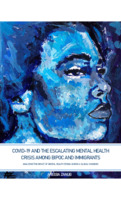 Covid-19 and the Escalating Mental Health Crisis among Bipoc and Immigrants Created by Areeba Zanub in Fall 2020, this digital capstone project examined the COVID-19 pandemic relationship to the rising mental health crisis of BIPOC and immigrant communities. In it, Zanub investigated the role of the "essential worker" with attention to the generational trauma and socioeconomic neglect faced by these underrepresented communities during the COVID-19 pandemic. This item is part of the City University of New York (CUNY) Distance Learning Archive, a group project developed as part of Prof. Matthew K. Gold's Spring 2020 Knowledge Infrastructures seminar in the Ph.D. Program in English at The Graduate Center, CUNY, in partnership with the Interactive Technology and Pedagogy Certificate Program. The project's goal was to resist or trouble the discourse of catastrophe around the shift to online learning caused by the COVID-19 pandemic by documenting the lived experiences of students, faculty, and staff across CUNY's 25 campuses. Further, the project wanted to document the moment of crisis response by taking a critical approach to educational technology.
 -
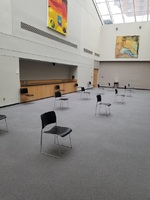 Safety Measures at The Graduate Center Taken by Charles Scott, Director of Facilities at the CUNY Graduate Center between March 2020 and May 2021, these pictures showed some of the ways in which administration and staff worked towards creating the conditions for a safe working and learning environment, as per CDC and NY State guidelines. While only a few essential workers were allowed in/required to enter the building after Governor Cuomo's March 13 executive order, over the following months, Scott and his staff explored a mired of ways in which the Graduate Center (a building where the majority of classrooms and offices have no windows nor access to natural light and air) could be safe for students, staff, and faculty. This item is part of the City University of New York (CUNY) Distance Learning Archive, a group project developed as part of Matthew K. Golds Spring 2020 Knowledge Infrastructures seminar in the Ph.D. Program in English at The Graduate Center, CUNY, in partnership with The Interactive Technology and Pedagogy Certificate Program. The project's goal was to resist or trouble the discourse of catastrophe around the shift to online learning caused by the COVID-19 pandemic by documenting the lived experiences of students, faculty, and staff across CUNY's 25 campuses. Further, we wanted to document the moment of crisis response with a critical approach to educational technology.
 -
 Selected Facebook Posts from CUNY Confessions This item offered a curated selection of informally written Facebook posts documenting student life during the abrupt transition to distance learning in mid-March of 2020. Drawing from the "CUNY Confessions" Facebook group, these compiled posts represented anonymous remarks and reflections submitted by students from multiple City University of New York (CUNY) campuses. Posts were included in the interest of surfacing the unfiltered and unseen domestic, educational, and extracurricular experiences of CUNY students during the university-wide shutdown of physical facilities following the COVID-19 outbreak across NYC. This item is part of the City University of New York (CUNY) Distance Learning Archive, a group project developed as part of Matthew K. Golds Spring 2020 Knowledge Infrastructures seminar in the Ph.D. Program in English at The Graduate Center, CUNY, in partnership with The Interactive Technology and Pedagogy Certificate Program. The project's goal was to resist or trouble the discourse of catastrophe around the shift to online learning caused by the COVID-19 pandemic by documenting the lived experiences of students, faculty, and staff across CUNY's 25 campuses. Further, we wanted to document the moment of crisis response with a critical approach to educational technology.
 -
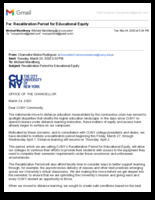 Recalibration Period for Educational Equity As many artifacts in this collection have suggested, the switch to online learning was abrupt for faculty, administration, and students alike. A week to transfer an entire university system to a digital format, especially when many community members did not have reliable internet access, was not enough time. As such, the City University of New York (CUNY) required a second adjustment period, or 'recalibration,' postponing classes yet again for faculty and students to acquire necessary resources for online instruction. Sent on March 23, 2020, this email from Chancellor Rodriguez summarized the rationale behind such a decision. This item is part of the City University of New York (CUNY) Distance Learning Archive, a group project developed as part of Matthew K. Golds Spring 2020 Knowledge Infrastructures seminar in the Ph.D. Program in English at The Graduate Center, CUNY, in partnership with The Interactive Technology and Pedagogy Certificate Program. The project's goal was to resist or trouble the discourse of catastrophe around the shift to online learning caused by the COVID-19 pandemic by documenting the lived experiences of students, faculty, and staff across CUNY's 25 campuses. Further, we wanted to document the moment of crisis response with a critical approach to educational technology.
 -
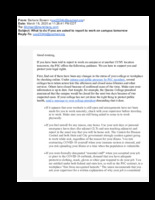 What to Do If You Are Asked to Report to Work on Campus Tomorrow Sent on March 18, 2020, this artifact included a statement by the Professional Staff Congress (PSC) dictating terms for essential workers whose roles required continued in-person work during the official closure of CUNY. Despite its name, distance learning still required many CUNY employees to remain onsite for essential operations. Seeing the possibility for abuse during the pandemic, the PSC released this statement on the final day of CUNY's instructional recess period in support of labor equity during this moment of crisis. This item is part of the City University of New York (CUNY) Distance Learning Archive, a group project developed as part of Matthew K. Golds Spring 2020 Knowledge Infrastructures seminar in the Ph.D. Program in English at The Graduate Center, CUNY, in partnership with The Interactive Technology and Pedagogy Certificate Program. The project's goal was to resist or trouble the discourse of catastrophe around the shift to online learning caused by the COVID-19 pandemic by documenting the lived experiences of students, faculty, and staff across CUNY's 25 campuses. Further, we wanted to document the moment of crisis response with a critical approach to educational technology.
 -
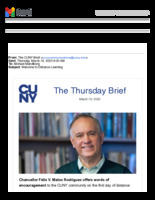 Welcome to Distance Learning The City University of New York (CUNY) traditionally has sent out regular newsletters to inform its community of significant events and accomplishments by its faculty and students. For the first week of remote learning, these newsletters would focus on the nature of online learning. We included the first of many such newsletters in this archive to mark the formal transition to distance learning on March 19, 2020, immediately following CUNY's instructional recess. This item is part of the City University of New York (CUNY) Distance Learning Archive, a group project developed as part of Matthew K. Golds Spring 2020 Knowledge Infrastructures seminar in the Ph.D. Program in English at The Graduate Center, CUNY, in partnership with The Interactive Technology and Pedagogy Certificate Program. The project's goal was to resist or trouble the discourse of catastrophe around the shift to online learning caused by the COVID-19 pandemic by documenting the lived experiences of students, faculty, and staff across CUNY's 25 campuses. Further, we wanted to document the moment of crisis response with a critical approach to educational technology.
 -
 Semester Info: Update 6.5 This series of emails from March 17th, 2020, between department faculty at Queens Colleges' Department of Art provided a snapshot of the sheer administrative burden that instituting remote learning practices was for many faculty. Rather than provide time for an exhaustive analysis of each course's teaching plans, the span of only a few days forced many departments to give a blank check to faculty course design. With little opportunity for oversight, such practices would quickly complicate the resumption of instruction. This item is part of the City University of New York (CUNY) Distance Learning Archive, a group project developed as part of Matthew K. Golds Spring 2020 Knowledge Infrastructures seminar in the Ph.D. Program in English at The Graduate Center, CUNY, in partnership with The Interactive Technology and Pedagogy Certificate Program. The project's goal was to resist or trouble the discourse of catastrophe around the shift to online learning caused by the COVID-19 pandemic by documenting the lived experiences of students, faculty, and staff across CUNY's 25 campuses. Further, we wanted to document the moment of crisis response with a critical approach to educational technology.
 -
 COVID-19 Update (Lehman College Campus COVID-19 Exposure) Sent on March 16, 2020, this email provided official notice of COVID-19 exposure among the Lehman College student body. In conjunction with John Jay College, Brooklyn College, and the College of Staten Island, this announcement marked the spread of COVID-19 to CUNY campuses across four of New York City's boroughs. This item is part of the City University of New York (CUNY) Distance Learning Archive, a group project developed as part of Prof. Matthew K. Gold's Spring 2020 Knowledge Infrastructures seminar in the Ph.D. Program in English at The Graduate Center, CUNY, in partnership with the Interactive Technology and Pedagogy Certificate Program. The project's goal was to resist or trouble the discourse of catastrophe around the shift to online learning caused by the COVID-19 pandemic by documenting the lived experiences of students, faculty, and staff across CUNY's 25 campuses. Further, the project wanted to document the moment of crisis response by taking a critical approach to educational technology.
 -
 Update on Hunter's Response to Coronavirus In the same vein as other official communiques, this email from Hunter College regarding available resources sought to strike a balance between logistical planning and human apathy. Of particular interest was the focus in this message on libraries. With many members of the City University of New York (CUNY) community coming from multi-generational, shared households, the question of space for education was a crucial – but often overlooked – concern. With the brief mention of this concern, we are reminded how the transition to distance learning was not as simple as switching on a computer; the fundamental nature of space for study outside of traditional classrooms was also complicated. This item is part of the City University of New York (CUNY) Distance Learning Archive, a group project developed as part of Prof. Matthew K. Gold's Spring 2020 Knowledge Infrastructures seminar in the Ph.D. Program in English at The Graduate Center, CUNY, in partnership with the Interactive Technology and Pedagogy Certificate Program. The project's goal was to resist or trouble the discourse of catastrophe around the shift to online learning caused by the COVID-19 pandemic by documenting the lived experiences of students, faculty, and staff across CUNY's 25 campuses. Further, the project wanted to document the moment of crisis response by taking a critical approach to educational technology.
 -
 Telecommuting Plans Released on March 15, 2020, this email represented an official communication from City University of New York (CUNY) Chancellor Matos Rodriguez on university guidelines, expectations, and intent to set up telecommunications for CUNY's operations. In this lengthy email, we again see the unique balance of conciliation and professionalism that the CUNY administration had attempted to convey throughout the pandemic. While we are typically used to separating questions of logistics and human effect, the creation of online learning systems during the pandemic revealed such concerns to be hardly disparate. This item is part of the City University of New York (CUNY) Distance Learning Archive, a group project developed as part of Prof. Matthew K. Gold's Spring 2020 Knowledge Infrastructures seminar in the Ph.D. Program in English at The Graduate Center, CUNY, in partnership with the Interactive Technology and Pedagogy Certificate Program. The project's goal was to resist or trouble the discourse of catastrophe around the shift to online learning caused by the COVID-19 pandemic by documenting the lived experiences of students, faculty, and staff across CUNY's 25 campuses. Further, the project wanted to document the moment of crisis response by taking a critical approach to educational technology.
 -
 Covid-19 Update (Lehman College campus) This submission from a member of the CUNY community included an email from Lehman College's President sent the night of March 16, 2020, discussing the consequences of the official shutdown order. In this artifact, we encounter two concerns: logistics and anxiety. On the one hand, the sudden nature of the shutdown limited some college's abilities to fully transition with necessary materials and resources to remote locations, requiring specific extensions to campus attendance to permit effective operations. On the other hand, Lehman College had just received news of student exposure to COVID-19 on its campus, raising fears that the now remote student body would be carrying the infection back to their own homes. This email showed the difficulty of facilitating the transition to distance learning, balancing the twin questions of community support and logistical analysis and needs. This item is part of the City University of New York (CUNY) Distance Learning Archive, a group project developed as part of Prof. Matthew K. Gold's Spring 2020 Knowledge Infrastructures seminar in the Ph.D. Program in English at The Graduate Center, CUNY, in partnership with the Interactive Technology and Pedagogy Certificate Program. The project's goal was to resist or trouble the discourse of catastrophe around the shift to online learning caused by the COVID-19 pandemic by documenting the lived experiences of students, faculty, and staff across CUNY's 25 campuses. Further, the project wanted to document the moment of crisis response by taking a critical approach to educational technology.
 -
 Coronavirus Update: CSI exposure Staten Island, often considered NYC's "forgotten borough," the lesser child of the more famous boroughs of Manhattan, Brooklyn, Queens, and the Bronx, was not able to avoid the pandemic. CSI President William J. Fritz sent this email on March 13, 2020, addressing the first positive case of Covid-19 in the CSI community. Despite the disparate geographies and perceived isolation of CUNY's 25 campuses across the city, the spread of COVID-19 was powerful enough in the end to register in every borough and every CUNY campus, reminding us all of the sheer reach and ubiquity of the disease. This item is part of the City University of New York (CUNY) Distance Learning Archive, a group project developed as part of Prof. Matthew K. Gold's Spring 2020 Knowledge Infrastructures seminar in the Ph.D. Program in English at The Graduate Center, CUNY, in partnership with the Interactive Technology and Pedagogy Certificate Program. The project's goal was to resist or trouble the discourse of catastrophe around the shift to online learning caused by the COVID-19 pandemic by documenting the lived experiences of students, faculty, and staff across CUNY's 25 campuses. Further, the project wanted to document the moment of crisis response by taking a critical approach to educational technology.
151–175 of 1046