CUNY Adjunct Labor
Item set
Collection
CUNY Adjunct Labor
Time Periods
1970-1977 Open Admissions - Fiscal Crisis - State Takeover
1978-1992 Retrenchment - Austerity - Tuition
1993-1999 End of Remediation and Open Admissions in Senior Colleges
2000-2010 Centralization of CUNY
Items
26–50 of 82
Advanced search
-
 "Equal pay for Equal Work" This 1994 flyer, produced by the Adjunct Faculty Association (AFA) at John Jay College of Criminal Justice, was an appeal to the Professional Staff Congress (PSC) to stop supporting a two-tiered salaru system. The document detailed inequities in adjunct compensation. Specific demands included salary adjustments, paid office hours, job security, governance inclusion, job flexibilit, and support for scholarly activities by adjuncts.The Adjunct Faculty Association (AFA) formed shortly after the failure of the Part-time Instructional and Research Staff Union (PTU) to achieve the right to form a separate union.
 -
 Legal Objection to PTU Petition This letter, sent in 1987 from the law offices of Guazzo, Perelson, Rushfield, and Guazzo, to the New York State Public Employment Relations Board (PERB), indicated the Professionals Staff Congress's (PSC) objections to the Part-Time Instructional and Research Staff Union (PTU) petition filed with PERB. The union's objection to the petition was PTU's claim that they were calling for certification when in fact it was a decertification attempt. According to the letter, the petition also omitted a statement offering the reasons for decertification and misrepresented the number of employee signatures. The correspondence requested that the petition be dismissed due to improper filing.The Part-Time Instructional and Research Staff Union (PTU) was a group of part-time faculty members from across CUNY who challenged the PSC for the right to represent adjuncts.
 -
 Why Adjunct Faculty Should Join the PSC This newsletter, written in 1987 by the Adjunct Faculty Association (AFA), formed shortly after the failure of the Part-time Instructional and Research Staff Union (PTU) to achieve the right to form a separate union, called for adjuncts to join the Professional Staff Congress (PSC), citing adjunct voting strength and the growing responsiveness of the union to adjunct needs.The Part-Time Instructional and Research Staff Union (PTU) was a group of part-time faculty members from across CUNY who challenged the PSC for the right to represent adjuncts.
 -
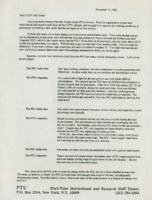 Three more Years of Do-Nothing Representation This November 14, 1986 newsletter, written by members of The Part-Time Instructional and Research Staff Union (PTU) and addressed to CUNY part-timers, outlined the PTU's arguments for, and the PSC's arguments against, the certification of a new part-timers' union. A union authorization card was provided.The Part-Time Instructional and Research Staff Union (PTU) was a group of part-time faculty members from across CUNY who challenged the PSC for the right to represent adjuncts.
 -
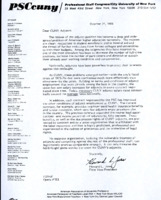 Reasons Adjuncts Should Stay in the PSC This October 21, 1986 letter, written on PSC letterhead and signed by Professional Staff Congress (PSC) Vice President Howard L. Jones, was sent to adjunct faculty. The letter stated that the "terms and conditions" of employment of adjuncts within the CUNY system exceeded national averages and emphasized recent contract improvements, which included employer-paid health insurance and tuition remission. It closed by arguing that a separate organization of adjuncts would compromise the “hard-fought gains won by the union for CUNY’s adjuncts.”
 -
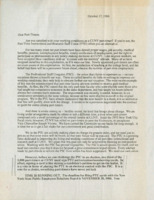 A Vote for Choice This October 17, 1986 letter, written by Jeffrey Gerson, the president of the Part-time Instructional and Research Staff Union (PTU), was a call for adjunct faculty to sign an enclosed card in support of putting the PTU on the ballot to run against the PSC.The Part-Time Instructional and Research Staff Union (PTU) was a group of part-time faculty members from across CUNY who challenged the PSC for the right to represent adjuncts.
 -
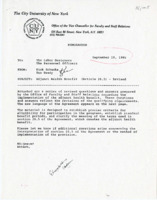 Adjunct Benefits: Questions and Answers This September 18, 1986 memo from the Office of the Vice-Chancellor for Faculty and Staff Relations at CUNY to the Labor Designees and Personnel Officers on the campuses listed a series of revised questions regarding the implementation of adjunct health benefits. The memo presented material designed to establish precise criteria for adjuncts' eligibility and to clarify all terms used in article 26.5. Interestingly, the "six-semester adjunct service requirement" had been corrected to read "two-semester adjunct service requirement" throughout the document.
 -
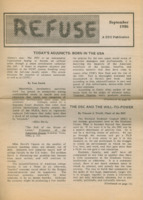 REFUSE: The DSC and the Will to Power "The DSC and the Will to Power," published in the Refuse – a Doctoral Student Council (DSC) publication, was drafted in the fall of 1986 by Vincent Tirelli, Chair of the DSC. The article made the case for creating space for "interdisciplinary activity" as an integral part of receiving a doctoral education. Drawing parallels to the fiscal problems of NYC, Tirelli maintained that student agency and involvement is critical to the health of the institution.
 -
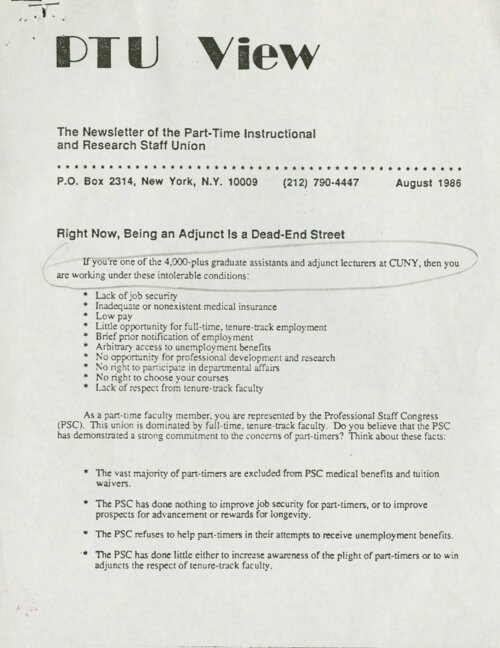 PTU View The August 1986 PTU View newsletter called for adjunct faculty to sign a "union authorization" card. In addition to listing how the Professional Staff Congress (PSC) had failed to represent the interests of contingent faculty, the PTU’s demands outlined in the newsletter included comprehensive healthcare, job security, and equal pay for equal work. The Part-time Instructional and Research Staff Union (PTU), although never formally approved as a collective bargaining agent, consisted of a group of graduate students and part-time faculty who felt that it was impossible to improve the working conditions of adjunct faculty without breaking away from the PSC and forming their own union. They filed a PERB request for representation in 1986 that would ultimately fail.
 -
 Notice of Appearance: PERB and the Part-Time and Instructional Research Staff Union This December 2, 1986 Notice of Hearing, addressed to (but not confirmed by) the City University of New York and the Professional Staff Congress, announced that a hearing would be conducted on February 26, 1987 at the NYS Public Employment Relations Board (PERB). The petitioner was listed as the Part-time Instructional and Research Staff Union (PTU) and the notice stated that the hearing pertains to a Petition for Certification/Decertification. It was signed by Jeffrey Gerson.The Part-time Instructional and Research Staff Union (PTU), although never formally approved as a collective bargaining agent, consisted of a group of graduate students and part-time faculty who felt that it was impossible to improve the working conditions of adjunct faculty without breaking away from the PSC and forming their own union.
 -
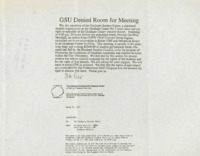 GSU Denied Room for Meeting This document, filed in 1986, included both the original memo from the Graduate Center's Associate Provost for Academic Affairs, Geoffrey Marshall, and the Graduate Student Union’s (GSU) response. In the initial memo, the permission to use a room was withdrawn for the following reason: “The activity for which the GSU wishes to use the room...is not appropriate to the authorized use of Graduate Center facilities by the Graduate Student Union.” The GSU’s response claimed that the action “has shown a cynical contempt for the rights of students and the right of free speech” and announced the group's intention to meet despite the withdrawal of permission.
 -
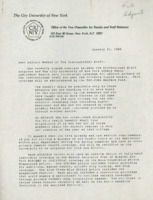 Health Care Benefit Description and Application This January 21, 1986 document, sent to adjunct PSC members, is the first official correspondence from CUNY's Office of the Vice Chancellor for Faculty and Staff Relations which described the details of the fully paid, adjunct health care benefits to be administered by the PSC-CUNY Welfare Fund. This health care coverage was made available to adjunct faculty who taught six or more hours per semester for at least ten consecutive semesters. Enclosed in the letter was an application form to be returned by eligible adjunct faculty.
 -
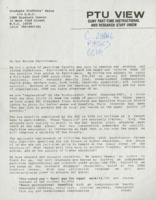 Introduction to, and invitation to join, the PTU View Dissatisfied with their lack of "representation" by the Professional Staff Congress (PSC), the Graduate Students' Union and Doctoral Students' Council founded the CUNY Part-Time Instructional and Research Staff Union in 1986. This letter outlined the group's grievances with the PSC and invited graduate stduent membership. The grievances enumerated included: pro-rated pay, equal pay for equal work, basic professional benefits, full rights to participate in the union, job security, and full faculty privileges.
 -
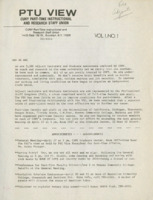 PTU Newsletter (vol. 1., no. 1) The debut newsletter in 1986 of PTU View, was published by a group devoted to fighting for the rights of part-time staff at CUNY. Included were listed contacts at various CUNY campuses; announcements of several Spring meetings; and a detailed enumeration of the group's various positions on adjunct pay and benefits, as well as larger on various political and budgetary issues. The Part-Time Instructional and Research Staff Union (PTU) was a group of part-time faculty members from across CUNY who challenged the PSC for the right to represent adjuncts.
 -
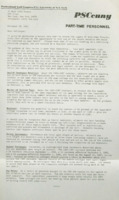 Part-time Personnel: A Newsletter (3) This 1985 Professional Staff Congress (PSC) Part-time Personnel newsletter described the benefits achieved in the PSC-CUNY 1984-1987 contract. Most notably adjuncts who taught six or more hours per semester and at least one course in the same department for at least ten consecutive semesters were eligible to receive health benefits. Additional issues enumerated and described included: tuition remission, workload, salary increases, pay dates, observations, evaluations, and reappointments.
 -
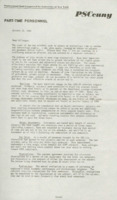 Part-time Personnel: A Newsletter (2) This October 22, 1984 Professional Staff Congress (PSC) Part-time Personnel newsletter reviewed the 1982-84 contractual agreements between the PSC and CUNY. Workloads were described as "the most significant change" and allowed adjunct faculty to teach two courses (not to exceed 9 hours) on one campus and one additional course (not to exceed 6 hours) at a different campus. Additional contract gains included pay dates, observations, reappointments, travel funds, and leaves.
 -
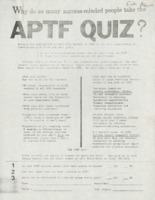 Association of Part-time Faculty Quiz Produced by the Association of Part-time Faculty (APTF) at CUNY, this satirical quiz juxtaposed current CUNY adjunct rights with the recent labor achievements of other institutions of higher education. It also provided a mock balance sheet in which part-time and full-time benefits were compared.
 -
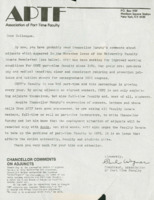 Deconstructing Chancellor Murphy's Comments on Adjuncts The Association of Part-Time faculty (APTF) sent out this correspondence to full -and part-time faculty asking them to send letters to CUNY Chancellor Joseph Murphy who had called the adjunct employment situation “catastrophic” but, according to the APTF, failed to return phone calls and had yet to take any action. The letter stressed that the use of “adjuncts as migrant workers,” exploits adjuncts, full-time faculty, and, students alike and urged the University Faculty Senate to get involved.
 -
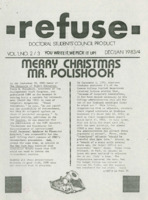 The Refuse: On Representation or Decertification This issue of The Refuse (December 1983-January 1984), a Doctoral Students’ Council newletter, addressed the issue of retrenchment at CUNY, pointing to several articles that had mischaracterized CUNY’s relationship to labor precarity and injustices. In the article “Merry Christmas Mr. Polishook [PSC's president],” Zaccardo and Bunnell unpack the distinction between Graduate Assistant A-lines and adjunct positions, which they claimed in effect amounted to a loss of 3,800 dollars annually per graduate student. Also discussed was the national trend of replacing full-time lines with adjuncts and how that resulted in the further de-professionalizing of the teaching field. The newsletter closed with a call to all graduate students to join the Graduate Student Union (GSU) and provided an agenda for the next meeting, which included discussing a decertification campaign.
 -
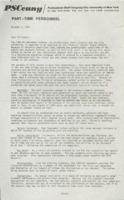 Part-time Personnel: A Newsletter (1) This 1983 Professional Staff Congress (PSC) Part-time Personnel newsletter communicated the 1982-84 contractual agreement between the PSC and CUNY. It advised all adjuncts to understand the contractual language, as that knowledge would allow them to exercise access to the grievance process should they experience any violations. In addition to pay increases, a number of gains were outlined including pay dates, observations, reappointments, travel funds, and leaves.
 -
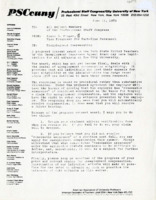 RE: Unemployment Compensation This June 17, 1983, memo, sent to all adjunct members of the Professional Staff Congress (PSC), informed part-time faculty that they had a right to appeal all state unemployment compensation denials since 1978 based on a procedural violation. Despite being unable to offer assurance, the union urged adjuncts to return the verification forms and if they believed they had not received “reasonable assurance” for the fall semester to apply for unemployment benefits.
 -
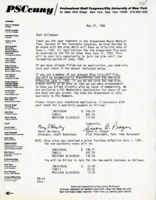 Form Letter for those Expressing Interest in Medical Plan Distributed in late May 1983, this letter was sent to those who had previously expressed an interest in the Professional Staff Congress's (PSC) "Wraparound Major Medical Plan." It included quarterly employee payment costs under the plan.
 -
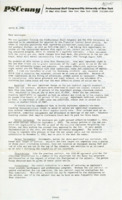 Form Letter Reviewing Provisions of 1983 Contract Agreement Written by Susan Prager, the PSC's Vice President for Part-Time Personnel, this April 1983 letter was distributed to adjunct professors. The letter, intended to inform adjuncts of the terms of the new CUNY agreement which extended retroactively from September 1982 through August 1984, briefly touched on a range of topics including workload, salary, evaluations, and reappointment. Prager closed by encouraging those not yet in the union to join, and for all to report any violations of the rights enumerated in the letter.
 -
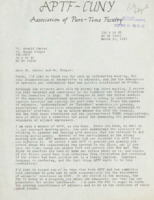 Association of Part-time Faculty: A letter to the PSC In addition to a reference to an earlier meeting, this March 15, 1983 letter from Nancy Erber of the Association of Part-Time Faculty and addressed to Mr. Arnold Cantor (PSC Executive Director) and Ms. Susan Prager (PSC Vice President), assured the Professional Staff Congress (PSC) that there were many people across CUNY committed to fighting for adjunct rights. Of particular interest, the letter closed with several agenda ideas for Ms. Prager, which included an “adjunct news” column in The Clarion, the union newspaper, a committee newsletter to adjuncts, a PSC mini-conference on part-time issues, and an opinion survey.
 -
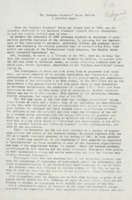 The Graduate Students' Union 1983-84:
A position paper Written by the Graduate Students’ Union (GSU) in 1983-84, this position paper stated the intentions of the recently formed organization. The aims enumerated were to advance the interests of CUNY graduate students as employees (or prospective employees), to work in concert with the Graduate Center's Doctoral Student Council (DSC), and to press for the improvement of the conditions of adjuncts. The position paper also claimed that part-time employees needed their own representation outside of the PSC and, for the first time, the intent to start a decertification campaign was written about and circulated.
The Graduate Students' Union 1983-84:
A position paper Written by the Graduate Students’ Union (GSU) in 1983-84, this position paper stated the intentions of the recently formed organization. The aims enumerated were to advance the interests of CUNY graduate students as employees (or prospective employees), to work in concert with the Graduate Center's Doctoral Student Council (DSC), and to press for the improvement of the conditions of adjuncts. The position paper also claimed that part-time employees needed their own representation outside of the PSC and, for the first time, the intent to start a decertification campaign was written about and circulated.
26–50 of 82