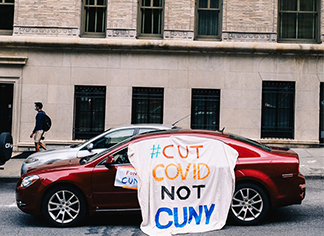
#CutCovidNotCUNY
Item set
Title
Description
The CDLA’s #CutCOVIDNotCUNY collection offers a way of engaging what Donna Haraway terms “staying with the trouble,” of the potential and actualized austerity measures introduced by the CUNY administration at the outset of the pandemic, the intended pathways forward developed by the university and the state, as well as university-wide resistance to such actions. Documenting this moment in CUNY’s history establishes the collective memory of what transpired and allows for considerations of ways forward that take into account both the harried measures implemented and attempted by university and state administrations and the relentless pushback by the CUNY community. This collection can serve to inform, animate, and mobilize the CUNY community, to remind ourselves of the pushback against austerity policies and techno-solutionism in a moment of catastrophic realignment.
In May of 2020, the state and city budget cuts for CUNY were projected as high as $115 million, about 20% of CUNY’s expected budget prior to the pandemic. In this moment, the CUNY administration was keen to dismiss the contingent workforce by the thousands. Reported plans by John Jay College and the College of Staten Island, for example, spoke of the dismissal of 40 percent and 35 percent respectively of their adjunct workforces—some of whom would then consequently be left without health insurance during the largest global health crisis in a century. In swift response to the treatment of its workers at John Jay, seemingly instigated by a memo from Provost Yi Li, CUNY Rank and File activists mobilized against austerity, utilizing Twitter under the username #CUNYstrikeready Rank and File Action to connect with the broader CUNY community through town halls, writing an “Open Letter of Commitment to Resist Cuts at CUNY” signed by faculty CUNY-wide, and establishing a community and public facing presence against racist austerity measures.
Twitter was an important platform for the CUNY community to push against these measures, share personal perspectives, experiences, articles, and resources, and connect with others; and, accordingly, this collection documents various tweets from our community in this moment. Through the hashtag #CutCOVIDNotCUNY, GC PhD candidate and Brooklyn College instructor Mikey Elster used Twitter to draw attention to the important consideration that “the same workers on the front line of fighting the epidemic are our students.” And, the Brooklyn College PSC chapter identified the double-standard of expectations: that CUNY workers are being cut from employment while simultaneously being asked to offer uncompensated labor to the state:
“#CUNY + #SUNY faculty and staff are being asked to donate 15-20 hrs interviewing applicants for NYS Contact Tracing initiative. Vital work for the state's public health, but @NYGovCuomo will you also ensure these higher ed folks have thriving colleges in Fall? #CutCovidNotCUNY.”

Notably early on in planning for the 2020-21 academic year, Brooklyn College mandated that its departments and programs increase class sizes while simultaneously lopping off 25 percent of their course offerings. Yet, in an article for the Gotham Gazette well circulated in the CUNY Twitterverse, Professor Matt Brim of the College of Staten Island explained that such measures are not new to CUNY, stating that the university “has been in a slow-burn, decades-long state of crisis…[and that] the COVID-19 pandemic reveals with new urgency...CUNY’s longstanding, systemic failures.” And, as GC Fellow and City College instructor Harry Blain pointed out on the platform, community colleges and minority-serving institutions such as Medgar Evers College are particularly feeling the brunt:
“@CUNY cuts fall most viciously on community colleges like @bcc_pres and @bmcc_cuny, as well as senior colleges like @NewsatMedgar that serve low-income communities.”
Such harmful preemptive measures sparked protests across both the city and social media, illustrated in tweets by the PSC and others (which included the particularly striking photography by artist Erik McGregor) that address the May Day caravan for adjunct rights, and through the hashtags #CutCovidNotCUNY and #makebillionairespay, among others. Physically at the protests (New York State Senator John C. Liu), on Twitter and online (including Congressmember Alexandria Ocasio Cortez) a number of federal, state, and local government officials and public advocates showed their support for funding CUNY despite plans by Governor Cuomo and university administration. Support for resistance to austerity measures at CUNY and those observed more broadly across the US, and considerations of the taxation of the wealthy as a viable way forward, were made by both local politicians and CUNY faculty.

The CDLA #CutCOVIDNotCUNY collection hopes to act as a useful resource in the fight against austerity politics during the COVID-19 pandemic. Serving as a collection of responses native to the CUNY community, these experiences will therefore be preserved in the CDLA, to retain them in our collective institutional memory. This collection of the CDLA hopes to offer a preemptive measure against neoliberal master narratives through documenting the extensive pushback and activism by the CUNY community in this moment.
This collection is part of the CUNY Distance Learning Archive (CDLA), a group project developed as part of Matthew K. Gold’s Spring 2020 “Knowledge Infrastructures” seminar in the Ph.D. Program in English at The Graduate Center, CUNY, in partnership with The Interactive Technology and Pedagogy Certificate Program. All CDLA collections on the CUNY Digital History Archive website were co-curated by Travis Bartley, Nicole Cote, Zach Muhlbauer, and Stefano Morello (Project Manager).
Language
Contributor
Collection
Time Periods
Items
-
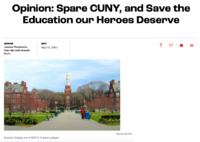 "Spare CUNY, and Save the Education our Heroes Deserve" (City Limits) City Limits article from May 2020, written by three Brooklyn College faculty members, on saving CUNY. The article directly and significantly addressed CUNY students as "heroes" for New York who work in frontline roles: from stocking essentials on shelves, to driving cabs, and delivering food. It speaks to the way their students establish community, and to the significance of funding CUNY in this moment. Like other articles, this piece speaks to the long history of CUNY austerity and its previous status as a free institution. This item is part of the CUNY Distance Learning Archive, a group project developed as part of Matthew K. Golds Spring 2020 Knowledge Infrastructures seminar in the Ph.D. Program in English at The Graduate Center, CUNY, in partnership with The Interactive Technology and Pedagogy Certificate Program. The goal of the project is to resist or trouble the discourse of catastrophe around the shift to online learning caused by the COVID-19 pandemic by documenting the lived experiences of students, faculty, and staff across CUNYs 25 campuses. Further, we want to document the moment of crisis response from a critical approach to educational technology.
 -
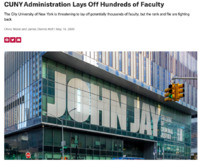 "CUNY Administration Lays Off Hundreds of Faculty" (Left Voice) Left Voice article written in May 2020 by a Graduate Center PhD candidate and City College faculty member. This document addresses CUNY adjunct layoffs, starting with the 400 adjunct employees laid off at John Jay (what was estimated to be 40% of their total faculty at the time). It also points to many administrative and buerucatic aspects of these lay offsfrom the way health care, unemployment, and other benefits will be terminated for contingent members of the CUNY community during a public health crisis, to specific logistics of PSC union and Rank and File action meetings in fighting against widespread firing of contingent labor. This item is part of the CUNY Distance Learning Archive, a group project developed as part of Matthew K. Golds Spring 2020 Knowledge Infrastructures seminar in the Ph.D. Program in English at The Graduate Center, CUNY, in partnership with The Interactive Technology and Pedagogy Certificate Program. The goal of the project is to resist or trouble the discourse of catastrophe around the shift to online learning caused by the COVID-19 pandemic by documenting the lived experiences of students, faculty, and staff across CUNYs 25 campuses. Further, we want to document the moment of crisis response from a critical approach to educational technology.
 -
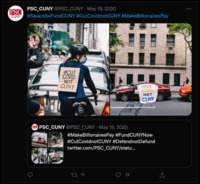 Tweet: #SaveJobsFundCUNY #CutCovidnotCUNY #MakeBillionairesPay This Twitter thread from the Professional Staff Congress documents the caravan to save jobs and fund CUNY; it includes images of protestors on foot, bike, and by car, signaling onlookers to take stock of the #SaveJobsFundCUNY, #CutCovidnotCUNY #MakeBillionairesPay hashtags. This item is part of the CUNY Distance Learning Archive, a group project developed as part of Matthew K. Golds Spring 2020 Knowledge Infrastructures seminar in the Ph.D. Program in English at The Graduate Center, CUNY, in partnership with The Interactive Technology and Pedagogy Certificate Program. The goal of the project is to resist or trouble the discourse of catastrophe around the shift to online learning caused by the COVID-19 pandemic by documenting the lived experiences of students, faculty, and staff across CUNYs 25 campuses. Further, we want to document the moment of crisis response from a critical approach to educational technology.
 -
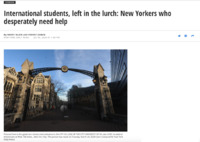 "International students, Left in the Lurch: New Yorkers Who Desperately Need Help" (NY Daily News) This July 2020 NY Daily News article by two CUNY graduate students specifically documented issues faced by CUNY international students during the COVID pandemic, given CUNY's budget cuts, online instruction models, and requirements by the U.S. Department of Homeland Security to maintain residence status in the United States. The article documented the ways some visas were set to be "abruptly terminated" at the end of the academic year and the imperative for international students to be able to remain in the US. This item is part of the City University of New York (CUNY) Distance Learning Archive, a group project developed as part of Prof. Matthew K. Gold's Spring 2020 Knowledge Infrastructures seminar in the Ph.D. Program in English at The Graduate Center, CUNY, in partnership with the Interactive Technology and Pedagogy Certificate Program. The project's goal was to resist or trouble the discourse of catastrophe around the shift to online learning caused by the COVID-19 pandemic by documenting the lived experiences of students, faculty, and staff across CUNY's 25 campuses. Further, the project wanted to document the moment of crisis response by taking a critical approach to educational technology.
 -
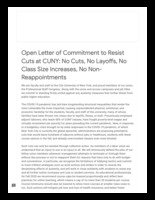 Open Letter of Commitment to Resist Cuts at CUNY: No Cuts, No Layoffs, No Class Size Increases, No Non-Reappointments This widely circulated open letter from Rank and File Action (a group of militant activists at CUNY challenging the culture of austerity in public higher education) argued against budget cuts at CUNY. This document specifically addressed activism in terms specific to the CUNY; it also expressed the need for collective action and "more militant strategies" beyond lobbying in order to secure necessary changes at CUNY. This item is part of the City University of New York (CUNY) Distance Learning Archive, a group project developed as part of Prof. Matthew K. Gold's Spring 2020 Knowledge Infrastructures seminar in the Ph.D. Program in English at The Graduate Center, CUNY, in partnership with the Interactive Technology and Pedagogy Certificate Program. The project's goal was to resist or trouble the discourse of catastrophe around the shift to online learning caused by the COVID-19 pandemic by documenting the lived experiences of students, faculty, and staff across CUNY's 25 campuses. Further, the project wanted to document the moment of crisis response by taking a critical approach to educational technology.
 -
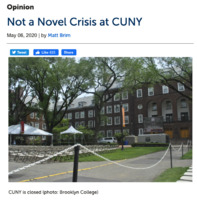 "Not a Novel Crisis at CUNY" (Gotham Gazette) This May 2020 Gotham Gazette article by a CUNY College of Staten Island professor, addressed the ways these austerity measures fit into a longer CUNY history of struggle. The article notes that even before the pandemic, CUNY colleges had struggled to provide sufficient resources needed for its students' education, and connected such struggles to broader city budget cuts in institutions that low-income CUNY communities relied on, for example, the Metropolitan Transit Authority. This item is part of the City University of New York (CUNY) Distance Learning Archive, a group project developed as part of Prof. Matthew K. Gold's Spring 2020 Knowledge Infrastructures seminar in the Ph.D. Program in English at The Graduate Center, CUNY, in partnership with the Interactive Technology and Pedagogy Certificate Program. The project's goal was to resist or trouble the discourse of catastrophe around the shift to online learning caused by the COVID-19 pandemic by documenting the lived experiences of students, faculty, and staff across CUNY's 25 campuses. Further, the project wanted to document the moment of crisis response by taking a critical approach to educational technology.
 -
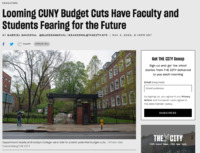 "Looming CUNY Budget Cuts Have Faculty and Students Fearing for the Future" (The City) This May 2020 article in The City on CUNY budget cuts by a reporter who is also a CUNY alum, included testimonials by various CUNY students as well as provided context for the budget cuts in terms of federal and state funding. It also spoke to the need to allocate federal CARES act funding and similar forms of federal support. This item is part of the City University of New York (CUNY) Distance Learning Archive, a group project developed as part of Prof. Matthew K. Gold's Spring 2020 Knowledge Infrastructures seminar in the Ph.D. Program in English at The Graduate Center, CUNY, in partnership with the Interactive Technology and Pedagogy Certificate Program. The project's goal was to resist or trouble the discourse of catastrophe around the shift to online learning caused by the COVID-19 pandemic by documenting the lived experiences of students, faculty, and staff across CUNY's 25 campuses. Further, the project wanted to document the moment of crisis response by taking a critical approach to educational technology.
 -
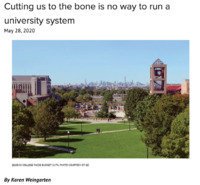 "Cutting Us to the Bone is No Way to Run a University System" (Queens Daily Eagle) This Queens Eagle article, written in May 2020 by a Queens College professor in the English Department, describes budget cuts at CUNY in general and i as they relate to the history of Queens College in particular. The focus on a single CUNY college includes historical quotes from various moments in Queens College's history where cuts were expected to be made, including one by a former Queens College president explaining that there was nothing left to cut at the college and another from a contingent faculty member asking in 1989 for a tax on the rich in 1989, a parallel to such calls 30 years later. This item is part of the City University of New York (CUNY) Distance Learning Archive, a group project developed as part of Prof. Matthew K. Gold's Spring 2020 Knowledge Infrastructures seminar in the Ph.D. Program in English at The Graduate Center, CUNY, in partnership with the Interactive Technology and Pedagogy Certificate Program. The project's goal was to resist or trouble the discourse of catastrophe around the shift to online learning caused by the COVID-19 pandemic by documenting the lived experiences of students, faculty, and staff across CUNY's 25 campuses. Further, the project wanted to document the moment of crisis response by taking a critical approach to educational technology.
 -
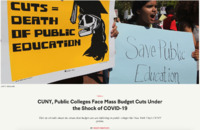 "CUNY, Public Colleges Face Mass Budget Cuts Under the Shock of COVID-19" (Teen Vogue) This September 2020 Teen Vogue article written by a CUNY Graduate Center PhD student in Anthropology about the CutCovidNotCUNY movement provides national acknowledgement in a widely circulated public facing magazine with a younger reader base to the austerity measures being faced by CUNY. The article spoke directly to the social and racial injustice embodied in these budget cuts and worked to inspire student activism at other higher education institutions, asking readers to imagine their idea of a dream campus. This item is part of the City University of New York (CUNY) Distance Learning Archive, a group project developed as part of Prof. Matthew K. Gold's Spring 2020 Knowledge Infrastructures seminar in the Ph.D. Program in English at The Graduate Center, CUNY, in partnership with the Interactive Technology and Pedagogy Certificate Program. The project's goal was to resist or trouble the discourse of catastrophe around the shift to online learning caused by the COVID-19 pandemic by documenting the lived experiences of students, faculty, and staff across CUNY's 25 campuses. Further, the project wanted to document the moment of crisis response by taking a critical approach to educational technology.
 -
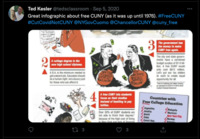 Tweet: Infographic About Free CUNY (as it was up until 1976) This tweet from May 2020 is an infographic, created by the CUNY activist group FreeCUNY, and tweeted out by a CUNY faculty member, depicted the history of CUNY's costs to students until the mid-1970s and the social and economic benefits New York City reaped from its free tuition policy. This item is part of the City University of New York (CUNY) Distance Learning Archive, a group project developed as part of Prof. Matthew K. Gold's Spring 2020 Knowledge Infrastructures seminar in the Ph.D. Program in English at The Graduate Center, CUNY, in partnership with the Interactive Technology and Pedagogy Certificate Program. The project's goal was to resist or trouble the discourse of catastrophe around the shift to online learning caused by the COVID-19 pandemic by documenting the lived experiences of students, faculty, and staff across CUNY's 25 campuses. Further, the project wanted to document the moment of crisis response by taking a critical approach to educational technology.
 -
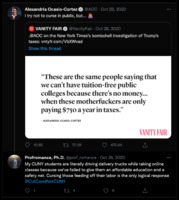 Tweet: My CUNY students are literally driving delivery trucks while taking online classes This tweet from August 2020 by a CUNY faculty member responded to US Representative Alexandria Ocasio-Cortez support for CUNY by highlighting CUNY students' essential labor while they are trying to learn at CUNY in the midst of the pandemic. This item is part of the City University of New York (CUNY) Distance Learning Archive, a group project developed as part of Prof. Matthew K. Gold's Spring 2020 Knowledge Infrastructures seminar in the Ph.D. Program in English at The Graduate Center, CUNY, in partnership with the Interactive Technology and Pedagogy Certificate Program. The project's goal was to resist or trouble the discourse of catastrophe around the shift to online learning caused by the COVID-19 pandemic by documenting the lived experiences of students, faculty, and staff across CUNY's 25 campuses. Further, the project wanted to document the moment of crisis response by taking a critical approach to educational technology.
 -
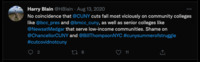 Tweet: Cuts fall most viciously on community colleges This tweet from August 2020 posted by a Graduate Center Ph.D. candidate spoke out against budget cuts at CUNY, especially those affecting community colleges and low-income students in particular. Focusing specifically on these issues was particularly relevant because CUNY's seven community colleges are often left out of such discussions, in favor of a focus on CUNY's eleven senior colleges. This item is part of the City University of New York (CUNY) Distance Learning Archive, a group project developed as part of Prof. Matthew K. Gold's Spring 2020 Knowledge Infrastructures seminar in the Ph.D. Program in English at The Graduate Center, CUNY, in partnership with the Interactive Technology and Pedagogy Certificate Program. The project's goal was to resist or trouble the discourse of catastrophe around the shift to online learning caused by the COVID-19 pandemic by documenting the lived experiences of students, faculty, and staff across CUNY's 25 campuses. Further, the project wanted to document the moment of crisis response by taking a critical approach to educational technology.
 -
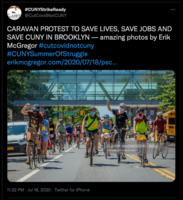 Tweet: CARAVAN PROTEST TO SAVE LIVES, SAVE JOBS AND SAVE CUNY IN BROOKLYN This tweet from May 2020 described auto caravan protests against cuts at CUNY. It documented community-wide activism and solidarity in support of CUNY's long fight against austerity policies. This item is part of the City University of New York (CUNY) Distance Learning Archive, a group project developed as part of Prof. Matthew K. Gold's Spring 2020 Knowledge Infrastructures seminar in the Ph.D. Program in English at The Graduate Center, CUNY, in partnership with the Interactive Technology and Pedagogy Certificate Program. The project's goal was to resist or trouble the discourse of catastrophe around the shift to online learning caused by the COVID-19 pandemic by documenting the lived experiences of students, faculty, and staff across CUNY's 25 campuses. Further, the project wanted to document the moment of crisis response by taking a critical approach to educational technology.
 -
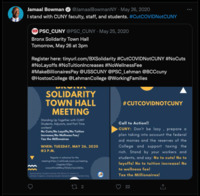 Tweet: I stand with CUNY faculty, staff, and students. This tweet, posted in May 2020 by US Representative Jamaal Bowman, is an indication of an expression of solidarity for CUNY at the federal level. This item is part of the City University of New York (CUNY) Distance Learning Archive, a group project developed as part of Prof. Matthew K. Gold's Spring 2020 Knowledge Infrastructures seminar in the Ph.D. Program in English at The Graduate Center, CUNY, in partnership with the Interactive Technology and Pedagogy Certificate Program. The project's goal was to resist or trouble the discourse of catastrophe around the shift to online learning caused by the COVID-19 pandemic by documenting the lived experiences of students, faculty, and staff across CUNY's 25 campuses. Further, the project wanted to document the moment of crisis response by taking a critical approach to educational technology.
 -
 Tweet: PSC Thanks Sen. John C. Liu for Showing support for the Caravan to Stop Layoffs and Fund CUNY This tweet by the CUNY Professional Staff Congress (the union of CUNY faculty, staff, and graduate students) from May 2020 recognized New York State Senator John C. Liu's support for the May Day caravan and for funding for CUNY, an example of an expression of solidarity for CUNY at the state level This item is part of the City University of New York (CUNY) Distance Learning Archive, a group project developed as part of Prof. Matthew K. Gold's Spring 2020 Knowledge Infrastructures seminar in the Ph.D. Program in English at The Graduate Center, CUNY, in partnership with the Interactive Technology and Pedagogy Certificate Program. The project's goal was to resist or trouble the discourse of catastrophe around the shift to online learning caused by the COVID-19 pandemic by documenting the lived experiences of students, faculty, and staff across CUNY's 25 campuses. Further, the project wanted to document the moment of crisis response by taking a critical approach to educational technology.
 -
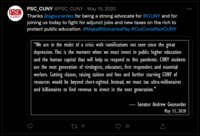 Tweet: Thanks @agounardes for being a strong advocate for @CUNY and for joining us today to fight for adjunct jobs and new taxes on the rich to protect public education. This tweet by the CUNY Professional Staff Congress (the union of CUNY faculty, staff, and graduate students) from May 2020 recognized New York State Senator Andrew Gounardes's support for funding CUNY, an example of an expression of solidarity for CUNY at the state level. This item is part of the City University of New York (CUNY) Distance Learning Archive, a group project developed as part of Prof. Matthew K. Gold's Spring 2020 Knowledge Infrastructures seminar in the Ph.D. Program in English at The Graduate Center, CUNY, in partnership with the Interactive Technology and Pedagogy Certificate Program. The project's goal was to resist or trouble the discourse of catastrophe around the shift to online learning caused by the COVID-19 pandemic by documenting the lived experiences of students, faculty, and staff across CUNY's 25 campuses. Further, the project wanted to document the moment of crisis response by taking a critical approach to educational technology.
 -
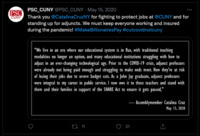 Tweet: Thank you @CatalinaCruzNY for fighting to protect jobs at @CUNY and for standing up for adjuncts This tweet by the CUNY Professional Staff Congress (the union of CUNY faculty, staff, and graduate students) from May 2020 ecognized New York State Assemblymember Catalina Cruz's support for funding CUNY, an example of an expression of solidarity for CUNY at the state level. This item is part of the City University of New York (CUNY) Distance Learning Archive, a group project developed as part of Prof. Matthew K. Gold's Spring 2020 Knowledge Infrastructures seminar in the Ph.D. Program in English at The Graduate Center, CUNY, in partnership with the Interactive Technology and Pedagogy Certificate Program. The project's goal was to resist or trouble the discourse of catastrophe around the shift to online learning caused by the COVID-19 pandemic by documenting the lived experiences of students, faculty, and staff across CUNY's 25 campuses. Further, the project wanted to document the moment of crisis response by taking a critical approach to educational technology.
 -
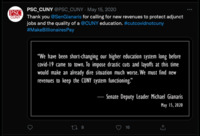 Tweet: Thank you @SenGianaris for calling for new revenues to protect adjunct jobs and the quality of a @CUNY education. This tweet by the CUNY Professional Staff Congress (the union of CUNY faculty, staff, and graduate students) from May 2020 recognized New York State Senator Michael Gianaris's public support for funding CUNY, a important example of an expression of solidarity with CUNY at the state level. This item is part of the City University of New York (CUNY) Distance Learning Archive, a group project developed as part of Prof. Matthew K. Gold's Spring 2020 Knowledge Infrastructures seminar in the Ph.D. Program in English at The Graduate Center, CUNY, in partnership with the Interactive Technology and Pedagogy Certificate Program. The project's goal was to resist or trouble the discourse of catastrophe around the shift to online learning caused by the COVID-19 pandemic by documenting the lived experiences of students, faculty, and staff across CUNY's 25 campuses. Further, the project wanted to document the moment of crisis response by taking a critical approach to educational technology.
 -
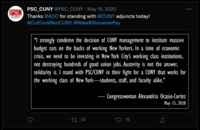 Tweet: Thanks @AOC for Standing with @CUNY Adjuncts This tweet from the CUNY Professional Staff Congress (the union of CUNY faculty, staff and graduate students) from May 2020, recognized U.S. Representative Alexandria Ocasio-Cortez's public support for funding CUNY, a perhaps too rare example from a federal official of active solidarity with CUNY's struggles. This item is part of the City University of New York (CUNY) Distance Learning Archive, a group project developed as part of Prof. Matthew K. Gold's Spring 2020 Knowledge Infrastructures seminar in the Ph.D. Program in English at The Graduate Center, CUNY, in partnership with the Interactive Technology and Pedagogy Certificate Program. The project's goal was to resist or trouble the discourse of catastrophe around the shift to online learning caused by the COVID-19 pandemic by documenting the lived experiences of students, faculty, and staff across CUNY's 25 campuses. Further, the project wanted to document the moment of crisis response by taking a critical approach to educational technology.
 -
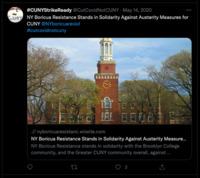 Tweet: NY Boricua Resistance Stands in Solidarity Against Austerity Measures for CUNY This tweet from May 2020 addressed the New York Boricua [Puerto Rican] Resistance's support for funding CUNY. It is a representation of the external solidarity for CUNY expressed in this moment, connecting CUNY to the broader community and the fight for social justice. This item is part of the City University of New York (CUNY) Distance Learning Archive, a group project developed as part of Prof. Matthew K. Gold's Spring 2020 Knowledge Infrastructures seminar in the Ph.D. Program in English at The Graduate Center, CUNY, in partnership with the Interactive Technology and Pedagogy Certificate Program. The project's goal was to resist or trouble the discourse of catastrophe around the shift to online learning caused by the COVID-19 pandemic by documenting the lived experiences of students, faculty, and staff across CUNY's 25 campuses. Further, the project wanted to document the moment of crisis response by taking a critical approach to educational technology.
 -
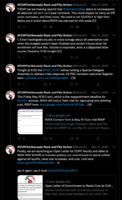 Tweet: Commitment to Stand Unified Against All Layoffs, Class Size Increases, and Cuts This Rank and File Action tweet from May 2020 circulated an Open Letter against CUNY layoffs, increases to class size, and other budget cuts. The document is a representation of collective action during the pandemic and an active pushback against austerity policies, and reflects the use of social media to encourage activism during the COVID-19 crisis. This item is part of the City University of New York (CUNY) Distance Learning Archive, a group project developed as part of Prof. Matthew K. Gold's Spring 2020 Knowledge Infrastructures seminar in the Ph.D. Program in English at The Graduate Center, CUNY, in partnership with the Interactive Technology and Pedagogy Certificate Program. The project's goal was to resist or trouble the discourse of catastrophe around the shift to online learning caused by the COVID-19 pandemic by documenting the lived experiences of students, faculty, and staff across CUNY's 25 campuses. Further, the project wanted to document the moment of crisis response by taking a critical approach to educational technology.
 -
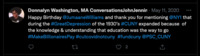 Tweet: During the Great Depression CUNY Expanded This tweet from May 2020, recognized NYC Public Advocate Jumaane Williams's public support for funding CUNY and his argument that CUNY had expanded during the Great Depression by opening two new senior colleges in Brooklyn and Queens. In addition to showing public solidarity with CUNY during this moment, the tweet also addresses the longer and progressive history of CUNY even in precarious times. This item is part of the City University of New York (CUNY) Distance Learning Archive, a group project developed as part of Prof. Matthew K. Gold's Spring 2020 Knowledge Infrastructures seminar in the Ph.D. Program in English at The Graduate Center, CUNY, in partnership with the Interactive Technology and Pedagogy Certificate Program. The project's goal was to resist or trouble the discourse of catastrophe around the shift to online learning caused by the COVID-19 pandemic by documenting the lived experiences of students, faculty, and staff across CUNY's 25 campuses. Further, the project wanted to document the moment of crisis response by taking a critical approach to educational technology.
 -
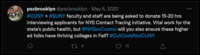 Tweet: CUNY and SUNY Faculty and Staff Are Being Asked to Donate 15-20 hrs This tweet, written in May 2020, documented the fact that CUNY and SUNY faculty and staff were being asked to volunteer their labor to support NYS's Contact Tracing initiative despite drastic cuts in CUNY funding and reductions in contingent workers like adjuncts. The tweet demonstrates how New York State continuously asked for more labor from the workers in the very institutions like CUNY and SUNY whose budgets the state was then cutting. This item is part of the City University of New York (CUNY) Distance Learning Archive, a group project developed as part of Prof. Matthew K. Gold's Spring 2020 Knowledge Infrastructures seminar in the Ph.D. Program in English at The Graduate Center, CUNY, in partnership with the Interactive Technology and Pedagogy Certificate Program. The project's goal was to resist or trouble the discourse of catastrophe around the shift to online learning caused by the COVID-19 pandemic by documenting the lived experiences of students, faculty, and staff across CUNY's 25 campuses. Further, the project wanted to document the moment of crisis response by taking a critical approach to educational technology.