Brooklyn College Feminist Trailblazers of the 1970s
Item set
Collection
Brooklyn College Feminist Trailblazers of the 1970s
Time Periods
1970-1977 Open Admissions - Fiscal Crisis - State Takeover
1978-1992 Retrenchment - Austerity - Tuition
Items
1–25 of 38
Advanced search
-
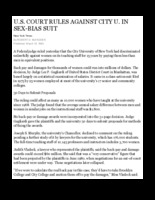 "U.S. Court Rules Against City U. in Sex-Bias Suit" Ten years after a class action lawsuit was filed in 1973 by 25 women faculty across CUNY campuses, a federal judge ruled that CUNY had "discriminated unlawfully against women on its teaching staff for 15 years by paying them less than men in equivalent positions." Popularly knows as the "Melani Case" because Brooklyn College Women's Studies Program co-coordinator Lilia Melani was the first plaintiff and organizer, the landmark case, born at Brooklyn College, affected the salaries of thousands of women employees of the university.
 -
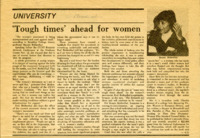 "Tough Times Ahead for Women" Brooklyn College Women's Studies Program co-founder and professor of history, Renate Bridenthal, is featured in this Clarion article, which is the PSC-CUNY faculty union publication. The Clarion covered a speech Bridenthal gave at the CUNY Feminist Network Conference at the Graduate Center, in which she spoke about the cultural backlash against the feminist movement and predicted that women would experience disproportionate effects of the economic downturn in the early 1980s. However, Bridenthal is sure to note victories and strides made within feminist scholarship, such as the Women's Studies Program at Brooklyn College.
 -
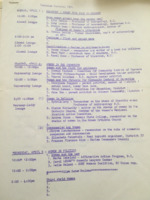 Program, Brooklyn College Feminist Festival These two versions of a program for a feminist festival held in the early years of the Brooklyn College Women's Studies Program showcase the interdisciplinary concerns of the program, as well as their commitment to an active relationship between feminist scholarship and activism. Speakers and workshops for the festival range from self-defense demonstrations to feminist arts, poetry, and film They also address activism in education, sexual violence, abortion rights, women's health, sexual orientation, and women's labor, including academics' lawsuits against sex discrimination. Presenters of note are Dolores Huerta of the farmworkers movement, Lilia Melani of the CUNY Women's Coalition lawsuit against sex discrimination, and Pat Lander, a long time co-coordinator of the Women's Studies Program at Brooklyn College.
 -
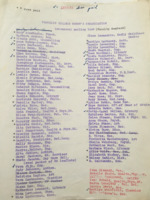 Brooklyn College Women's Organization Members List The Brooklyn College Women's Organization (BCWO) was the first organized group of women faculty at Brooklyn College, brought together across departments to address women's issues at the university. BCWO was the birthplace of feminist activity and initiatives at the college, including the Women's Studies Program, the Women's Center, the Day Care Collective, and the CUNY wide sex discrimination lawsuit campaign, led by BCWO member Lilia Melani. In her oral history, program co-founder under Renate Bridenthal remembers stuffing flyers in the mailboxes of women faculty across the college for the BCWO first meeting that was attended by many on this list.
 -
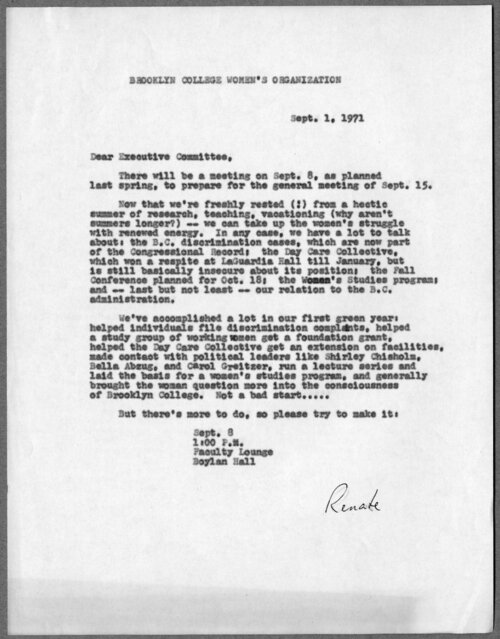 Brooklyn College Women's Organization Executive Meeting Invite The letter to the Brooklyn College Women's Organization (BCWO) executive committee invites them to a meeting to plan for a general meeting later in the month. The invitation documents the activities of the first group to convene at the university to address women's issues. Written by Renate Bridenthal (history), the group's ambitious agenda documents BWCO's role as the birthplace of the Women's Studies Program, Women's Center, Day Care Collective, and the sex discrimination lawsuit brought against CUNY on by women faculty who were discriminated against in hiring, salary, and tenure.
 -
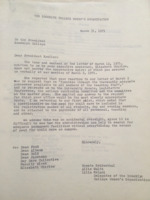 BWCO Response to President Kneller on Daycare Responding to the dismissive tone of a letter from Brooklyn College President John Kneller's office, the Brooklyn College Women's Organization (BCWO) wrote: "The tone and content of the letter...does not convey the cooperative spirit of which you assured us verbally at our meeting." The letter goes on to address the way that organizers were "re-routed...omit(ting) any answer to the request for which your office would be the most clearly appropriate route." This document showcases the tenacity of Brooklyn College's feminist activists, who sought accountability from the administration in their efforts to achieve adequate childcare, end employment discrimination based on sex and maternity leave, and to establish a women's studies program at Brooklyn College.
 -
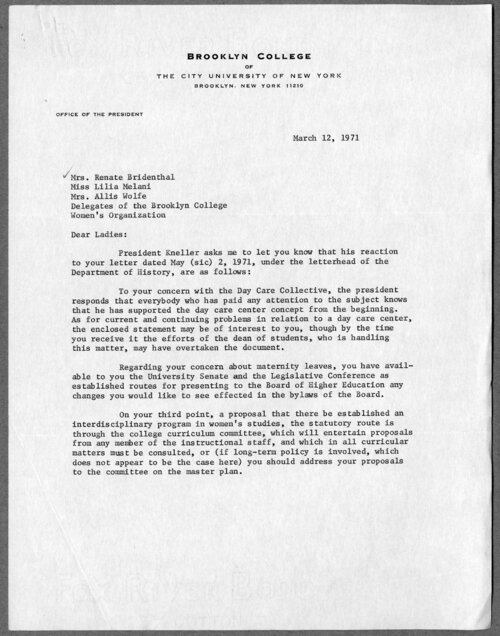 Response to the Brooklyn College Women's Organization from President Kneller In this letter addressed "Dear ladies," Brooklyn College President John Kneller's office delivers a dismissive response to complaints of sex discrimination and demands made by the Brooklyn College Women's Organization (BCWO). Kneller's office writes that he has "supported the day care concept from the beginning" but refers organizers to the dean of students instead. Regarding organizers' concerns about maternity discrimination, Kneller redirects them to the Board of Higher Education via the University Senate and Legislative Conference. And finally, he refers BCWO to the college curriculum committee to propose a Women's Studies Program. The letter makes no mention of the sex discrimination investigation led by BCWO.
 -
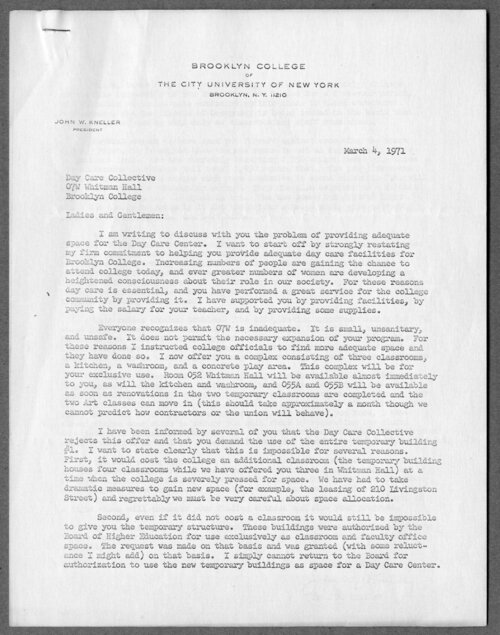 Letter from President Kneller on Daycare Center This letter from Brooklyn College President John Kneller demonstrates the level of engagement that feminist faculty and staff organizers of the Day Care Collective demanded from university leadership as they experienced dismissal after dismissal. While President Kneller proposed a temporary home for the day care program, he was forced to contend with activists who continued to demand adequate, safe childcare for children whose parents worked or studied at Brooklyn College.
 -
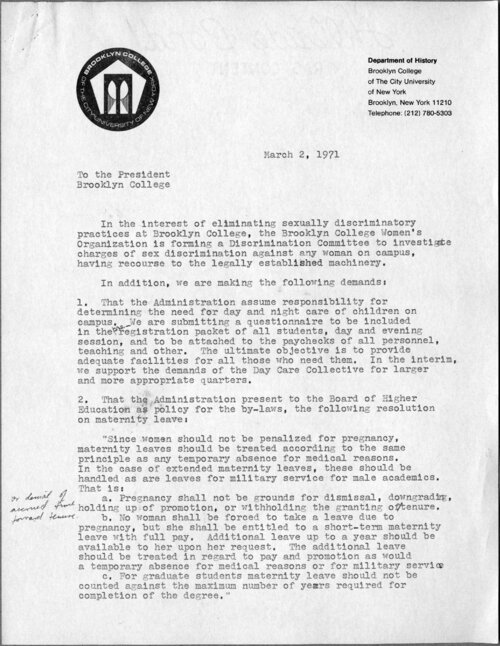 Letter from BCWO to President Kneller on Sex Discrimination This letter to Brooklyn College president John Kneller informs him of the Brooklyn College Women's Organization's (BCWO) formation of "a Discrimination Committee to investigate charges of sex discrimination against any woman on campus, having recourse to the legally established machinery." In addition, this letter from BCWO delegates Renate Bridenthal, Lilia Melani, and Allis Wolfe makes the following three demands of the administration: 1. Day and night care for children of students, faculty, and staff; 2. A resolution on maternity leave non-discrimination; and 3. The inauguration of an interdisciplinary Women's Studies Program. Both the tone and the objectives shed light onto the ways that feminist organizers saw their role as activists within the academy, their vision for improving the lives of women students and faculty, and their roadmap for accomplishing such lofty goals in the face of the structural inequalities they faced.
 -
 BCWO Goals, Letter to Pat Withner In the early 1970s before the founding of the Women's Studies Program, the Brooklyn College Women's Organization (BCWO) addressed several concerns of women faculty and students at the college. Historian and co-founder Renate Bridenthal notifies the office of College Relations of BCWO's formation and outlines their goals to investigate and dismantle institutional sexism and structural gender inequality at the college in the following areas: day care, gender imbalances in offices and departments throughout the university, equal employment in pay, rank, and tenure, maternity leave, academic and career counseling that resulted in tracking of women students, and sex discrimination.
 -
 "Pressure and Popularity Spur Variety In College Women's Studies Courses" This New York Times article chronicles the advent of the establishment of women's studies programs at universities across the country in the 1970s, featuring the newly established double major at Brooklyn College. Program co-founder and co-coordinator Renate Bridenthal (History) was interviewed: "Two years ago, Professor Bridenthal recalled, students began collecting signatures on petitions and lobbying the departmental chairmen, the student women's liberation group, and the Brooklyn College Women's Organization (BCWO) fought to get the major program approved." However, the article gives the last word to the male dean of faculty at Columbia University, reinforcing the climate of sexism within the academy: "The real question is 'whether or not this really represents an academic or intellectual discipline.'" This article demonstrates the frequent efforts to delegitimize women's studies that organizers faced, which reinforced their evidence for the importance and need for their work.
 -
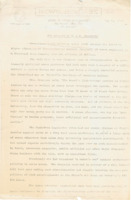 City Council Press Release on Sex Discrimination This press release from the New York City Council Office of Public Information announces Councilmember Carol Greitzer's accusation that the Board of Education "discriminated against thousands of women employees at a financial loss running into the millions of dollars." Though not named in this release, the women who formed the Brooklyn College Women's Organization (BWCO) including Lilia Melani and Renate Bridenthal spearheaded the class action suit, documenting, organizing, and gathering evidence for discrimination in hiring, pay and tenure among CUNY-wide faculty, in addition to pregnancy discrimination. A champion for women's rights, Councilmember Greitzer cites two particularly egregious examples from women faculty at Brooklyn College, and linked the discrimination to a larger pattern of institutionalized sexism in the city. Greitzer cites that only two women deans existed out of over seventy at fourteen board institutions, that there were only two women board members out of twenty one, all fourteen officers at CUNY "from the chancellor on down" are male, and only one woman was president (Jaqueline Wexler of Hunter College) out of nine universities and eight community colleges. The Department of Health, Education, and Welfare investigated women workers' claims, saying "the weight of evidence...supports the complaint's (sic) allegation of sex discrimination." Greitzer's pledge to take the battle to Washington if necessary highlights the political alliances feminist organizers at Brooklyn College made to bolster their fight for gender parity.
 -
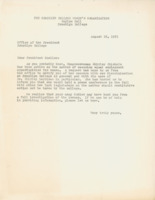 Congresswoman Chisholm Letter to President Kneller on Sex Discrimination The Brooklyn College Women's Organization (BCWO) was organized in the early 1970s by an interdisciplinary group of faculty across departments to address sex discrimination other issues facing women on campus. This letter from BCWO notifies the Brooklyn College President's Office that the issue of sex discrimination at Brooklyn College is on the radar of Congresswoman Shirley Chisholm. The first African American woman elected to US congress, she was also an alumni of Brooklyn College who went on to fight for equal employment opportunities for black Americans and women. By notifying the President of Chisholm's interest in the sex discrimination cases at Brooklyn College, organizers strategically leveraged Chisholm's promise to hold a press conference on the issue should it not be addressed.
 -
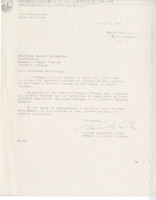 Letter from Brooklyn College Dean of Social Sciences This letter from Nathan Schmukler, Dean of Social Sciences at Brooklyn College welcomes the transfer of the interdisciplinary program in Women's Studies to the College of Social Sciences. The Women's Studies steering committee had advocated for the move from Humanities to Social Sciences in order to realize the program's goals of more co-taught courses and a broader scope of interdisciplinary content.
 -
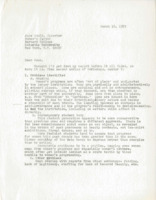 Letter to Jane Gould, Barnard Women's College This letter from Brooklyn College Women's Studies Program co-founder Renate Bridenthal to the director of the Women's Center at Barnard College demonstrates the inter-institutional collaboration within academic feminist activism, and the co-development of the field of Women's Studies. Writing after attending a women's studies faculty conference at Barnard, Bridenthal is eager to address issues facing women's centers and women's studies programs in academic institutions around the country. The issues presented here are emblematic of the issues facing the field as a whole, including: departmental homes for women's studies programs, homophobia as a barrier to students's access to resources, a lack of feminist consciousness in the student body, and lack of funding, staffing, and legitimacy for programs. Bridenthal lists ideas for professional support that attendants brainstormed for moving "beyond survival," including alumni associations for women's studies graduates, funding opportunities, broadening research on women of low-income and in developing countries, dealing with administrators, and the development of an outcomes-based evaluation metric for the effects of a women's studies curriculum on the student body,
 -
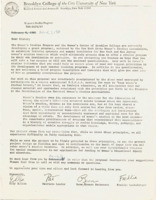 Summer Institute Grant Proposal After establishing both a Women's Studies baccalaureate and a Women's Center at Brooklyn College, faculty organizers turned their attention to broadening the field. With support from the New York Women's Studies Association they prepared to submit a joint proposal to develop a summer teacher training program. The proposed institute would increase women's studies offerings across post-secondary educational institutions in New York and New Jersey. Using a feminist methodology of collaborative input for course development, the creators of this proposal solicited input from women's studies educators via this letter and questionnaire in order to gather information on the status of regional programs, and make sure that the training institute aligned with principles outlined in the constitution of the National Women's Studies Association (NWSA). Their collaborative outreach and detailed survey demonstrated that "while we share these principles, we all experience difficulty in fully realizing them."
 -
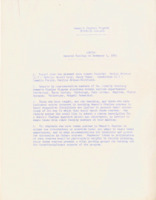 Women's Studies Program General Meeting Minutes The minutes of this meeting of the Women's Studies Program reflect the pedagogical considerations and the feminist methodologies used to build course curriculum within the program. Proposals for new courses from new faculty across disciplines are invited, and faculty discuss the inclusion of topics and sources for future syllabi from students who have previously taken courses in the program. The solicitation of student input for course planning points to the collaborative nature of curriculum building within Brooklyn College's Women's Studies Program.
 -
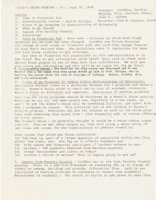 Brooklyn College Women's Union Meeting The Women's Union at Brooklyn College was an organization comprised of many faculty and staff from the Women's Studies Program, but existed as a separate entity that would tackle political and administrative issues affecting women at the college. These notes from their inaugural meeting reflect the types of advocacy they tackled, from fighting for courses that explored lesbian sexuality to addressing cuts to student financial aid, welfare, and TAP, sexual harassment and safety on campus, and the ways that married women could be excluded from financial assistance.
 -
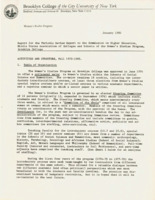 Periodic Review Report to Commission on Higher Education Six years after the Women's Studies Program began offering a joint BA from Brooklyn College's Schools of Social Sciences & Humanities, the program issued this progress report outlining their accomplishments and concerns to the Commission of Higher Education. This document provides a comprehensive overview of the structure used to steer and co-govern the program, pedagogical considerations such as co-taught courses (including descriptions), and participation in helping develop women's studies as a field in national professional associations, as well as in high schools. The section on Project CHANCE describes the program and grant that enabled the establishment of the Women's Center at Brooklyn College, providing re-entry courses and support for 100 non-traditional returning women students in its second year. Proposals for new courses focused on women and violence, lesbian experience, women in arts and music, and gendered political economies of power are also included. The course on lesbian experience would prove to be quite controversial, where obtaining approval became a lengthy process. Finally, by providing proof of increasing enrollment in program courses, the report authors make the case for faculty tenure and a new process for departmental approval for faculty releases to teach women's studies courses.
 -
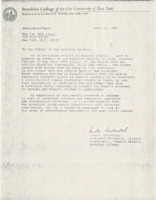 Letter to the Editor, New York Times Magazine As women's studies programs began to emerge in colleges around the country, faculty had to fight to legitimize the field of academic inquiry and interdisciplinary framing. Furthermore, several programs had to fend off homophobic and misogynist attempts to delegitimize the field, from both within their institutions and the broader public. This letter, penned by Women's Studies Program co-founder and historian Renate Bridenthal, was sent to the New York Times Magazine editor after they ran a story about Sarah Lawrence's women's studies program in which the journalist pandered to fears of faculty spreading lesbianism amongst students. Bridenthal's firm reply calls out the tactic for what she called an attempt to "subvert the women's movement in general and Women's Studies in particular," and shows a broad kinship with and commitment to the field of women's studies.
 -
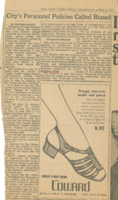 "City's Personnel Policies Called Biased" This New York Times article outlines charges against the city that alleged discrimination against women and racial minorities in hiring and promotions at CUNY. Women's Studies Program co-coordinators and Brooklyn College Women's Organization members were heavily involved with organizing the lawsuit, principally Lilia Melani (English), and Renate Bridenthal (History). The lawsuit, which became known as the Melani Case, was formally filed two years later in 1973 by 25 women at 17 of CUNY colleges. Thirteen years later, in March 1983, the class action suit was finally won in a ruling by a federal judge. Thousands of CUNY faculty members were affected by the decision, winning back pay and raises.
 -
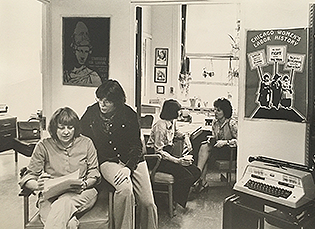
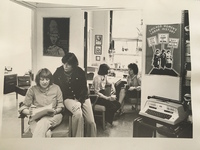 Women's Studies Program Office The Women's Studies Program at Brooklyn College, founded in 1971, was one of the first such programs in the country. Taken in 1982, this is one of the few photographs of the Women's Studies office located at 2157 Boylan Hall and features Pat Quercia (right) and Renate Bridenthal in the inner office. Pat Quercia served as office administrator since the founding of the program, and historian Renate Bridenthal served as the program's co-coordinator and helped convene the Brooklyn College Women's Organization, the group that preceded the program and fought for its inception. In the outer office are Claudette Charbonneau, instructor of Women's Studies, and Pat Lander (right) from the Anthropology Department, who also co-coordinated the program.
 -
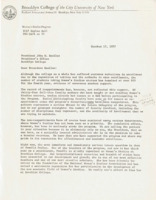 Letter to Brooklyn College President John Kneller on Budget Cuts and Faculty Tenure During the 1970s, CUNY experienced a fiscal crisis resulting in faculty and staff layoffs, increased tuition, as well as cutbacks in open enrollment. As a result, the coordinators of the Brooklyn College Women's Studies Program drafted this letter to Brooklyn College President John Kneller stressing their program's high student enrollment despite lack of faculty reappointments. Of specific concern was the request to reappoint untenured faculty member Tucker Pamella Farley. Farley helped found the program and was in her third year as program co-coordinator. The letter's authors appealed to the President to retain Farley as essential to the success of the groundbreaking Women's Studies Program.
 -
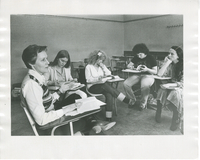 Tucker Pamella Farley's Women and Literature Class This photograph shows Tucker Pamella Farley (left) teaching her popular Women and Literature course in a discussion circle with her students. Farley taught at Brooklyn College from 1970 to 2005, where she was central to developing the Women’s Studies Program as program co-founder, and taught English and Women’s Studies courses. She fought for and secured funding for the first Women’s Center on campus, creating Project Chance for returning women students. The Women's Center is still running today as one of the oldest college women's centers in the country.
 -
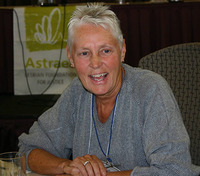 Oral History Interview with Tucker Pamella Farley This oral history interview was conducted with Tucker Pamella Farley, a founding member of the Brooklyn College Women’s Organization. In it, she discusses the political climate of the 1960s through the 1980s and the range of activities, actions, and initiatives she undertook to help form a Women's Studies Program and a Women's Center at Brooklyn College. From community organizing to student mentoring to fighting the Brooklyn College administration, Tucker Pamella Farley forthrightly recalls her political and organizational experiences that went into the groundbreaking feminist work on her campus at the time. She also shares the personal and professional experiences that she and other women faced as they navigated academia.
1–25 of 38