Brooklyn College Feminist Trailblazers of the 1970s
Item set
Collection
Brooklyn College Feminist Trailblazers of the 1970s
Time Periods
1970-1977 Open Admissions - Fiscal Crisis - State Takeover
1978-1992 Retrenchment - Austerity - Tuition
Items
26–38 of 38
Advanced search
-
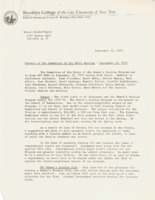 Minutes of the Women's Studies Committee of the Whole In an effort to decentralize decision-making power and include multiple perspectives both in program governance and in courses taught, the Brooklyn College Women's Studies Program created new and innovative structures for its operations. Rather than have one program chair or coordinator, each year the program was led by two co-coordinators. These meeting minutes are an example of the ways that faculty collaborated to solve shortages as a result of budget cuts that threatened co-taught classes, and shared leadership. Here, faculty debate becoming a department versus an interdisciplinary program, and discuss the establishment of a women's studies club.
 -
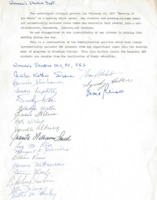 Letter to Protest 'Meeting of the Whole' Central to the founders of the Women's Studies Program and Women's Center at Brooklyn College were issues of access, collaborative input, and community inclusion in decision making. The frameworks they shaped were informed by a feminist analysis of the ways that gender, race, and class either privilege or exclude subjects from positions of power and decision-making. In this letter, twenty faculty and staff members of the Women's Studies Program and Women's Center grappled internally with issues of access, and signed on in protest of a meeting of the program during regular work hours. Signatories cited that the proposed time for the meeting excluded participation and input from critical stakeholders and community members such as working women, mothers, and students.
 -
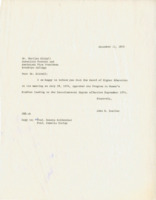 Letter from President Kneller about Baccalaureate in Women's Studies More than four years after the first meeting of the Brooklyn College Women's Organization, the Women's Studies Program co-founders received this letter from Brooklyn College President John Kneller. A major victory in securing legitimacy for both the program and women's studies as an academic field, this letter informed the program faculty of the Board of Higher Education's approval for an accredited baccalaureate in Women's Studies, effective September 1974.
 -
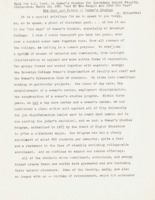 "The Past and Future of Women's Studies" - Conference Talk Women's Studies Program co-founder historian Renate Bridenthal gave this talk for the Brooklyn College Institute in Women's Studies for Secondary School Faculty conference in 1980. Bridenthal recounts the formation of the Brooklyn College Women's Organization of faculty and staff, and the student-run Women's Liberation Club. Such groups formed to address day care, employment discrimination, the establishment of a women's center, and the construction of the program. At the time of the presentation, the program had approximately 800 students per semester. She calls on the field to continue to question patriarchal norms, be inclusive of women in scholarship, and provide context and analysis for structural inequalities facing students and workers today.
 -
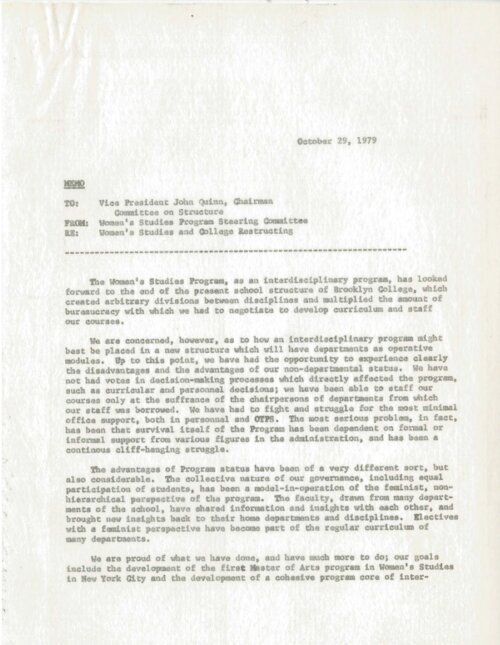 Memo to Brooklyn College Vice President John Quinn This memo from the Women's Studies Steering Committee to Brooklyn College Vice President John Quinn (also the Committee Chairman on Structure) argues for the restructuring of interdisciplinary programs into a Women's Studies department, with the aim of fostering collective governance, reducing bureaucracy in curriculum development and shared faculty appointments. This resource demonstrates the politics of resource allocation and the staffing difficulties within interdisciplinary programs.
 -
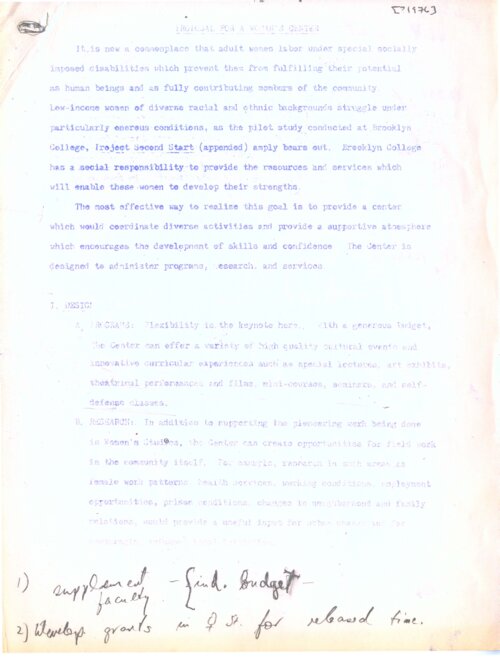 Proposal for a Women's Center at Brooklyn College Just after the establishment of the Women's Studies Program at Brooklyn College, program co-founder Tucker Farley began to push for a Women's Center as a complementary counterpart to the academic program. This proposal envisions the Women's Center as the hub of direct services and feminist activism on campus, and highlights the need for support to low income women, women of color, and caregivers. Services proposed include flexible programming, childcare, transportation, counseling, work training and placement, as well as research on women's work, health, prisons, families, and neighborhoods.
 -
 Proposal for a Women's Studies Program at Brooklyn College This proposal for a Women's Studies Program at Brooklyn College describes a nationwide demand for courses on the subject. The document illuminates the co-founders' preliminary arguments for such a program, as well as their first ideas about how to situate and structure the program within the university. Authors cite the need to examine and transform the position of women in society, and the need for Brooklyn College to be competitive in this field. The proposal advocates for a feminist pedagogy that would be best served by establishing an interdisciplinary program, which was realized shortly thereafter with baccalaureate accreditation in 1974.
 -
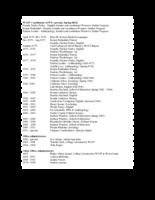 Brooklyn College Women's Studies Program Coordinators (1974 – Spring 2016) This list of Brooklyn College Women's Studies Program Coordinators (1974 – Spring 2016) names the faculty and years they led the program and demonstrates the co-coordinator model in the beginning of the program's history with the aim of decentralizing singular hierarchical power. Listed as co-founders are Tucker Pamellla Farley (English), Renate Bridenthal (History), and Pat Lander (Anthropology).
 -
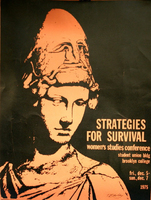 "Strategies for Survival" Conference Poster The first conference put on by the Brooklyn College Women's Studies Program was held in 1975, one year after the co-major was officially approved. The title of the conference was "Strategies for Survival" and the poster was designed by art department and Women's Studies faculty member, Fredrica Wachsberger, reflecting the imagery selected to represent women's resistance historically.
 -
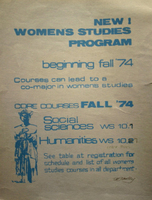 First Brooklyn College Women's Studies Program Poster The first poster for the co-major in Women's Studies at Brooklyn College was created in 1974 by art department faculty member Fredrica Wachsberger, co-coordinator of the program from 1975-1979. Marketing efforts for the new program paid off, and the nascent courses experienced high student enrollment.
 -
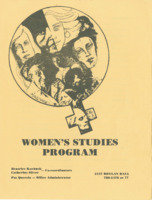 Women's Studies Program Catalog This catalog outlines the feminist perspectives and pedagogies used to establish the Women's Studies Program at Brooklyn College. The program was governed by a steering committee of faculty, students, and staff, and included co-coordinators who rotated someone new in each year. Included in the catalog are programs of study, career options, major requirements for the BA, co-listed courses, and program faculty.
 -
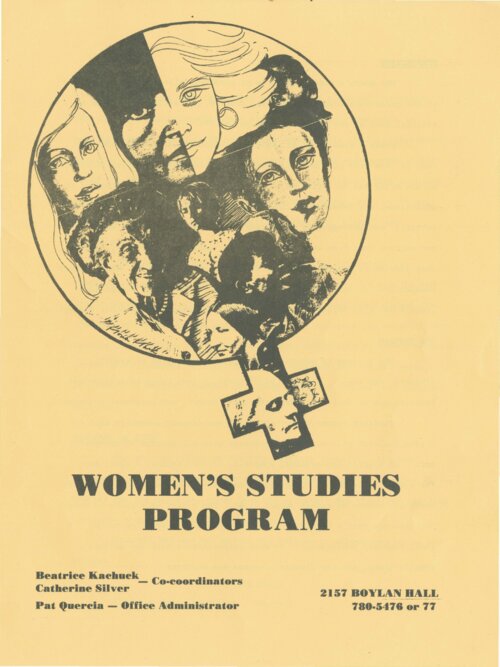 Women's Studies Program Report of Activities This report outlines the academic and outreach activities conducted by the Women's Studies Program at Brooklyn College during first year the BA was offered. This document offers a record of the establishment of program governance, collaborations with the Women's Center on returning women students, plans for a regional Women's Studies Conference, and network building with other professional women's associations.
 -
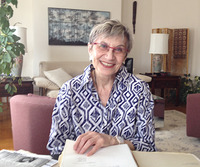 Oral History Interview with Renate Bridenthal This oral history interview with Renate Bridenthal, a founding member of the Brooklyn College Women’s Organization, discusses the political climate at Brooklyn College from the 1960s through the 1980s amidst the historical backdrop of the various social movements of the time. Based on her personal experience as a young woman academic who was involved in feminist initiatives and the anti-war protests of the 60s and 70s, Renate offers insight into a range of women's issues on campus as well as her vivid recollections of the struggle to spearhead a Women’s Studies Program, establish a Women’s Center and daycare center, and legally address gender discrimination at CUNY. In reflecting on the work, she states, “It was very empowering to know that if you’re a collective…if you really, as a group, are on the same page, if you’re determined…that’s going to work!”
26–38 of 38