Item sets
26–31 of 31
Advanced search-
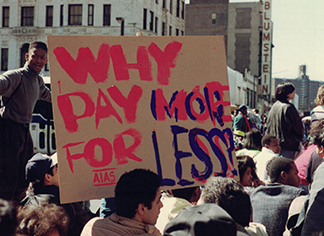 Student Strikes of 1991: Graduate Center Student Takeover In the Spring of 1991, proposed tuition hikes, cuts to the university’s operating budget, and reductions in student aid prompted system-wide student strikes at CUNY. Spurred into action by student activists at City College, groups of students began taking over their campuses throughout the CUNY system. By the end of the occupation more than two-thirds of CUNY was under student occupation. This collection includes flyers, photographs, manifestos, and other primary source materials from the Spring of 1991. They were gathered and assembled by Katherine McCaffrey, then a Graduate Center (GC) Anthropology doctoral student, highlighting the role of the GC in the system-wide movement, and providing the lens through which the struggle is understood. The 1991 strike at the Graduate Center was born in the Anthropology PhD program and reflected the progressive education doctoral students received in a program rooted not only in Marxist theory, but also in practice. This training recognized the nature of the interconnected and unequal world that we inhabited and encouraged students to use the tools of Anthropology to change it. Several documents reveal early organizing efforts of Anthropology doctoral students that laid a foundation for the strike. A key element of the program’s identity and dynamism emerged from the public nature of the City University system and neoliberal threats to the material basis of this public education that CUNY faced. Austerity ultimately had the effect of unifying students and faculty alike in opposing this direct assault against such a crucial public good. A key argument of the material included in this collection is that student mobilizations that emerged from the CUNY system from the mid-1970s through the mid-1990s were not narrowly framed simply to oppose tuition hikes but rather were more broadly conceptualized as resistance against austerity measures and the expanding war economy. Documents in this collection reveal these linkages. Student solidarity across campuses was a crucial character of the system-wide strike. Documents reveal efforts to promote solidarity and build coalitions with labor unions, community organizations, and elected officials to redirect state and city taxes towards education, healthcare, housing, and mass transit. For example, one flyer appeals to NYC labor movement members to join CUNY student strikers on an April 24, 1991 rally at the World Trade Center, arguing that the attacks on CUNY were part of city-wide attacks on city workers, public schools, health care, worker safety, child care, public transit, and beyond. Demonstrations expanded beyond individual campuses to the streets of Harlem, Lower Manhattan and Albany. Protest tactics included strikes, demonstrations, teach-ins, and takeovers of multiple buildings across campuses. The protestors also called for the restructuring of the CUNY Board of Trustees and implementing a progressive state tax structure. Protest movements cross-pollinated. One of the documents in this collection is a poster from the Latinas/os Caucus of ACT UP/NY which drew parallels between cuts to education and cuts to health care. The flyer emphasized that when "basic rights are at stake, radical responses are in order.” Another flyer ironically juxtaposed Iraqi leader Saddam Hussein with New York Governor Mario Cuomo and CUNY Chancellor Ann Reynolds, pointing both to the dubious nature of the US war on Iraq and the harm perpetrated by local officials against the public at home. Documents within this collection include dissenting opinions and analyses of the efficacy of the strike. Stanley Aronowitz, who taught in the doctoral program in Sociology, noted that the event's main success was the direct democracy that it practiced and the possibility that CUNY could become a leading "innovator in pedagogy and curriculum." Katherine McCaffrey, now a Professor of Anthropology at Montclair State University, curated the collection.
 -
 The Shutdown: CUNY Responds to the Covid-19 Pandemic <p><span style="font-weight: 400;">On</span> <span style="font-weight: 400;">December 31, 2019</span><b>,</b><span style="font-weight: 400;"> the </span><a href="https://www.who.int/news/item/29-06-2020-covidtimeline"><span style="font-weight: 400;">World Health Organization (WHO) learned from a media statement</span></a><span style="font-weight: 400;"> released by the Wuhan Municipal Health Commission that there had been cases of “viral pneumonia” in the People’s Republic of China. On February 11, the WHO </span><a href="https://www.who.int/news/item/29-06-2020-covidtimeline"><span style="font-weight: 400;">provided an official name for the novel coronavirus</span></a><span style="font-weight: 400;"> responsible for the illness: COVID-19. In less than a month after its naming, COVID-19 developed worldwide into a full-blown pandemic. Seattle was the first hot spot, soon followed by New York City, which became a major epicenter for infection. Many public and private institutions were forced to close their doors and switch to remote operations, including the City University of New York. Over the course of a week, the largest urban public university in the United States, comprised of approximately 250,000 students and 45,000 faculty across 25 campuses, was asked to transition from the traditional practice of collegiate learning and university operation to a digital format that could be successfully operated from the confines of individual homes, all while a pandemic raged across the globe and the city, consuming health, livelihoods, and life itself.</span></p> <p><span style="font-weight: 400;">For the user of the CDLA collection, these contrasting scales of time and consequence are understandably disquieting. Officially </span><a href="https://twitter.com/cuny/status/1237217302363475968?lang=en"><span style="font-weight: 400;">sanctioned notices from the CUNY administration </span></a><span style="font-weight: 400;">reassuring the student body that “...there are no confirmed coronavirus cases involving anyone in the CUNY community,”</span><span style="font-weight: 400;"> can sound naive (if not cynical) in hindsight, especially when compounded by </span><a href="https://cdha.cuny.edu/items/show/12632"><span style="font-weight: 400;">concurrent community petitions to close the college</span></a><span style="font-weight: 400;"> and </span><a href="https://cdha.cuny.edu/items/show/12362"><span style="font-weight: 400;">the circulation of the #CloseCUNY “hashtag”</span></a><span style="font-weight: 400;"> across social media outlets. Yet, the closing of a university is complex; in its role as a public institution, the CUNY system overwhelmingly serves the classically marginalized citizens of New York City, many of whom could not be assumed to possess the necessary equipment to engage in online instruction.</span><span style="font-weight: 400;"></span></p> <br /> <p><span style="font-weight: 400;"></span></p> <center><a href="https://cdha.cuny.edu/items/show/12352"><img src="https://cdha.cuny.edu/files/original/dc58b1ddffda86988d53a28c39d8fc7d.png" width="400" alt="Tweet by CUNY student suggesting administration is concerned with lack of access to technology" /></a></center> <p><span style="font-weight: 400;"><br />As </span><a href="https://cdha.cuny.edu/items/show/12352"><span style="font-weight: 400;">a CUNY student’s tweet</span></a><span style="font-weight: 400;"> pointed out, closure of the university could not proceed without considering the double-bind of educational access and lived precarity that intersects the lives of those reliant upon public institutions. Such reasoning can be seen expressed in the official communiques of CUNY authorities, such as </span><a href="https://cdha.cuny.edu/items/show/12392"><span style="font-weight: 400;">this series of tweets from the president of Lehman College</span></a><span style="font-weight: 400;">. To close CUNY was more than simply a physical “closing of doors”; it was the denial of infrastructural access to the most vulnerable and deserving students, faculty, and staff. While possessing a duty to protect the health of its community, CUNY needed to proceed in a manner that respected its core mission to provide access to quality higher education for all.</span></p> <p><span style="font-weight: 400;">Of course, to simply reiterate the official account of the digital transition does a disservice of forgetting those very voices that such accounts claim to value. While the university pondered solutions to structural inequity, the CUNY community was awash in uncertainty and consequential anxiety. Some </span><a href="https://cdha.cuny.edu/items/show/12342"><span style="font-weight: 400;">doubted the sincerity of official statements</span></a><span style="font-weight: 400;">, and saw a perceived lack of investment in preventative infrastructure as demonstrative of a lack of care. For some students, faculty and staff, this developed into </span><a href="https://cdha.cuny.edu/items/show/12412"><span style="font-weight: 400;">feelings of antagonism towards CUNY as a whole.</span></a><span style="font-weight: 400;"> Given such an outcry and the growing rate of infections across New York state and the nation, a CUNY shut-down </span><a href="https://cdha.cuny.edu/items/show/12302"><span style="font-weight: 400;">seemed bound to occur</span></a><span style="font-weight: 400;">. Yet, even if one were acutely aware of the exact timing of the closure, they would still have been stunned by the means of its announcement. On March 11, 2020, at 11:12 AM, New York Governor Andrew Cuomo surprised the CUNY community by announcing on Twitter that CUNY would be moving to online learning within a week.</span></p> <p><span style="font-weight: 400;"> </span></p> <center><a href="https://cdha.cuny.edu/items/show/12312"><img src="https://cdha.cuny.edu/files/original/2f402d8f5f6a57d2914f98565100fa1c.png" width="400" alt="Governor Andrew Cuomo's tweet announcing CUNY's shift to distance learning" /></a></center> <p><span style="font-weight: 400;"></span></p> <p><span style="font-weight: 400;">Starting March 12, CUNY would enter a </span><a href="https://cdha.cuny.edu/items/show/12322"><span style="font-weight: 400;">five-day recess</span></a><span style="font-weight: 400;"> before transitioning to fully remote instruction for the remainder of the semester. In terms of public safety, such a decision could be deemed necessary: John Jay announced that same day that </span><a href="https://cdha.cuny.edu/items/show/12452"><span style="font-weight: 400;">a COVID-19 exposure</span></a><span style="font-weight: 400;"> (defined by the CDC </span><a href="https://www.cdc.gov/coronavirus/2019-ncov/php/public-health-recommendations.html"><span style="font-weight: 400;">as being in close contact, within 6 feet for a total of 15 minutes or more, with a person who has tested positive for COVID-19</span></a><span style="font-weight: 400;">) had occurred</span><b>,</b><span style="font-weight: 400;"> and </span><a href="https://cdha.cuny.edu/items/show/12492"><span style="font-weight: 400;">Brooklyn</span></a><span style="font-weight: 400;">, </span><a href="https://cdha.cuny.edu/items/show/12522"><span style="font-weight: 400;">Lehman</span></a><span style="font-weight: 400;">, and </span><a href="https://cdha.cuny.edu/items/show/12512"><span style="font-weight: 400;">Staten Island </span></a><span style="font-weight: 400;">colleges announced exposures within the same week. But in terms of logistics, the sudden decision exacerbated further anxieties, as both students and faculty </span><a href="https://cdha.cuny.edu/items/show/12282"><span style="font-weight: 400;">scrambled</span></a><span style="font-weight: 400;"> to cope with the limitations facing the integration of face-to-face coursework into digital formats. Perhaps the most succinct example of the indeterminacy facing instruction was a </span><a href="https://cdha.cuny.edu/items/show/12562"><span style="font-weight: 400;">Queens College department email</span></a><span style="font-weight: 400;"> providing blanket approval to all course changes, due to inability of the administration to keep up with requests. </span></p> <p><span style="font-weight: 400;">With such strains facing academic continuity within the first few weeks of the online transition, CUNY administration deemed </span><a href="https://cdha.cuny.edu/items/show/12592"><span style="font-weight: 400;">another period of recalibration</span></a><span style="font-weight: 400;"> appropriate, suspending instruction from March 27 to April 1. Though coming at the expense of the traditional Spring Recess period, the extra time proved valuable for faculty, allowing for the restructuring and fine-tuning of teaching practices and syllabi. Though these new course designs hardly proved immune from problems (see the accompanying </span><a href="https://cdha.cuny.edu/collections/show/382"><i><span style="font-weight: 400;">Teaching and Learning </span></i><span style="font-weight: 400;">collection of this archive</span></a><span style="font-weight: 400;">), they at least provided time for a new reality to set in: distance learning had begun.</span></p> <p><span style="font-weight: 400;">Large questions abound: Were the difficulties in transitioning to online learning a result of Governor Cuomo’s lack of communication or CUNY’s administrative lack of power under the Cuomo administration to determine its own fate? Are the anxieties and antagonism of the CUNY community deserved or the knee-jerk reactions of a community in crisis? In the </span><i><span style="font-weight: 400;">Shutdown </span></i><span style="font-weight: 400;">collection of the CUNY Distance Learning Archive, we refrain from answering these questions. Rather, this collection seeks to preserve a moment, acquiring artifacts from CUNY staff, students, and faculty in order to reveal the range of subjective moments of crisis. <br /><br /><br /></span></p> <hr /> <p><i><span style="font-weight: 400;">This collection is part of the </span></i><a href="https://cdla.commons.gc.cuny.edu"><i><span style="font-weight: 400;">CUNY Distance Learning Archive (CDLA)</span></i></a><i><span style="font-weight: 400;">, a group project developed as part of Matthew K. Gold’s Spring 2020 “<a href="https://kinfrastructures.commons.gc.cuny.edu/">Knowledge Infrastructures</a>” seminar in the Ph.D. Program in English at The Graduate Center, CUNY, in partnership with The Interactive Technology and Pedagogy Certificate Program.</span></i><span style="font-weight: 400;"><em> All CDLA collections on the CUNY Digital History Archive website were co-curated by Travis Bartley, Nicole Cote, Zach Muhlbauer, and Stefano Morello (Project Manager).</em></span></p>
 -
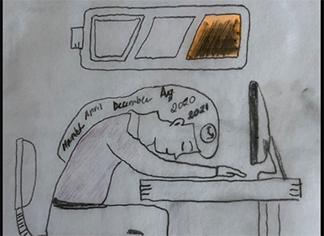 Teaching and Learning During the Time of Covid-19 <p><span style="font-weight: 400;">The CDLA’s Teaching and Learning Collection features an array of personal and institutional documentation, community resources, </span><a href="https://cdha.cuny.edu/items/show/12742"><span style="font-weight: 400;">class projects</span></a><span style="font-weight: 400;">, and digital media related to CUNY’s remote teaching and learning practices in light of the COVID-19 pandemic. The collection brings these items into conversation with one another in the interest of centering the lived experiences of CUNY students, faculty, and staff during this pivotal moment in the history of the largest urban public-university system in the United States. In an effort to help preserve the university’s institutional memory, users of this collection are invited to explore these artifacts in order to reflect on what it was like to teach and learn at CUNY during the Spring 2020 onset of the COVID-19 pandemic.</span></p> <br /> <p><span style="font-weight: 400;">With confirmed cases of COVID-19 soon to spread across the New York City area, CUNY colleges began to triage the outbreak by preparing campus-based guidance for faculty to employ in the event of a university-wide shift to distance learning formats. Collected by the Graduate Center's Teaching and Learning Center (TLC) days before the closure of onset university facilities, these documents address emergent concerns surrounding </span><a href="https://continuity.commons.gc.cuny.edu"><span style="font-weight: 400;">the practice of online teaching and learning during a public health crisis</span></a><span style="font-weight: 400;">. These resources urge CUNY faculty to rethink their role as educators by accounting for issues ranging from course communications and instructional design, to accessibility and assistive technology, to testing and assessment policies, to the precarious health and wellbeing of their students. CUNY faculty associated with the group “Rank and File Action” likewise circulated </span><a href="https://cdha.cuny.edu/items/show/12752"><span style="font-weight: 400;">a proposal</span></a><span style="font-weight: 400;"> for transitioning to distance learning, stressing the need for educators to “give up on normal,” strategically adopt tech platforms, and consider asynchronous modes of instruction, among other recommendations.</span></p> <br /> <p><span style="font-weight: 400;">Items from this collection also foreground the submerged perspectives of CUNY students as they struggled to keep pace with distance learning. In the case of student Reddit posts, these items document the self-represented concerns of CUNY students engaged in conversation with one another around the problematics of learning during the pandemic. In particular, these posts found students at odds with the </span><a href="https://cdha.cuny.edu/items/show/12902"><span style="font-weight: 400;">assessment protocol</span></a><span style="font-weight: 400;">, </span><a href="https://cdha.cuny.edu/items/show/12842"><span style="font-weight: 400;">communication practices</span></a><span style="font-weight: 400;">, and </span><a href="https://cdha.cuny.edu/items/show/12832"><span style="font-weight: 400;">rigorous workloads</span></a><span style="font-weight: 400;"> of the distance learning process. Critically, they also paid credence to the </span><a href="https://cdha.cuny.edu/items/show/12872"><span style="font-weight: 400;">essential labor practices</span></a><span style="font-weight: 400;"> and emotional toll of CUNY students as they intersected with the stresses of online coursework. </span></p> <br /><center><a href="https://cdha.cuny.edu/items/show/12872"><img src="http://stefanomorello.com/wp-content/uploads/2021/12/Screen-Shot-2021-12-10-at-9.03.54-AM.png" width="600" alt="Reddit Thread I'm Tired of These Professors" /></a></center><br /><br /> <p><span style="font-weight: 400;">CUNY educators came to highlight the urgent need for instructors to responsively design and teach their online courses in response to the social and emotional burdens of learners. In one </span><a href="https://cdha.cuny.edu/items/show/12812"><span style="font-weight: 400;">HASTAC blog post</span></a><span style="font-weight: 400;"> on the pedagogical conditions of the pandemic, for instance, Graduate Center faculty member Cathy Davidson adopted a critical perspective on instructional design for instructors to consider as they prepared for the Fall 2020 semester, urging them to not only to do no harm but also to acknowledge that harm has </span><i><span style="font-weight: 400;">already</span></i><span style="font-weight: 400;"> been done unto students in this time of untold crisis.</span></p> <br /><center><a href="https://cdha.cuny.edu/items/show/12892"><img src="https://cdha.cuny.edu/files/original/35cee72a8d1d67d6cfd62eeecfa34e31.png" width="400" alt="Teaching and Learning Center's Twitter Thread About Trauma-Informed Pedagogy" a="" /></a></center><br /> <p><span style="font-weight: 400;">Crowdsourced submissions to the collection also included academic projects by CUNY students that focus on the disproportionate impact of the pandemic on minority communities in NYC. Related items in the collection included </span><a href="https://cdha.cuny.edu/items/show/12642"><span style="font-weight: 400;">honors theses</span></a><span style="font-weight: 400;"> and</span><a href="https://cdha.cuny.edu/items/show/12742"><span style="font-weight: 400;"> digital capstone projects</span></a><span style="font-weight: 400;"> documenting individual and collective struggles during the time of the pandemic. </span></p> <br /> <p><span style="font-weight: 400;">From CUNY senior administrators to student Redditors, the value of this collection lies in its potential to inform and integrate our historical memory as a public institution of higher education. Working from the top-down, bottom-up, and middle-out, the CDLA Teaching and Learning Collection aims to render these educational experiences more legible, making visible multiple scales of the teaching and learning experience across the CUNY system. Users of this collection are thus invited to engage with these artifacts in ways that continue to protect the memory of this difficult moment going forward. It is ultimately through such acts of institutional remembrance that the embodied strife and collective resilience of this public crisis may live on unencumbered by any one dominant voice. </span></p> <hr /> <p><i><span style="font-weight: 400;">This collection is part of the </span></i><a href="https://cdla.commons.gc.cuny.edu"><i><span style="font-weight: 400;">CUNY Distance Learning Archive (CDLA)</span></i></a><i><span style="font-weight: 400;">, a group project developed as part of Matthew K. Gold’s Spring 2020 “<a href="https://kinfrastructures.commons.gc.cuny.edu/">Knowledge Infrastructures</a>” seminar in the Ph.D. Program in English at The Graduate Center, CUNY, in partnership with The Interactive Technology and Pedagogy Certificate Program.</span></i><span style="font-weight: 400;"> <em>All CDLA collections on the CUNY Digital History Archive website were co-curated by Travis Bartley, Nicole Cote, Zach Muhlbauer, and Stefano Morello (Project Manager).</em></span></p>
 -
 The Story of SLAM!: Oral history interviews The oral histories included here were all conducted by Professor Amaka Okechukwu, a sociologist at George Mason University, as part of the research for her book, To Fulfill These Rights: Political Struggle Over Affirmative Action and Open Admissions (Columbia University Press, 2019). Professor Okechukwu graciously contributed these oral history interviews to the CDHA. To Fulfill These Rights documents struggles over open admissions and affirmative action at universities across the country, including a groundbreaking chapter on SLAM! and the dismantling of open admissions at CUNY. This collection was curated by Lucien Baskin, a doctoral student in the Graduate Center's PhD Program in Urban Education.
 -
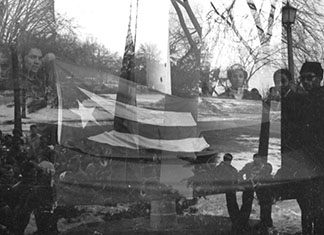 Puerto Rican Studies at Brooklyn College The fight for the creation of Puerto Rican and Black Studies programs across a number of campuses in the City University of New York (CUNY) system in late 1960s and early 1970s is one of the singular academic and political achievements of the student and community movements in these years. Stories of unity and solidarity between Puerto Rican and African American student populations and local communities were central to the struggles at many of the campuses throughout the City University. The battles for a Puerto Rican Studies department at Brooklyn College were directly connected to the larger Open Admissions movement that fundamentally reshaped CUNY after 1969. This was especially true at Brooklyn College, as this collection on the history of the fight to create a Puerto Rican Studies department at the college reveals. The efforts of a mostly Puerto Rican and African-American student-led struggle within CUNY in the years after 1968 contributed to the establishment of the larger field of U.S.-based Puerto Rican Studies (PRS) programs. As a pioneering discipline, PRS also contributed to the emerging fields of Latino Studies and Ethnic Studies, helping transform the curriculum in higher education institutions across the nation. Brooklyn College was one of several CUNY campuses at which students and faculty engaged with each other, alongside community residents, to achieve a more equitable, responsive, and integrated public education system. Influenced and supported by national organizations such as the Black Panther Party and the Young Lords Organization, the Civil Rights Movement, international struggles including opposition to the Vietnam War, and the pro-independence movement in and for Puerto Rico, student-activists at Brooklyn College engaged in various forms of protest in their efforts to transform the university system. When Puerto Rican and African-American students began to arrive in small but significant numbers at Brooklyn College (BC) and CUNY during the late 1960s, they encountered a campus that did not reflect the Brooklyn neighborhoods they knew and had grown up in. By 1968, 96 percent of the undergraduate student enrollment at Brooklyn College remained white, middle class, and largely Jewish. In that same year Puerto Rican students established the Puerto Rican Alliance (P.R.A.) at Brooklyn College, signaling the presence of pioneering Puerto Rican student-activists on the campus. The early cohort of predominantly Puerto Rican and African-American students who began integrating the Brooklyn College (BC) campus in the late 1960s became active members of the Puerto Rican Alliance and the Brooklyn League of Afro-American Collegians (B.L.A.C.)--both student clubs at BC. In April 1969 the student members of P.R.A. and B.L.A.C. presented BC President George A. Peck with a list of 18 demands that included: active recruitment and admission of more Puerto Rican and Black students into the university; establishment of Puerto Rican and Afro-American Institutes; and an end to biological and chemical warfare research and C.I.A. activities at the campus. These demands were modeled after the Black Panther Party’s 21 national demands. The 18 demands were also supported by Students for a Democratic Society (S.D.S.), a student club composed of a mostly white radical students on campus. This phase of the student-led struggle at BC is described in oral histories with pioneering student-activists included in this collection as a racially, ethnically, and linguistically inclusive movement. Later in the spring of 1969, in response to student demands and student and faculty activism on campus the BC administration approved the creation initially of the Puerto Rican and Afro-American institutes, both of which opened on the BC Campus early the following year. One of the biggest and earliest demonstrations in support of these demands at Brooklyn College became known as the “BC19” event. In May 1969, after weeks of campus protests, 19 students were arrested in their homes during a pre-dawn raid by NYC police. Pioneering student-activists faced charges for their on-campus demonstrations and were held on Rikers Island, in Queens, NY for three days. BC student and faculty activists, as well as members of the surrounding Brooklyn community (including BC alum, Congresswoman Shirley Chisholm) raised funds for bail to allow the arrested students to be released. Oral historical interviews conducted with two of the “BC19” students, Antonio Nieves and Dr. Orlando Pile are included in this collection. Finally, in January 1970, with continued support from BC faculty and staff, the Departments of Puerto Rican and Afro-American Studies were established and began operating on several CUNY campus, including Brooklyn College, Hunter College, Borough of Manhattan Community College, and City College, contributing to the longterm transformation of CUNY through new and progressive curricula and a growing and integrated student body. The initial few years after the establishment of the Department of Puerto Rican Studies (PRS) in 1970 remained fairly quiet on the BC campus. Led by students, faculty, and staff, the new academic department and the separate PRS Institute (which continued) developed courses, programs, and community-driven partnerships between Puerto Rico and the diaspora in the United States. The 1973-74 academic year marked the next major phase in the Puerto Rican struggle at Brooklyn College. Student-activists organized and mobilized to defend their right to self-determination of and control over the Department of Puerto Rican Studies. Shortly after the founding director and chair of the department resigned the BC administration organized a search committee, chaired by President John W. Kneller. In an unexpected move, President Kneller defied the decision of the search committee and in Fall 1974 chose a candidate as the new chair of the department who students, faculty, and staff opposed. Students then engaged in a series of protests demanding to have Prof. María Sánchez, the search committee’s choice, as the department’s next chairperson. Students rallied on campus and at President Kneller’s house and the gym he frequented. The protests escalated into a multi-day take-over in October 1974 of the BC Registrar’s office, ending with the arrest of 41 students and 3 faculty members. This incident became known as the BC44. Oral history interviews conducted with arrested students and one faculty member are part of this collection. This Puerto Rican Studies at Brooklyn College Collection (PRSBC) focuses on a mostly Puerto Rican led student movement at CUNY during the late 1960s and early 1970s. The collection includes oral history interviews with pioneering student-activists, photographs of participants and important events, and archival materials. The oral history interviews were recorded for a documentary film, Making the Impossible Possible (2021), directed by Tami Gold and Pam Sporn and produced by the Alliance for Puerto Rican Education and Empowerment (A.P.R.E.E.), an organization founded by several of the pioneering Brooklyn College student activists. Antonio "Tony" Nieves, student member and liaison of the Puerto Rican Alliance and the Brooklyn League of Afro-American Collegians contributed the photographs in this collection, which captured the racial and ethnic solidarity on the campus during the late 1960s. Archival materials found at Brooklyn College’s Archives and Special Collections fill out the story of institutional, pedagogical, cultural, and linguistic transformation that occurred across the CUNY system and at Brooklyn College as a result of the actions of a formidable, mostly Puerto Rican and African-American student-led, movement. The collection was curated by Gisely Colón López, a doctoral student in the Graduate Center’s Urban Education PhD program.
 -
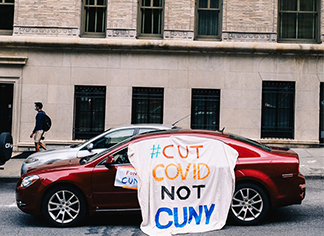 #CutCovidNotCUNY <p><span style="font-weight: 400;">The CDLA’s </span><i><span style="font-weight: 400;">#CutCOVIDNotCUNY</span></i><span style="font-weight: 400;"> collection offers a way of engaging what Donna Haraway terms “staying with the trouble,” of the potential and actualized austerity measures introduced by the CUNY administration at the outset of the pandemic, the intended pathways forward developed by the university and the state, as well as university-wide resistance to such actions. Documenting this moment in CUNY’s history establishes the collective memory of what transpired and allows for considerations of ways forward that take into account both the harried measures implemented and attempted by university and state administrations and the relentless pushback by the CUNY community. This collection can serve to inform, animate, and mobilize the CUNY community, to remind ourselves of the pushback against austerity policies and techno-solutionism in a moment of catastrophic realignment. </span></p> <p><span style="font-weight: 400;">In May of 2020, the state and city</span><a href="http://www.psc-cuny.org/news-events/cuny-adjuncts-union-aoc-and-nys-lawmakers-demand-jobs-and-new-taxes-rich"><span style="font-weight: 400;"> budget cuts</span></a><span style="font-weight: 400;"> for CUNY were projected as high as $115 million, about 20% of CUNY’s expected budget prior to the pandemic. In this moment, the CUNY administration was keen to dismiss the contingent workforce by the thousands. Reported plans by John Jay College and the College of Staten Island, for example, spoke of the dismissal of 40 percent and 35 percent respectively of their adjunct workforces—some of whom would then consequently be </span><a href="https://cdha.cuny.edu/items/show/13252"><span style="font-weight: 400;">left without health insurance</span></a><span style="font-weight: 400;"> during the largest global health crisis in a century.</span> <span style="font-weight: 400;">In swift response to the treatment of its workers at John Jay, seemingly instigated by a memo from Provost Yi Li, CUNY Rank and File activists mobilized against austerity, utilizing Twitter under the username </span><i><span style="font-weight: 400;">#CUNYstrikeready Rank and File Action</span></i><span style="font-weight: 400;"> to connect with the broader CUNY community through town halls, writing an </span><a href="https://cdha.cuny.edu/items/show/13202"><span style="font-weight: 400;">“Open Letter of Commitment to Resist Cuts at CUNY” </span></a><span style="font-weight: 400;">signed by faculty CUNY-wide, and establishing a community and public facing presence against racist austerity measures. </span></p> <p><span style="font-weight: 400;">Twitter was an important platform for the CUNY community to push against these measures, share personal perspectives, experiences, articles, and resources, and connect with others; and, accordingly, this collection documents various tweets from our community in this moment. Through the hashtag </span><i><span style="font-weight: 400;">#CutCOVIDNotCUNY,</span></i><span style="font-weight: 400;"> GC PhD candidate and Brooklyn College instructor Mikey Elster </span><a href="https://cdha.cuny.edu/items/show/13012"><span style="font-weight: 400;">used Twitter</span></a><span style="font-weight: 400;"> to draw attention to the important consideration that “the same workers on the front line of fighting the epidemic are our students.” And, the Brooklyn College PSC chapter</span><a href="https://cdha.cuny.edu/items/show/13022"><span style="font-weight: 400;"> identified the double-standard of expectations</span></a><span style="font-weight: 400;">: that CUNY workers are being cut from employment while simultaneously being asked to offer uncompensated labor to the state: <br /><br />“#CUNY + #SUNY faculty and staff are being asked to donate 15-20 hrs interviewing applicants for NYS Contact Tracing initiative. Vital work for the state's public health, but @NYGovCuomo will you also ensure these higher ed folks have thriving colleges in Fall? #CutCovidNotCUNY.” <br /><br /></span></p> <center><a href="https://cdha.cuny.edu/items/show/13242"><img src="https://cdha.cuny.edu/files/original/c4eb9d17d02798a3865d95c65639612a.png" width="400" alt="Tweet: PSC Protest Against cuts to CUNY budget during the COVID pandemic" a="" /></a></center> <p><span style="font-weight: 400;"><br />Notably early on in planning for the 2020-21 academic year, Brooklyn College mandated that its departments and programs increase class sizes while </span><a href="https://cdha.cuny.edu/items/show/13262"><span style="font-weight: 400;">simultaneously lopping off 25 percent of their course offerings</span></a><span style="font-weight: 400;">. Yet, in an article for the </span><i><span style="font-weight: 400;">Gotham Gazette</span></i><span style="font-weight: 400;"> well circulated in the CUNY Twitterverse, Professor Matt Brim of the College of Staten Island </span><a href="https://cdha.cuny.edu/items/show/13192"><span style="font-weight: 400;">explained that such measures are not new to CUNY</span></a><span style="font-weight: 400;">, stating that the university “has been in a slow-burn, decades-long state of crisis…[and that] the COVID-19 pandemic reveals with new urgency...CUNY’s longstanding, systemic failures.” And, as GC Fellow and City College instructor Harry Blain </span><a href="https://cdha.cuny.edu/items/show/13132"><span style="font-weight: 400;">pointed out on the platform</span></a><span style="font-weight: 400;">, community colleges and minority-serving institutions such as Medgar Evers College are particularly feeling the brunt: <br /><br />“@CUNY cuts fall most viciously on community colleges like @bcc_pres and @bmcc_cuny, as well as senior colleges like @NewsatMedgar that serve low-income communities.” </span></p> <p><span style="font-weight: 400;">Such harmful preemptive measures sparked protests across both the city and social media, illustrated in </span><a href="https://cdha.cuny.edu/items/show/13242"><span style="font-weight: 400;">tweets by the PSC</span></a><span style="font-weight: 400;"> and others (which included the particularly striking </span><a href="https://cdha.cuny.edu/items/show/13232"><span style="font-weight: 400;">photography by artist Erik McGregor</span></a><span style="font-weight: 400;">) that address the May Day caravan for adjunct rights, and through the hashtags </span><i><span style="font-weight: 400;">#CutCovidNotCUNY </span></i><span style="font-weight: 400;">and </span><i><span style="font-weight: 400;">#makebillionairespay, </span></i><span style="font-weight: 400;">among others. Physically at the protests (</span><a href="https://cdha.cuny.edu/items/show/13102"><span style="font-weight: 400;">New York State Senator John C. Liu</span></a><span style="font-weight: 400;">), on Twitter and online (including </span><a href="https://cdha.cuny.edu/items/show/13062"><span style="font-weight: 400;">Congressmember Alexandria Ocasio Cortez</span></a><span style="font-weight: 400;">) a number of federal, state, and local government officials and public advocates showed their support for funding CUNY despite plans by Governor Cuomo and university administration. Support for resistance to austerity measures at CUNY and those observed more broadly across the US, and considerations of the taxation of the wealthy as a viable way forward, were made by both </span><a href="https://cdha.cuny.edu/items/show/13142"><span style="font-weight: 400;">local politicians</span></a><span style="font-weight: 400;"> and </span><a href="https://cdha.cuny.edu/items/show/13162"><span style="font-weight: 400;">CUNY faculty</span></a><span style="font-weight: 400;">. <br /><br /></span></p> <center><a href="https://cdha.cuny.edu/items/show/13142"><img src="https://cdha.cuny.edu/files/original/cbf121b7be633bf049d33924f9200723.png" width="400" alt="AOC's Tweet" a="" /></a></center><br /> <p><span style="font-weight: 400;">The CDLA </span><i><span style="font-weight: 400;">#CutCOVIDNotCUNY</span></i><span style="font-weight: 400;"> collection hopes to act as a useful resource in the fight against austerity politics during the COVID-19 pandemic.</span> <span style="font-weight: 400;">Serving as a collection of responses native to the CUNY community, these experiences will therefore be preserved in the CDLA, to retain them in our collective institutional memory. This collection of the CDLA hopes to offer a preemptive measure against neoliberal master narratives through documenting the extensive pushback and activism by the CUNY community in this moment. <br /><br /></span></p> <hr /> <p><i><span style="font-weight: 400;">This collection is part of the </span></i><a href="https://cdla.commons.gc.cuny.edu"><i><span style="font-weight: 400;">CUNY Distance Learning Archive (CDLA)</span></i></a><i><span style="font-weight: 400;">, a group project developed as part of Matthew K. Gold’s Spring 2020 “<a href="https://kinfrastructures.commons.gc.cuny.edu/">Knowledge Infrastructures</a>” seminar in the Ph.D. Program in English at The Graduate Center, CUNY, in partnership with The Interactive Technology and Pedagogy Certificate Program.</span></i><span style="font-weight: 400;"> <em>All CDLA collections on the CUNY Digital History Archive website were co-curated by Travis Bartley, Nicole Cote, Zach Muhlbauer, and Stefano Morello (Project Manager).</em></span></p>
26–31 of 31