Oral History Interview with Antonio "Tony" Nieves
Item

CUNY
DIGITALHISTORYARCHIVE
A project produced by the Alliance for Puerto Rican Education and Empowerment, APREE.
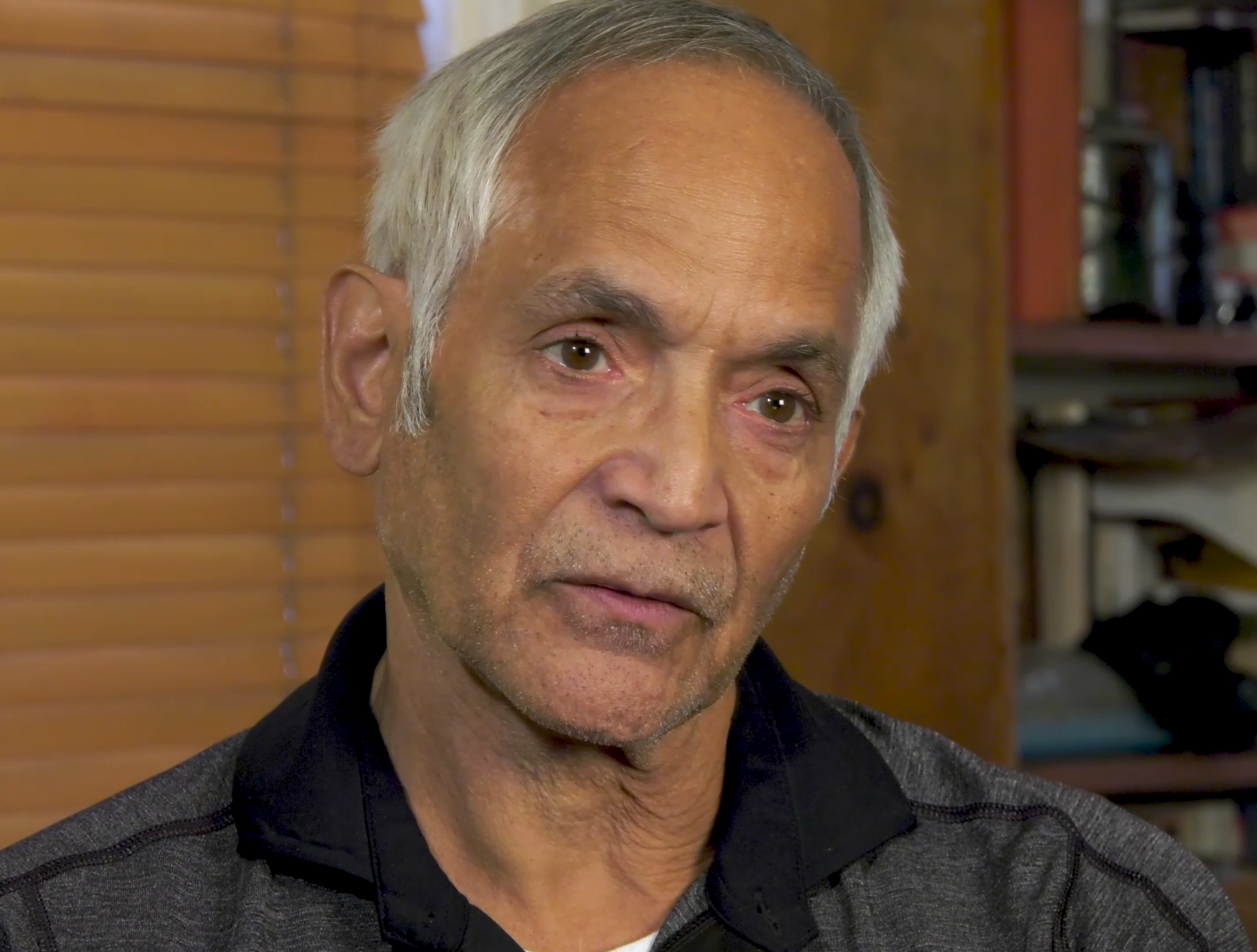
Interview with Antonio “Tony” Nieves
Interviewed by Pam Sporn and Tami Gold
November, 2019
New York, NY
[Start of recorded material at 00:00]
Pam Sporn
Antonio Nieves
Can you start by telling me when you, how did you get to Brooklyn
College? What year did you start? What was that like to be a young Puerto
Rican student in Brooklyn College?
Well, when I got to Brooklyn College, I graduated from high school in the
spring 1968 and I was inducted into the army. Before I graduated from
high school, then I was accepted by the Educational Opportunity Program
at Brooklyn College, which was a program for minority students that
wanted to go to college. We had to go to a pre, remedial courses over the
summer taking math and English. And so I was accepted into the
Educational Opportunity Program. And I told him about my being
recruited me being called into the army and they said they will take care of
it for me. So they called the army they said that I was not going to be able
to participate in their activity. I wasn't going to go anyway, I was looking
at either leaving the country or going to Canada, but I was not going to
participate in the war in Vietnam, my family is we're demonstrating
against, my brothers were demonstrating against the war in Vietnam, I had
been politically active before I went to Brooklyn College. So I was
demonstrating against the war in Vietnam, my first demonstration was
against racism in the south, the lunch counter programs that they had
boycotts in the south, and they wouldn’t let Black people eat at the
counter. So I became involved in that in 19, 1964 was, I think my first
demonstration. So by the time I got into college, I had been to several
demonstrations against racism, several demonstrations against the war in
Vietnam. When I got to Brooklyn College, there were two organizations,
Pam Sporn
Antonio Nieves
Pam Sporn
Antonio Nieves
Black League of Afro-American Collegians, which is B.L.A.C. and the
Puerto Rican Alliance, which is P.R.A. Now I joined both organizations
when I got there. I was just starting out in photography, so I was the
photographer for both organizations. And since I went to both meetings, in
both organizations, I delegated myself to be the liaison between the both
organizations. So I was on the Central Committee for B.L.A.C. and I was
on the Central Committee for P.R.A. Being at Brooklyn College, my first
year, within the first two months, I was working with both organizations.
So whatever happened, at B.L.A.C., or the Brooklyn League of Afro-
American Collegians, I would bring to the Puerto Rican Alliance or
whatever happened at the Puerto Rican Alliance, I would bring to the
Black League of Afro-American Collegians, so we will all be on the same
page because we were all fighting against, we were all fighting the same
struggle. And so I became involved with both organizations.
What drew you to those two organizations? What were the issues that you
felt both organizations answered for you what was going on on the campus
that you felt like you wanted to be part of those two organizations?
I think that it was more of a community, something in the community
because I had gone to Erasmus, Erasmus is predominantly Jewish High
School. Brooklyn College, was a predominantly Jewish college, we used
to call it Yeshiva high. Most of the people that graduated from Erasmus
went to Brooklyn College and became teachers. When I applied to
Brooklyn College, I was rejected from Brooklyn College, I had applied to
27 universities and in CUNY and was rejected by all of them. And then at
some point, the Educational Opportunity Program of Brooklyn College
accepted me because of my grades on my S.A.T's. and so the reason I was
drawn to B.L.A.C. and P.R.A. is because they were Blacks, and Puerto
Ricans there and it was a community thing. So that's where your friends
were, that's where the political activity was. And so that's why I think I
joined both organizations.
Did all of the members of the Puerto Rican Alliance necessarily feel an
affinity for being also a member of the B-.L.A.C.?
No, no, because there was a lot of racism there. There was a lot of racism
going on at Brooklyn College, between even Puerto Ricans and Blacks.
Puerto Ricans and Blacks were tried, the society tried to separate us as two
entities but being Puerto Rican, you have Blacks, you have Whites, you
have every color in the rainbow, every kind of hair and every kind of eye
color. So the community that I was raised in and the household I was
raising was an international household. We didn't see differentiation
between people, we didn't see the color. Because we have everybody in
our family Black and White.
Pam Sporn
Antonio Nieves
Pam Sporn
Antonio Nieves
[05:08]
So if that wasn't the case with some of the other Puerto Rican students,
what... what kind of conversations were going on? Since you, you felt that
affinity? Did you have conversations that would try to present another
point of view to those other Puerto Rican students?
I think we had a conference, the first, the first semester that I was at
Brooklyn College it was Proud to be Latino, or Proud to be Puerto Rican,
we had a conference in upstate New York, where it was just the people
from P.R.A., and people from different communities in Harlem and
different political organizations that had gotten us together to discuss what
it meant to be Puerto Rican and, you know, we discussed about hiding our
Black grandmother's in the closet, you know, Puerto Ricans, traditionally,
I want to say to just traditionally, they're not, they're not racist. In their
culture, we have different people in our culture, or different colors in our
culture. But being indoctrinated with the Black and the White of America
society, you know, that's been putt in our, in our culture now, that you
know, if you're Black, step back, if you're White, go forwards. So there
was that, that racism does exist in the in the Puerto Rican culture, and is
perpetrated by the myths that America has put upon us because it had their
own history of racism here. So I think that came out then that Puerto
Ricans that are Black have a problem in the White in the white Puerto
Rican community. And so those are some of the things that we were
struggling with, that we have, we're all one family doesn't matter what
color we are. But we have that first identify that we have a problem with
racism in the Puerto Rican community. And so that's one of the things that
we address in the early the early, the early, the early fall of, of 1968.
(background audio) In the fall of 1968, you address this issue of racism
within the Puerto Rican community.
Yes, we went to a conference in upstate New York, and the conference
was about being Proud to be Puerto Rican, about our cultural identity. And
some of the things that we discussed, there was racism, that White Puerto
Rican like to hide their Black grandmother's in the closet. And there is a
racism that exists in our culture. It's been perpetrated by the racist culture
in America, whether you're Black, you have to step back, if you're White,
go ahead and one of the things that my mother taught me as a child was
that if you're Black, you're not going to get ahead in society. So you need
to marry White to improve the race, and this is a typical thing in Puerto
Rico. So we have to recognize, we had to recognize that there was racism
there and that's one of the issues that we had to deal with and within
ourselves. Yes. Well, it's a it's a saying in the culture, hide your Black
grandmother in the, in the closet, you know, when you bring people over
the house, so you know, you have to recognize that there's racism there.
And there's racism in the Puerto Rican community that, you know, light
Pam Sporn
Antonio Nieves
Whites light, Puerto Ricans get treated better than a Black Puerto Ricans
and it was bought out in the conference really in a stark way because
somebody started crying. Cookie started crying at the at the conference
where we were discussing Black and White and we Joaquin was there at
the conference. And I think she called him, I don't know if she called him
a nigga or if she didn't call them a nigger. And, you know, she said that,
yes, she had this animosity towards him. And everybody in the conference
started crying, except Cesar, myself and Joaquin. I think there was
somebody else, maybe Lucas, but it was a big emotional. It was a cathartic
moment. It was emotional for people, people recognizing their own
racism, people who recognize that they had believed in a certain thing that
they needed to move forward and change.
How does that relate to your commitment to fighting for curriculum
changes at Brooklyn College? What was being taught about Puerto Rican
or Latino culture, issues of race at Brooklyn College when you were
there?
[09:50]
Puerto Ricans didn't have a history. There was no Puerto Rican history.
There was no Black history. The only Black history was that Blacks were
slaves and you know, Puerto Rican, were had no, I guess the only culture
that Puerto Ricans had was music. But there was no history. So when I got
to Brooklyn College, I had started studying on my own I, at high school, I
started reading a lot of literature about different cultures and different
races. And I saw that every culture, and every race has a history. So my
goal, and Malcom X was one of my teachers, also, Malcolm X, you know,
enlightened me to the fact that we have a history, we just have to go find
it. And so I thought it was important for me to learn my history. And I
thought it is important to learn Black history also and Puerto Rican
history, because Puerto Ricans are one third Black, we have Spanish and
we have Indian, and we have Afro-American in us. So we're part of all
three races. So why would you not like one race and like the other, you
know, that doesn't? What kind of self respect are you going to have for
yourself, who can you, you know, I didn't have any identity when I went
to college, I was looking for who I was, you know. All my life, I've been
told that I was nobody, and that I was nothing and I would never
accomplish anything. The same thing that Orlando had with his experience
in medical school, I had in high school, when they asked me what I
wanted to be and I told them, I wanted to be a doctor. And they asked me
what your father was. And I said, Well, my father was a carpenter. And
they said, well, that's an honorable profession, maybe you should do that.
And I said, no, I want to be a doctor. And so racism during that period of
time was as common as apple pie. It was very prevalent, people were
being killed constantly in the street. So if you didn’t struggle for what you
wanted, if you didn't, if you wanted to just sit on the sidelines, and I wasn't
Tami Gold
Pam Sporn
Antonio Nieves
Pam Sporn
Antonio Nieves
one of those people, I come from a family that has struggled, my mother
struggled, and she taught me how to struggle, my brothers struggle. So
sometimes I say, I blame it on my Christian upbringing, that we should
always take care of the underdog, we should always take care of our
brothers and sisters, no matter who they are, we should uplift the poor. I
was very ignorant when I went to high school, I didn't know a lot about
society or things that I learned later on. But, you know, self identity was
one of the most important things at that time, because we weren't learning
self identity. The only thing that latins did was make trouble, cut people
up and were criminals.
Very heavy, also heavy that you say you didn't know yourself and you
didn't know who you are.
So how important was the Puerto Rican Alliance to you in shaping that
identity and affirming that you were somebody?
We were looking for our identity. We were trying to study, we were trying
to find out what identity was, it was being, we were told we didn't have
any history. We didn't have any identity. So I knew that we did. You
know, just listening to Malcolm X, listening to the Young Lords, listening
to the Panthers, you know, other progressive groups, S.D.S. was out there,
the Communist Party was out there. The struggle for Palestine was there. I
had, you know, first heard about the struggle for Palestine back in ‘68, and
°69 and I was reading literature and try to understand, I've always tried to
understand what was going on in the world, and why the world functioned
the way it was, and why was there oppression? Why were people looked
down upon. And I tried to understand the international politics. I never got
a handle on it. But during the meantime, I've learned a lot about the world.
Tell me about the demands that the Puerto Rican and Black students were
putting forward at Brooklyn College. What were the demands of the
Puerto Rican Alliance and Black League of Afro-American Collegians?
B.L.A.C. sa I said, when I got to college be Puerto Ricans and the Puerto
Rican Alliance and Black League of Afro-American Collegians was
organization that were striving to have self identity. Self identity was the
most important thing at that time. Education was very important also. And
the only way that I saw I think, was from Marcus Garvey, or Booker T.
Washington that said, you know, pull yourself up by your own bootstraps
don't depend on anybody. And that's what the Black community was, you
know, doing and the Puerto Rican community we were trying to uplift
ourselves by knowing more about ourselves.
[14:59]
So and I think it was December, Orlando came to me and he said group
was going to California, that the Black Panthers were having a Black
Studies conference on how to set up Black Studies in schools. And he told
me he was going and I said well what about me? How come you're not
sending me? I said, you know, I belong to, I'm a member of both
organizations you know, I'm the liaison, don't you also need pictures of
what happens in California, you know, you need your photographer there.
So he gave me his spot. And so I ended up going to the conference in
Oakland, California. And I think we went, Ray Aviles was there, he was a
member of the Young Lords. Askia, Davis was a member of the Black
Panther Party, and I believe he went we came and there was, I think two
sisters went, I'm really bad on names, but also two sisters from the
organization went from B.L.A.C. and when we came back, and Larry
Sparks, was a member of the Communist Party, but he wasn't a member of
the student body. When we came back from Oakland, when we first got to
Oakland, we went to the to the Black Panther headquarters and to me it
was it was an exhilarating moment, because I walked in, and theres
Panthers were dressed in Black with their berets and holding M-16s. On
either side of the door, and they said they were expecting a raid that night.
So I think we slept under the pool table that night. And then the next day,
we went to a motel and we saw Bobby Seale and Kathleen Cleaver they
spoke there. They gave us a bunch of literature about how to set up a
program for B.L.A.C., for Black Studies. We came back, when I came
back with the other members of the organization we sat down with the
Central Committee and told them what our findings were. Sometime in the
course of that I think when we wrote the 18 demands, there might have
been about eight of us, four men, six men and two women that wrote the
18 demands. It was a Central Committee of P.R.A. and Central Committee
and B.L.A.C. and so one of the important things that when we wrote up
the demands, because it was, it was, in California it was Black studies, it
wasn’t in Puerto Rican studies, just Black studies. So what we did was,,
we took the Black studies and we made it into Puerto Rican studies also.
So everything that was we were demanding for Black League of Afro-
American Collegians, we were also demanding for the Puerto Rican
Alliance. So we came up with the demands. And every demand we
changed, it was Black and Puerto Rican, and then every other demand was
Puerto Rican and Black. So there wouldn't be any divisiveness. And so we
presented it to the student body. It was funny to present it to the student
bodies because my brother had a Xerox machine in the basement because
he was a member of the Du Bois club and so we printed up leaflets, so I
printed up leaflets in my basement, that said secret meeting and gave it out
to the third world students on the campus. We didn't give it out to the
White students on campus, because they weren't the people we're trying to
influence and recruit. We had, I think about 300 people at the first
meeting, the secret meeting, and we presented the 18 demands, the 19 18,
21 demands to them.
Pam Sporn
Antonio Nieves
Pam Sporn
Antonio Nieves
What was the main gist of the 19 demands? Can you tell me the top four
demands?
I think the first one was that (...) The first demand of the 19 demands was
that we admit all Blacks and Puerto Ricans in the city, because Brooklyn
College, Brooklyn College represents the city and we pay taxes in the city.
And so Brooklyn College should reflect the tax base of the of New York.
And so we need to have more Blacks and Puerto Rican students in there.
So that was the first demand. The second demand was for more ethnic
studies, more Black, Afro-American Studies, as to the origin and what the
history of Africans in Africa and how it relates to America, to American
Afro, American Africans. Also the history of Puerto Rico that we should
have courses that taught, taught us what Puerto Rican history was, we
wanted to know what our history was. We wanted to know what identity
was. We knew that we had one, we wanted teachers that would teach us
those, those histories, and we wanted them to come from the culture. We
wanted afro American teachers and we wanted Puerto Rican teachers to
teach us our own culture. We knew we had a culture, we knew we had a
history, and it wasn't being taught, it was being, what we were being fed
was propaganda and lies, that there was a Puerto Rican history to learn and
we were not being taught it. One of the demands also that we had, it wasn't
it was more of a demand that reflected the political times that we wanted
to end the war in Vietnam. We didn't expect that we would get that
demand but we put it in there for us not for posterity. But you know, the
word escapes me at the moment.
[20:57]
Did you feel there was a connection between the university and the war
going on?
No, there wasn't, there was (...) I think Orlando talked about it earlier,
there was a relationship between they were doing, not only were they
recruiting on campus, but they were also doing biological experiments on
the campus. And we didn't think that Brooklyn College should be a haven
for the military to be doing experiments on campus, that we didn't want
them recruiting people on campus. So yes, there was a connection. And I
think that might have been reflected in the demands also, that we
demanded, you know, no more recruitment, no more biological
experiments being done by the military on campus. And Open
Admissions, everybody should, everybody has a right to knowledge and
also, there was a big thing about, well, if you let Puerto Ricans and Blacks
in then you're going to lower the standards and we said, well, the standard
was already low in the high schools, and they weren't teaching us properly
so we couldn't even go to college and be successful. So we demanded
Pam Sporn
Antonio Nieves
Pam Sporn
Antonio Nieves
remedial courses for people who were in high school and coming to
college.
Do you remember any slogans being spray painted around the campus?
No, I don't remember any slogans I don't think we did that. I don't think
we did any graffiti. Every action that was taken on campus was
coordinated. Nothing happened uncoordinated. The central committee
made sure that we had people where we needed them to be, we made sure
that whatever activity was taking place on campus was either, was headed
by was coordinated by the Central Committee there nothing happened on
the campus that we were not aware of. There was no demonstrations, no
activities everything came from us.
No, we had a demonstration where we burned the head of a pig on
campus, on the quadrangle in front of Boylan Hall. And we had chants,
about Peck I think it was President Peck you lie, and so we burned a pig's
head. We had demonstrations during that particular during that particular
winter, that first winter. We had demonstrations for Malcolm X we
celebrated Malcolm X's birthday. I don't think we did too much
celebrating for Martin Luther King, but we were very, very people were
interested in struggling. There were people who wanted to do it peacefully
like Malcolm X, like Martin Luther King, there are people who advocated
for peaceful demonstrations. Martin Luther King had been killed through
violence, Malcolm X have been killed through violence, we were being
killed in the streets, Black people being killed and dragged out of their
homes, Puerto Ricans will be thrown off roofs, we took over the church in
Harlem because it had killed a Puerto Rican either in the jail or had thrown
them off the roof, that was Young Lords. We had members of the Young
Lords in our organization we had members of the Black Panther Party in
our organization. They did not, they were in the organization. To us, I
think the most important thing that a group of neighborhood kids,
gangsters had gotten together and formed political organizations to serve
the community. And here we are, college students. And if gangs can
organize a community and have breakfast programs, lunch programs, what
would stop us from doing things that were important to us like learning
our culture, making it easier for other people to learn.
[25:07]
Why did you demonstration about the President? Why did you say that
President Peck was lying? What was that about? Can you tell me, was that
when Black, Puerto Rican and White students occupied the President's
Office was this in 1969?
It wasn't ’69, we were trying to institute our demands, and the school was
saying no. And so when we talk about our culture and our history, that we
Pam Sporn
Antonio Nieves
Pam Sporn
Antonio Nieves
Pam Sporn
Antonio Nieves
Pam Sporn
Antonio Nieves
have a right to our culture and our history, the President was denying us
by denying our demands. And so we were calling him a liar. And we were
saying, you know, this is what we want. And I think that even before the
students were arrested, there was a lot of activity, there were fires on
campus, there was, there was civil unrest on campus, fire alarms were
turned on. The philosophy then was if the school doesn't work for
everybody, it works for nobody. It wasn't working for Blacks and Puerto
Ricans, it wasn't gonna work for anybody. So the goal was to shut the
school down and get them to listen to our demands. And when the raid
came in May, and they arrested us. I think that it may have brought a lot
more people into the fold. But there was, if you look at the photographs
from that time, and the tapes of that time, you'll see that there's a lot of
people on campus demonstrating so we had a lot of support. But I think
more came after we were arrested, like Orlando said.
Can you remember that? Can you describe that moment, can you describe
what happened?
Which moment is that?
When the BC 19 were arrested?
Well, it was very traumatic. I'll say that. From what happened, what other
people have told me about their activity or what happened in their house,
from my house, they came into my house.
I'm sorry, could you say, I mean, say who they is. I'm sorry. Just start
again and say whose they?
(background audio) It was the police, what was the question?
Oh, tell me what happened. You say it was very dramatic when you were
arrested in the BC 19. You were telling me when the police arrived at your
house.
So the police. I was, I was studying for my exams. I normally study at
night. So I was studying till 5:30 in the morning. I’d just left my house to
go around the block to go to my mother's house to get something to eat. I
saw the police cars coming around the corner, I went to my mother's house
and had my crackers and tea went to sleep. Meanwhile, the police came to
my house, they came, they unlocked the front door. They came in with
vest. It was a typical thing that they were doing during then, the pre dawn
raids. They came in with several policemen, they came in with vest
shotguns. They went into the house they arrested all the male members of
the house. I remember (...) was telling me that he woke up with a
flashlight and in his eyes and a policeman put a shotgun in his face and he
Pam Sporn
Antonio Nieves
Pam Sporn
Antonio Nieves
was laying in bed and he just, he said they asked him are you Antonio
Nieves, he just slapped the shotgun away and said, no, I gotta go to work
in the morning. I'm not him.
Anyway, so they arrested every all the males in the house. And for the
other members of the, of the organization. They Orlando's family was, his
sisters were arrested, his mother was arrested. This happened in other
people's houses. Since they arrested 19 of us. Only two of us did not get
arrested me and Larry Sparks and because I had just left the house. Was it
traumatic? Yes. And then the next day, or that day when, when they were
being arraigned, I was going to the courthouse to see what the charges
were. They had already arrested everybody. And when I got there,
somebody told me, you can't go into because they're looking for you. And
they're going to, you know, you're looking at 251 years in jail. And so the
charges were riot in the first degree, riot in the second degree, riot in the
third degree, incite to riot in the first degree, secondary arson in the first
degree, second degree, criminal mischief in the second degree, first degree
conspiracy to conspire, in the first degree and second degree. So yeah, I
was a little nervous. But this is something that we had decided that we
were going to do, no matter what the consequences were. The people in
the organization were committed to sacrificing whatever they needed
sacrifice to make sure that we had Puerto Rican Studies and Afro-
American Studies, and we were taught our true history, and not the
propaganda or the stuff that was made up and fed to us.
[30:08]
Those are tremendously harsh charges for college students. That's crazy.
It was crazy. And there's no way I was gonna do 151 years, but
it was, what it was. And it didn't matter if it was 500 years, you know,
everybody that was involved in the organization and was working for
Black Studies and Puerto Rican Studies was committed.
How did it actually win the Puerto Rican Studies Institute, how was it
actually, what made the final push to get that approved?
Well, I think that after the case was going on for, went on for about a year.
And so the students that were arrested, the unrest on the campus stopped.
In September, the demands were presented again to the to the school, the
school started instituting them. I think that the school knew that if they
didn't institute these demands, that everything was going to start all over
again, that the people will, not only was the initial core group committed,
but now the whole student body was committed to it. And they were
pushing for it. And when we were arrested, money had to be raised. I think
that the women in the organization went out and raised money. People put
up their houses for collateral. But I think, I always say this all, most of the
Pam Sporn
Antonio Nieves
Tami Gold,
Antonio Nieves
time, my philosophy is the backbone of an organization is women in the
organization, because most of the men were arrested. So most of the
women in the organization took up the struggle of supporting us, and you
know, carrying on the information. But that's my bias.
So the Institute's were established because of the immense pressure of the
student body.
That's correct. I mean, there were certain things that they couldn't institute.
Some of the demands were again symbolic was what the word I was
looking for, like the war in Vietnam. I don't know if the racist professor
that, that was mentioned earlier, if he was ever ousted. But yes, they set
up, they set up a program for the Puerto Rican, they also set up a program
for admissions of more Blacks and Puerto Ricans and eventually, the free
admissions, Open Admissions is what it was called, it wasn't free
admission, it was Open Admission. Open Admission was not for just
Blacks and Puerto Ricans, Open Admission was for everybody. We
wanted Blacks and Whites, Puerto Ricans, and whatever minority you
were, whatever color you were, we wanted everybody to have an equal
opportunity in the schools, because the end goal of that is that education
will open up your mind. And an educated society can control its own
destiny. And that's what we were looking for. We were looking to educate
the masses and educate to the Puerto Rican and Black communities and
everybody else who would listen so they would see what was really going
on in life. So education is the key to success. One of my other idioms
(background audio) That whole thing sounds very traumatic, and scary.
When you went home, people told you not to go in and what did you do?
Did you run away from the city? Because I would have, did you go into
hiding? I mean, I would have freaked out. Like, what did you leave town?
Well, the first thing I did was go to the courthouse because I wanted, I was
gonna sit in court, listen to them, because they didn't have my picture so
they didn't know what I looked like. But I was, as I got closer to the
courthouse, they had put out, they had send out runners, because they
knew what I was going to do. My organization send out runners and told
me to disappear. And so I disappeared. I went underground for maybe a
week. That's not a long time. Was I scared? No. I wasn't scared. My, I
went to my girlfriend's house, and her mother said, is this you in the Daily
News. I was like, yeah, that's me. Because they had an arrest warrant for
me. At some point I was worried about if I walked the streets would a
policeman recognize me, so I went up to a policeman and asked him for
directions. He didn't know who I was, so I felt comfortable.
[34:58]
Pam Sporn
Antonio Nieves
Tami Gold
So I hit out, I had some friends that took care of me and they insisted I
stay inside. But after a week, I had talked to my lawyer. The lawyers that
we had was, Mr. Mercer, senior and (...) was one of our lawyers. And so I
gave myself up, to the to my lawyer, and he took me into the police station
so I spent three days at Rikers Island, till I was bailed out. That was an
experience. But it wasn't a bad experience for me. I've been
institutionalized, before I was in an orphanage for like five or six years so
I already know how institutions function. So and I had read Malcolm X on
how he dealt with jail. So when I went to jail, I just connected to some
people that were doing martial arts, and I worked out on the floor with
them. So basically, nobody really bothered me. I called it a vacation. At
Rikers three days.
So looking back, we're commemorating the 50th anniversary of the Puerto
Rican Studies Department, and all the work that you guys did to win that
and Black Studies. Looking back, what is the most important thing to you?
And what have you carried from those days to now, in terms of how, what
you've committed your life to? What's been the influence of being
involved in that, that struggle?
Well, I was always proud that we had gotten Open Admissions, I was
proud to, when I would look back, and I would think about what I was
doing at that particular time in my life, I would look back and I was like,
well, you did something, you help educate people, you know. Now people
are going to college and people are getting educated and have better
opportunities, and they can make better decisions. And so I was happy
about that. I was not aware that after seven years Open Admissions was
done away with. I was also, when I left Brooklyn College, I went to
Howard University School of Pharmacy. And so I was concentrating on
my studies, because I realized that in order to be an effective member of
the community, you also had to have a degree, you also have to have some
power, that being involved in political movements and not getting an
education and not having any power behind your voice was important, so I
went to finish my education. And once I finished my education, then I
started working as a Pharmacist in the community. And my, my necessity,
Ihave a need to serve the community. I don't know where it comes from,
maybe it comes from my mother, maybe comes from my Christian
background, maybe it comes from my political background. So now I was
a Pharmacist and I was serving the community in terms of giving,
delivering health, health care. So that filled a void for me, because I need
to be working in the community and hopefully doing something to make
things better for everybody else.
Ihave a few questions. Why were you turned down when you first applied
to...
Antonio Nieves
Tami Gold
Antonio Nieves
Tami Gold
Antonio Nieves
Tami Gold
Antonio Nieves
The reason I was turned down, is because I had horrible grades, horrible
grades when I was in high school. And when I was in elementary school,
P.S. 47. and then I went to Erasmus. They were never really interested in
educating us, they were babysitting. You know, my teacher told me, told
the class, I'm going to teach you guys you can either listen or not listen,
either way, I'm going to get paid. Education wasn't a priority in schools.
Just being there, babysitting was the priority. I don't know if I answered
your question.
Why do you think we went to a school all Puerto Rican? Was it race
based?
The first school I went to was P.S. 47 and I think there was many Blacks
and Puerto Ricans because it was a Black and Puerto Rican community in
Park Slope on Fourth Avenue and Dean street and when the second school
I went to, Walt Whitman was predominantly Jewish, and Erasmus was
predominantly Jewish, and I forgot the question already.
Well, did they single out not educating you because you're Puerto Rican?
[39:51]
No, I think it was the whole education system was, was okay. I believe
that when I was in school, the education system in New York City was not
really geared toward educating people but more babysitting students. I was
in a, when I lived in Brooklyn, it was a ghetto , the high school was a
ghetto school. We had hot and cold running prostitutes and junkies in the
neighborhood. The school wasn't really geared toward educating but more
babysitting. When I went off into, into high school and junior high school,
they will good schools, Erasmus was a good school Whitman was a good
school. But I don't think that, they were particularly interested in teaching
the Third World students, what they needed to know if you didn't, my
mother had a third grade education so to her me just being at school was a
big thing. And she always, my mother always stressed that, you should get
educated and you should go to college and she was always pushing me to
go to school. But the schools were not interested in basically teaching you
anything.
You mentioned that your brother was in the Du Bois club. Can you
explain to Pam, what's the Du Bois club?
W.E.B. Du Bois Club was a, was an Afro-American and some of the
things that he esposed was if you, you have to help yourself, nobody's
going to help you. You have to develop your own economic base. And so
there was a communist organization that decided to take his name. And
they were, I thought they would just Brooklyn based but they were New
York based, my brother was the chapter, the head chapter, e he was in
Pam Sporn
Antonio Nieves
Pam Sporn
Antonio Nieves
Pam Sporn
Antonio Nieves
Pam Sporn
Antonio Nieves
charge of the Brooklyn chapter of the W.E.B. Du Bois club. And I don't
know if I had too much, I didn't do too much, I didn't do anything with the
boys club other than know that my brother was a member.
Did he talk about what happened in the Du Bois club while in the house?
Well in the house we always, we always had talked about. My house was
on Bergen Street was an open house and so we would have people from
the community come in. And it would be always constant polemics ‘till
two, three o'clock in the morning, people would sit around, drink tea and
crackers, and smoke their cigarettes and drink their beer and wine and
we'd discuss politics ‘till two, three o'clock in the morning and that was
the usual thing on my house. And it was because of my brother Dito and
my brother, Robert.
Exciting times. Seems like it was very rich and inspiring. How old were
you when this was going on?
Just turning 18, turning 19 though, and that's a an incomplete sentence.
Sorry.
I'm getting tapped on the back to ask you to repeat that. So you're 18 and
all these vibrant political discussions are happening in your house? Could
you tell me that?
We were talking about racism and talked about racism in the society?
What racism represented, we talked about Jim Crow...
Could you just, I'm sorry to interrupt, you could just step back and say I
was 18, and in the house where this vibrant political discussions going on.
I was 16 and my house we used to have vibrant political discussions. We'd
sit around the kitchen till two, three o'clock in the morning and talk about
racism. We would talk about the war in Vietnam, which was prevalent.
My brother Dito was inducted to the army and he told him that if he, if
they took them in the army, he would organize the soldiers. So they would
shoot at the US government and not at the Vietnamese. They took my
brother Robert from the W.E.B. Du Bois club, and they wanted him to join
the army, he said he wouldn't go, I was inducted I went to Fort Hamilton, I
went to Fort Hamilton for my induction test and they wanted me to swear
allegiance to the United States and I told them I wouldn't, that I will take
the Fourth Amendment and they was like, that's the wrong amendment.
The guy said it's the fifth amendment, I was like, alright, I'll take that one.
So I wouldn't pledge allegiance to the United States, they inducted me
anyway. I was supposed to report to the military but in my household
when I was younger, there was a lot of political emphasis, so we talked
Tami Gold
Antonio Nieves
Tami Gold
Antonio Nieves
Tami Gold
Antonio Nieves
about racism. We talked about colonialism. We talked about Allende, we
talked about the war in Vietnam, we talked about Palestine, we talked
about racism. We talked about Malcolm X, we talked about Martin Luther
King, we talked about women's struggle. We talked about, a little bit about
the gay struggle because the gay struggle was just coming into its own.
But everything was discussed at home, and everything was fair game.
[45:01]
You mentioned that there was a cc, a Central Committee?
The Central Committee for P.R.A. and the Central Committee for Black
League of Afro-American Collegians. P.R.S being Puerto Rican Alliance.
We coordinated with the organizations and the organization decided what
actions were going to be taken, whether it was to block Boylan Hall,
whether it was to have a demonstration and burn a pig's head, whether it
was to pull the fire alarms, whether it was to shut down the school,
whatever was needed to shut down the school to draw attention to the 18
demands that we wanted, 21 demands, excuse me.
How are they elected? How did the Central Committee, were you on the
Central Committee and did you get elected?
I was on the Central Committee for Puerto Rican Alliance and Black
League of Afro-American Collegians. How is the committee elected, the
committee was elected by the membership of the organization. The
organization voted who they wanted for President, Vice President and we
would make decisions and bring it down to the organization and discuss it
with the organization. And at some point, the organization got together
after we came from California and decided what activity we wanted to
have.
You mentioned earlier Puerto Ricans with thrown off the roofs? Can you
elaborate, who is throwing Puerto Ricans off the roof?
Oh, the police department were at that particular point. Or that particular
time in history, the police department were committing a lot of atrocities
against the third world people, against third world people. Afro-American
people the Black Panther Party was getting shot in their beds. People, the
Young Lords, I don't know if the member, the young man who was thrown
off the roof was he a member of the Young Lords, he may have been or he
may have been somebody from the Young Lords who was killed in the in
the jail at Rikers. But there was, they murdering third world people. They
were killing Puerto Ricans and they were killing Blacks, indiscriminately.
And so you can either go sit back and do nothing or you could stand up
and fight. And the people that I would, that I was with wanted to stand up
Tami Gold
Antonio Nieves
Tami Gold
Antonio Nieves
Tami Gold
Antonio Nieves
the fight. And they were not going to kowtow to anybody. It was our way
or the highway.
Where you proud?
Am I proud? I'm proud of the accomplishments that we that we were able
to bring to fruition. I was happy that I wasn't, I didn't have to kill anybody
in that period of time. But I'd never expected to make it past 25. And so
everybody who was involved in the organization, were actually taking
their lives in their hands and putting their lives at risk and their family's
lives at risk. They were, when we were in the court, the DA wanted to hear
from somebody to admit to something ‘cause everybody was not admitting
to anything. They wanted to clear their names. The DA had just invaded
21 people's houses in pre-dawn raids with shotguns and squads of
policemen and guns drawn and so they had to have some, some reason for
legitimizing what they had done. We did, we did take actions on the
campus that we thought would bring us, bring us what we wanted. And we
were willing to take those chances people willing to die at that time,
people were willing to sacrifice their lives at that time. And I think that's
what it took to, to get us to where we are today or to get us to the 21
demands and having somethings instituted like Puerto Rican Studies and
Afro-American Studies and learning more about our history and who we
were.
Today, are you happy with where things are today?
No.
Education and education, educating young Puerto Ricans and young
Dominicans and African Americans, their history, (background audio).
Last question.
[49:50]
Am I happy with where things are today? No, I'm not happy with where
things are today because we're back where we were before. We're back 50
years back. What have we accomplished? There are less Puerto Ricans in
college now, than they were back when I was there. You know, all the
things that we fought for they've been pushed back, Black people still
getting killed on the streets and shot in the streets like dogs, yes. Are
Puerto Ricans being discriminated, yes. Now, you know, the only thing I
didn't mention was the Chavez struggle, the Grape struggle and the
migrant workers, you know, what are they going through? America is
supposed to be inclusive. The only thing I want America to do is to live up
to its values, I was taught American values, the values that I learned in this
country are the values that I expect America to stand up for, and if it
doesn't stand up for that, then I'm willing to call it to call it a task. If
America is not going to represent everybody and give freedom to
everybody that I'm willing to call it a task, if I have to sacrifice my life to
do that, that then I'm willing to do that also. I'm not putting up with
inequalities and inequities that I've been promised that would not exist in
America. So freedom for all, equality for all or nobody has any rest. That's
my philosophy.
[End of recorded material at 51:06]
DIGITALHISTORYARCHIVE
A project produced by the Alliance for Puerto Rican Education and Empowerment, APREE.
Interview with Antonio “Tony” Nieves
Interviewed by Pam Sporn and Tami Gold
November, 2019
New York, NY
[Start of recorded material at 00:00]
Pam Sporn
Antonio Nieves
Can you start by telling me when you, how did you get to Brooklyn
College? What year did you start? What was that like to be a young Puerto
Rican student in Brooklyn College?
Well, when I got to Brooklyn College, I graduated from high school in the
spring 1968 and I was inducted into the army. Before I graduated from
high school, then I was accepted by the Educational Opportunity Program
at Brooklyn College, which was a program for minority students that
wanted to go to college. We had to go to a pre, remedial courses over the
summer taking math and English. And so I was accepted into the
Educational Opportunity Program. And I told him about my being
recruited me being called into the army and they said they will take care of
it for me. So they called the army they said that I was not going to be able
to participate in their activity. I wasn't going to go anyway, I was looking
at either leaving the country or going to Canada, but I was not going to
participate in the war in Vietnam, my family is we're demonstrating
against, my brothers were demonstrating against the war in Vietnam, I had
been politically active before I went to Brooklyn College. So I was
demonstrating against the war in Vietnam, my first demonstration was
against racism in the south, the lunch counter programs that they had
boycotts in the south, and they wouldn’t let Black people eat at the
counter. So I became involved in that in 19, 1964 was, I think my first
demonstration. So by the time I got into college, I had been to several
demonstrations against racism, several demonstrations against the war in
Vietnam. When I got to Brooklyn College, there were two organizations,
Pam Sporn
Antonio Nieves
Pam Sporn
Antonio Nieves
Black League of Afro-American Collegians, which is B.L.A.C. and the
Puerto Rican Alliance, which is P.R.A. Now I joined both organizations
when I got there. I was just starting out in photography, so I was the
photographer for both organizations. And since I went to both meetings, in
both organizations, I delegated myself to be the liaison between the both
organizations. So I was on the Central Committee for B.L.A.C. and I was
on the Central Committee for P.R.A. Being at Brooklyn College, my first
year, within the first two months, I was working with both organizations.
So whatever happened, at B.L.A.C., or the Brooklyn League of Afro-
American Collegians, I would bring to the Puerto Rican Alliance or
whatever happened at the Puerto Rican Alliance, I would bring to the
Black League of Afro-American Collegians, so we will all be on the same
page because we were all fighting against, we were all fighting the same
struggle. And so I became involved with both organizations.
What drew you to those two organizations? What were the issues that you
felt both organizations answered for you what was going on on the campus
that you felt like you wanted to be part of those two organizations?
I think that it was more of a community, something in the community
because I had gone to Erasmus, Erasmus is predominantly Jewish High
School. Brooklyn College, was a predominantly Jewish college, we used
to call it Yeshiva high. Most of the people that graduated from Erasmus
went to Brooklyn College and became teachers. When I applied to
Brooklyn College, I was rejected from Brooklyn College, I had applied to
27 universities and in CUNY and was rejected by all of them. And then at
some point, the Educational Opportunity Program of Brooklyn College
accepted me because of my grades on my S.A.T's. and so the reason I was
drawn to B.L.A.C. and P.R.A. is because they were Blacks, and Puerto
Ricans there and it was a community thing. So that's where your friends
were, that's where the political activity was. And so that's why I think I
joined both organizations.
Did all of the members of the Puerto Rican Alliance necessarily feel an
affinity for being also a member of the B-.L.A.C.?
No, no, because there was a lot of racism there. There was a lot of racism
going on at Brooklyn College, between even Puerto Ricans and Blacks.
Puerto Ricans and Blacks were tried, the society tried to separate us as two
entities but being Puerto Rican, you have Blacks, you have Whites, you
have every color in the rainbow, every kind of hair and every kind of eye
color. So the community that I was raised in and the household I was
raising was an international household. We didn't see differentiation
between people, we didn't see the color. Because we have everybody in
our family Black and White.
Pam Sporn
Antonio Nieves
Pam Sporn
Antonio Nieves
[05:08]
So if that wasn't the case with some of the other Puerto Rican students,
what... what kind of conversations were going on? Since you, you felt that
affinity? Did you have conversations that would try to present another
point of view to those other Puerto Rican students?
I think we had a conference, the first, the first semester that I was at
Brooklyn College it was Proud to be Latino, or Proud to be Puerto Rican,
we had a conference in upstate New York, where it was just the people
from P.R.A., and people from different communities in Harlem and
different political organizations that had gotten us together to discuss what
it meant to be Puerto Rican and, you know, we discussed about hiding our
Black grandmother's in the closet, you know, Puerto Ricans, traditionally,
I want to say to just traditionally, they're not, they're not racist. In their
culture, we have different people in our culture, or different colors in our
culture. But being indoctrinated with the Black and the White of America
society, you know, that's been putt in our, in our culture now, that you
know, if you're Black, step back, if you're White, go forwards. So there
was that, that racism does exist in the in the Puerto Rican culture, and is
perpetrated by the myths that America has put upon us because it had their
own history of racism here. So I think that came out then that Puerto
Ricans that are Black have a problem in the White in the white Puerto
Rican community. And so those are some of the things that we were
struggling with, that we have, we're all one family doesn't matter what
color we are. But we have that first identify that we have a problem with
racism in the Puerto Rican community. And so that's one of the things that
we address in the early the early, the early, the early fall of, of 1968.
(background audio) In the fall of 1968, you address this issue of racism
within the Puerto Rican community.
Yes, we went to a conference in upstate New York, and the conference
was about being Proud to be Puerto Rican, about our cultural identity. And
some of the things that we discussed, there was racism, that White Puerto
Rican like to hide their Black grandmother's in the closet. And there is a
racism that exists in our culture. It's been perpetrated by the racist culture
in America, whether you're Black, you have to step back, if you're White,
go ahead and one of the things that my mother taught me as a child was
that if you're Black, you're not going to get ahead in society. So you need
to marry White to improve the race, and this is a typical thing in Puerto
Rico. So we have to recognize, we had to recognize that there was racism
there and that's one of the issues that we had to deal with and within
ourselves. Yes. Well, it's a it's a saying in the culture, hide your Black
grandmother in the, in the closet, you know, when you bring people over
the house, so you know, you have to recognize that there's racism there.
And there's racism in the Puerto Rican community that, you know, light
Pam Sporn
Antonio Nieves
Whites light, Puerto Ricans get treated better than a Black Puerto Ricans
and it was bought out in the conference really in a stark way because
somebody started crying. Cookie started crying at the at the conference
where we were discussing Black and White and we Joaquin was there at
the conference. And I think she called him, I don't know if she called him
a nigga or if she didn't call them a nigger. And, you know, she said that,
yes, she had this animosity towards him. And everybody in the conference
started crying, except Cesar, myself and Joaquin. I think there was
somebody else, maybe Lucas, but it was a big emotional. It was a cathartic
moment. It was emotional for people, people recognizing their own
racism, people who recognize that they had believed in a certain thing that
they needed to move forward and change.
How does that relate to your commitment to fighting for curriculum
changes at Brooklyn College? What was being taught about Puerto Rican
or Latino culture, issues of race at Brooklyn College when you were
there?
[09:50]
Puerto Ricans didn't have a history. There was no Puerto Rican history.
There was no Black history. The only Black history was that Blacks were
slaves and you know, Puerto Rican, were had no, I guess the only culture
that Puerto Ricans had was music. But there was no history. So when I got
to Brooklyn College, I had started studying on my own I, at high school, I
started reading a lot of literature about different cultures and different
races. And I saw that every culture, and every race has a history. So my
goal, and Malcom X was one of my teachers, also, Malcolm X, you know,
enlightened me to the fact that we have a history, we just have to go find
it. And so I thought it was important for me to learn my history. And I
thought it is important to learn Black history also and Puerto Rican
history, because Puerto Ricans are one third Black, we have Spanish and
we have Indian, and we have Afro-American in us. So we're part of all
three races. So why would you not like one race and like the other, you
know, that doesn't? What kind of self respect are you going to have for
yourself, who can you, you know, I didn't have any identity when I went
to college, I was looking for who I was, you know. All my life, I've been
told that I was nobody, and that I was nothing and I would never
accomplish anything. The same thing that Orlando had with his experience
in medical school, I had in high school, when they asked me what I
wanted to be and I told them, I wanted to be a doctor. And they asked me
what your father was. And I said, Well, my father was a carpenter. And
they said, well, that's an honorable profession, maybe you should do that.
And I said, no, I want to be a doctor. And so racism during that period of
time was as common as apple pie. It was very prevalent, people were
being killed constantly in the street. So if you didn’t struggle for what you
wanted, if you didn't, if you wanted to just sit on the sidelines, and I wasn't
Tami Gold
Pam Sporn
Antonio Nieves
Pam Sporn
Antonio Nieves
one of those people, I come from a family that has struggled, my mother
struggled, and she taught me how to struggle, my brothers struggle. So
sometimes I say, I blame it on my Christian upbringing, that we should
always take care of the underdog, we should always take care of our
brothers and sisters, no matter who they are, we should uplift the poor. I
was very ignorant when I went to high school, I didn't know a lot about
society or things that I learned later on. But, you know, self identity was
one of the most important things at that time, because we weren't learning
self identity. The only thing that latins did was make trouble, cut people
up and were criminals.
Very heavy, also heavy that you say you didn't know yourself and you
didn't know who you are.
So how important was the Puerto Rican Alliance to you in shaping that
identity and affirming that you were somebody?
We were looking for our identity. We were trying to study, we were trying
to find out what identity was, it was being, we were told we didn't have
any history. We didn't have any identity. So I knew that we did. You
know, just listening to Malcolm X, listening to the Young Lords, listening
to the Panthers, you know, other progressive groups, S.D.S. was out there,
the Communist Party was out there. The struggle for Palestine was there. I
had, you know, first heard about the struggle for Palestine back in ‘68, and
°69 and I was reading literature and try to understand, I've always tried to
understand what was going on in the world, and why the world functioned
the way it was, and why was there oppression? Why were people looked
down upon. And I tried to understand the international politics. I never got
a handle on it. But during the meantime, I've learned a lot about the world.
Tell me about the demands that the Puerto Rican and Black students were
putting forward at Brooklyn College. What were the demands of the
Puerto Rican Alliance and Black League of Afro-American Collegians?
B.L.A.C. sa I said, when I got to college be Puerto Ricans and the Puerto
Rican Alliance and Black League of Afro-American Collegians was
organization that were striving to have self identity. Self identity was the
most important thing at that time. Education was very important also. And
the only way that I saw I think, was from Marcus Garvey, or Booker T.
Washington that said, you know, pull yourself up by your own bootstraps
don't depend on anybody. And that's what the Black community was, you
know, doing and the Puerto Rican community we were trying to uplift
ourselves by knowing more about ourselves.
[14:59]
So and I think it was December, Orlando came to me and he said group
was going to California, that the Black Panthers were having a Black
Studies conference on how to set up Black Studies in schools. And he told
me he was going and I said well what about me? How come you're not
sending me? I said, you know, I belong to, I'm a member of both
organizations you know, I'm the liaison, don't you also need pictures of
what happens in California, you know, you need your photographer there.
So he gave me his spot. And so I ended up going to the conference in
Oakland, California. And I think we went, Ray Aviles was there, he was a
member of the Young Lords. Askia, Davis was a member of the Black
Panther Party, and I believe he went we came and there was, I think two
sisters went, I'm really bad on names, but also two sisters from the
organization went from B.L.A.C. and when we came back, and Larry
Sparks, was a member of the Communist Party, but he wasn't a member of
the student body. When we came back from Oakland, when we first got to
Oakland, we went to the to the Black Panther headquarters and to me it
was it was an exhilarating moment, because I walked in, and theres
Panthers were dressed in Black with their berets and holding M-16s. On
either side of the door, and they said they were expecting a raid that night.
So I think we slept under the pool table that night. And then the next day,
we went to a motel and we saw Bobby Seale and Kathleen Cleaver they
spoke there. They gave us a bunch of literature about how to set up a
program for B.L.A.C., for Black Studies. We came back, when I came
back with the other members of the organization we sat down with the
Central Committee and told them what our findings were. Sometime in the
course of that I think when we wrote the 18 demands, there might have
been about eight of us, four men, six men and two women that wrote the
18 demands. It was a Central Committee of P.R.A. and Central Committee
and B.L.A.C. and so one of the important things that when we wrote up
the demands, because it was, it was, in California it was Black studies, it
wasn’t in Puerto Rican studies, just Black studies. So what we did was,,
we took the Black studies and we made it into Puerto Rican studies also.
So everything that was we were demanding for Black League of Afro-
American Collegians, we were also demanding for the Puerto Rican
Alliance. So we came up with the demands. And every demand we
changed, it was Black and Puerto Rican, and then every other demand was
Puerto Rican and Black. So there wouldn't be any divisiveness. And so we
presented it to the student body. It was funny to present it to the student
bodies because my brother had a Xerox machine in the basement because
he was a member of the Du Bois club and so we printed up leaflets, so I
printed up leaflets in my basement, that said secret meeting and gave it out
to the third world students on the campus. We didn't give it out to the
White students on campus, because they weren't the people we're trying to
influence and recruit. We had, I think about 300 people at the first
meeting, the secret meeting, and we presented the 18 demands, the 19 18,
21 demands to them.
Pam Sporn
Antonio Nieves
Pam Sporn
Antonio Nieves
What was the main gist of the 19 demands? Can you tell me the top four
demands?
I think the first one was that (...) The first demand of the 19 demands was
that we admit all Blacks and Puerto Ricans in the city, because Brooklyn
College, Brooklyn College represents the city and we pay taxes in the city.
And so Brooklyn College should reflect the tax base of the of New York.
And so we need to have more Blacks and Puerto Rican students in there.
So that was the first demand. The second demand was for more ethnic
studies, more Black, Afro-American Studies, as to the origin and what the
history of Africans in Africa and how it relates to America, to American
Afro, American Africans. Also the history of Puerto Rico that we should
have courses that taught, taught us what Puerto Rican history was, we
wanted to know what our history was. We wanted to know what identity
was. We knew that we had one, we wanted teachers that would teach us
those, those histories, and we wanted them to come from the culture. We
wanted afro American teachers and we wanted Puerto Rican teachers to
teach us our own culture. We knew we had a culture, we knew we had a
history, and it wasn't being taught, it was being, what we were being fed
was propaganda and lies, that there was a Puerto Rican history to learn and
we were not being taught it. One of the demands also that we had, it wasn't
it was more of a demand that reflected the political times that we wanted
to end the war in Vietnam. We didn't expect that we would get that
demand but we put it in there for us not for posterity. But you know, the
word escapes me at the moment.
[20:57]
Did you feel there was a connection between the university and the war
going on?
No, there wasn't, there was (...) I think Orlando talked about it earlier,
there was a relationship between they were doing, not only were they
recruiting on campus, but they were also doing biological experiments on
the campus. And we didn't think that Brooklyn College should be a haven
for the military to be doing experiments on campus, that we didn't want
them recruiting people on campus. So yes, there was a connection. And I
think that might have been reflected in the demands also, that we
demanded, you know, no more recruitment, no more biological
experiments being done by the military on campus. And Open
Admissions, everybody should, everybody has a right to knowledge and
also, there was a big thing about, well, if you let Puerto Ricans and Blacks
in then you're going to lower the standards and we said, well, the standard
was already low in the high schools, and they weren't teaching us properly
so we couldn't even go to college and be successful. So we demanded
Pam Sporn
Antonio Nieves
Pam Sporn
Antonio Nieves
remedial courses for people who were in high school and coming to
college.
Do you remember any slogans being spray painted around the campus?
No, I don't remember any slogans I don't think we did that. I don't think
we did any graffiti. Every action that was taken on campus was
coordinated. Nothing happened uncoordinated. The central committee
made sure that we had people where we needed them to be, we made sure
that whatever activity was taking place on campus was either, was headed
by was coordinated by the Central Committee there nothing happened on
the campus that we were not aware of. There was no demonstrations, no
activities everything came from us.
No, we had a demonstration where we burned the head of a pig on
campus, on the quadrangle in front of Boylan Hall. And we had chants,
about Peck I think it was President Peck you lie, and so we burned a pig's
head. We had demonstrations during that particular during that particular
winter, that first winter. We had demonstrations for Malcolm X we
celebrated Malcolm X's birthday. I don't think we did too much
celebrating for Martin Luther King, but we were very, very people were
interested in struggling. There were people who wanted to do it peacefully
like Malcolm X, like Martin Luther King, there are people who advocated
for peaceful demonstrations. Martin Luther King had been killed through
violence, Malcolm X have been killed through violence, we were being
killed in the streets, Black people being killed and dragged out of their
homes, Puerto Ricans will be thrown off roofs, we took over the church in
Harlem because it had killed a Puerto Rican either in the jail or had thrown
them off the roof, that was Young Lords. We had members of the Young
Lords in our organization we had members of the Black Panther Party in
our organization. They did not, they were in the organization. To us, I
think the most important thing that a group of neighborhood kids,
gangsters had gotten together and formed political organizations to serve
the community. And here we are, college students. And if gangs can
organize a community and have breakfast programs, lunch programs, what
would stop us from doing things that were important to us like learning
our culture, making it easier for other people to learn.
[25:07]
Why did you demonstration about the President? Why did you say that
President Peck was lying? What was that about? Can you tell me, was that
when Black, Puerto Rican and White students occupied the President's
Office was this in 1969?
It wasn't ’69, we were trying to institute our demands, and the school was
saying no. And so when we talk about our culture and our history, that we
Pam Sporn
Antonio Nieves
Pam Sporn
Antonio Nieves
Pam Sporn
Antonio Nieves
Pam Sporn
Antonio Nieves
have a right to our culture and our history, the President was denying us
by denying our demands. And so we were calling him a liar. And we were
saying, you know, this is what we want. And I think that even before the
students were arrested, there was a lot of activity, there were fires on
campus, there was, there was civil unrest on campus, fire alarms were
turned on. The philosophy then was if the school doesn't work for
everybody, it works for nobody. It wasn't working for Blacks and Puerto
Ricans, it wasn't gonna work for anybody. So the goal was to shut the
school down and get them to listen to our demands. And when the raid
came in May, and they arrested us. I think that it may have brought a lot
more people into the fold. But there was, if you look at the photographs
from that time, and the tapes of that time, you'll see that there's a lot of
people on campus demonstrating so we had a lot of support. But I think
more came after we were arrested, like Orlando said.
Can you remember that? Can you describe that moment, can you describe
what happened?
Which moment is that?
When the BC 19 were arrested?
Well, it was very traumatic. I'll say that. From what happened, what other
people have told me about their activity or what happened in their house,
from my house, they came into my house.
I'm sorry, could you say, I mean, say who they is. I'm sorry. Just start
again and say whose they?
(background audio) It was the police, what was the question?
Oh, tell me what happened. You say it was very dramatic when you were
arrested in the BC 19. You were telling me when the police arrived at your
house.
So the police. I was, I was studying for my exams. I normally study at
night. So I was studying till 5:30 in the morning. I’d just left my house to
go around the block to go to my mother's house to get something to eat. I
saw the police cars coming around the corner, I went to my mother's house
and had my crackers and tea went to sleep. Meanwhile, the police came to
my house, they came, they unlocked the front door. They came in with
vest. It was a typical thing that they were doing during then, the pre dawn
raids. They came in with several policemen, they came in with vest
shotguns. They went into the house they arrested all the male members of
the house. I remember (...) was telling me that he woke up with a
flashlight and in his eyes and a policeman put a shotgun in his face and he
Pam Sporn
Antonio Nieves
Pam Sporn
Antonio Nieves
was laying in bed and he just, he said they asked him are you Antonio
Nieves, he just slapped the shotgun away and said, no, I gotta go to work
in the morning. I'm not him.
Anyway, so they arrested every all the males in the house. And for the
other members of the, of the organization. They Orlando's family was, his
sisters were arrested, his mother was arrested. This happened in other
people's houses. Since they arrested 19 of us. Only two of us did not get
arrested me and Larry Sparks and because I had just left the house. Was it
traumatic? Yes. And then the next day, or that day when, when they were
being arraigned, I was going to the courthouse to see what the charges
were. They had already arrested everybody. And when I got there,
somebody told me, you can't go into because they're looking for you. And
they're going to, you know, you're looking at 251 years in jail. And so the
charges were riot in the first degree, riot in the second degree, riot in the
third degree, incite to riot in the first degree, secondary arson in the first
degree, second degree, criminal mischief in the second degree, first degree
conspiracy to conspire, in the first degree and second degree. So yeah, I
was a little nervous. But this is something that we had decided that we
were going to do, no matter what the consequences were. The people in
the organization were committed to sacrificing whatever they needed
sacrifice to make sure that we had Puerto Rican Studies and Afro-
American Studies, and we were taught our true history, and not the
propaganda or the stuff that was made up and fed to us.
[30:08]
Those are tremendously harsh charges for college students. That's crazy.
It was crazy. And there's no way I was gonna do 151 years, but
it was, what it was. And it didn't matter if it was 500 years, you know,
everybody that was involved in the organization and was working for
Black Studies and Puerto Rican Studies was committed.
How did it actually win the Puerto Rican Studies Institute, how was it
actually, what made the final push to get that approved?
Well, I think that after the case was going on for, went on for about a year.
And so the students that were arrested, the unrest on the campus stopped.
In September, the demands were presented again to the to the school, the
school started instituting them. I think that the school knew that if they
didn't institute these demands, that everything was going to start all over
again, that the people will, not only was the initial core group committed,
but now the whole student body was committed to it. And they were
pushing for it. And when we were arrested, money had to be raised. I think
that the women in the organization went out and raised money. People put
up their houses for collateral. But I think, I always say this all, most of the
Pam Sporn
Antonio Nieves
Tami Gold,
Antonio Nieves
time, my philosophy is the backbone of an organization is women in the
organization, because most of the men were arrested. So most of the
women in the organization took up the struggle of supporting us, and you
know, carrying on the information. But that's my bias.
So the Institute's were established because of the immense pressure of the
student body.
That's correct. I mean, there were certain things that they couldn't institute.
Some of the demands were again symbolic was what the word I was
looking for, like the war in Vietnam. I don't know if the racist professor
that, that was mentioned earlier, if he was ever ousted. But yes, they set
up, they set up a program for the Puerto Rican, they also set up a program
for admissions of more Blacks and Puerto Ricans and eventually, the free
admissions, Open Admissions is what it was called, it wasn't free
admission, it was Open Admission. Open Admission was not for just
Blacks and Puerto Ricans, Open Admission was for everybody. We
wanted Blacks and Whites, Puerto Ricans, and whatever minority you
were, whatever color you were, we wanted everybody to have an equal
opportunity in the schools, because the end goal of that is that education
will open up your mind. And an educated society can control its own
destiny. And that's what we were looking for. We were looking to educate
the masses and educate to the Puerto Rican and Black communities and
everybody else who would listen so they would see what was really going
on in life. So education is the key to success. One of my other idioms
(background audio) That whole thing sounds very traumatic, and scary.
When you went home, people told you not to go in and what did you do?
Did you run away from the city? Because I would have, did you go into
hiding? I mean, I would have freaked out. Like, what did you leave town?
Well, the first thing I did was go to the courthouse because I wanted, I was
gonna sit in court, listen to them, because they didn't have my picture so
they didn't know what I looked like. But I was, as I got closer to the
courthouse, they had put out, they had send out runners, because they
knew what I was going to do. My organization send out runners and told
me to disappear. And so I disappeared. I went underground for maybe a
week. That's not a long time. Was I scared? No. I wasn't scared. My, I
went to my girlfriend's house, and her mother said, is this you in the Daily
News. I was like, yeah, that's me. Because they had an arrest warrant for
me. At some point I was worried about if I walked the streets would a
policeman recognize me, so I went up to a policeman and asked him for
directions. He didn't know who I was, so I felt comfortable.
[34:58]
Pam Sporn
Antonio Nieves
Tami Gold
So I hit out, I had some friends that took care of me and they insisted I
stay inside. But after a week, I had talked to my lawyer. The lawyers that
we had was, Mr. Mercer, senior and (...) was one of our lawyers. And so I
gave myself up, to the to my lawyer, and he took me into the police station
so I spent three days at Rikers Island, till I was bailed out. That was an
experience. But it wasn't a bad experience for me. I've been
institutionalized, before I was in an orphanage for like five or six years so
I already know how institutions function. So and I had read Malcolm X on
how he dealt with jail. So when I went to jail, I just connected to some
people that were doing martial arts, and I worked out on the floor with
them. So basically, nobody really bothered me. I called it a vacation. At
Rikers three days.
So looking back, we're commemorating the 50th anniversary of the Puerto
Rican Studies Department, and all the work that you guys did to win that
and Black Studies. Looking back, what is the most important thing to you?
And what have you carried from those days to now, in terms of how, what
you've committed your life to? What's been the influence of being
involved in that, that struggle?
Well, I was always proud that we had gotten Open Admissions, I was
proud to, when I would look back, and I would think about what I was
doing at that particular time in my life, I would look back and I was like,
well, you did something, you help educate people, you know. Now people
are going to college and people are getting educated and have better
opportunities, and they can make better decisions. And so I was happy
about that. I was not aware that after seven years Open Admissions was
done away with. I was also, when I left Brooklyn College, I went to
Howard University School of Pharmacy. And so I was concentrating on
my studies, because I realized that in order to be an effective member of
the community, you also had to have a degree, you also have to have some
power, that being involved in political movements and not getting an
education and not having any power behind your voice was important, so I
went to finish my education. And once I finished my education, then I
started working as a Pharmacist in the community. And my, my necessity,
Ihave a need to serve the community. I don't know where it comes from,
maybe it comes from my mother, maybe comes from my Christian
background, maybe it comes from my political background. So now I was
a Pharmacist and I was serving the community in terms of giving,
delivering health, health care. So that filled a void for me, because I need
to be working in the community and hopefully doing something to make
things better for everybody else.
Ihave a few questions. Why were you turned down when you first applied
to...
Antonio Nieves
Tami Gold
Antonio Nieves
Tami Gold
Antonio Nieves
Tami Gold
Antonio Nieves
The reason I was turned down, is because I had horrible grades, horrible
grades when I was in high school. And when I was in elementary school,
P.S. 47. and then I went to Erasmus. They were never really interested in
educating us, they were babysitting. You know, my teacher told me, told
the class, I'm going to teach you guys you can either listen or not listen,
either way, I'm going to get paid. Education wasn't a priority in schools.
Just being there, babysitting was the priority. I don't know if I answered
your question.
Why do you think we went to a school all Puerto Rican? Was it race
based?
The first school I went to was P.S. 47 and I think there was many Blacks
and Puerto Ricans because it was a Black and Puerto Rican community in
Park Slope on Fourth Avenue and Dean street and when the second school
I went to, Walt Whitman was predominantly Jewish, and Erasmus was
predominantly Jewish, and I forgot the question already.
Well, did they single out not educating you because you're Puerto Rican?
[39:51]
No, I think it was the whole education system was, was okay. I believe
that when I was in school, the education system in New York City was not
really geared toward educating people but more babysitting students. I was
in a, when I lived in Brooklyn, it was a ghetto , the high school was a
ghetto school. We had hot and cold running prostitutes and junkies in the
neighborhood. The school wasn't really geared toward educating but more
babysitting. When I went off into, into high school and junior high school,
they will good schools, Erasmus was a good school Whitman was a good
school. But I don't think that, they were particularly interested in teaching
the Third World students, what they needed to know if you didn't, my
mother had a third grade education so to her me just being at school was a
big thing. And she always, my mother always stressed that, you should get
educated and you should go to college and she was always pushing me to
go to school. But the schools were not interested in basically teaching you
anything.
You mentioned that your brother was in the Du Bois club. Can you
explain to Pam, what's the Du Bois club?
W.E.B. Du Bois Club was a, was an Afro-American and some of the
things that he esposed was if you, you have to help yourself, nobody's
going to help you. You have to develop your own economic base. And so
there was a communist organization that decided to take his name. And
they were, I thought they would just Brooklyn based but they were New
York based, my brother was the chapter, the head chapter, e he was in
Pam Sporn
Antonio Nieves
Pam Sporn
Antonio Nieves
Pam Sporn
Antonio Nieves
Pam Sporn
Antonio Nieves
charge of the Brooklyn chapter of the W.E.B. Du Bois club. And I don't
know if I had too much, I didn't do too much, I didn't do anything with the
boys club other than know that my brother was a member.
Did he talk about what happened in the Du Bois club while in the house?
Well in the house we always, we always had talked about. My house was
on Bergen Street was an open house and so we would have people from
the community come in. And it would be always constant polemics ‘till
two, three o'clock in the morning, people would sit around, drink tea and
crackers, and smoke their cigarettes and drink their beer and wine and
we'd discuss politics ‘till two, three o'clock in the morning and that was
the usual thing on my house. And it was because of my brother Dito and
my brother, Robert.
Exciting times. Seems like it was very rich and inspiring. How old were
you when this was going on?
Just turning 18, turning 19 though, and that's a an incomplete sentence.
Sorry.
I'm getting tapped on the back to ask you to repeat that. So you're 18 and
all these vibrant political discussions are happening in your house? Could
you tell me that?
We were talking about racism and talked about racism in the society?
What racism represented, we talked about Jim Crow...
Could you just, I'm sorry to interrupt, you could just step back and say I
was 18, and in the house where this vibrant political discussions going on.
I was 16 and my house we used to have vibrant political discussions. We'd
sit around the kitchen till two, three o'clock in the morning and talk about
racism. We would talk about the war in Vietnam, which was prevalent.
My brother Dito was inducted to the army and he told him that if he, if
they took them in the army, he would organize the soldiers. So they would
shoot at the US government and not at the Vietnamese. They took my
brother Robert from the W.E.B. Du Bois club, and they wanted him to join
the army, he said he wouldn't go, I was inducted I went to Fort Hamilton, I
went to Fort Hamilton for my induction test and they wanted me to swear
allegiance to the United States and I told them I wouldn't, that I will take
the Fourth Amendment and they was like, that's the wrong amendment.
The guy said it's the fifth amendment, I was like, alright, I'll take that one.
So I wouldn't pledge allegiance to the United States, they inducted me
anyway. I was supposed to report to the military but in my household
when I was younger, there was a lot of political emphasis, so we talked
Tami Gold
Antonio Nieves
Tami Gold
Antonio Nieves
Tami Gold
Antonio Nieves
about racism. We talked about colonialism. We talked about Allende, we
talked about the war in Vietnam, we talked about Palestine, we talked
about racism. We talked about Malcolm X, we talked about Martin Luther
King, we talked about women's struggle. We talked about, a little bit about
the gay struggle because the gay struggle was just coming into its own.
But everything was discussed at home, and everything was fair game.
[45:01]
You mentioned that there was a cc, a Central Committee?
The Central Committee for P.R.A. and the Central Committee for Black
League of Afro-American Collegians. P.R.S being Puerto Rican Alliance.
We coordinated with the organizations and the organization decided what
actions were going to be taken, whether it was to block Boylan Hall,
whether it was to have a demonstration and burn a pig's head, whether it
was to pull the fire alarms, whether it was to shut down the school,
whatever was needed to shut down the school to draw attention to the 18
demands that we wanted, 21 demands, excuse me.
How are they elected? How did the Central Committee, were you on the
Central Committee and did you get elected?
I was on the Central Committee for Puerto Rican Alliance and Black
League of Afro-American Collegians. How is the committee elected, the
committee was elected by the membership of the organization. The
organization voted who they wanted for President, Vice President and we
would make decisions and bring it down to the organization and discuss it
with the organization. And at some point, the organization got together
after we came from California and decided what activity we wanted to
have.
You mentioned earlier Puerto Ricans with thrown off the roofs? Can you
elaborate, who is throwing Puerto Ricans off the roof?
Oh, the police department were at that particular point. Or that particular
time in history, the police department were committing a lot of atrocities
against the third world people, against third world people. Afro-American
people the Black Panther Party was getting shot in their beds. People, the
Young Lords, I don't know if the member, the young man who was thrown
off the roof was he a member of the Young Lords, he may have been or he
may have been somebody from the Young Lords who was killed in the in
the jail at Rikers. But there was, they murdering third world people. They
were killing Puerto Ricans and they were killing Blacks, indiscriminately.
And so you can either go sit back and do nothing or you could stand up
and fight. And the people that I would, that I was with wanted to stand up
Tami Gold
Antonio Nieves
Tami Gold
Antonio Nieves
Tami Gold
Antonio Nieves
the fight. And they were not going to kowtow to anybody. It was our way
or the highway.
Where you proud?
Am I proud? I'm proud of the accomplishments that we that we were able
to bring to fruition. I was happy that I wasn't, I didn't have to kill anybody
in that period of time. But I'd never expected to make it past 25. And so
everybody who was involved in the organization, were actually taking
their lives in their hands and putting their lives at risk and their family's
lives at risk. They were, when we were in the court, the DA wanted to hear
from somebody to admit to something ‘cause everybody was not admitting
to anything. They wanted to clear their names. The DA had just invaded
21 people's houses in pre-dawn raids with shotguns and squads of
policemen and guns drawn and so they had to have some, some reason for
legitimizing what they had done. We did, we did take actions on the
campus that we thought would bring us, bring us what we wanted. And we
were willing to take those chances people willing to die at that time,
people were willing to sacrifice their lives at that time. And I think that's
what it took to, to get us to where we are today or to get us to the 21
demands and having somethings instituted like Puerto Rican Studies and
Afro-American Studies and learning more about our history and who we
were.
Today, are you happy with where things are today?
No.
Education and education, educating young Puerto Ricans and young
Dominicans and African Americans, their history, (background audio).
Last question.
[49:50]
Am I happy with where things are today? No, I'm not happy with where
things are today because we're back where we were before. We're back 50
years back. What have we accomplished? There are less Puerto Ricans in
college now, than they were back when I was there. You know, all the
things that we fought for they've been pushed back, Black people still
getting killed on the streets and shot in the streets like dogs, yes. Are
Puerto Ricans being discriminated, yes. Now, you know, the only thing I
didn't mention was the Chavez struggle, the Grape struggle and the
migrant workers, you know, what are they going through? America is
supposed to be inclusive. The only thing I want America to do is to live up
to its values, I was taught American values, the values that I learned in this
country are the values that I expect America to stand up for, and if it
doesn't stand up for that, then I'm willing to call it to call it a task. If
America is not going to represent everybody and give freedom to
everybody that I'm willing to call it a task, if I have to sacrifice my life to
do that, that then I'm willing to do that also. I'm not putting up with
inequalities and inequities that I've been promised that would not exist in
America. So freedom for all, equality for all or nobody has any rest. That's
my philosophy.
[End of recorded material at 51:06]
Title
Oral History Interview with Antonio "Tony" Nieves
Description
In this oral history with Antonio "Tony" Nieves, photographer, pharmacist, and former student-activist at Brooklyn College during the late 1960s, Nieves discussed his unique role as both liaison and photographer for both the Puerto Rican Alliance (P.R.A.) and the Brooklyn League of Afro-American Collegians (B.L.A.C.)l two student organizations central to the cultural, racial and curricular transformation of the Brooklyn College in the late 1960. Nieves was also one of the "BC19," a group of 19 students arrested for rioting, arson, conspiracy to conspire for their on-campus demonstrations, charges that were ultimately dismissed.
This item is part of the Puerto Rican Studies at Brooklyn College (PRSBC) Collection, which covers the largely Puerto Rican-led student movement at Brooklyn College (CUNY) during the late 1960s and early 1970s that fought for the creation of the Puerto Rican Studies Department at the college. The collection includes oral history interviews with pioneering student activists, photographs of participants and their struggles, and other archival materials on the fight to create the Puerto Rican Studies Department drawn from the Archives and Special Collections library at Brooklyn College.
This item is part of the Puerto Rican Studies at Brooklyn College (PRSBC) Collection, which covers the largely Puerto Rican-led student movement at Brooklyn College (CUNY) during the late 1960s and early 1970s that fought for the creation of the Puerto Rican Studies Department at the college. The collection includes oral history interviews with pioneering student activists, photographs of participants and their struggles, and other archival materials on the fight to create the Puerto Rican Studies Department drawn from the Archives and Special Collections library at Brooklyn College.
Contributor
Nieves, Antonio "Tony"
Creator
Sporn, Pam
Gold, Tami
Date
November 2019
Language
English
Relation
14272
14252
14262
14222
14172
13892
13922
13912
Rights
Copyrighted
Source
Alliance for Puerto Rican Education and Empowerment
interviewer
Pam Sporn and Tami Gold
interviewee
Antonio “Tony” Nieves
Location
Brooklyn, NY
Transcription
A project of the Professional Staff Congress Archives Committee
Interview with Antonio “Tony” Nieves
Interviewed by Pam Sporn and Tami Gold
November, 2019
New York, NY
[Start of recorded material at 00:00]
Pam Sporn Can you start by telling me when you, how did you get to Brooklyn
College? What year did you start? What was that like to be a young Puerto
Rican student in Brooklyn College?
Antonio Nieves Well, when I got to Brooklyn College, I graduated from high school in the
spring 1968 and I was inducted into the army. Before I graduated from
high school, then I was accepted by the Educational Opportunity Program
at Brooklyn College, which was a program for minority students that
wanted to go to college. We had to go to a pre, remedial courses over the
summer taking math and English. And so I was accepted into the
Educational Opportunity Program. And I told him about my being
recruited me being called into the army and they said they will take care of
it for me. So they called the army they said that I was not going to be able
to participate in their activity. I wasn't going to go anyway, I was looking
at either leaving the country or going to Canada, but I was not going to
participate in the war in Vietnam, my family is we're demonstrating
against, my brothers were demonstrating against the war in Vietnam, I had
been politically active before I went to Brooklyn College. So I was
demonstrating against the war in Vietnam, my first demonstration was
against racism in the south, the lunch counter programs that they had
boycotts in the south, and they wouldn’t let Black people eat at the
counter. So I became involved in that in 19, 1964 was, I think my first
demonstration. So by the time I got into college, I had been to several
demonstrations against racism, several demonstrations against the war in
Vietnam. When I got to Brooklyn College, there were two organizations,
Black League of Afro-American Collegians, which is B.L.A.C. and the
Puerto Rican Alliance, which is P.R.A. Now I joined both organizations
when I got there. I was just starting out in photography, so I was the
photographer for both organizations. And since I went to both meetings, in
both organizations, I delegated myself to be the liaison between the both
organizations. So I was on the Central Committee for B.L.A.C. and I was
on the Central Committee for P.R.A. Being at Brooklyn College, my first
year, within the first two months, I was working with both organizations.
So whatever happened, at B.L.A.C., or the Brooklyn League of Afro-
American Collegians, I would bring to the Puerto Rican Alliance or
whatever happened at the Puerto Rican Alliance, I would bring to the
Black League of Afro-American Collegians, so we will all be on the same
page because we were all fighting against, we were all fighting the same
struggle. And so I became involved with both organizations.
Pam Sporn What drew you to those two organizations? What were the issues that you
felt both organizations answered for you what was going on on the campus
that you felt like you wanted to be part of those two organizations?
Antonio Nieves I think that it was more of a community, something in the community
because I had gone to Erasmus, Erasmus is predominantly Jewish High
School. Brooklyn College, was a predominantly Jewish college, we used
to call it Yeshiva high. Most of the people that graduated from Erasmus
went to Brooklyn College and became teachers. When I applied to
Brooklyn College, I was rejected from Brooklyn College, I had applied to
27 universities and in CUNY and was rejected by all of them. And then at
some point, the Educational Opportunity Program of Brooklyn College
accepted me because of my grades on my S.A.T's. and so the reason I was
drawn to B.L.A.C. and P.R.A. is because they were Blacks, and Puerto
Ricans there and it was a community thing. So that's where your friends
were, that's where the political activity was. And so that's why I think I
joined both organizations.
Pam Sporn Did all of the members of the Puerto Rican Alliance necessarily feel an
affinity for being also a member of the B.L.A.C.?
Antonio Nieves No, no, because there was a lot of racism there. There was a lot of racism
going on at Brooklyn College, between even Puerto Ricans and Blacks.
Puerto Ricans and Blacks were tried, the society tried to separate us as two
entities but being Puerto Rican, you have Blacks, you have Whites, you
have every color in the rainbow, every kind of hair and every kind of eye
color. So the community that I was raised in and the household I was
raising was an international household. We didn't see differentiation
between people, we didn't see the color. Because we have everybody in
our family Black and White.
Pam Sporn [05:08]
So if that wasn't the case with some of the other Puerto Rican students,
what… what kind of conversations were going on? Since you, you felt that
affinity? Did you have conversations that would try to present another
point of view to those other Puerto Rican students?
Antonio Nieves I think we had a conference, the first, the first semester that I was at
Brooklyn College it was Proud to be Latino, or Proud to be Puerto Rican,
we had a conference in upstate New York, where it was just the people
from P.R.A., and people from different communities in Harlem and
different political organizations that had gotten us together to discuss what
it meant to be Puerto Rican and, you know, we discussed about hiding our
Black grandmother's in the closet, you know, Puerto Ricans, traditionally,
I want to say to just traditionally, they're not, they're not racist. In their
culture, we have different people in our culture, or different colors in our
culture. But being indoctrinated with the Black and the White of America
society, you know, that's been putt in our, in our culture now, that you
know, if you're Black, step back, if you're White, go forwards. So there
was that, that racism does exist in the in the Puerto Rican culture, and is
perpetrated by the myths that America has put upon us because it had their
own history of racism here. So I think that came out then that Puerto
Ricans that are Black have a problem in the White in the white Puerto
Rican community. And so those are some of the things that we were
struggling with, that we have, we're all one family doesn't matter what
color we are. But we have that first identify that we have a problem with
racism in the Puerto Rican community. And so that's one of the things that
we address in the early the early, the early, the early fall of, of 1968.
Pam Sporn (background audio) In the fall of 1968, you address this issue of racism
within the Puerto Rican community.
Antonio Nieves Yes, we went to a conference in upstate New York, and the conference
was about being Proud to be Puerto Rican, about our cultural identity. And
some of the things that we discussed, there was racism, that White Puerto
Rican like to hide their Black grandmother's in the closet. And there is a
racism that exists in our culture. It's been perpetrated by the racist culture
in America, whether you're Black, you have to step back, if you're White,
go ahead and one of the things that my mother taught me as a child was
that if you're Black, you're not going to get ahead in society. So you need
to marry White to improve the race, and this is a typical thing in Puerto
Rico. So we have to recognize, we had to recognize that there was racism
there and that's one of the issues that we had to deal with and within
ourselves. Yes. Well, it's a it's a saying in the culture, hide your Black
grandmother in the, in the closet, you know, when you bring people over
the house, so you know, you have to recognize that there's racism there.
And there's racism in the Puerto Rican community that, you know, light
Whites light, Puerto Ricans get treated better than a Black Puerto Ricans
and it was bought out in the conference really in a stark way because
somebody started crying. Cookie started crying at the at the conference
where we were discussing Black and White and we Joaquin was there at
the conference. And I think she called him, I don't know if she called him
a nigga or if she didn't call them a nigger. And, you know, she said that,
yes, she had this animosity towards him. And everybody in the conference
started crying, except Cesar, myself and Joaquin. I think there was
somebody else, maybe Lucas, but it was a big emotional. It was a cathartic
moment. It was emotional for people, people recognizing their own
racism, people who recognize that they had believed in a certain thing that
they needed to move forward and change.
Pam Sporn How does that relate to your commitment to fighting for curriculum
changes at Brooklyn College? What was being taught about Puerto Rican
or Latino culture, issues of race at Brooklyn College when you were
there?
Antonio Nieves [09:50]
Puerto Ricans didn't have a history. There was no Puerto Rican history.
There was no Black history. The only Black history was that Blacks were
slaves and you know, Puerto Rican, were had no, I guess the only culture
that Puerto Ricans had was music. But there was no history. So when I got
to Brooklyn College, I had started studying on my own I, at high school, I
started reading a lot of literature about different cultures and different
races. And I saw that every culture, and every race has a history. So my
goal, and Malcom X was one of my teachers, also, Malcolm X, you know,
enlightened me to the fact that we have a history, we just have to go find
it. And so I thought it was important for me to learn my history. And I
thought it is important to learn Black history also and Puerto Rican
history, because Puerto Ricans are one third Black, we have Spanish and
we have Indian, and we have Afro-American in us. So we're part of all
three races. So why would you not like one race and like the other, you
know, that doesn't? What kind of self respect are you going to have for
yourself, who can you, you know, I didn't have any identity when I went
to college, I was looking for who I was, you know. All my life, I've been
told that I was nobody, and that I was nothing and I would never
accomplish anything. The same thing that Orlando had with his experience
in medical school, I had in high school, when they asked me what I
wanted to be and I told them, I wanted to be a doctor. And they asked me
what your father was. And I said, Well, my father was a carpenter. And
they said, well, that's an honorable profession, maybe you should do that.
And I said, no, I want to be a doctor. And so racism during that period of
time was as common as apple pie. It was very prevalent, people were
being killed constantly in the street. So if you didn’t struggle for what you
wanted, if you didn't, if you wanted to just sit on the sidelines, and I wasn't
one of those people, I come from a family that has struggled, my mother
struggled, and she taught me how to struggle, my brothers struggle. So
sometimes I say, I blame it on my Christian upbringing, that we should
always take care of the underdog, we should always take care of our
brothers and sisters, no matter who they are, we should uplift the poor. I
was very ignorant when I went to high school, I didn't know a lot about
society or things that I learned later on. But, you know, self identity was
one of the most important things at that time, because we weren't learning
self identity. The only thing that latins did was make trouble, cut people
up and were criminals.
Tami Gold Very heavy, also heavy that you say you didn't know yourself and you
didn't know who you are.
Pam Sporn So how important was the Puerto Rican Alliance to you in shaping that
identity and affirming that you were somebody?
Antonio Nieves We were looking for our identity. We were trying to study, we were trying
to find out what identity was, it was being, we were told we didn't have
any history. We didn't have any identity. So I knew that we did. You
know, just listening to Malcolm X, listening to the Young Lords, listening
to the Panthers, you know, other progressive groups, S.D.S. was out there,
the Communist Party was out there. The struggle for Palestine was there. I
had, you know, first heard about the struggle for Palestine back in ‘68, and
’69 and I was reading literature and try to understand, I've always tried to
understand what was going on in the world, and why the world functioned
the way it was, and why was there oppression? Why were people looked
down upon. And I tried to understand the international politics. I never got
a handle on it. But during the meantime, I've learned a lot about the world.
Pam Sporn Tell me about the demands that the Puerto Rican and Black students were
putting forward at Brooklyn College. What were the demands of the
Puerto Rican Alliance and Black League of Afro-American Collegians?
Antonio Nieves B.L.A.C. as I said, when I got to college be Puerto Ricans and the Puerto
Rican Alliance and Black League of Afro-American Collegians was
organization that were striving to have self identity. Self identity was the
most important thing at that time. Education was very important also. And
the only way that I saw I think, was from Marcus Garvey, or Booker T.
Washington that said, you know, pull yourself up by your own bootstraps
don't depend on anybody. And that's what the Black community was, you
know, doing and the Puerto Rican community we were trying to uplift
ourselves by knowing more about ourselves.
[14:59]
So and I think it was December, Orlando came to me and he said group
was going to California, that the Black Panthers were having a Black
Studies conference on how to set up Black Studies in schools. And he told
me he was going and I said well what about me? How come you're not
sending me? I said, you know, I belong to, I'm a member of both
organizations you know, I'm the liaison, don't you also need pictures of
what happens in California, you know, you need your photographer there.
So he gave me his spot. And so I ended up going to the conference in
Oakland, California. And I think we went, Ray Aviles was there, he was a
member of the Young Lords. Askia, Davis was a member of the Black
Panther Party, and I believe he went we came and there was, I think two
sisters went, I'm really bad on names, but also two sisters from the
organization went from B.L.A.C. and when we came back, and Larry
Sparks, was a member of the Communist Party, but he wasn't a member of
the student body. When we came back from Oakland, when we first got to
Oakland, we went to the to the Black Panther headquarters and to me it
was it was an exhilarating moment, because I walked in, and theres
Panthers, were dressed in Black with their berets and holding M-16s. On
either side of the door, and they said they were expecting a raid that night.
So I think we slept under the pool table that night. And then the next day,
we went to a motel and we saw Bobby Seale and Kathleen Cleaver they
spoke there. They gave us a bunch of literature about how to set up a
program for B.L.A.C., for Black Studies. We came back, when I came
back with the other members of the organization we sat down with the
Central Committee and told them what our findings were. Sometime in the
course of that I think when we wrote the 18 demands, there might have
been about eight of us, four men, six men and two women that wrote the
18 demands. It was a Central Committee of P.R.A. and Central Committee
and B.L.A.C. and so one of the important things that when we wrote up
the demands, because it was, it was, in California it was Black studies, it
wasn’t in Puerto Rican studies, just Black studies. So what we did was,,
we took the Black studies and we made it into Puerto Rican studies also.
So everything that was we were demanding for Black League of Afro-
American Collegians, we were also demanding for the Puerto Rican
Alliance. So we came up with the demands. And every demand we
changed, it was Black and Puerto Rican, and then every other demand was
Puerto Rican and Black. So there wouldn't be any divisiveness. And so we
presented it to the student body. It was funny to present it to the student
bodies because my brother had a Xerox machine in the basement because
he was a member of the Du Bois club and so we printed up leaflets, so I
printed up leaflets in my basement, that said secret meeting and gave it out
to the third world students on the campus. We didn't give it out to the
White students on campus, because they weren't the people we're trying to
influence and recruit. We had, I think about 300 people at the first
meeting, the secret meeting, and we presented the 18 demands, the 19 18,
21 demands to them.
Pam Sporn What was the main gist of the 19 demands? Can you tell me the top four
demands?
Antonio Nieves I think the first one was that (…) The first demand of the 19 demands was
that we admit all Blacks and Puerto Ricans in the city, because Brooklyn
College, Brooklyn College represents the city and we pay taxes in the city.
And so Brooklyn College should reflect the tax base of the of New York.
And so we need to have more Blacks and Puerto Rican students in there.
So that was the first demand. The second demand was for more ethnic
studies, more Black, Afro-American Studies, as to the origin and what the
history of Africans in Africa and how it relates to America, to American
Afro, American Africans. Also the history of Puerto Rico that we should
have courses that taught, taught us what Puerto Rican history was, we
wanted to know what our history was. We wanted to know what identity
was. We knew that we had one, we wanted teachers that would teach us
those, those histories, and we wanted them to come from the culture. We
wanted afro American teachers and we wanted Puerto Rican teachers to
teach us our own culture. We knew we had a culture, we knew we had a
history, and it wasn't being taught, it was being, what we were being fed
was propaganda and lies, that there was a Puerto Rican history to learn and
we were not being taught it. One of the demands also that we had, it wasn't
it was more of a demand that reflected the political times that we wanted
to end the war in Vietnam. We didn't expect that we would get that
demand but we put it in there for us not for posterity. But you know, the
word escapes me at the moment.
Pam Sporn [20:57]
Did you feel there was a connection between the university and the war
going on?
Antonio Nieves No, there wasn't, there was (…) I think Orlando talked about it earlier,
there was a relationship between they were doing, not only were they
recruiting on campus, but they were also doing biological experiments on
the campus. And we didn't think that Brooklyn College should be a haven
for the military to be doing experiments on campus, that we didn't want
them recruiting people on campus. So yes, there was a connection. And I
think that might have been reflected in the demands also, that we
demanded, you know, no more recruitment, no more biological
experiments being done by the military on campus. And Open
Admissions, everybody should, everybody has a right to knowledge and
also, there was a big thing about, well, if you let Puerto Ricans and Blacks
in then you're going to lower the standards and we said, well, the standard
was already low in the high schools, and they weren't teaching us properly
so we couldn't even go to college and be successful. So we demanded
remedial courses for people who were in high school and coming to
college.
Pam Sporn Do you remember any slogans being spray painted around the campus?
Antonio Nieves No, I don't remember any slogans I don't think we did that. I don't think
we did any graffiti. Every action that was taken on campus was
coordinated. Nothing happened uncoordinated. The central committee
made sure that we had people where we needed them to be, we made sure
that whatever activity was taking place on campus was either, was headed
by was coordinated by the Central Committee there nothing happened on
the campus that we were not aware of. There was no demonstrations, no
activities everything came from us.
No, we had a demonstration where we burned the head of a pig on
campus, on the quadrangle in front of Boylan Hall. And we had chants,
about Peck I think it was President Peck you lie, and so we burned a pig's
head. We had demonstrations during that particular during that particular
winter, that first winter. We had demonstrations for Malcolm X we
celebrated Malcolm X's birthday. I don't think we did too much
celebrating for Martin Luther King, but we were very, very people were
interested in struggling. There were people who wanted to do it peacefully
like Malcolm X, like Martin Luther King, there are people who advocated
for peaceful demonstrations. Martin Luther King had been killed through
violence, Malcolm X have been killed through violence, we were being
killed in the streets, Black people being killed and dragged out of their
homes, Puerto Ricans will be thrown off roofs, we took over the church in
Harlem because it had killed a Puerto Rican either in the jail or had thrown
them off the roof, that was Young Lords. We had members of the Young
Lords in our organization we had members of the Black Panther Party in
our organization. They did not, they were in the organization. To us, I
think the most important thing that a group of neighborhood kids,
gangsters had gotten together and formed political organizations to serve
the community. And here we are, college students. And if gangs can
organize a community and have breakfast programs, lunch programs, what
would stop us from doing things that were important to us like learning
our culture, making it easier for other people to learn.
Pam Sporn [25:07]
Why did you demonstration about the President? Why did you say that
President Peck was lying? What was that about? Can you tell me, was that
when Black, Puerto Rican and White students occupied the President's
Office was this in 1969?
Antonio Nieves It wasn't ’69, we were trying to institute our demands, and the school was
saying no. And so when we talk about our culture and our history, that we
have a right to our culture and our history, the President was denying us
by denying our demands. And so we were calling him a liar. And we were
saying, you know, this is what we want. And I think that even before the
students were arrested, there was a lot of activity, there were fires on
campus, there was, there was civil unrest on campus, fire alarms were
turned on. The philosophy then was if the school doesn't work for
everybody, it works for nobody. It wasn't working for Blacks and Puerto
Ricans, it wasn't gonna work for anybody. So the goal was to shut the
school down and get them to listen to our demands. And when the raid
came in May, and they arrested us. I think that it may have brought a lot
more people into the fold. But there was, if you look at the photographs
from that time, and the tapes of that time, you'll see that there's a lot of
people on campus demonstrating so we had a lot of support. But I think
more came after we were arrested, like Orlando said.
Pam Sporn Can you remember that? Can you describe that moment, can you describe
what happened?
Antonio Nieves Which moment is that?
Pam Sporn When the BC 19 were arrested?
Antonio Nieves Well, it was very traumatic. I'll say that. From what happened, what other
people have told me about their activity or what happened in their house,
from my house, they came into my house.
Pam Sporn I'm sorry, could you say, I mean, say who they is. I'm sorry. Just start
again and say whose they?
Antonio Nieves (background audio) It was the police, what was the question?
Pam Sporn Oh, tell me what happened. You say it was very dramatic when you were
arrested in the BC 19. You were telling me when the police arrived at your
house.
Antonio Nieves So the police. I was, I was studying for my exams. I normally study at
night. So I was studying till 5:30 in the morning. I’d just left my house to
go around the block to go to my mother's house to get something to eat. I
saw the police cars coming around the corner, I went to my mother's house
and had my crackers and tea went to sleep. Meanwhile, the police came to
my house, they came, they unlocked the front door. They came in with
vest. It was a typical thing that they were doing during then, the pre dawn
raids. They came in with several policemen, they came in with vest
shotguns. They went into the house they arrested all the male members of
the house. I remember (…) was telling me that he woke up with a
flashlight and in his eyes and a policeman put a shotgun in his face and he
was laying in bed and he just, he said they asked him are you Antonio
Nieves, he just slapped the shotgun away and said, no, I gotta go to work
in the morning. I'm not him.
Anyway, so they arrested every all the males in the house. And for the
other members of the, of the organization. They Orlando's family was, his
sisters were arrested, his mother was arrested. This happened in other
people's houses. Since they arrested 19 of us. Only two of us did not get
arrested me and Larry Sparks and because I had just left the house. Was it
traumatic? Yes. And then the next day, or that day when, when they were
being arraigned, I was going to the courthouse to see what the charges
were. They had already arrested everybody. And when I got there,
somebody told me, you can't go into because they're looking for you. And
they're going to, you know, you're looking at 251 years in jail. And so the
charges were riot in the first degree, riot in the second degree, riot in the
third degree, incite to riot in the first degree, secondary arson in the first
degree, second degree, criminal mischief in the second degree, first degree
conspiracy to conspire, in the first degree and second degree. So yeah, I
was a little nervous. But this is something that we had decided that we
were going to do, no matter what the consequences were. The people in
the organization were committed to sacrificing whatever they needed
sacrifice to make sure that we had Puerto Rican Studies and Afro-
American Studies, and we were taught our true history, and not the
propaganda or the stuff that was made up and fed to us.
Pam Sporn [30:08]
Those are tremendously harsh charges for college students. That's crazy.
Antonio Nieves It was crazy. And there's no way I was gonna do 151 years, but
it was, what it was. And it didn't matter if it was 500 years, you know,
everybody that was involved in the organization and was working for
Black Studies and Puerto Rican Studies was committed.
Pam Sporn How did it actually win the Puerto Rican Studies Institute, how was it
actually, what made the final push to get that approved?
Antonio Nieves Well, I think that after the case was going on for, went on for about a year.
And so the students that were arrested, the unrest on the campus stopped.
In September, the demands were presented again to the to the school, the
school started instituting them. I think that the school knew that if they
didn't institute these demands, that everything was going to start all over
again, that the people will, not only was the initial core group committed,
but now the whole student body was committed to it. And they were
pushing for it. And when we were arrested, money had to be raised. I think
that the women in the organization went out and raised money. People put
up their houses for collateral. But I think, I always say this all, most of the
time, my philosophy is the backbone of an organization is women in the
organization, because most of the men were arrested. So most of the
women in the organization took up the struggle of supporting us, and you
know, carrying on the information. But that's my bias.
Pam Sporn So the Institute's were established because of the immense pressure of the
student body.
Antonio Nieves That's correct. I mean, there were certain things that they couldn't institute.
Some of the demands were again symbolic was what the word I was
looking for, like the war in Vietnam. I don't know if the racist professor
that, that was mentioned earlier, if he was ever ousted. But yes, they set
up, they set up a program for the Puerto Rican, they also set up a program
for admissions of more Blacks and Puerto Ricans and eventually, the free
admissions, Open Admissions is what it was called, it wasn't free
admission, it was Open Admission. Open Admission was not for just
Blacks and Puerto Ricans, Open Admission was for everybody. We
wanted Blacks and Whites, Puerto Ricans, and whatever minority you
were, whatever color you were, we wanted everybody to have an equal
opportunity in the schools, because the end goal of that is that education
will open up your mind. And an educated society can control its own
destiny. And that's what we were looking for. We were looking to educate
the masses and educate to the Puerto Rican and Black communities and
everybody else who would listen so they would see what was really going
on in life. So education is the key to success. One of my other idioms
Tami Gold, (background audio) That whole thing sounds very traumatic, and scary.
When you went home, people told you not to go in and what did you do?
Did you run away from the city? Because I would have, did you go into
hiding? I mean, I would have freaked out. Like, what did you leave town?
Antonio Nieves Well, the first thing I did was go to the courthouse because I wanted, I was
gonna sit in court, listen to them, because they didn't have my picture so
they didn't know what I looked like. But I was, as I got closer to the
courthouse, they had put out, they had send out runners, because they
knew what I was going to do. My organization send out runners and told
me to disappear. And so I disappeared. I went underground for maybe a
week. That's not a long time. Was I scared? No. I wasn't scared. My, I
went to my girlfriend's house, and her mother said, is this you in the Daily
News. I was like, yeah, that's me. Because they had an arrest warrant for
me. At some point I was worried about if I walked the streets would a
policeman recognize me, so I went up to a policeman and asked him for
directions. He didn't know who I was, so I felt comfortable.
[34:58]
So I hit out, I had some friends that took care of me and they insisted I
stay inside. But after a week, I had talked to my lawyer. The lawyers that
we had was, Mr. Mercer, senior and (…) was one of our lawyers. And so I
gave myself up, to the to my lawyer, and he took me into the police station
so I spent three days at Rikers Island, till I was bailed out. That was an
experience. But it wasn't a bad experience for me. I've been
institutionalized, before I was in an orphanage for like five or six years so
I already know how institutions function. So and I had read Malcolm X on
how he dealt with jail. So when I went to jail, I just connected to some
people that were doing martial arts, and I worked out on the floor with
them. So basically, nobody really bothered me. I called it a vacation. At
Rikers three days.
Pam Sporn So looking back, we're commemorating the 50th anniversary of the Puerto
Rican Studies Department, and all the work that you guys did to win that
and Black Studies. Looking back, what is the most important thing to you?
And what have you carried from those days to now, in terms of how, what
you've committed your life to? What's been the influence of being
involved in that, that struggle?
Antonio Nieves Well, I was always proud that we had gotten Open Admissions, I was
proud to, when I would look back, and I would think about what I was
doing at that particular time in my life, I would look back and I was like,
well, you did something, you help educate people, you know. Now people
are going to college and people are getting educated and have better
opportunities, and they can make better decisions. And so I was happy
about that. I was not aware that after seven years Open Admissions was
done away with. I was also, when I left Brooklyn College, I went to
Howard University School of Pharmacy. And so I was concentrating on
my studies, because I realized that in order to be an effective member of
the community, you also had to have a degree, you also have to have some
power, that being involved in political movements and not getting an
education and not having any power behind your voice was important, so I
went to finish my education. And once I finished my education, then I
started working as a Pharmacist in the community. And my, my necessity,
I have a need to serve the community. I don't know where it comes from,
maybe it comes from my mother, maybe comes from my Christian
background, maybe it comes from my political background. So now I was
a Pharmacist and I was serving the community in terms of giving,
delivering health, health care. So that filled a void for me, because I need
to be working in the community and hopefully doing something to make
things better for everybody else.
Tami Gold I have a few questions. Why were you turned down when you first applied
to…
Antonio Nieves The reason I was turned down, is because I had horrible grades, horrible
grades when I was in high school. And when I was in elementary school,
P.S. 47. and then I went to Erasmus. They were never really interested in
educating us, they were babysitting. You know, my teacher told me, told
the class, I'm going to teach you guys you can either listen or not listen,
either way, I'm going to get paid. Education wasn't a priority in schools.
Just being there, babysitting was the priority. I don't know if I answered
your question.
Tami Gold Why do you think we went to a school all Puerto Rican? Was it race
based?
Antonio Nieves The first school I went to was P.S. 47 and I think there was many Blacks
and Puerto Ricans because it was a Black and Puerto Rican community in
Park Slope on Fourth Avenue and Dean street and when the second school
I went to, Walt Whitman was predominantly Jewish, and Erasmus was
predominantly Jewish, and I forgot the question already.
Tami Gold Well, did they single out not educating you because you're Puerto Rican?
Antonio Nieves [39:51]
No, I think it was the whole education system was, was okay. I believe
that when I was in school, the education system in New York City was not
really geared toward educating people but more babysitting students. I was
in a, when I lived in Brooklyn, it was a ghetto , the high school was a
ghetto school. We had hot and cold running prostitutes and junkies in the
neighborhood. The school wasn't really geared toward educating but more
babysitting. When I went off into, into high school and junior high school,
they will good schools, Erasmus was a good school Whitman was a good
school. But I don't think that, they were particularly interested in teaching
the Third World students, what they needed to know if you didn't, my
mother had a third grade education so to her me just being at school was a
big thing. And she always, my mother always stressed that, you should get
educated and you should go to college and she was always pushing me to
go to school. But the schools were not interested in basically teaching you
anything.
Tami Gold You mentioned that your brother was in the Du Bois club. Can you
explain to Pam, what's the Du Bois club?
Antonio Nieves W.E.B. Du Bois Club was a, was an Afro-American and some of the
things that he espoused was if you, you have to help yourself, nobody's
going to help you. You have to develop your own economic base. And so
there was a communist organization that decided to take his name. And
they were, I thought they would just Brooklyn based but they were New
York based, my brother was the chapter, the head chapter, e he was in
charge of the Brooklyn chapter of the W.E.B. Du Bois club. And I don't
know if I had too much, I didn't do too much, I didn't do anything with the
boys club other than know that my brother was a member.
Pam Sporn Did he talk about what happened in the Du Bois club while in the house?
Antonio Nieves Well in the house we always, we always had talked about. My house was
on Bergen Street was an open house and so we would have people from
the community come in. And it would be always constant polemics ‘till
two, three o'clock in the morning, people would sit around, drink tea and
crackers, and smoke their cigarettes and drink their beer and wine and
we'd discuss politics ‘till two, three o'clock in the morning and that was
the usual thing on my house. And it was because of my brother Dito and
my brother, Robert.
Pam Sporn Exciting times. Seems like it was very rich and inspiring. How old were
you when this was going on?
Antonio Nieves Just turning 18, turning 19 though, and that's a an incomplete sentence.
Sorry.
Pam Sporn I'm getting tapped on the back to ask you to repeat that. So you're 18 and
all these vibrant political discussions are happening in your house? Could
you tell me that?
Antonio Nieves We were talking about racism and talked about racism in the society?
What racism represented, we talked about Jim Crow…
Pam Sporn Could you just, I'm sorry to interrupt, you could just step back and say I
was 18, and in the house where this vibrant political discussions going on.
Antonio Nieves I was 16 and my house we used to have vibrant political discussions. We'd
sit around the kitchen till two, three o'clock in the morning and talk about
racism. We would talk about the war in Vietnam, which was prevalent.
My brother Dito was inducted to the army and he told him that if he, if
they took them in the army, he would organize the soldiers. So they would
shoot at the US government and not at the Vietnamese. They took my
brother Robert from the W.E.B. Du Bois club, and they wanted him to join
the army, he said he wouldn't go, I was inducted I went to Fort Hamilton, I
went to Fort Hamilton for my induction test and they wanted me to swear
allegiance to the United States and I told them I wouldn't, that I will take
the Fourth Amendment and they was like, that's the wrong amendment.
The guy said it's the fifth amendment, I was like, alright, I'll take that one.
So I wouldn't pledge allegiance to the United States, they inducted me
anyway. I was supposed to report to the military but in my household
when I was younger, there was a lot of political emphasis, so we talked
about racism. We talked about colonialism. We talked about Allende, we
talked about the war in Vietnam, we talked about Palestine, we talked
about racism. We talked about Malcolm X, we talked about Martin Luther
King, we talked about women's struggle. We talked about, a little bit about
the gay struggle because the gay struggle was just coming into its own.
But everything was discussed at home, and everything was fair game.
Tami Gold [45:01]
You mentioned that there was a cc, a Central Committee?
Antonio Nieves The Central Committee for P.R.A. and the Central Committee for Black
League of Afro-American Collegians. P.R.S being Puerto Rican Alliance.
We coordinated with the organizations and the organization decided what
actions were going to be taken, whether it was to block Boylan Hall,
whether it was to have a demonstration and burn a pig's head, whether it
was to pull the fire alarms, whether it was to shut down the school,
whatever was needed to shut down the school to draw attention to the 18
demands that we wanted, 21 demands, excuse me.
Tami Gold How are they elected? How did the Central Committee, were you on the
Central Committee and did you get elected?
Antonio Nieves I was on the Central Committee for Puerto Rican Alliance and Black
League of Afro-American Collegians. How is the committee elected, the
committee was elected by the membership of the organization. The
organization voted who they wanted for President, Vice President and we
would make decisions and bring it down to the organization and discuss it
with the organization. And at some point, the organization got together
after we came from California and decided what activity we wanted to
have.
Tami Gold You mentioned earlier Puerto Ricans with thrown off the roofs? Can you
elaborate, who is throwing Puerto Ricans off the roof?
Antonio Nieves Oh, the police department were at that particular point. Or that particular
time in history, the police department were committing a lot of atrocities
against the third world people, against third world people. Afro-American
people the Black Panther Party was getting shot in their beds. People, the
Young Lords, I don't know if the member, the young man who was thrown
off the roof was he a member of the Young Lords, he may have been or he
may have been somebody from the Young Lords who was killed in the in
the jail at Rikers. But there was, they murdering third world people. They
were killing Puerto Ricans and they were killing Blacks, indiscriminately.
And so you can either go sit back and do nothing or you could stand up
and fight. And the people that I would, that I was with wanted to stand up
the fight. And they were not going to kowtow to anybody. It was our way
or the highway.
Tami Gold Where you proud?
Antonio Nieves Am I proud? I'm proud of the accomplishments that we that we were able
to bring to fruition. I was happy that I wasn't, I didn't have to kill anybody
in that period of time. But I'd never expected to make it past 25. And so
everybody who was involved in the organization, were actually taking
their lives in their hands and putting their lives at risk and their family's
lives at risk. They were, when we were in the court, the DA wanted to hear
from somebody to admit to something ‘cause everybody was not admitting
to anything. They wanted to clear their names. The DA had just invaded
21 people's houses in pre-dawn raids with shotguns and squads of
policemen and guns drawn and so they had to have some, some reason for
legitimizing what they had done. We did, we did take actions on the
campus that we thought would bring us, bring us what we wanted. And we
were willing to take those chances people willing to die at that time,
people were willing to sacrifice their lives at that time. And I think that's
what it took to, to get us to where we are today or to get us to the 21
demands and having somethings instituted like Puerto Rican Studies and
Afro-American Studies and learning more about our history and who we
were.
Tami Gold Today, are you happy with where things are today?
Antonio Nieves No.
Tami Gold Education and education, educating young Puerto Ricans and young
Dominicans and African Americans, their history, (background audio).
Last question.
Antonio Nieves [49:50]
Am I happy with where things are today? No, I'm not happy with where
things are today because we're back where we were before. We're back 50
years back. What have we accomplished? There are less Puerto Ricans in
college now, than they were back when I was there. You know, all the
things that we fought for they've been pushed back, Black people still
getting killed on the streets and shot in the streets like dogs, yes. Are
Puerto Ricans being discriminated, yes. Now, you know, the only thing I
didn't mention was the Chavez struggle, the Grape struggle and the
migrant workers, you know, what are they going through? America is
supposed to be inclusive. The only thing I want America to do is to live up
to its values, I was taught American values, the values that I learned in this
country are the values that I expect America to stand up for, and if it
doesn't stand up for that, then I'm willing to call it to call it a task. If
America is not going to represent everybody and give freedom to
everybody that I'm willing to call it a task, if I have to sacrifice my life to
do that, that then I'm willing to do that also. I'm not putting up with
inequalities and inequities that I've been promised that would not exist in
America. So freedom for all, equality for all or nobody has any rest. That's
my philosophy.
[End at 51:06]
Interview with Antonio “Tony” Nieves
Interviewed by Pam Sporn and Tami Gold
November, 2019
New York, NY
[Start of recorded material at 00:00]
Pam Sporn Can you start by telling me when you, how did you get to Brooklyn
College? What year did you start? What was that like to be a young Puerto
Rican student in Brooklyn College?
Antonio Nieves Well, when I got to Brooklyn College, I graduated from high school in the
spring 1968 and I was inducted into the army. Before I graduated from
high school, then I was accepted by the Educational Opportunity Program
at Brooklyn College, which was a program for minority students that
wanted to go to college. We had to go to a pre, remedial courses over the
summer taking math and English. And so I was accepted into the
Educational Opportunity Program. And I told him about my being
recruited me being called into the army and they said they will take care of
it for me. So they called the army they said that I was not going to be able
to participate in their activity. I wasn't going to go anyway, I was looking
at either leaving the country or going to Canada, but I was not going to
participate in the war in Vietnam, my family is we're demonstrating
against, my brothers were demonstrating against the war in Vietnam, I had
been politically active before I went to Brooklyn College. So I was
demonstrating against the war in Vietnam, my first demonstration was
against racism in the south, the lunch counter programs that they had
boycotts in the south, and they wouldn’t let Black people eat at the
counter. So I became involved in that in 19, 1964 was, I think my first
demonstration. So by the time I got into college, I had been to several
demonstrations against racism, several demonstrations against the war in
Vietnam. When I got to Brooklyn College, there were two organizations,
Black League of Afro-American Collegians, which is B.L.A.C. and the
Puerto Rican Alliance, which is P.R.A. Now I joined both organizations
when I got there. I was just starting out in photography, so I was the
photographer for both organizations. And since I went to both meetings, in
both organizations, I delegated myself to be the liaison between the both
organizations. So I was on the Central Committee for B.L.A.C. and I was
on the Central Committee for P.R.A. Being at Brooklyn College, my first
year, within the first two months, I was working with both organizations.
So whatever happened, at B.L.A.C., or the Brooklyn League of Afro-
American Collegians, I would bring to the Puerto Rican Alliance or
whatever happened at the Puerto Rican Alliance, I would bring to the
Black League of Afro-American Collegians, so we will all be on the same
page because we were all fighting against, we were all fighting the same
struggle. And so I became involved with both organizations.
Pam Sporn What drew you to those two organizations? What were the issues that you
felt both organizations answered for you what was going on on the campus
that you felt like you wanted to be part of those two organizations?
Antonio Nieves I think that it was more of a community, something in the community
because I had gone to Erasmus, Erasmus is predominantly Jewish High
School. Brooklyn College, was a predominantly Jewish college, we used
to call it Yeshiva high. Most of the people that graduated from Erasmus
went to Brooklyn College and became teachers. When I applied to
Brooklyn College, I was rejected from Brooklyn College, I had applied to
27 universities and in CUNY and was rejected by all of them. And then at
some point, the Educational Opportunity Program of Brooklyn College
accepted me because of my grades on my S.A.T's. and so the reason I was
drawn to B.L.A.C. and P.R.A. is because they were Blacks, and Puerto
Ricans there and it was a community thing. So that's where your friends
were, that's where the political activity was. And so that's why I think I
joined both organizations.
Pam Sporn Did all of the members of the Puerto Rican Alliance necessarily feel an
affinity for being also a member of the B.L.A.C.?
Antonio Nieves No, no, because there was a lot of racism there. There was a lot of racism
going on at Brooklyn College, between even Puerto Ricans and Blacks.
Puerto Ricans and Blacks were tried, the society tried to separate us as two
entities but being Puerto Rican, you have Blacks, you have Whites, you
have every color in the rainbow, every kind of hair and every kind of eye
color. So the community that I was raised in and the household I was
raising was an international household. We didn't see differentiation
between people, we didn't see the color. Because we have everybody in
our family Black and White.
Pam Sporn [05:08]
So if that wasn't the case with some of the other Puerto Rican students,
what… what kind of conversations were going on? Since you, you felt that
affinity? Did you have conversations that would try to present another
point of view to those other Puerto Rican students?
Antonio Nieves I think we had a conference, the first, the first semester that I was at
Brooklyn College it was Proud to be Latino, or Proud to be Puerto Rican,
we had a conference in upstate New York, where it was just the people
from P.R.A., and people from different communities in Harlem and
different political organizations that had gotten us together to discuss what
it meant to be Puerto Rican and, you know, we discussed about hiding our
Black grandmother's in the closet, you know, Puerto Ricans, traditionally,
I want to say to just traditionally, they're not, they're not racist. In their
culture, we have different people in our culture, or different colors in our
culture. But being indoctrinated with the Black and the White of America
society, you know, that's been putt in our, in our culture now, that you
know, if you're Black, step back, if you're White, go forwards. So there
was that, that racism does exist in the in the Puerto Rican culture, and is
perpetrated by the myths that America has put upon us because it had their
own history of racism here. So I think that came out then that Puerto
Ricans that are Black have a problem in the White in the white Puerto
Rican community. And so those are some of the things that we were
struggling with, that we have, we're all one family doesn't matter what
color we are. But we have that first identify that we have a problem with
racism in the Puerto Rican community. And so that's one of the things that
we address in the early the early, the early, the early fall of, of 1968.
Pam Sporn (background audio) In the fall of 1968, you address this issue of racism
within the Puerto Rican community.
Antonio Nieves Yes, we went to a conference in upstate New York, and the conference
was about being Proud to be Puerto Rican, about our cultural identity. And
some of the things that we discussed, there was racism, that White Puerto
Rican like to hide their Black grandmother's in the closet. And there is a
racism that exists in our culture. It's been perpetrated by the racist culture
in America, whether you're Black, you have to step back, if you're White,
go ahead and one of the things that my mother taught me as a child was
that if you're Black, you're not going to get ahead in society. So you need
to marry White to improve the race, and this is a typical thing in Puerto
Rico. So we have to recognize, we had to recognize that there was racism
there and that's one of the issues that we had to deal with and within
ourselves. Yes. Well, it's a it's a saying in the culture, hide your Black
grandmother in the, in the closet, you know, when you bring people over
the house, so you know, you have to recognize that there's racism there.
And there's racism in the Puerto Rican community that, you know, light
Whites light, Puerto Ricans get treated better than a Black Puerto Ricans
and it was bought out in the conference really in a stark way because
somebody started crying. Cookie started crying at the at the conference
where we were discussing Black and White and we Joaquin was there at
the conference. And I think she called him, I don't know if she called him
a nigga or if she didn't call them a nigger. And, you know, she said that,
yes, she had this animosity towards him. And everybody in the conference
started crying, except Cesar, myself and Joaquin. I think there was
somebody else, maybe Lucas, but it was a big emotional. It was a cathartic
moment. It was emotional for people, people recognizing their own
racism, people who recognize that they had believed in a certain thing that
they needed to move forward and change.
Pam Sporn How does that relate to your commitment to fighting for curriculum
changes at Brooklyn College? What was being taught about Puerto Rican
or Latino culture, issues of race at Brooklyn College when you were
there?
Antonio Nieves [09:50]
Puerto Ricans didn't have a history. There was no Puerto Rican history.
There was no Black history. The only Black history was that Blacks were
slaves and you know, Puerto Rican, were had no, I guess the only culture
that Puerto Ricans had was music. But there was no history. So when I got
to Brooklyn College, I had started studying on my own I, at high school, I
started reading a lot of literature about different cultures and different
races. And I saw that every culture, and every race has a history. So my
goal, and Malcom X was one of my teachers, also, Malcolm X, you know,
enlightened me to the fact that we have a history, we just have to go find
it. And so I thought it was important for me to learn my history. And I
thought it is important to learn Black history also and Puerto Rican
history, because Puerto Ricans are one third Black, we have Spanish and
we have Indian, and we have Afro-American in us. So we're part of all
three races. So why would you not like one race and like the other, you
know, that doesn't? What kind of self respect are you going to have for
yourself, who can you, you know, I didn't have any identity when I went
to college, I was looking for who I was, you know. All my life, I've been
told that I was nobody, and that I was nothing and I would never
accomplish anything. The same thing that Orlando had with his experience
in medical school, I had in high school, when they asked me what I
wanted to be and I told them, I wanted to be a doctor. And they asked me
what your father was. And I said, Well, my father was a carpenter. And
they said, well, that's an honorable profession, maybe you should do that.
And I said, no, I want to be a doctor. And so racism during that period of
time was as common as apple pie. It was very prevalent, people were
being killed constantly in the street. So if you didn’t struggle for what you
wanted, if you didn't, if you wanted to just sit on the sidelines, and I wasn't
one of those people, I come from a family that has struggled, my mother
struggled, and she taught me how to struggle, my brothers struggle. So
sometimes I say, I blame it on my Christian upbringing, that we should
always take care of the underdog, we should always take care of our
brothers and sisters, no matter who they are, we should uplift the poor. I
was very ignorant when I went to high school, I didn't know a lot about
society or things that I learned later on. But, you know, self identity was
one of the most important things at that time, because we weren't learning
self identity. The only thing that latins did was make trouble, cut people
up and were criminals.
Tami Gold Very heavy, also heavy that you say you didn't know yourself and you
didn't know who you are.
Pam Sporn So how important was the Puerto Rican Alliance to you in shaping that
identity and affirming that you were somebody?
Antonio Nieves We were looking for our identity. We were trying to study, we were trying
to find out what identity was, it was being, we were told we didn't have
any history. We didn't have any identity. So I knew that we did. You
know, just listening to Malcolm X, listening to the Young Lords, listening
to the Panthers, you know, other progressive groups, S.D.S. was out there,
the Communist Party was out there. The struggle for Palestine was there. I
had, you know, first heard about the struggle for Palestine back in ‘68, and
’69 and I was reading literature and try to understand, I've always tried to
understand what was going on in the world, and why the world functioned
the way it was, and why was there oppression? Why were people looked
down upon. And I tried to understand the international politics. I never got
a handle on it. But during the meantime, I've learned a lot about the world.
Pam Sporn Tell me about the demands that the Puerto Rican and Black students were
putting forward at Brooklyn College. What were the demands of the
Puerto Rican Alliance and Black League of Afro-American Collegians?
Antonio Nieves B.L.A.C. as I said, when I got to college be Puerto Ricans and the Puerto
Rican Alliance and Black League of Afro-American Collegians was
organization that were striving to have self identity. Self identity was the
most important thing at that time. Education was very important also. And
the only way that I saw I think, was from Marcus Garvey, or Booker T.
Washington that said, you know, pull yourself up by your own bootstraps
don't depend on anybody. And that's what the Black community was, you
know, doing and the Puerto Rican community we were trying to uplift
ourselves by knowing more about ourselves.
[14:59]
So and I think it was December, Orlando came to me and he said group
was going to California, that the Black Panthers were having a Black
Studies conference on how to set up Black Studies in schools. And he told
me he was going and I said well what about me? How come you're not
sending me? I said, you know, I belong to, I'm a member of both
organizations you know, I'm the liaison, don't you also need pictures of
what happens in California, you know, you need your photographer there.
So he gave me his spot. And so I ended up going to the conference in
Oakland, California. And I think we went, Ray Aviles was there, he was a
member of the Young Lords. Askia, Davis was a member of the Black
Panther Party, and I believe he went we came and there was, I think two
sisters went, I'm really bad on names, but also two sisters from the
organization went from B.L.A.C. and when we came back, and Larry
Sparks, was a member of the Communist Party, but he wasn't a member of
the student body. When we came back from Oakland, when we first got to
Oakland, we went to the to the Black Panther headquarters and to me it
was it was an exhilarating moment, because I walked in, and theres
Panthers, were dressed in Black with their berets and holding M-16s. On
either side of the door, and they said they were expecting a raid that night.
So I think we slept under the pool table that night. And then the next day,
we went to a motel and we saw Bobby Seale and Kathleen Cleaver they
spoke there. They gave us a bunch of literature about how to set up a
program for B.L.A.C., for Black Studies. We came back, when I came
back with the other members of the organization we sat down with the
Central Committee and told them what our findings were. Sometime in the
course of that I think when we wrote the 18 demands, there might have
been about eight of us, four men, six men and two women that wrote the
18 demands. It was a Central Committee of P.R.A. and Central Committee
and B.L.A.C. and so one of the important things that when we wrote up
the demands, because it was, it was, in California it was Black studies, it
wasn’t in Puerto Rican studies, just Black studies. So what we did was,,
we took the Black studies and we made it into Puerto Rican studies also.
So everything that was we were demanding for Black League of Afro-
American Collegians, we were also demanding for the Puerto Rican
Alliance. So we came up with the demands. And every demand we
changed, it was Black and Puerto Rican, and then every other demand was
Puerto Rican and Black. So there wouldn't be any divisiveness. And so we
presented it to the student body. It was funny to present it to the student
bodies because my brother had a Xerox machine in the basement because
he was a member of the Du Bois club and so we printed up leaflets, so I
printed up leaflets in my basement, that said secret meeting and gave it out
to the third world students on the campus. We didn't give it out to the
White students on campus, because they weren't the people we're trying to
influence and recruit. We had, I think about 300 people at the first
meeting, the secret meeting, and we presented the 18 demands, the 19 18,
21 demands to them.
Pam Sporn What was the main gist of the 19 demands? Can you tell me the top four
demands?
Antonio Nieves I think the first one was that (…) The first demand of the 19 demands was
that we admit all Blacks and Puerto Ricans in the city, because Brooklyn
College, Brooklyn College represents the city and we pay taxes in the city.
And so Brooklyn College should reflect the tax base of the of New York.
And so we need to have more Blacks and Puerto Rican students in there.
So that was the first demand. The second demand was for more ethnic
studies, more Black, Afro-American Studies, as to the origin and what the
history of Africans in Africa and how it relates to America, to American
Afro, American Africans. Also the history of Puerto Rico that we should
have courses that taught, taught us what Puerto Rican history was, we
wanted to know what our history was. We wanted to know what identity
was. We knew that we had one, we wanted teachers that would teach us
those, those histories, and we wanted them to come from the culture. We
wanted afro American teachers and we wanted Puerto Rican teachers to
teach us our own culture. We knew we had a culture, we knew we had a
history, and it wasn't being taught, it was being, what we were being fed
was propaganda and lies, that there was a Puerto Rican history to learn and
we were not being taught it. One of the demands also that we had, it wasn't
it was more of a demand that reflected the political times that we wanted
to end the war in Vietnam. We didn't expect that we would get that
demand but we put it in there for us not for posterity. But you know, the
word escapes me at the moment.
Pam Sporn [20:57]
Did you feel there was a connection between the university and the war
going on?
Antonio Nieves No, there wasn't, there was (…) I think Orlando talked about it earlier,
there was a relationship between they were doing, not only were they
recruiting on campus, but they were also doing biological experiments on
the campus. And we didn't think that Brooklyn College should be a haven
for the military to be doing experiments on campus, that we didn't want
them recruiting people on campus. So yes, there was a connection. And I
think that might have been reflected in the demands also, that we
demanded, you know, no more recruitment, no more biological
experiments being done by the military on campus. And Open
Admissions, everybody should, everybody has a right to knowledge and
also, there was a big thing about, well, if you let Puerto Ricans and Blacks
in then you're going to lower the standards and we said, well, the standard
was already low in the high schools, and they weren't teaching us properly
so we couldn't even go to college and be successful. So we demanded
remedial courses for people who were in high school and coming to
college.
Pam Sporn Do you remember any slogans being spray painted around the campus?
Antonio Nieves No, I don't remember any slogans I don't think we did that. I don't think
we did any graffiti. Every action that was taken on campus was
coordinated. Nothing happened uncoordinated. The central committee
made sure that we had people where we needed them to be, we made sure
that whatever activity was taking place on campus was either, was headed
by was coordinated by the Central Committee there nothing happened on
the campus that we were not aware of. There was no demonstrations, no
activities everything came from us.
No, we had a demonstration where we burned the head of a pig on
campus, on the quadrangle in front of Boylan Hall. And we had chants,
about Peck I think it was President Peck you lie, and so we burned a pig's
head. We had demonstrations during that particular during that particular
winter, that first winter. We had demonstrations for Malcolm X we
celebrated Malcolm X's birthday. I don't think we did too much
celebrating for Martin Luther King, but we were very, very people were
interested in struggling. There were people who wanted to do it peacefully
like Malcolm X, like Martin Luther King, there are people who advocated
for peaceful demonstrations. Martin Luther King had been killed through
violence, Malcolm X have been killed through violence, we were being
killed in the streets, Black people being killed and dragged out of their
homes, Puerto Ricans will be thrown off roofs, we took over the church in
Harlem because it had killed a Puerto Rican either in the jail or had thrown
them off the roof, that was Young Lords. We had members of the Young
Lords in our organization we had members of the Black Panther Party in
our organization. They did not, they were in the organization. To us, I
think the most important thing that a group of neighborhood kids,
gangsters had gotten together and formed political organizations to serve
the community. And here we are, college students. And if gangs can
organize a community and have breakfast programs, lunch programs, what
would stop us from doing things that were important to us like learning
our culture, making it easier for other people to learn.
Pam Sporn [25:07]
Why did you demonstration about the President? Why did you say that
President Peck was lying? What was that about? Can you tell me, was that
when Black, Puerto Rican and White students occupied the President's
Office was this in 1969?
Antonio Nieves It wasn't ’69, we were trying to institute our demands, and the school was
saying no. And so when we talk about our culture and our history, that we
have a right to our culture and our history, the President was denying us
by denying our demands. And so we were calling him a liar. And we were
saying, you know, this is what we want. And I think that even before the
students were arrested, there was a lot of activity, there were fires on
campus, there was, there was civil unrest on campus, fire alarms were
turned on. The philosophy then was if the school doesn't work for
everybody, it works for nobody. It wasn't working for Blacks and Puerto
Ricans, it wasn't gonna work for anybody. So the goal was to shut the
school down and get them to listen to our demands. And when the raid
came in May, and they arrested us. I think that it may have brought a lot
more people into the fold. But there was, if you look at the photographs
from that time, and the tapes of that time, you'll see that there's a lot of
people on campus demonstrating so we had a lot of support. But I think
more came after we were arrested, like Orlando said.
Pam Sporn Can you remember that? Can you describe that moment, can you describe
what happened?
Antonio Nieves Which moment is that?
Pam Sporn When the BC 19 were arrested?
Antonio Nieves Well, it was very traumatic. I'll say that. From what happened, what other
people have told me about their activity or what happened in their house,
from my house, they came into my house.
Pam Sporn I'm sorry, could you say, I mean, say who they is. I'm sorry. Just start
again and say whose they?
Antonio Nieves (background audio) It was the police, what was the question?
Pam Sporn Oh, tell me what happened. You say it was very dramatic when you were
arrested in the BC 19. You were telling me when the police arrived at your
house.
Antonio Nieves So the police. I was, I was studying for my exams. I normally study at
night. So I was studying till 5:30 in the morning. I’d just left my house to
go around the block to go to my mother's house to get something to eat. I
saw the police cars coming around the corner, I went to my mother's house
and had my crackers and tea went to sleep. Meanwhile, the police came to
my house, they came, they unlocked the front door. They came in with
vest. It was a typical thing that they were doing during then, the pre dawn
raids. They came in with several policemen, they came in with vest
shotguns. They went into the house they arrested all the male members of
the house. I remember (…) was telling me that he woke up with a
flashlight and in his eyes and a policeman put a shotgun in his face and he
was laying in bed and he just, he said they asked him are you Antonio
Nieves, he just slapped the shotgun away and said, no, I gotta go to work
in the morning. I'm not him.
Anyway, so they arrested every all the males in the house. And for the
other members of the, of the organization. They Orlando's family was, his
sisters were arrested, his mother was arrested. This happened in other
people's houses. Since they arrested 19 of us. Only two of us did not get
arrested me and Larry Sparks and because I had just left the house. Was it
traumatic? Yes. And then the next day, or that day when, when they were
being arraigned, I was going to the courthouse to see what the charges
were. They had already arrested everybody. And when I got there,
somebody told me, you can't go into because they're looking for you. And
they're going to, you know, you're looking at 251 years in jail. And so the
charges were riot in the first degree, riot in the second degree, riot in the
third degree, incite to riot in the first degree, secondary arson in the first
degree, second degree, criminal mischief in the second degree, first degree
conspiracy to conspire, in the first degree and second degree. So yeah, I
was a little nervous. But this is something that we had decided that we
were going to do, no matter what the consequences were. The people in
the organization were committed to sacrificing whatever they needed
sacrifice to make sure that we had Puerto Rican Studies and Afro-
American Studies, and we were taught our true history, and not the
propaganda or the stuff that was made up and fed to us.
Pam Sporn [30:08]
Those are tremendously harsh charges for college students. That's crazy.
Antonio Nieves It was crazy. And there's no way I was gonna do 151 years, but
it was, what it was. And it didn't matter if it was 500 years, you know,
everybody that was involved in the organization and was working for
Black Studies and Puerto Rican Studies was committed.
Pam Sporn How did it actually win the Puerto Rican Studies Institute, how was it
actually, what made the final push to get that approved?
Antonio Nieves Well, I think that after the case was going on for, went on for about a year.
And so the students that were arrested, the unrest on the campus stopped.
In September, the demands were presented again to the to the school, the
school started instituting them. I think that the school knew that if they
didn't institute these demands, that everything was going to start all over
again, that the people will, not only was the initial core group committed,
but now the whole student body was committed to it. And they were
pushing for it. And when we were arrested, money had to be raised. I think
that the women in the organization went out and raised money. People put
up their houses for collateral. But I think, I always say this all, most of the
time, my philosophy is the backbone of an organization is women in the
organization, because most of the men were arrested. So most of the
women in the organization took up the struggle of supporting us, and you
know, carrying on the information. But that's my bias.
Pam Sporn So the Institute's were established because of the immense pressure of the
student body.
Antonio Nieves That's correct. I mean, there were certain things that they couldn't institute.
Some of the demands were again symbolic was what the word I was
looking for, like the war in Vietnam. I don't know if the racist professor
that, that was mentioned earlier, if he was ever ousted. But yes, they set
up, they set up a program for the Puerto Rican, they also set up a program
for admissions of more Blacks and Puerto Ricans and eventually, the free
admissions, Open Admissions is what it was called, it wasn't free
admission, it was Open Admission. Open Admission was not for just
Blacks and Puerto Ricans, Open Admission was for everybody. We
wanted Blacks and Whites, Puerto Ricans, and whatever minority you
were, whatever color you were, we wanted everybody to have an equal
opportunity in the schools, because the end goal of that is that education
will open up your mind. And an educated society can control its own
destiny. And that's what we were looking for. We were looking to educate
the masses and educate to the Puerto Rican and Black communities and
everybody else who would listen so they would see what was really going
on in life. So education is the key to success. One of my other idioms
Tami Gold, (background audio) That whole thing sounds very traumatic, and scary.
When you went home, people told you not to go in and what did you do?
Did you run away from the city? Because I would have, did you go into
hiding? I mean, I would have freaked out. Like, what did you leave town?
Antonio Nieves Well, the first thing I did was go to the courthouse because I wanted, I was
gonna sit in court, listen to them, because they didn't have my picture so
they didn't know what I looked like. But I was, as I got closer to the
courthouse, they had put out, they had send out runners, because they
knew what I was going to do. My organization send out runners and told
me to disappear. And so I disappeared. I went underground for maybe a
week. That's not a long time. Was I scared? No. I wasn't scared. My, I
went to my girlfriend's house, and her mother said, is this you in the Daily
News. I was like, yeah, that's me. Because they had an arrest warrant for
me. At some point I was worried about if I walked the streets would a
policeman recognize me, so I went up to a policeman and asked him for
directions. He didn't know who I was, so I felt comfortable.
[34:58]
So I hit out, I had some friends that took care of me and they insisted I
stay inside. But after a week, I had talked to my lawyer. The lawyers that
we had was, Mr. Mercer, senior and (…) was one of our lawyers. And so I
gave myself up, to the to my lawyer, and he took me into the police station
so I spent three days at Rikers Island, till I was bailed out. That was an
experience. But it wasn't a bad experience for me. I've been
institutionalized, before I was in an orphanage for like five or six years so
I already know how institutions function. So and I had read Malcolm X on
how he dealt with jail. So when I went to jail, I just connected to some
people that were doing martial arts, and I worked out on the floor with
them. So basically, nobody really bothered me. I called it a vacation. At
Rikers three days.
Pam Sporn So looking back, we're commemorating the 50th anniversary of the Puerto
Rican Studies Department, and all the work that you guys did to win that
and Black Studies. Looking back, what is the most important thing to you?
And what have you carried from those days to now, in terms of how, what
you've committed your life to? What's been the influence of being
involved in that, that struggle?
Antonio Nieves Well, I was always proud that we had gotten Open Admissions, I was
proud to, when I would look back, and I would think about what I was
doing at that particular time in my life, I would look back and I was like,
well, you did something, you help educate people, you know. Now people
are going to college and people are getting educated and have better
opportunities, and they can make better decisions. And so I was happy
about that. I was not aware that after seven years Open Admissions was
done away with. I was also, when I left Brooklyn College, I went to
Howard University School of Pharmacy. And so I was concentrating on
my studies, because I realized that in order to be an effective member of
the community, you also had to have a degree, you also have to have some
power, that being involved in political movements and not getting an
education and not having any power behind your voice was important, so I
went to finish my education. And once I finished my education, then I
started working as a Pharmacist in the community. And my, my necessity,
I have a need to serve the community. I don't know where it comes from,
maybe it comes from my mother, maybe comes from my Christian
background, maybe it comes from my political background. So now I was
a Pharmacist and I was serving the community in terms of giving,
delivering health, health care. So that filled a void for me, because I need
to be working in the community and hopefully doing something to make
things better for everybody else.
Tami Gold I have a few questions. Why were you turned down when you first applied
to…
Antonio Nieves The reason I was turned down, is because I had horrible grades, horrible
grades when I was in high school. And when I was in elementary school,
P.S. 47. and then I went to Erasmus. They were never really interested in
educating us, they were babysitting. You know, my teacher told me, told
the class, I'm going to teach you guys you can either listen or not listen,
either way, I'm going to get paid. Education wasn't a priority in schools.
Just being there, babysitting was the priority. I don't know if I answered
your question.
Tami Gold Why do you think we went to a school all Puerto Rican? Was it race
based?
Antonio Nieves The first school I went to was P.S. 47 and I think there was many Blacks
and Puerto Ricans because it was a Black and Puerto Rican community in
Park Slope on Fourth Avenue and Dean street and when the second school
I went to, Walt Whitman was predominantly Jewish, and Erasmus was
predominantly Jewish, and I forgot the question already.
Tami Gold Well, did they single out not educating you because you're Puerto Rican?
Antonio Nieves [39:51]
No, I think it was the whole education system was, was okay. I believe
that when I was in school, the education system in New York City was not
really geared toward educating people but more babysitting students. I was
in a, when I lived in Brooklyn, it was a ghetto , the high school was a
ghetto school. We had hot and cold running prostitutes and junkies in the
neighborhood. The school wasn't really geared toward educating but more
babysitting. When I went off into, into high school and junior high school,
they will good schools, Erasmus was a good school Whitman was a good
school. But I don't think that, they were particularly interested in teaching
the Third World students, what they needed to know if you didn't, my
mother had a third grade education so to her me just being at school was a
big thing. And she always, my mother always stressed that, you should get
educated and you should go to college and she was always pushing me to
go to school. But the schools were not interested in basically teaching you
anything.
Tami Gold You mentioned that your brother was in the Du Bois club. Can you
explain to Pam, what's the Du Bois club?
Antonio Nieves W.E.B. Du Bois Club was a, was an Afro-American and some of the
things that he espoused was if you, you have to help yourself, nobody's
going to help you. You have to develop your own economic base. And so
there was a communist organization that decided to take his name. And
they were, I thought they would just Brooklyn based but they were New
York based, my brother was the chapter, the head chapter, e he was in
charge of the Brooklyn chapter of the W.E.B. Du Bois club. And I don't
know if I had too much, I didn't do too much, I didn't do anything with the
boys club other than know that my brother was a member.
Pam Sporn Did he talk about what happened in the Du Bois club while in the house?
Antonio Nieves Well in the house we always, we always had talked about. My house was
on Bergen Street was an open house and so we would have people from
the community come in. And it would be always constant polemics ‘till
two, three o'clock in the morning, people would sit around, drink tea and
crackers, and smoke their cigarettes and drink their beer and wine and
we'd discuss politics ‘till two, three o'clock in the morning and that was
the usual thing on my house. And it was because of my brother Dito and
my brother, Robert.
Pam Sporn Exciting times. Seems like it was very rich and inspiring. How old were
you when this was going on?
Antonio Nieves Just turning 18, turning 19 though, and that's a an incomplete sentence.
Sorry.
Pam Sporn I'm getting tapped on the back to ask you to repeat that. So you're 18 and
all these vibrant political discussions are happening in your house? Could
you tell me that?
Antonio Nieves We were talking about racism and talked about racism in the society?
What racism represented, we talked about Jim Crow…
Pam Sporn Could you just, I'm sorry to interrupt, you could just step back and say I
was 18, and in the house where this vibrant political discussions going on.
Antonio Nieves I was 16 and my house we used to have vibrant political discussions. We'd
sit around the kitchen till two, three o'clock in the morning and talk about
racism. We would talk about the war in Vietnam, which was prevalent.
My brother Dito was inducted to the army and he told him that if he, if
they took them in the army, he would organize the soldiers. So they would
shoot at the US government and not at the Vietnamese. They took my
brother Robert from the W.E.B. Du Bois club, and they wanted him to join
the army, he said he wouldn't go, I was inducted I went to Fort Hamilton, I
went to Fort Hamilton for my induction test and they wanted me to swear
allegiance to the United States and I told them I wouldn't, that I will take
the Fourth Amendment and they was like, that's the wrong amendment.
The guy said it's the fifth amendment, I was like, alright, I'll take that one.
So I wouldn't pledge allegiance to the United States, they inducted me
anyway. I was supposed to report to the military but in my household
when I was younger, there was a lot of political emphasis, so we talked
about racism. We talked about colonialism. We talked about Allende, we
talked about the war in Vietnam, we talked about Palestine, we talked
about racism. We talked about Malcolm X, we talked about Martin Luther
King, we talked about women's struggle. We talked about, a little bit about
the gay struggle because the gay struggle was just coming into its own.
But everything was discussed at home, and everything was fair game.
Tami Gold [45:01]
You mentioned that there was a cc, a Central Committee?
Antonio Nieves The Central Committee for P.R.A. and the Central Committee for Black
League of Afro-American Collegians. P.R.S being Puerto Rican Alliance.
We coordinated with the organizations and the organization decided what
actions were going to be taken, whether it was to block Boylan Hall,
whether it was to have a demonstration and burn a pig's head, whether it
was to pull the fire alarms, whether it was to shut down the school,
whatever was needed to shut down the school to draw attention to the 18
demands that we wanted, 21 demands, excuse me.
Tami Gold How are they elected? How did the Central Committee, were you on the
Central Committee and did you get elected?
Antonio Nieves I was on the Central Committee for Puerto Rican Alliance and Black
League of Afro-American Collegians. How is the committee elected, the
committee was elected by the membership of the organization. The
organization voted who they wanted for President, Vice President and we
would make decisions and bring it down to the organization and discuss it
with the organization. And at some point, the organization got together
after we came from California and decided what activity we wanted to
have.
Tami Gold You mentioned earlier Puerto Ricans with thrown off the roofs? Can you
elaborate, who is throwing Puerto Ricans off the roof?
Antonio Nieves Oh, the police department were at that particular point. Or that particular
time in history, the police department were committing a lot of atrocities
against the third world people, against third world people. Afro-American
people the Black Panther Party was getting shot in their beds. People, the
Young Lords, I don't know if the member, the young man who was thrown
off the roof was he a member of the Young Lords, he may have been or he
may have been somebody from the Young Lords who was killed in the in
the jail at Rikers. But there was, they murdering third world people. They
were killing Puerto Ricans and they were killing Blacks, indiscriminately.
And so you can either go sit back and do nothing or you could stand up
and fight. And the people that I would, that I was with wanted to stand up
the fight. And they were not going to kowtow to anybody. It was our way
or the highway.
Tami Gold Where you proud?
Antonio Nieves Am I proud? I'm proud of the accomplishments that we that we were able
to bring to fruition. I was happy that I wasn't, I didn't have to kill anybody
in that period of time. But I'd never expected to make it past 25. And so
everybody who was involved in the organization, were actually taking
their lives in their hands and putting their lives at risk and their family's
lives at risk. They were, when we were in the court, the DA wanted to hear
from somebody to admit to something ‘cause everybody was not admitting
to anything. They wanted to clear their names. The DA had just invaded
21 people's houses in pre-dawn raids with shotguns and squads of
policemen and guns drawn and so they had to have some, some reason for
legitimizing what they had done. We did, we did take actions on the
campus that we thought would bring us, bring us what we wanted. And we
were willing to take those chances people willing to die at that time,
people were willing to sacrifice their lives at that time. And I think that's
what it took to, to get us to where we are today or to get us to the 21
demands and having somethings instituted like Puerto Rican Studies and
Afro-American Studies and learning more about our history and who we
were.
Tami Gold Today, are you happy with where things are today?
Antonio Nieves No.
Tami Gold Education and education, educating young Puerto Ricans and young
Dominicans and African Americans, their history, (background audio).
Last question.
Antonio Nieves [49:50]
Am I happy with where things are today? No, I'm not happy with where
things are today because we're back where we were before. We're back 50
years back. What have we accomplished? There are less Puerto Ricans in
college now, than they were back when I was there. You know, all the
things that we fought for they've been pushed back, Black people still
getting killed on the streets and shot in the streets like dogs, yes. Are
Puerto Ricans being discriminated, yes. Now, you know, the only thing I
didn't mention was the Chavez struggle, the Grape struggle and the
migrant workers, you know, what are they going through? America is
supposed to be inclusive. The only thing I want America to do is to live up
to its values, I was taught American values, the values that I learned in this
country are the values that I expect America to stand up for, and if it
doesn't stand up for that, then I'm willing to call it to call it a task. If
America is not going to represent everybody and give freedom to
everybody that I'm willing to call it a task, if I have to sacrifice my life to
do that, that then I'm willing to do that also. I'm not putting up with
inequalities and inequities that I've been promised that would not exist in
America. So freedom for all, equality for all or nobody has any rest. That's
my philosophy.
[End at 51:06]
Original Format
Digital
Duration
51:06
Sporn, Pam, and Gold, Tami. “Oral History Interview With Antonio ‘Tony’ Nieves”. 14272, CUNY DIGITAL HISTORY ARCHIVE, accessed September 5, 2026, https://stephenz.tailc22a4b.ts.net/s/cdha/item/2140