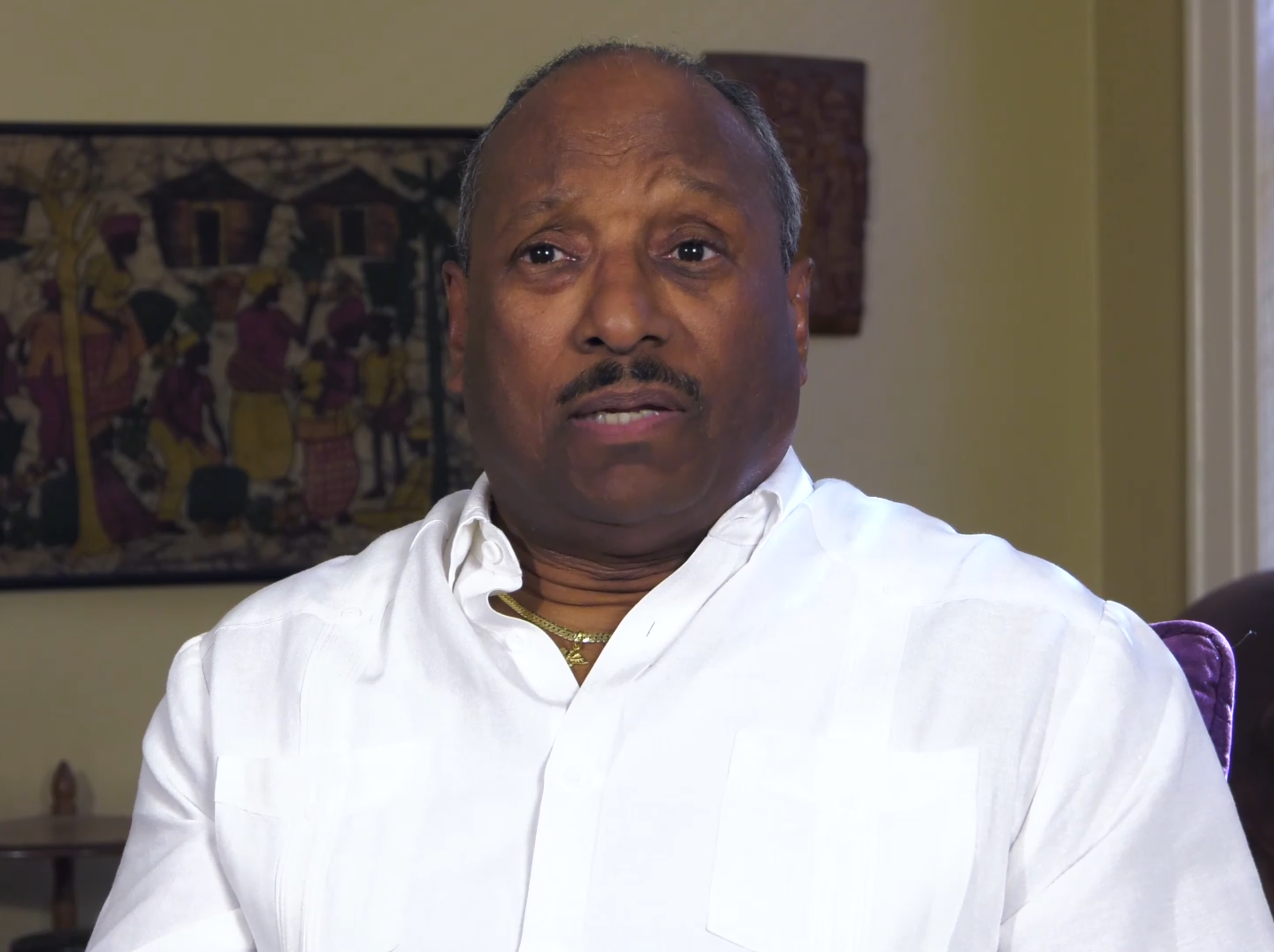
Oral History Interview with Dr. Orlando Pile
Item
CUNY
DIGITALHISTORYARCHIVE
A project produced by the Alliance for Puerto Rican Education and Empowerment, APREE.
Interview with Orlando Pile
Interviewed by Pam Sporn and Tami Gold
November, 2019
New York, NY
[Start of recorded material at 00:00:00]
Pam Sporn
Orlando Pile
I'd like to take you back to Brooklyn College for what went when you first got
there. How did you end up going to Brooklyn College?
Well, I went to Brooklyn College in 1966 when I, after I finished high school, I
was gonna go down south to Shore University, but my dad asked me to stay closer
to home, and he could contribute some dollars and we could stay at home save
money. So eventually, I did not have the grades to, let’s say that because it's a B
average, and I had a 2.75 couldn't get into Brooklyn College daytime, so I went to
School of General Studies in the evening. So by taking a couple of courses in the
evening time and the daytime, I worked for a Christian and Jews United for Social
Action, it’s called [unknown] in different areas of Bedford-Stuyvesant, East New
York and Brownsville. And here, I became a social worker at the age of 18, of
working with Welfare Rights, and people with their rights for their housing,
housing rights, and in an educational area, same time as the Ocean-Hill
Brownsville school board, which my mother was an elected member of that
board. And I was the student representative of that.
So here I am, in the day working, answering phones, trying to get people their
benefits and talking to landlords, you got to put fuel in the apartment building or
whatever. So when I did that, and then going to school in the evening time, I was
also playing basketball for Brooklyn College. And so in the evening, now, so after
about, let's say, go from 1966 to about ’68 what happened is that they with the
Black organization, actually, they didn't have a name at the time. So I went to a
meeting with my godbrother, and he was telling me, he goes with these people
don't know what they're talking about the community and whatnot. And I said,
Pam Sporn
Orlando Pile
Well, you know, he said, You should run this place. I got no, no, no, right now I
got, I'm a pre med, I'm trying to get into day school, so I can go into medical
school. And eventually, I attended a few meetings and decided, you know, what,
you really need some leadership. So I was not the first President. They had a
President, Vice President, etc. And eventually, I ran and became the President.
The key thing is, what took place at this time, was the issues on the campus. And
with some of the new students coming in, it was a matter of what are some of the
issues that was very pertinent at Brooklyn College number one, from colleges
population of Black and Latinos was less than 1%, of the entire university. And
I've almost 30,000, which is a classical liberal arts, School of General Studies and
Graduate Studies, less than 1%. So that was a main issue. The other thing is the
the institution in terms of courses, courses, and that were pertinent to the culture
of African Americans and Latinos. So we want to make that an issue. In addition
to this, we wanted the enrollment increased. So we made some demands for this.
Then this galvanized a lot of the Black and Latino students. And then the
formulation between the Brooklyn League of Afro American Collegians, and for
the Puerto Rican students was Puerto Rican Alliance. So here you had these two
organizations, fighting for the same things that we wanted together on the
campus. Now, the obstacle that we had was many of the students on the campus
predominately White students were not used to this. This was a totally different
culture. The institution itself of Brooklyn College, one of the City Colleges, the
main four, main city colleges, had one of the highest rankings of students going
into medicine, as almost as equal to Yale, to Harvard, and Princeton. I mean, this
was how astute this organization was. To give you an example, I applied for
Buffalo University for medical school, and also at Rutgers. And at Buffalo when I
asked the recruiter, the interviewer I said what what's my chances of going into to
get an accepted, he goes a B, your C at Brooklyn College is a B plus at Ohio
State. That's how demanding the science department was. You'd have maybe 3000
students who would probably be applying for as pre-med, you may only have 700
that complete it.
[00:05:09]
Tell me what it was like to be a young Black student at Brooklyn College, when
only less than 1% of the student body was Black or Latino.
Well actually tell you the truth, I came from schools that were predominantly
White, so that wasn't an issue. But what the issue was, is their sensitivity to the
needs of Black and Puerto Rican students, basically, because from our
communities that were coming into Brooklyn College, in the Flatbush area, is a
predominantly White Jewish type of community. So the key thing is they wanted
to, we wanted to know, why don't you have certain subjects, teachers, and
students that reflects the community that Brooklyn College also represents. And
so this is where we had some issues. Now, we demanded that we wanted to put
some demands together, we wanted to increase the amount of Black and Puerto
Rican students. And so that came to be 1000 Blacks and 1000 Puerto Rican
students, we had some obstacles to that and we also wanted to increase in the
amount of Black and Puerto Rican or Latino instructors. Also, the beginning of
the African American Institute was developed, as well as the Puerto Rican Studies
Department. And they, Puerto Rican and Latino Studies Department and this
came about also with the SEEK, which is a program that would increase the
amount of Black and Latino students into the college, and also to provide some
remedial courses to make sure that they would be up to par and in taking some of
the other subject matters and that increased the number. Now, the key thing that's
happening right now is how serious were the students going to be to emphasize
the importance of what these needs were.
So now you have some students may not be interested enough to, being
demonstrating or being vocal about it. For me, that was a second nature, because
that's what I did in my neighborhood in Ocean- Hill, Brownsville. That's what my
mother did. And so I brought that same energy into Brooklyn College. And so
when I became and I ran for the President, I became the President, the Brooklyn
League of Afro American Collegians, or B.L.A.C., we really wanted to emphasize
these important subjects. And then we galvanized the other students meetings, in
informing them of the importance of this. And like you had members of the
Brooklyn League of Afro American Collegians, B.L.A.C. was also members of
the Puerto Rican Alliance. And so now we're joining forces together. And
eventually, we had certain conflicts or confrontations with the student body, like
the fraternities, or whatever it was. And so one of the key things that took place
was, we had a demonstration in front of Boylan Hall, in the quadrangle area. And
so we did is we blocked one of the entrances. So the students wanted us to get out
of the way, but they were afraid of us, as we had these our members in front.
So what they did was, they brought the fire department, that came in. Now from
Bedford Avenue, the closest entrance, is right close to Bedford Avenue to get into
Boylan Hall but they walked across the quadrangle into the front entrance. And
the fire department said let us in, and we were saying, for what, they said it was a
fire. Well, why did you go to the other entrance? They didn't. So they said, are
you stopping us from going in and we're saying, hey we're not stopping, we're
stopping you from going in here. So they turned around, and they went back
toward Bedford Avenue, as soon as they reached the quadrangle to the entrance of
Bedford Avenue the local, police department, New York City Police Department,
came in with billy clubs and to try to get to us. However, all of the other students
that were, wanted to get in and were yelling at us, the police went through them,
beating them to get to us. And eventually, we left and a lot of these students got
injured.
[00:10:09]
And that caused a lot of ruckus on the campus of students saying, why are the
police, why did they come in and why did they beat us and all this other thing. So
now they became sympathetic to our cause. Just around this time, in May, we had
organization, members of our organization were arrested and that became,
Pam Sporn
Orlando Pile
Pam Sporn
Orlando Pile
because we had the 21 demands for subject matter for students, for faculty
members that had been not rehired. We wanted them to be reinstated. And we
wanted also the population to increase, we wanted the subject matters that more
reflected and we wanted some instructors to be removed for their racist attitudes.
And eventually 19 or 21 students got, became BC 19, got arrested. And our bail
was like $250,000. And that was 200 years if you convicted, or more like all
accounts, and eventually they made a settlement on that. And we got out, but then
the battle still continued and eventually, we did have increase in the number of
Black and Puerto Rican students with the Educational Opportunity Program,
which was like about 290 students or whatever, and Dr. Richard Trent was the
head of that. And eventually he developed that program, built it up. And it slowly
but surely, those numbers increased more and more. And eventually, we had a lot
of the issues that we had demanded. They only said they agreed on certain levels.
And they agreed to work with us. And there's where you had the increase and the
involvement of the students, the faculty, also as part of the development of the
campus. And so now, what you see now on Brooklyn College is because we took,
of what took place, and our efforts back in the 1960s and early ‘70s.
Now, what we see Brooklyn College as a result of what you did back in the ‘60s
and ‘70s. What is the difference? Now? What do you see at Brooklyn College
now?
You have the numbers, the numbers of Black and Latino students have increased.
The number of faculty members, the subject matter, in terms of the studies. That's,
and that whole culture is a big difference between we had gone through and what
is presently right now. Now I think that what's important right now is that that's
not only reflective just at Brooklyn College, but that's reflective of all the city
colleges. So that's Queens College, and that’s City College, you know, Hunter,
you know, all of these institutions have changed, due to the efforts of students
over at Columbia, City College, Cornell, San Francisco, you know, Kent State,
this was just a growing surge of the students, and which eventually helped bring
the end of the Vietnam War was through the student efforts. So that was just the
wave that was everybody was part of. And at one point, I had to say, Okay, I have
to back off of the Brooklyn League of African American Collegians story, or the
effort of working, and go into my studies and to prepare for going into medical
school. So I made that, made that decision and then eventually in ‘72, after I
graduated, I got into medical school and left that to everybody else.,
So [heard that you are actually the one who gave the name to the Puerto Rican
Alliance. Is that true?
Which name the Puerto Rican Alliance? (background audio) I'm not too sure
about that, I would have to say, my brother Antonio Nieves, he probably will
remember that probably more than I would, but no, I didn't because I know the
Brooklyn League of Afro American Collegians came through, came by the, Peter
Sherwood, who was an original member of B.L.A.C. and he created that name,
Pam Sporn
Orlando Pile
itself. He took Black, BLAC and he put the acronym, he got it together for
Brooklyn League of Afro American Collegians, but I'm not too sure if I was
responsible for the Puerto Rican Alliance. If I was, well, thank you. But I don't
think so.
[00:14:58]
So tell me about this conference that you went to in Oakland, California.
organized by the Black Panther Party, I believe that had to do with establishing
and fighting for ethnic studies, Black Studies Department.
Okay. So that was in Los Angeles, if I remember exactly. I thought it was in Los
Angeles. It could have been Oakland, but I thought it was Los Angeles, now I was
on, as the President, I was going to go, but I gave my seat up to another student,
(background audio)
[00:15:39]
As President of the Brooklyn League of American Collegians, I was going to be
one of like, I think it was eight students that were going to go as representative
body of our institution to go to the study given by the conference, that was given
by the Black Panther Party, which I thought it was in Los Angeles area. And they
came back with a lot of information about the programs and about what needs to
be done on campuses to help improve the culture for Black and Latino students. I
didn't go but the group that was selected came back and they brought a lot of
information for the campus. Now, I did attend the conference in Montreal. And
that was the, that was oh, I would say that. Not the Caribbean, but it was the
international conference, for...I'm trying to remember the actual name, but it was
a political conference there. That's where I saw Kathleen Cleaver, Bobby Seale. I
remember if I remember Bobby Seale was there, but I know Kathleen Cleaver
was there. And they had other members of the Black Panther Party that was the
And there was the one of the key things was about the end of the Vietnam War,
and improving the awareness, awareness of the importance of the struggle of the
Black man and the Latinos in the United States. So this is the type of education
that we were trying to bring forth into the campus. So this was a big cultural
shock for Brooklyn College. And plus, you had the School of, Democratic Society
S.D.S., which was very, very active. And they were supportive of our actions as
well. They had some, a lot and they took over the President's Office, they had
almost damaged the office. While our organization basically said, well, we
understand, we support you, but we're not going to be part of this. And so we
were separated from that and we continued to have our own education that
continued at Brooklyn College but across at Roosevelt Hall. And so a lot of the
faculty members supported us and continued studies during this time that they
took over the President's headquarters, there in Boylan Hall, eventually that ended
and the school went back to its normal order, which we found that very
interesting.
Tami Gold
Orlando Pile
Pam Sporn
Orlando Pile
Tami Gold
Why? Why did you decide not to do the occupation of the President's Office? He
was saying it was mostly S.D.S. and students, probably what you're saying is
White students?
Okay, when the S.D.S. took over the President's Office and with their demands,
they never incorporated us, they never asked us, what they were going to do. So
there were going to do, first of all, just because you're doing it, and you're doing it
for what your demands are, they did not involve us. So we didn't want to get
involved with that, because we had no control of what they were talking about
and what they were doing. So we basically just backed away from that and didn't
prevent them from whatever they wanted to do. We allow them to go on. And we
told them, we supported them in their effort. But we were not going to participate
in that, it was just too dangerous and we just couldn't tell who was behind it all
the way. And so we had to be very, very careful at that point.
What were the demands of S.D.S. when they took over the President's Office?
[00:19:40]
Well, mainly it was about in terms of the war was one, in terms of having the
campus to come out with a, a message to the government that they wanted to end
the war, and also some of the other things that they wanted it in terms of, oh, the
recruiting, of military recruiting on the campus, they wanted that removed. And
that was the second time of demonstration. The other one, the first time was in
“68. But ‘69 was the other one.
Anyway, so we didn't get in part of that. And eventually they left the office there,
which I found very interesting. They didn't bring the police in, to remove them.
They just waited until they, I guess, whatever they negotiated, and then they
eventually left the office in shambles. But again, there was some people that we
when, we went to S.D.S. in the President's Office to talk to them, we noticed
there's a couple of people that we saw there, that they seemed like they were,
maybe members of the Black Panther Party. But when we inquired about them,
they weren't members of the Black Panther Party. We thought they were
undercover, at that point. And that's what made us very, very leery about what
was taking place in, and we informed members S.D.S., that you need to be careful
about who is actually in this office here. And you're talking about some of your
demands, and everything, who these people are. And they say, and we wanted to
let them know, they are not from our organization. And you need to inquire if you
think they're Black Panthers, you need to talk to the Black Panther Party and find
out are these representatives. So this made us very leery about what took place
there.
That's crazy. That's intense. That must have been emotional, to like think that it
could have been infiltrated?
Orlando Pile
Pam Sporn
Orlando Pile
Well, only because somebody told us when we looked at the the person there, the
a couple of people there. We just didn't know who they were. And they just
happen to appear on our campus. One thing about the Brooklyn League of Afro
American Collegians, and the Puerto Rican Alliance, is that we knew our
members we knew who to deal with, and people who are not, that was not part of
us, we questioned where did they come from? You know, and what were your
intentions. So and then if they would approach us and talk to us, then we, then we
can deal with it, because we had members of the Du Bois Society, W.E.B. Du
Bois Society, the Communist Party. So a lot of these members also came into, for
support, but we told them, we appreciate it, but we felt that we wanted to get our
student body involved with this.
See, I think the thing that's important is that what I wanted to, as the other
members of the B.L.A.C., wanted to tell the student body is that if this is
something that you really want, you have to fight for this. You can't just say,
okay, we want this and expect the administration to say, sure, let's just give it to
you. No, they weren't. So basically, our philosophy was dare to struggle, dare to
win. And so you had to be some type of a paper tiger to say, oh, yes, this is what
we're going to do, open it up, shut it down, you know, this. No, you have to
actually put forth the effort and be able to deal with this confrontation. So I think
that when the BC 19, when they got arrested, when we got arrested, this really
kind of put fear in a lot of people but then again, they realized, hey, they were
struggling for us. And so the student body became supportive of us. And this is
where the DA, the district attorney's office had to make some amends and some
changes in terms of these charges and they would accept that, well, were we
responsible for doing something with some damages on the campus or whatever.
And then we had to agree to that and particularly one of our members took most
of the blame of that. But it wasn't, that really wasn't happening. But we had to,
we're faced with these 200 plus years, and all of this and we didn't want to put this
burden on our family members, etc. and the student body was now supportive of
what our demands were and what we wanted to do. That was the main important
thing that we had faculty and student members, now a supporter of making
changes at Brooklyn College. That's the most important thing and that came about
so it kind of worked out.
So the student body then began to support what you were doing, how did that
what was the evidence of that? How did they show that what began to happen?
That illustrated mass support for this struggle for changing the kind of curriculum
that there was.
[00:24:55]
Mass demonstration and also we met in the auditorium and there they allowed us
to get our information across. And they were more understanding more agreeable.
And they voiced, either by petitions or whatever to the administration there needs
to be some changes that needs to be made. Now, they may not have agreed in
everything that we wanted, but at least they were making the administration see,
Tami Gold
Orlando Pile
Pam Sporn
Orlando Pile
hey, there needs to be changes made on the campus. And they was and they
would come up to us and they would tell us, you know, we, you know, we
appreciate what you're doing, we may not agree on everything that you're
requesting but we understand that there needs to be some changes on the campus.
When you kept saying they just now?
The administration. They, so the student body was now agreeing with us as the
members of the B.L.A.C. and the Puerto Rican Alliance, to see that, yes, there
needs to be some changes made. Cause basically, it's a cultural difference now,
because to see that you have more Black and Latino students now on a campus,
okay. And all of a sudden, now, it's a matter of understanding, hey, all we're
talking about is getting a better educate, better education. And we’re also it's
important that you understand the type of lives that we are living, and what are the
problems that we have, that is faced, facing us, in our community, of housing, of
education, not only education in the higher level, but education in the lower
grades, and through elementary school, junior high school and high schools, for
curriculum as well, that needs to be changed in order to help improve the
enrollment into Brooklyn College by having better educational programs in the
community so that people can pass the SATs and also have better grades and be
able to comprehend the coursework that would be existing at college.
Was that one of the changes that was made? Were there a program set up that,
that would do outreach from the university to the college to the community?
Well, I think the, one of the things that the Education Opportunity Program, the
EOP, that was really, I think, really SEEK was really the main one, but then they
included the Education Opportunity Program, which actually came through with
the change of their GPA in order to get them in, and they had the tutors and
everything else and it became quite a success so that it just increased. But again,
what we did is we tried to go into the community itself and as I said, as a member
of the Ocean-Hill Brownsville school board, had to be as a student representative
to make sure that they, that the education that was provided in those schools, that
was at par with all of the schools, the non-Black and Latino students, schools or
high attendance. So but again, the climate at that time was the independent school
boards. When independent school boards decided to remove teachers who were
not teaching properly, that's when the United Teachers Association, basically
fought against it, with the representative Albert Shanker. He fought against that,
and he says, no, you cannot fire any of our teachers. And there was another
conflict that took place and this was within the community.
So that basically put the, the strain on the independent school boards at Harlem,
and Two Bridges down in the Lower East Side and Ocean-Hill Brownsville was
really McCoy. So that was the main crux of everything, the hiring and firing of
teachers, that the union basically said, you can't do that. So they had to come to
some type of understanding how they were going to deal with that. So again,
student members from the University from Brooklyn College, were also involved
Pam Sporn
in the community in the same thing. So this is where you have to struggle, both
from the community and on Brooklyn College campus and other city college
campuses took place. And that was eventually some development of it and I guess
the New York School, the Public School System had to make some changes.
Okay, so the Brooklyn League of Afro American Collegians had to have a base
on the campus and that was the African American Institute. So we would actually
meet there, we, in order for, if we had to get fliers out. We had to use the
mimeograph machine in our to make our copies of all of our, either minutes or of
our meetings, or flyers that we put out on the campus, or any other things
elsewhere that pertain to the African American Institute or our program, the
BLAC.
[00:30:09]
But I am trying to remember, but the other thing was that we had several Black
faculty members on the campus. They were very supportive of us. Okay, and it's
particularly Ines Reid. Professor Ines Reid, Eunice Matthews, Richard Trent,
Clyde Diller of the Chemistry Department, who was a part of the Manhattan
Project, that project Manhattan that formed the atomic bomb. He was part of that
group, because it was several groups that made that, the formula to make the
bomb and Clyde Diller who was in the Chemistry Department, Assistant
Chairman of the Chemistry Department he became very dear to me. And they
were other, Craig Bell was also, Maurice Watson. And they had other members of
the SEEK organization that also supported us. We even had a studies, a research
group to go to Chicago, Gary, Indiana, and Detroit to look at the African
community in Chicago and talk about P. Stone Rangers, and also other
development of programs in the community. We also went to Gary, Indiana to the
Mayor Hatcher, who was of a Black mayor in Gary, Indiana. And then we also
went to Detroit, to the judge that was responsible for, the conference that took
place, the African conference, that took place there that they arrested, and shot up
the church, there that which Aretha Franklin's father's church over there. So and
then there was people who were arrested, went to this judge, and this judge and
this judge released everyone. It was a Black church over there.
But anyway, this is the studies that we did, and we did this research for that, and
that was part of the African American Institute research program. So the African
American Institute was very, very important in terms of the study, they created
the curriculum, that wasn't the students, they created the curriculum, you could
actually get a major in that. Okay. And Maurice Watson was part of that in terms
of the, sorry, the artistic development for theater. And theater was one of the main
things Maurice Watson was a part of. And some of the other things I'm trying to
remember.
Did you take any courses in the African American Institute?
Orlando Pile
Pam Spoen
Orlando Pile
I took one or two of them because I was a pre-med major. So I was taking 25
credits per semester. And they were mostly, they were sciences. But yes, I did
have some of the subjects.
Prior to May 10, 1969, was the day that they arrested, basically 20 students 21
students, actually one student was not, one member of the BC 19 was not a
student. Okay. One was an undercover officer, as well. And, who was a student
on the campus and the, we were arrested for attempting to a conspiracy to destroy
or damage the campus and to blow up the campus. Okay, so this is what we got
arrested for. They arrest took place in the wee hours in the morning, 430, 5
o'clock, they dragged me out of my house. And I didn't realize that later on that
my sister, and I believe my sister and my mother, or both my sisters were arrested
as well, when they tried to interfere with the police officer that tried to arrest me.
So anyway, so we got arrested, and there we stayed at Rikers Island, and we were
there for about three or four days. During this time, our bail was set for, at $200,
000, $250,000 and we were facing over 200 years if convicted on each account.
[00:34:50]
So to raise bail, the student body at Brooklyn College, that's the entire student
body. That's Black, Latino, White student body members contributed to the bail
money to getting all of us out of, out of jail. And once we got out of jail, and then
eventually, we never went to trial, it was a settlement by the DA's office and
Goldberg, whatever his name, who was later indicted, later on, he was indicted by
State Department, whatever it was, district attorney, Attorney General, whatever.
But anyway, this is what happened at the, on the campus. Like I said, it
galvanized a lot of the student body for helping us in terms of achieving our
demands.
Was it worth it?
Oh, it's always worth it. It's always worth it. Because what you're basically trying
to do is change a mindset. It is one thing to be growing up into a community
where the advantage, the advantages for one type of student because of their
color, or race or whatever, over other students is totally unfair. And this is what,
the same thing happened on college campuses.
Give you a clear example. I was a pre-med student when I first started at
Brooklyn College. I went to my counselor to prepare what my coursework would
be like, while I'm at Brooklyn College, to prepare me to go into medical school.
The counselor told me, after reading my transcript said to me, why don't you
consider becoming a art teacher? Or go into music? I said, I'm sorry, didn’t I tell
you that I was a pre-med student, and I wanted my coursework for pre medicine.
Said, well, I don't know, it just seems like maybe that you would show more
interest in the other subjects. I said, Thank you very much. That was the last time,
that was 1966 was the last time I ever seeked any type of counseling from any
member of that institution. And my entire coursework was prepared by talking to
Winston Price, a pre-med student who was Black, and also the member of the
basketball team, the day basketball team that I played against. And he told me,
this is how you prepare your subjects and this is how you find out in terms of
what faculty members, and what major you have to choose as a chemistry major,
or a bio major and I became a bio major. Winston Price eventually became,
graduated from Brooklyn College, went on to medical school, became a
pediatrician, and eventually became one of the Presidents of the National Medical
Association. So this was my, in terms of my destiny, to have that happen to me.
And so this was something I always remembered and I always emphasize to the
organization that we got counselors that are in this institution that are trying to
sabotage us. So we need to stick together and supportive. And this is what
happened on one time, one course, one class that was tended by Professor
Fitzhugh, it was an English class. And when I questioned the professor on the
selections of his books, I said, how come you don't include any Black or Latino
authors? He says, they are social writers. I go, social writers. And when I
questioned them, and the next time I came into the campus, I mean, into the class,
it was the second time I told him, I said, well, you still haven't changed, you
haven't added anything. He says, you're being disruptive, you need to leave my
class. I said, no, you're going to leave the class. And so eventually, he walked out.
And other faculty and some of the White students, they says, now how are we
going to get our, our course our credits and everything. I go, that's not my
problem. I said he needed to address this issue.
Eventually, I got called to the Dean Breglio’s office. And he said to me, he says,
Orlando, I have a problem. And I would like you to address, address it. And I
said, Sure. What is it? He says, we have a student, a faculty member came to me
and said he had a disruptive student in his class, and he could not perform his
classwork. And he needed to have that student removed. He says, and I needed
this, I said to him, well, who is this student? And he says, his name is Pile and he
goes, of all the students, you had the President of the Brooklyn League of Afro
American Collegians in your class. So he says to me, what do you want to do?
[00:39:57]
I said, well I wanted, I wanted him to represent, you know, all of the others, the
population of this campus. He said, he's not going to do that, that's a tenured
professor. I said, well, I don't want to go to that class. He said, well, do you want
to go to another one? I said, that's not the class I chose. I chose another professor,
but the course was closed out. He says, what will get you moved, and I go, well,
what about the other students? So he said to me, well, I can't deal with that right
now, but I could deal with you. So I got changed.
What happened? Students came to me and told me that when they sent, they wrote
a paper and the paper was sent in, to the professor Fitzhugh, he gave them all D's
and F's, a lot of the Black and Latino students. And he said, where did you get
your coursework from? Or where did you, did you get your ideas from? They
said, well, I went to a Catholic, a Catholic High School and these are some of the
Pam Sporn
Orlando Pile
Pam Sporn
Orlando Pile
books that I used, and he goes, oh, no, those are all wrong, you can't use that as
your basis for your research. And eventually, they could never get higher grades,
so what they did, is they came to me, not to Dean Breglio and they said, you need
to help us. I go, well, what is it? I said, well, why don't you say something when
the time that I was trying to bring the argument up? And eventually what
happened was, I went to Dean Breglio and I says, you got seven or eight students
over here that are facing some of the same wrath that Fitzhugh did to me. So you
know what they did, they took all of these students and created a totally separate
class, and got instructors for them for that subject. And Fitzhugh remained as a
professor, that was one of our demands, to remove Fitzhugh from there, which he
has tenure, so that's like firing a teacher from the public school system. It's not
going to happen, but he was near retirement anyway.
So why did you feel the need or the importance of coordinating with the Puerto
Rican Alliance? What was the basis of that unity between the B.L.A.C. and the
Puerto Rican students?
I was just my culture growing up. I mean, in my neighborhood was mixture. My, I
had my aunt was Puerto Rican, my, my neighbors were godparents, to my
brothers and sisters. So it was just the way our cultures were mixed together. And
not only that but so the same thing that we faced in our communities we brought
to the college campus. So where you had Black and Puerto Rican students or
Black and Puerto Rican people from the community were now students together,
we had the same demands, the same interests. And therefore we supported each
other wholeheartedly. And that's where our groups between the Brooklyn League
of Afro American Collegians and the Puerto Rican Alliance stayed together and
supported each other. And also the African American Institute and the Puerto
Rican Studies Department.
(background sounds) You mentioned the presence of undercover police,
informants in the student organizations. What kinds of retributions did some of
the student activists face? What were some of the, you mentioned the BC 19, and
you mentioned Rikers, but what kind of long term impacted did some of those
recognitions have on students? What kind of sacrifices did students make to make
this change happen?
Well, to tell you the truth first of all, the undercover cop never could come back
on the campus. That was number one. Number two, what we tried to inform the
members of our organizations that we have to be very, we have to scrutinize all
members that became part of our organization, and wanted to be a part of making
major decisions on what our policies were going to be. So that helped from that in
that regard, but see it was not only undercover officers, it was members of our
organization that had ulterior motives, for not just, for their own personal gains,
instead of the gains of the of the community of the college. And so therefore, we
had to, people who were running for office, we felt that they did not reflect the
Pam Sporn
Tami Gold
Orlando Pile
Tami Gold
ideals of the Brooklyn League of Afro-American Collegians, and so we had to
have members go against them in terms of election and to defeat them.
[00:45:00]
And we had to look at [...] and many of these people came to me from my
organization to help see if I could, how can I could make that change. But I said,
it's not about me making that change, you guys got to get the student body and the
members of the organization to see who's going to run against them. I said, 1 am
working on, as a pre med student right now I'm doing 24 credits per semester
there. They understood that they finally worked it out. But like I said before, this
was the same thing that we had to we communicated with other campuses.
Columbia University was one City College was another one. So a lot of these
other campuses, we told them to just be very cognizant of who is in your presence
and who was amongst your organization, that you have to know who they are, you
know, run backgrounds, I mean, just to find out who they are, just by word of
mouth, do you know so and so. The same thing about that gentleman that was in
the S.D.S.’s demonstration and the President's headquarters is the same thing that
word of mouth, we told him, somebody recognized this individual, and we saw
him somewhere else but he was never a member, and he looked like a Black
Panther, leather hat and everything. But he wasn't a member of the Black Panther
Party, so we believed he was an undercover officer as well.
This short film is about commemorating the 50th anniversary of the founding of
the Puerto Rican Studies Department and the unity with the B.L.A.C. and [...] the
Black Studies Department. When you look back over that time..
(background audio)
You mentioned the Black Panther Party, you didn't mention the Young Lords, but
I know what you mean, it was a particular historic moment. Like, what was their
involvement, you mentioned that the person wasn't part of them. But was that an
influence in the movement that you were a part of the, Black Panther Party, that it
was a concept of finding one's bearings in terms of separatism that it was needed,
was that at all an influence on the struggles that you were engaged in?
During the time that we were there on the campus at Brooklyn College, we came
in contact with members of the Black Panther Party, as well as members of the
Young Lords. But they never were really on our campus. Because the Brooklyn
League of Afro-American Collegians and the Puerto Rican Alliance, were very
powerful organizations on the campus, that we dealt with our issues. And because
we dealt with our issues, they didn't need to come in, but they provided any
support, moral support for this.
(background audio)
It’s a particular historic moment in terms of terms of movements and Black
movements and Latino, Puerto Rican movements getting their bearings. And it
was el comite, there was lots. I'm sure that influenced you, in a deep way.
Orlando Pile Yes. So the influence of members of the Black Panther Party, or the, the ideology
that was in the Black Panther Party, and the Young Lords had an influence on the
members of B.L.A.C. and the Puerto Rican Alliance but only in the fact that we
come from the communities where the Black Panther Party had influence and the,
and the Young Lords. So therefore by being in the community with them and
attending their meetings, or their rallies or whatever, it influenced a lot of our
thoughts and our understanding of how to deal with some of our issues on the
campus. But I never looked at the Black Panther Party, or the Young Lords, as a
way to, to adapt to their ideology, but it was a matter of supporting because what
they were, they were the community armed guards, for the injustices that took
place within the community. We were the armed guard that dealt with the
injustices that took place on the campus. And so there's where the, the
combination or the understanding between the two, and they, like I said they were
very supportive of us, but they were not really on the campus, to deal with our
struggles, we dealt with our struggles. And I think it was very, very important that
we had that independence.
Now, as far as, after leaving the Brooklyn League of Afro American Collegians,
B.L.A.C. and then going on to medicine, in terms of how did I take some of this
experience? Well, the experience existed before I was on Brooklyn College
campus. So what happened with my household, with my with my mother, being
an activist, and being a member of the Ocean-Hill, Brownsville school board, she
basically instilled in me the, meaning to struggle and to fight for what was right
for the community, what was right for you, what was right for your family, that
you always be supportive of it. And that was extremely important. So leaving
Brooklyn College, I took that same struggle, that same attitude at Rutgers
University, for medicine. And so we had the same type of injustices on the
Brooklyn College campus and in our community took place at Rutgers University
in medical school. So where you had faculty members, making decisions on pass
fail of what, from certain tests that it took place, they would look at and see where
were the Black and Latino students were, and change the pass fail grade, to drop
down to capture, so many of the Black and Latino students, not all of them, but
some of those who had very high grades. But what happened was when they
asked them, when we asked, after every exam, if we got a grade that they said was
unsatisfactory, they took a colored paper, like red or green, and said, your
performance in this examination was unsatisfactory. If you continue to perform
this manner, you will have to repeat this course, please seek remedial help. They
put this letter and they put it in a mailbox that was in the hallway that other
members of the medical school, including faculty, secretaries, janitorial, they saw
these colored papers. They would actually say to us, oh, I'm sorry that you didn't
do well on your exam. And we're like, what are you talking about? Oh, we saw
the colored paper in your mailbox. So when we went to them to say, well, what
was pass fail? They said, well, they made the decision, they wouldn't give it to us.
So the next test, if that test, let's say was 60, the next test was probably 65. And so
on, and so on.
Tami Gold
Orlando Pile
Tami Gold
So at the end of the semester, when they gave out that the grade, they told me, oh,
you need to repeat the first test. Wait a minute, you gave me four letters for four
exams? Why did you give me the other three letters? They couldn't give an
answer. So we had representatives of the Black and Latino students there went to
the faculty of the Physiology Department and the professor, the Chairman said,
no, I'm not gonna even address that and wouldn't talk to me,. But one of the
professors showed that the grades, the pass fail kept changing, one test after the
next. And they sent the letters out to intimidate the students. And eventually, the
President of the university called for a meeting between that Department, and our
representatives and we had Professor Garrett, who came from Newark, New
Jersey, he was Ob Gyn, Dr. Garrett, he came down, he represented us and they we
had a meeting with them. And the, ridiculous this sounds, this is in medical
school. When Dr. Garrett asked the chairman of the Department, he said, you
know, I noticed that you had a pass fail here on this first test was 60. But the
student got a 62. But you, you gave them a letter and you failed him. He said, why
is that? He says because 62 was close to 60, which is failing. So we failed him.
Now he stood there and he looked at him. He said why didn’t you fail the student
that got a 68? He said because 68 was passing? He said no. 68 is close to 65,
which is close to 63, which is close to 60. Then therefore you should fail. And he
said that's ridiculous. He goes, exactly. So we had to deal with this type of
injustices that took place on there, but we struggle, we fought for it and they
changed their standards, that exactly what it would be stated at the beginning of
the semester, what was pass fail for the whole semester. So we made that change
that never existed before but they were dealing with the largest input of Black and
Latino students to that college, to the medical school. They were not faced with
that. And so they made their changes.
[00:55:27]
We see it had a big influence on you because you carried that over.
No, Blanche Pile had the influence that affected what I did over at Brooklyn
College, what affected what I did at the medical school, what I did for the rest of
my life. So therefore, what I believed in is that, that's what I would fight for. And
so those injustices will exist way beyond that. And the same thing happened when
I started working for the Los Angeles County Sheriff's Department, where I had a
Captain try to intimidate me on terms of my decision, a decision I made of
attending a conference at noon time, and he was telling me you can't leave the jail
uncovered over there and I said, but you got all, got people all over this this
Department, leave the jail to go for lunch at noon time. But eventually, I won that
battle on him because he never got promoted, beyond Captain and I waited until
he got released and then I retired to my satisfaction.
Okay, I have another question. My question is you talk a lot about this particular
time but you haven't mentioned women in terms of the women's movement, or
Orlando Pile
Pam Sporn
Orlando Pile
how that had an impact, and were women, a lot of the names you've mentioned,
very few. How was that circulating in terms of the situation at Brooklyn College
at that time?
Well, we had very strong female faculty members, and a lot of strong female
students. As I mentioned before, there were members of the Puerto Rican Alliance
were members of the Brooklyn League of Afro-American Collegians. Maxine
Rodriguez, who was our treasury, Treasurer. Eradamus Aviles, Antonio Nieves,
and so all of these members were Puerto Rican Alliance members. We had a lot of
women that were influence, including, at that time, who was my, became my
wife, Maria Vargas Pile became very influenced in a very quiet way, but always
to remind people that (...) were women in terms of you’d have to be very careful.
Don't use that chauvinistic attitude toward us just because you’re members, or
you’re head of an organization, or you this or that. There was members, also in
terms of faculty, there was people in the Puerto Rican Alliance, a lot of them in
terms of females, very very influential in terms of the struggle that took place on
the campus.
Some of our Black faculty members, Eunice Matthews, Ines Reid, these women
were very, very powerful in terms of helping and supporting not only the Puerto
Rican Institute, but the African American Institute. So women were very
influential. I don't, you know, it's this, I think that we were more receptive of that
and particularly when you look at the Black Panther Party in terms of Kathleen
Cleaver and Angela Davis, in terms of what they were doing, what they were
establishing. And I would just have to say that there were other female members
of the community that helped, was very, very supportive. And but I don't think
there was, I don't think we ever looked at it that way. I don't know, maybe it's
because my mother was so influential, and everybody respected my mother and
knew her political ideology and how determined she was and inspired a lot of
members of our organization, when she would speak to them. Particularly after
when we got arrested. She was very vocal about that. So yes, the, I think we, we
looked at in terms of the women in terms of support of our organization, and I
think we were very supportive of them. And maybe there were some conflicts at
certain times, as I mentioned before, there were certain members who were trying
to run for head of our organization, they were sort of abusing some of that
privilege.
[01:00:00]
But in terms of with women using it as an advantage for them, but eventually they
never got promoted, or they never got voted in.
Great, thank you so much. Is there anything else?
Well, you know, I think one of the things that I, I felt disappointed that what I
didn't do is I never went back to the campus to look at the development of both
the Institutes to see how they were doing once I became, once I went into medical
Pam Sporn
school, then moved from New York City to Los Angeles, and then moved my
family out there, and then did my residency and then went into practice out there.
And eventually, when I went on to work for the LA County Sheriff's Department,
becoming a member of the distinguished faculty, because of my accomplishments
in treating HIV and being an advocate for inmates, the rights for inmates, and
particularly for inmates who had HIV and developed AIDS. I think, like I say that
whole attitude from the way I was raised, I believe that that's what helped me a lot
in terms of what I accomplished and that some of the things that I do now in terms
of, I do mission work in Jamaica every year along with Antonio Nieves, who's the
pharmacist, you know, so my brother and I have basically worked in helping
people in that, in those indigenous neighborhoods areas in Jamaica, which, to me
is very fulfilling. And I think that's what's really needed, you know, in terms of
people have to help people that don't have the ability to help themselves. So I
hope and I wish I can go back to the campus and get these students, get involved
with the community and I think that's really the most important thing is to get
involved with the community utilize your skills, and your teachings, your or your
understanding, to go back into the community help the educational system, they
help the community organizations with weather its with housing, homelessness,
education, etc. Health, especially health.
So hopefully, we'll be able to do that, who knows.
So, aybe you'll go back to Brooklyn College?
Orlando Pile Yeah, hopefully. Hopefully. Okay.
[End of recorded material at 01:02:43]
DIGITALHISTORYARCHIVE
A project produced by the Alliance for Puerto Rican Education and Empowerment, APREE.
Interview with Orlando Pile
Interviewed by Pam Sporn and Tami Gold
November, 2019
New York, NY
[Start of recorded material at 00:00:00]
Pam Sporn
Orlando Pile
I'd like to take you back to Brooklyn College for what went when you first got
there. How did you end up going to Brooklyn College?
Well, I went to Brooklyn College in 1966 when I, after I finished high school, I
was gonna go down south to Shore University, but my dad asked me to stay closer
to home, and he could contribute some dollars and we could stay at home save
money. So eventually, I did not have the grades to, let’s say that because it's a B
average, and I had a 2.75 couldn't get into Brooklyn College daytime, so I went to
School of General Studies in the evening. So by taking a couple of courses in the
evening time and the daytime, I worked for a Christian and Jews United for Social
Action, it’s called [unknown] in different areas of Bedford-Stuyvesant, East New
York and Brownsville. And here, I became a social worker at the age of 18, of
working with Welfare Rights, and people with their rights for their housing,
housing rights, and in an educational area, same time as the Ocean-Hill
Brownsville school board, which my mother was an elected member of that
board. And I was the student representative of that.
So here I am, in the day working, answering phones, trying to get people their
benefits and talking to landlords, you got to put fuel in the apartment building or
whatever. So when I did that, and then going to school in the evening time, I was
also playing basketball for Brooklyn College. And so in the evening, now, so after
about, let's say, go from 1966 to about ’68 what happened is that they with the
Black organization, actually, they didn't have a name at the time. So I went to a
meeting with my godbrother, and he was telling me, he goes with these people
don't know what they're talking about the community and whatnot. And I said,
Pam Sporn
Orlando Pile
Well, you know, he said, You should run this place. I got no, no, no, right now I
got, I'm a pre med, I'm trying to get into day school, so I can go into medical
school. And eventually, I attended a few meetings and decided, you know, what,
you really need some leadership. So I was not the first President. They had a
President, Vice President, etc. And eventually, I ran and became the President.
The key thing is, what took place at this time, was the issues on the campus. And
with some of the new students coming in, it was a matter of what are some of the
issues that was very pertinent at Brooklyn College number one, from colleges
population of Black and Latinos was less than 1%, of the entire university. And
I've almost 30,000, which is a classical liberal arts, School of General Studies and
Graduate Studies, less than 1%. So that was a main issue. The other thing is the
the institution in terms of courses, courses, and that were pertinent to the culture
of African Americans and Latinos. So we want to make that an issue. In addition
to this, we wanted the enrollment increased. So we made some demands for this.
Then this galvanized a lot of the Black and Latino students. And then the
formulation between the Brooklyn League of Afro American Collegians, and for
the Puerto Rican students was Puerto Rican Alliance. So here you had these two
organizations, fighting for the same things that we wanted together on the
campus. Now, the obstacle that we had was many of the students on the campus
predominately White students were not used to this. This was a totally different
culture. The institution itself of Brooklyn College, one of the City Colleges, the
main four, main city colleges, had one of the highest rankings of students going
into medicine, as almost as equal to Yale, to Harvard, and Princeton. I mean, this
was how astute this organization was. To give you an example, I applied for
Buffalo University for medical school, and also at Rutgers. And at Buffalo when I
asked the recruiter, the interviewer I said what what's my chances of going into to
get an accepted, he goes a B, your C at Brooklyn College is a B plus at Ohio
State. That's how demanding the science department was. You'd have maybe 3000
students who would probably be applying for as pre-med, you may only have 700
that complete it.
[00:05:09]
Tell me what it was like to be a young Black student at Brooklyn College, when
only less than 1% of the student body was Black or Latino.
Well actually tell you the truth, I came from schools that were predominantly
White, so that wasn't an issue. But what the issue was, is their sensitivity to the
needs of Black and Puerto Rican students, basically, because from our
communities that were coming into Brooklyn College, in the Flatbush area, is a
predominantly White Jewish type of community. So the key thing is they wanted
to, we wanted to know, why don't you have certain subjects, teachers, and
students that reflects the community that Brooklyn College also represents. And
so this is where we had some issues. Now, we demanded that we wanted to put
some demands together, we wanted to increase the amount of Black and Puerto
Rican students. And so that came to be 1000 Blacks and 1000 Puerto Rican
students, we had some obstacles to that and we also wanted to increase in the
amount of Black and Puerto Rican or Latino instructors. Also, the beginning of
the African American Institute was developed, as well as the Puerto Rican Studies
Department. And they, Puerto Rican and Latino Studies Department and this
came about also with the SEEK, which is a program that would increase the
amount of Black and Latino students into the college, and also to provide some
remedial courses to make sure that they would be up to par and in taking some of
the other subject matters and that increased the number. Now, the key thing that's
happening right now is how serious were the students going to be to emphasize
the importance of what these needs were.
So now you have some students may not be interested enough to, being
demonstrating or being vocal about it. For me, that was a second nature, because
that's what I did in my neighborhood in Ocean- Hill, Brownsville. That's what my
mother did. And so I brought that same energy into Brooklyn College. And so
when I became and I ran for the President, I became the President, the Brooklyn
League of Afro American Collegians, or B.L.A.C., we really wanted to emphasize
these important subjects. And then we galvanized the other students meetings, in
informing them of the importance of this. And like you had members of the
Brooklyn League of Afro American Collegians, B.L.A.C. was also members of
the Puerto Rican Alliance. And so now we're joining forces together. And
eventually, we had certain conflicts or confrontations with the student body, like
the fraternities, or whatever it was. And so one of the key things that took place
was, we had a demonstration in front of Boylan Hall, in the quadrangle area. And
so we did is we blocked one of the entrances. So the students wanted us to get out
of the way, but they were afraid of us, as we had these our members in front.
So what they did was, they brought the fire department, that came in. Now from
Bedford Avenue, the closest entrance, is right close to Bedford Avenue to get into
Boylan Hall but they walked across the quadrangle into the front entrance. And
the fire department said let us in, and we were saying, for what, they said it was a
fire. Well, why did you go to the other entrance? They didn't. So they said, are
you stopping us from going in and we're saying, hey we're not stopping, we're
stopping you from going in here. So they turned around, and they went back
toward Bedford Avenue, as soon as they reached the quadrangle to the entrance of
Bedford Avenue the local, police department, New York City Police Department,
came in with billy clubs and to try to get to us. However, all of the other students
that were, wanted to get in and were yelling at us, the police went through them,
beating them to get to us. And eventually, we left and a lot of these students got
injured.
[00:10:09]
And that caused a lot of ruckus on the campus of students saying, why are the
police, why did they come in and why did they beat us and all this other thing. So
now they became sympathetic to our cause. Just around this time, in May, we had
organization, members of our organization were arrested and that became,
Pam Sporn
Orlando Pile
Pam Sporn
Orlando Pile
because we had the 21 demands for subject matter for students, for faculty
members that had been not rehired. We wanted them to be reinstated. And we
wanted also the population to increase, we wanted the subject matters that more
reflected and we wanted some instructors to be removed for their racist attitudes.
And eventually 19 or 21 students got, became BC 19, got arrested. And our bail
was like $250,000. And that was 200 years if you convicted, or more like all
accounts, and eventually they made a settlement on that. And we got out, but then
the battle still continued and eventually, we did have increase in the number of
Black and Puerto Rican students with the Educational Opportunity Program,
which was like about 290 students or whatever, and Dr. Richard Trent was the
head of that. And eventually he developed that program, built it up. And it slowly
but surely, those numbers increased more and more. And eventually, we had a lot
of the issues that we had demanded. They only said they agreed on certain levels.
And they agreed to work with us. And there's where you had the increase and the
involvement of the students, the faculty, also as part of the development of the
campus. And so now, what you see now on Brooklyn College is because we took,
of what took place, and our efforts back in the 1960s and early ‘70s.
Now, what we see Brooklyn College as a result of what you did back in the ‘60s
and ‘70s. What is the difference? Now? What do you see at Brooklyn College
now?
You have the numbers, the numbers of Black and Latino students have increased.
The number of faculty members, the subject matter, in terms of the studies. That's,
and that whole culture is a big difference between we had gone through and what
is presently right now. Now I think that what's important right now is that that's
not only reflective just at Brooklyn College, but that's reflective of all the city
colleges. So that's Queens College, and that’s City College, you know, Hunter,
you know, all of these institutions have changed, due to the efforts of students
over at Columbia, City College, Cornell, San Francisco, you know, Kent State,
this was just a growing surge of the students, and which eventually helped bring
the end of the Vietnam War was through the student efforts. So that was just the
wave that was everybody was part of. And at one point, I had to say, Okay, I have
to back off of the Brooklyn League of African American Collegians story, or the
effort of working, and go into my studies and to prepare for going into medical
school. So I made that, made that decision and then eventually in ‘72, after I
graduated, I got into medical school and left that to everybody else.,
So [heard that you are actually the one who gave the name to the Puerto Rican
Alliance. Is that true?
Which name the Puerto Rican Alliance? (background audio) I'm not too sure
about that, I would have to say, my brother Antonio Nieves, he probably will
remember that probably more than I would, but no, I didn't because I know the
Brooklyn League of Afro American Collegians came through, came by the, Peter
Sherwood, who was an original member of B.L.A.C. and he created that name,
Pam Sporn
Orlando Pile
itself. He took Black, BLAC and he put the acronym, he got it together for
Brooklyn League of Afro American Collegians, but I'm not too sure if I was
responsible for the Puerto Rican Alliance. If I was, well, thank you. But I don't
think so.
[00:14:58]
So tell me about this conference that you went to in Oakland, California.
organized by the Black Panther Party, I believe that had to do with establishing
and fighting for ethnic studies, Black Studies Department.
Okay. So that was in Los Angeles, if I remember exactly. I thought it was in Los
Angeles. It could have been Oakland, but I thought it was Los Angeles, now I was
on, as the President, I was going to go, but I gave my seat up to another student,
(background audio)
[00:15:39]
As President of the Brooklyn League of American Collegians, I was going to be
one of like, I think it was eight students that were going to go as representative
body of our institution to go to the study given by the conference, that was given
by the Black Panther Party, which I thought it was in Los Angeles area. And they
came back with a lot of information about the programs and about what needs to
be done on campuses to help improve the culture for Black and Latino students. I
didn't go but the group that was selected came back and they brought a lot of
information for the campus. Now, I did attend the conference in Montreal. And
that was the, that was oh, I would say that. Not the Caribbean, but it was the
international conference, for...I'm trying to remember the actual name, but it was
a political conference there. That's where I saw Kathleen Cleaver, Bobby Seale. I
remember if I remember Bobby Seale was there, but I know Kathleen Cleaver
was there. And they had other members of the Black Panther Party that was the
And there was the one of the key things was about the end of the Vietnam War,
and improving the awareness, awareness of the importance of the struggle of the
Black man and the Latinos in the United States. So this is the type of education
that we were trying to bring forth into the campus. So this was a big cultural
shock for Brooklyn College. And plus, you had the School of, Democratic Society
S.D.S., which was very, very active. And they were supportive of our actions as
well. They had some, a lot and they took over the President's Office, they had
almost damaged the office. While our organization basically said, well, we
understand, we support you, but we're not going to be part of this. And so we
were separated from that and we continued to have our own education that
continued at Brooklyn College but across at Roosevelt Hall. And so a lot of the
faculty members supported us and continued studies during this time that they
took over the President's headquarters, there in Boylan Hall, eventually that ended
and the school went back to its normal order, which we found that very
interesting.
Tami Gold
Orlando Pile
Pam Sporn
Orlando Pile
Tami Gold
Why? Why did you decide not to do the occupation of the President's Office? He
was saying it was mostly S.D.S. and students, probably what you're saying is
White students?
Okay, when the S.D.S. took over the President's Office and with their demands,
they never incorporated us, they never asked us, what they were going to do. So
there were going to do, first of all, just because you're doing it, and you're doing it
for what your demands are, they did not involve us. So we didn't want to get
involved with that, because we had no control of what they were talking about
and what they were doing. So we basically just backed away from that and didn't
prevent them from whatever they wanted to do. We allow them to go on. And we
told them, we supported them in their effort. But we were not going to participate
in that, it was just too dangerous and we just couldn't tell who was behind it all
the way. And so we had to be very, very careful at that point.
What were the demands of S.D.S. when they took over the President's Office?
[00:19:40]
Well, mainly it was about in terms of the war was one, in terms of having the
campus to come out with a, a message to the government that they wanted to end
the war, and also some of the other things that they wanted it in terms of, oh, the
recruiting, of military recruiting on the campus, they wanted that removed. And
that was the second time of demonstration. The other one, the first time was in
“68. But ‘69 was the other one.
Anyway, so we didn't get in part of that. And eventually they left the office there,
which I found very interesting. They didn't bring the police in, to remove them.
They just waited until they, I guess, whatever they negotiated, and then they
eventually left the office in shambles. But again, there was some people that we
when, we went to S.D.S. in the President's Office to talk to them, we noticed
there's a couple of people that we saw there, that they seemed like they were,
maybe members of the Black Panther Party. But when we inquired about them,
they weren't members of the Black Panther Party. We thought they were
undercover, at that point. And that's what made us very, very leery about what
was taking place in, and we informed members S.D.S., that you need to be careful
about who is actually in this office here. And you're talking about some of your
demands, and everything, who these people are. And they say, and we wanted to
let them know, they are not from our organization. And you need to inquire if you
think they're Black Panthers, you need to talk to the Black Panther Party and find
out are these representatives. So this made us very leery about what took place
there.
That's crazy. That's intense. That must have been emotional, to like think that it
could have been infiltrated?
Orlando Pile
Pam Sporn
Orlando Pile
Well, only because somebody told us when we looked at the the person there, the
a couple of people there. We just didn't know who they were. And they just
happen to appear on our campus. One thing about the Brooklyn League of Afro
American Collegians, and the Puerto Rican Alliance, is that we knew our
members we knew who to deal with, and people who are not, that was not part of
us, we questioned where did they come from? You know, and what were your
intentions. So and then if they would approach us and talk to us, then we, then we
can deal with it, because we had members of the Du Bois Society, W.E.B. Du
Bois Society, the Communist Party. So a lot of these members also came into, for
support, but we told them, we appreciate it, but we felt that we wanted to get our
student body involved with this.
See, I think the thing that's important is that what I wanted to, as the other
members of the B.L.A.C., wanted to tell the student body is that if this is
something that you really want, you have to fight for this. You can't just say,
okay, we want this and expect the administration to say, sure, let's just give it to
you. No, they weren't. So basically, our philosophy was dare to struggle, dare to
win. And so you had to be some type of a paper tiger to say, oh, yes, this is what
we're going to do, open it up, shut it down, you know, this. No, you have to
actually put forth the effort and be able to deal with this confrontation. So I think
that when the BC 19, when they got arrested, when we got arrested, this really
kind of put fear in a lot of people but then again, they realized, hey, they were
struggling for us. And so the student body became supportive of us. And this is
where the DA, the district attorney's office had to make some amends and some
changes in terms of these charges and they would accept that, well, were we
responsible for doing something with some damages on the campus or whatever.
And then we had to agree to that and particularly one of our members took most
of the blame of that. But it wasn't, that really wasn't happening. But we had to,
we're faced with these 200 plus years, and all of this and we didn't want to put this
burden on our family members, etc. and the student body was now supportive of
what our demands were and what we wanted to do. That was the main important
thing that we had faculty and student members, now a supporter of making
changes at Brooklyn College. That's the most important thing and that came about
so it kind of worked out.
So the student body then began to support what you were doing, how did that
what was the evidence of that? How did they show that what began to happen?
That illustrated mass support for this struggle for changing the kind of curriculum
that there was.
[00:24:55]
Mass demonstration and also we met in the auditorium and there they allowed us
to get our information across. And they were more understanding more agreeable.
And they voiced, either by petitions or whatever to the administration there needs
to be some changes that needs to be made. Now, they may not have agreed in
everything that we wanted, but at least they were making the administration see,
Tami Gold
Orlando Pile
Pam Sporn
Orlando Pile
hey, there needs to be changes made on the campus. And they was and they
would come up to us and they would tell us, you know, we, you know, we
appreciate what you're doing, we may not agree on everything that you're
requesting but we understand that there needs to be some changes on the campus.
When you kept saying they just now?
The administration. They, so the student body was now agreeing with us as the
members of the B.L.A.C. and the Puerto Rican Alliance, to see that, yes, there
needs to be some changes made. Cause basically, it's a cultural difference now,
because to see that you have more Black and Latino students now on a campus,
okay. And all of a sudden, now, it's a matter of understanding, hey, all we're
talking about is getting a better educate, better education. And we’re also it's
important that you understand the type of lives that we are living, and what are the
problems that we have, that is faced, facing us, in our community, of housing, of
education, not only education in the higher level, but education in the lower
grades, and through elementary school, junior high school and high schools, for
curriculum as well, that needs to be changed in order to help improve the
enrollment into Brooklyn College by having better educational programs in the
community so that people can pass the SATs and also have better grades and be
able to comprehend the coursework that would be existing at college.
Was that one of the changes that was made? Were there a program set up that,
that would do outreach from the university to the college to the community?
Well, I think the, one of the things that the Education Opportunity Program, the
EOP, that was really, I think, really SEEK was really the main one, but then they
included the Education Opportunity Program, which actually came through with
the change of their GPA in order to get them in, and they had the tutors and
everything else and it became quite a success so that it just increased. But again,
what we did is we tried to go into the community itself and as I said, as a member
of the Ocean-Hill Brownsville school board, had to be as a student representative
to make sure that they, that the education that was provided in those schools, that
was at par with all of the schools, the non-Black and Latino students, schools or
high attendance. So but again, the climate at that time was the independent school
boards. When independent school boards decided to remove teachers who were
not teaching properly, that's when the United Teachers Association, basically
fought against it, with the representative Albert Shanker. He fought against that,
and he says, no, you cannot fire any of our teachers. And there was another
conflict that took place and this was within the community.
So that basically put the, the strain on the independent school boards at Harlem,
and Two Bridges down in the Lower East Side and Ocean-Hill Brownsville was
really McCoy. So that was the main crux of everything, the hiring and firing of
teachers, that the union basically said, you can't do that. So they had to come to
some type of understanding how they were going to deal with that. So again,
student members from the University from Brooklyn College, were also involved
Pam Sporn
in the community in the same thing. So this is where you have to struggle, both
from the community and on Brooklyn College campus and other city college
campuses took place. And that was eventually some development of it and I guess
the New York School, the Public School System had to make some changes.
Okay, so the Brooklyn League of Afro American Collegians had to have a base
on the campus and that was the African American Institute. So we would actually
meet there, we, in order for, if we had to get fliers out. We had to use the
mimeograph machine in our to make our copies of all of our, either minutes or of
our meetings, or flyers that we put out on the campus, or any other things
elsewhere that pertain to the African American Institute or our program, the
BLAC.
[00:30:09]
But I am trying to remember, but the other thing was that we had several Black
faculty members on the campus. They were very supportive of us. Okay, and it's
particularly Ines Reid. Professor Ines Reid, Eunice Matthews, Richard Trent,
Clyde Diller of the Chemistry Department, who was a part of the Manhattan
Project, that project Manhattan that formed the atomic bomb. He was part of that
group, because it was several groups that made that, the formula to make the
bomb and Clyde Diller who was in the Chemistry Department, Assistant
Chairman of the Chemistry Department he became very dear to me. And they
were other, Craig Bell was also, Maurice Watson. And they had other members of
the SEEK organization that also supported us. We even had a studies, a research
group to go to Chicago, Gary, Indiana, and Detroit to look at the African
community in Chicago and talk about P. Stone Rangers, and also other
development of programs in the community. We also went to Gary, Indiana to the
Mayor Hatcher, who was of a Black mayor in Gary, Indiana. And then we also
went to Detroit, to the judge that was responsible for, the conference that took
place, the African conference, that took place there that they arrested, and shot up
the church, there that which Aretha Franklin's father's church over there. So and
then there was people who were arrested, went to this judge, and this judge and
this judge released everyone. It was a Black church over there.
But anyway, this is the studies that we did, and we did this research for that, and
that was part of the African American Institute research program. So the African
American Institute was very, very important in terms of the study, they created
the curriculum, that wasn't the students, they created the curriculum, you could
actually get a major in that. Okay. And Maurice Watson was part of that in terms
of the, sorry, the artistic development for theater. And theater was one of the main
things Maurice Watson was a part of. And some of the other things I'm trying to
remember.
Did you take any courses in the African American Institute?
Orlando Pile
Pam Spoen
Orlando Pile
I took one or two of them because I was a pre-med major. So I was taking 25
credits per semester. And they were mostly, they were sciences. But yes, I did
have some of the subjects.
Prior to May 10, 1969, was the day that they arrested, basically 20 students 21
students, actually one student was not, one member of the BC 19 was not a
student. Okay. One was an undercover officer, as well. And, who was a student
on the campus and the, we were arrested for attempting to a conspiracy to destroy
or damage the campus and to blow up the campus. Okay, so this is what we got
arrested for. They arrest took place in the wee hours in the morning, 430, 5
o'clock, they dragged me out of my house. And I didn't realize that later on that
my sister, and I believe my sister and my mother, or both my sisters were arrested
as well, when they tried to interfere with the police officer that tried to arrest me.
So anyway, so we got arrested, and there we stayed at Rikers Island, and we were
there for about three or four days. During this time, our bail was set for, at $200,
000, $250,000 and we were facing over 200 years if convicted on each account.
[00:34:50]
So to raise bail, the student body at Brooklyn College, that's the entire student
body. That's Black, Latino, White student body members contributed to the bail
money to getting all of us out of, out of jail. And once we got out of jail, and then
eventually, we never went to trial, it was a settlement by the DA's office and
Goldberg, whatever his name, who was later indicted, later on, he was indicted by
State Department, whatever it was, district attorney, Attorney General, whatever.
But anyway, this is what happened at the, on the campus. Like I said, it
galvanized a lot of the student body for helping us in terms of achieving our
demands.
Was it worth it?
Oh, it's always worth it. It's always worth it. Because what you're basically trying
to do is change a mindset. It is one thing to be growing up into a community
where the advantage, the advantages for one type of student because of their
color, or race or whatever, over other students is totally unfair. And this is what,
the same thing happened on college campuses.
Give you a clear example. I was a pre-med student when I first started at
Brooklyn College. I went to my counselor to prepare what my coursework would
be like, while I'm at Brooklyn College, to prepare me to go into medical school.
The counselor told me, after reading my transcript said to me, why don't you
consider becoming a art teacher? Or go into music? I said, I'm sorry, didn’t I tell
you that I was a pre-med student, and I wanted my coursework for pre medicine.
Said, well, I don't know, it just seems like maybe that you would show more
interest in the other subjects. I said, Thank you very much. That was the last time,
that was 1966 was the last time I ever seeked any type of counseling from any
member of that institution. And my entire coursework was prepared by talking to
Winston Price, a pre-med student who was Black, and also the member of the
basketball team, the day basketball team that I played against. And he told me,
this is how you prepare your subjects and this is how you find out in terms of
what faculty members, and what major you have to choose as a chemistry major,
or a bio major and I became a bio major. Winston Price eventually became,
graduated from Brooklyn College, went on to medical school, became a
pediatrician, and eventually became one of the Presidents of the National Medical
Association. So this was my, in terms of my destiny, to have that happen to me.
And so this was something I always remembered and I always emphasize to the
organization that we got counselors that are in this institution that are trying to
sabotage us. So we need to stick together and supportive. And this is what
happened on one time, one course, one class that was tended by Professor
Fitzhugh, it was an English class. And when I questioned the professor on the
selections of his books, I said, how come you don't include any Black or Latino
authors? He says, they are social writers. I go, social writers. And when I
questioned them, and the next time I came into the campus, I mean, into the class,
it was the second time I told him, I said, well, you still haven't changed, you
haven't added anything. He says, you're being disruptive, you need to leave my
class. I said, no, you're going to leave the class. And so eventually, he walked out.
And other faculty and some of the White students, they says, now how are we
going to get our, our course our credits and everything. I go, that's not my
problem. I said he needed to address this issue.
Eventually, I got called to the Dean Breglio’s office. And he said to me, he says,
Orlando, I have a problem. And I would like you to address, address it. And I
said, Sure. What is it? He says, we have a student, a faculty member came to me
and said he had a disruptive student in his class, and he could not perform his
classwork. And he needed to have that student removed. He says, and I needed
this, I said to him, well, who is this student? And he says, his name is Pile and he
goes, of all the students, you had the President of the Brooklyn League of Afro
American Collegians in your class. So he says to me, what do you want to do?
[00:39:57]
I said, well I wanted, I wanted him to represent, you know, all of the others, the
population of this campus. He said, he's not going to do that, that's a tenured
professor. I said, well, I don't want to go to that class. He said, well, do you want
to go to another one? I said, that's not the class I chose. I chose another professor,
but the course was closed out. He says, what will get you moved, and I go, well,
what about the other students? So he said to me, well, I can't deal with that right
now, but I could deal with you. So I got changed.
What happened? Students came to me and told me that when they sent, they wrote
a paper and the paper was sent in, to the professor Fitzhugh, he gave them all D's
and F's, a lot of the Black and Latino students. And he said, where did you get
your coursework from? Or where did you, did you get your ideas from? They
said, well, I went to a Catholic, a Catholic High School and these are some of the
Pam Sporn
Orlando Pile
Pam Sporn
Orlando Pile
books that I used, and he goes, oh, no, those are all wrong, you can't use that as
your basis for your research. And eventually, they could never get higher grades,
so what they did, is they came to me, not to Dean Breglio and they said, you need
to help us. I go, well, what is it? I said, well, why don't you say something when
the time that I was trying to bring the argument up? And eventually what
happened was, I went to Dean Breglio and I says, you got seven or eight students
over here that are facing some of the same wrath that Fitzhugh did to me. So you
know what they did, they took all of these students and created a totally separate
class, and got instructors for them for that subject. And Fitzhugh remained as a
professor, that was one of our demands, to remove Fitzhugh from there, which he
has tenure, so that's like firing a teacher from the public school system. It's not
going to happen, but he was near retirement anyway.
So why did you feel the need or the importance of coordinating with the Puerto
Rican Alliance? What was the basis of that unity between the B.L.A.C. and the
Puerto Rican students?
I was just my culture growing up. I mean, in my neighborhood was mixture. My, I
had my aunt was Puerto Rican, my, my neighbors were godparents, to my
brothers and sisters. So it was just the way our cultures were mixed together. And
not only that but so the same thing that we faced in our communities we brought
to the college campus. So where you had Black and Puerto Rican students or
Black and Puerto Rican people from the community were now students together,
we had the same demands, the same interests. And therefore we supported each
other wholeheartedly. And that's where our groups between the Brooklyn League
of Afro American Collegians and the Puerto Rican Alliance stayed together and
supported each other. And also the African American Institute and the Puerto
Rican Studies Department.
(background sounds) You mentioned the presence of undercover police,
informants in the student organizations. What kinds of retributions did some of
the student activists face? What were some of the, you mentioned the BC 19, and
you mentioned Rikers, but what kind of long term impacted did some of those
recognitions have on students? What kind of sacrifices did students make to make
this change happen?
Well, to tell you the truth first of all, the undercover cop never could come back
on the campus. That was number one. Number two, what we tried to inform the
members of our organizations that we have to be very, we have to scrutinize all
members that became part of our organization, and wanted to be a part of making
major decisions on what our policies were going to be. So that helped from that in
that regard, but see it was not only undercover officers, it was members of our
organization that had ulterior motives, for not just, for their own personal gains,
instead of the gains of the of the community of the college. And so therefore, we
had to, people who were running for office, we felt that they did not reflect the
Pam Sporn
Tami Gold
Orlando Pile
Tami Gold
ideals of the Brooklyn League of Afro-American Collegians, and so we had to
have members go against them in terms of election and to defeat them.
[00:45:00]
And we had to look at [...] and many of these people came to me from my
organization to help see if I could, how can I could make that change. But I said,
it's not about me making that change, you guys got to get the student body and the
members of the organization to see who's going to run against them. I said, 1 am
working on, as a pre med student right now I'm doing 24 credits per semester
there. They understood that they finally worked it out. But like I said before, this
was the same thing that we had to we communicated with other campuses.
Columbia University was one City College was another one. So a lot of these
other campuses, we told them to just be very cognizant of who is in your presence
and who was amongst your organization, that you have to know who they are, you
know, run backgrounds, I mean, just to find out who they are, just by word of
mouth, do you know so and so. The same thing about that gentleman that was in
the S.D.S.’s demonstration and the President's headquarters is the same thing that
word of mouth, we told him, somebody recognized this individual, and we saw
him somewhere else but he was never a member, and he looked like a Black
Panther, leather hat and everything. But he wasn't a member of the Black Panther
Party, so we believed he was an undercover officer as well.
This short film is about commemorating the 50th anniversary of the founding of
the Puerto Rican Studies Department and the unity with the B.L.A.C. and [...] the
Black Studies Department. When you look back over that time..
(background audio)
You mentioned the Black Panther Party, you didn't mention the Young Lords, but
I know what you mean, it was a particular historic moment. Like, what was their
involvement, you mentioned that the person wasn't part of them. But was that an
influence in the movement that you were a part of the, Black Panther Party, that it
was a concept of finding one's bearings in terms of separatism that it was needed,
was that at all an influence on the struggles that you were engaged in?
During the time that we were there on the campus at Brooklyn College, we came
in contact with members of the Black Panther Party, as well as members of the
Young Lords. But they never were really on our campus. Because the Brooklyn
League of Afro-American Collegians and the Puerto Rican Alliance, were very
powerful organizations on the campus, that we dealt with our issues. And because
we dealt with our issues, they didn't need to come in, but they provided any
support, moral support for this.
(background audio)
It’s a particular historic moment in terms of terms of movements and Black
movements and Latino, Puerto Rican movements getting their bearings. And it
was el comite, there was lots. I'm sure that influenced you, in a deep way.
Orlando Pile Yes. So the influence of members of the Black Panther Party, or the, the ideology
that was in the Black Panther Party, and the Young Lords had an influence on the
members of B.L.A.C. and the Puerto Rican Alliance but only in the fact that we
come from the communities where the Black Panther Party had influence and the,
and the Young Lords. So therefore by being in the community with them and
attending their meetings, or their rallies or whatever, it influenced a lot of our
thoughts and our understanding of how to deal with some of our issues on the
campus. But I never looked at the Black Panther Party, or the Young Lords, as a
way to, to adapt to their ideology, but it was a matter of supporting because what
they were, they were the community armed guards, for the injustices that took
place within the community. We were the armed guard that dealt with the
injustices that took place on the campus. And so there's where the, the
combination or the understanding between the two, and they, like I said they were
very supportive of us, but they were not really on the campus, to deal with our
struggles, we dealt with our struggles. And I think it was very, very important that
we had that independence.
Now, as far as, after leaving the Brooklyn League of Afro American Collegians,
B.L.A.C. and then going on to medicine, in terms of how did I take some of this
experience? Well, the experience existed before I was on Brooklyn College
campus. So what happened with my household, with my with my mother, being
an activist, and being a member of the Ocean-Hill, Brownsville school board, she
basically instilled in me the, meaning to struggle and to fight for what was right
for the community, what was right for you, what was right for your family, that
you always be supportive of it. And that was extremely important. So leaving
Brooklyn College, I took that same struggle, that same attitude at Rutgers
University, for medicine. And so we had the same type of injustices on the
Brooklyn College campus and in our community took place at Rutgers University
in medical school. So where you had faculty members, making decisions on pass
fail of what, from certain tests that it took place, they would look at and see where
were the Black and Latino students were, and change the pass fail grade, to drop
down to capture, so many of the Black and Latino students, not all of them, but
some of those who had very high grades. But what happened was when they
asked them, when we asked, after every exam, if we got a grade that they said was
unsatisfactory, they took a colored paper, like red or green, and said, your
performance in this examination was unsatisfactory. If you continue to perform
this manner, you will have to repeat this course, please seek remedial help. They
put this letter and they put it in a mailbox that was in the hallway that other
members of the medical school, including faculty, secretaries, janitorial, they saw
these colored papers. They would actually say to us, oh, I'm sorry that you didn't
do well on your exam. And we're like, what are you talking about? Oh, we saw
the colored paper in your mailbox. So when we went to them to say, well, what
was pass fail? They said, well, they made the decision, they wouldn't give it to us.
So the next test, if that test, let's say was 60, the next test was probably 65. And so
on, and so on.
Tami Gold
Orlando Pile
Tami Gold
So at the end of the semester, when they gave out that the grade, they told me, oh,
you need to repeat the first test. Wait a minute, you gave me four letters for four
exams? Why did you give me the other three letters? They couldn't give an
answer. So we had representatives of the Black and Latino students there went to
the faculty of the Physiology Department and the professor, the Chairman said,
no, I'm not gonna even address that and wouldn't talk to me,. But one of the
professors showed that the grades, the pass fail kept changing, one test after the
next. And they sent the letters out to intimidate the students. And eventually, the
President of the university called for a meeting between that Department, and our
representatives and we had Professor Garrett, who came from Newark, New
Jersey, he was Ob Gyn, Dr. Garrett, he came down, he represented us and they we
had a meeting with them. And the, ridiculous this sounds, this is in medical
school. When Dr. Garrett asked the chairman of the Department, he said, you
know, I noticed that you had a pass fail here on this first test was 60. But the
student got a 62. But you, you gave them a letter and you failed him. He said, why
is that? He says because 62 was close to 60, which is failing. So we failed him.
Now he stood there and he looked at him. He said why didn’t you fail the student
that got a 68? He said because 68 was passing? He said no. 68 is close to 65,
which is close to 63, which is close to 60. Then therefore you should fail. And he
said that's ridiculous. He goes, exactly. So we had to deal with this type of
injustices that took place on there, but we struggle, we fought for it and they
changed their standards, that exactly what it would be stated at the beginning of
the semester, what was pass fail for the whole semester. So we made that change
that never existed before but they were dealing with the largest input of Black and
Latino students to that college, to the medical school. They were not faced with
that. And so they made their changes.
[00:55:27]
We see it had a big influence on you because you carried that over.
No, Blanche Pile had the influence that affected what I did over at Brooklyn
College, what affected what I did at the medical school, what I did for the rest of
my life. So therefore, what I believed in is that, that's what I would fight for. And
so those injustices will exist way beyond that. And the same thing happened when
I started working for the Los Angeles County Sheriff's Department, where I had a
Captain try to intimidate me on terms of my decision, a decision I made of
attending a conference at noon time, and he was telling me you can't leave the jail
uncovered over there and I said, but you got all, got people all over this this
Department, leave the jail to go for lunch at noon time. But eventually, I won that
battle on him because he never got promoted, beyond Captain and I waited until
he got released and then I retired to my satisfaction.
Okay, I have another question. My question is you talk a lot about this particular
time but you haven't mentioned women in terms of the women's movement, or
Orlando Pile
Pam Sporn
Orlando Pile
how that had an impact, and were women, a lot of the names you've mentioned,
very few. How was that circulating in terms of the situation at Brooklyn College
at that time?
Well, we had very strong female faculty members, and a lot of strong female
students. As I mentioned before, there were members of the Puerto Rican Alliance
were members of the Brooklyn League of Afro-American Collegians. Maxine
Rodriguez, who was our treasury, Treasurer. Eradamus Aviles, Antonio Nieves,
and so all of these members were Puerto Rican Alliance members. We had a lot of
women that were influence, including, at that time, who was my, became my
wife, Maria Vargas Pile became very influenced in a very quiet way, but always
to remind people that (...) were women in terms of you’d have to be very careful.
Don't use that chauvinistic attitude toward us just because you’re members, or
you’re head of an organization, or you this or that. There was members, also in
terms of faculty, there was people in the Puerto Rican Alliance, a lot of them in
terms of females, very very influential in terms of the struggle that took place on
the campus.
Some of our Black faculty members, Eunice Matthews, Ines Reid, these women
were very, very powerful in terms of helping and supporting not only the Puerto
Rican Institute, but the African American Institute. So women were very
influential. I don't, you know, it's this, I think that we were more receptive of that
and particularly when you look at the Black Panther Party in terms of Kathleen
Cleaver and Angela Davis, in terms of what they were doing, what they were
establishing. And I would just have to say that there were other female members
of the community that helped, was very, very supportive. And but I don't think
there was, I don't think we ever looked at it that way. I don't know, maybe it's
because my mother was so influential, and everybody respected my mother and
knew her political ideology and how determined she was and inspired a lot of
members of our organization, when she would speak to them. Particularly after
when we got arrested. She was very vocal about that. So yes, the, I think we, we
looked at in terms of the women in terms of support of our organization, and I
think we were very supportive of them. And maybe there were some conflicts at
certain times, as I mentioned before, there were certain members who were trying
to run for head of our organization, they were sort of abusing some of that
privilege.
[01:00:00]
But in terms of with women using it as an advantage for them, but eventually they
never got promoted, or they never got voted in.
Great, thank you so much. Is there anything else?
Well, you know, I think one of the things that I, I felt disappointed that what I
didn't do is I never went back to the campus to look at the development of both
the Institutes to see how they were doing once I became, once I went into medical
Pam Sporn
school, then moved from New York City to Los Angeles, and then moved my
family out there, and then did my residency and then went into practice out there.
And eventually, when I went on to work for the LA County Sheriff's Department,
becoming a member of the distinguished faculty, because of my accomplishments
in treating HIV and being an advocate for inmates, the rights for inmates, and
particularly for inmates who had HIV and developed AIDS. I think, like I say that
whole attitude from the way I was raised, I believe that that's what helped me a lot
in terms of what I accomplished and that some of the things that I do now in terms
of, I do mission work in Jamaica every year along with Antonio Nieves, who's the
pharmacist, you know, so my brother and I have basically worked in helping
people in that, in those indigenous neighborhoods areas in Jamaica, which, to me
is very fulfilling. And I think that's what's really needed, you know, in terms of
people have to help people that don't have the ability to help themselves. So I
hope and I wish I can go back to the campus and get these students, get involved
with the community and I think that's really the most important thing is to get
involved with the community utilize your skills, and your teachings, your or your
understanding, to go back into the community help the educational system, they
help the community organizations with weather its with housing, homelessness,
education, etc. Health, especially health.
So hopefully, we'll be able to do that, who knows.
So, aybe you'll go back to Brooklyn College?
Orlando Pile Yeah, hopefully. Hopefully. Okay.
[End of recorded material at 01:02:43]
Title
Oral History Interview with Dr. Orlando Pile
Description
In this oral history with Dr. Orlando Pile, physician and former student-activist at Brooklyn College (BC) during the late 1960s, Pile discussed the ways his experiences growing up in Brooklyn influenced his activism at BC. He talked his role as former president of the Brooklyn League of Afro-American Collegians (B.L.A.C.) during a transformational period in the history of Brooklyn College.
This item is part of the Puerto Rican Studies at Brooklyn College (PRSBC) Collection, which covers the largely Puerto Rican-led student movement at Brooklyn College (CUNY) during the late 1960s and early 1970s that fought for the creation of the Puerto Rican Studies Department at the college. The collection includes oral history interviews with pioneering student activists, photographs of participants and their struggles, and other archival materials on the fight to create the Puerto Rican Studies Department drawn from the Archives and Special Collections library at Brooklyn College.
This item is part of the Puerto Rican Studies at Brooklyn College (PRSBC) Collection, which covers the largely Puerto Rican-led student movement at Brooklyn College (CUNY) during the late 1960s and early 1970s that fought for the creation of the Puerto Rican Studies Department at the college. The collection includes oral history interviews with pioneering student activists, photographs of participants and their struggles, and other archival materials on the fight to create the Puerto Rican Studies Department drawn from the Archives and Special Collections library at Brooklyn College.
Contributor
Pile, Orlando
Creator
Sporn, Pam
Gold, Tami
Date
November 2019
Language
English
Relation
14272
14252
13952
13922
13912
13892
Rights
Copyrighted
Source
Alliance for Puerto Rican Education and Empowerment
interviewer
Pam Sporn and Tami Gold
interviewee
Orlando Pile
Location
Brooklyn, NY
Transcription
A project of the Professional Staff Congress Archives Committee
Interview with Orlando Pile
Interviewed by Pam Sporn and Tami Gold
November, 2019
New York, NY
[Start of recorded material at 00:00:00]
Pam Sporn I'd like to take you back to Brooklyn College for what went when you first got
there. How did you end up going to Brooklyn College?
Orlando Pile Well, I went to Brooklyn College in 1966 when I, after I finished high school, I
was gonna go down south to Shore University, but my dad asked me to stay closer
to home, and he could contribute some dollars and we could stay at home save
money. So eventually, I did not have the grades to, let’s say that because it's a B
average, and I had a 2.75 couldn't get into Brooklyn College daytime, so I went to
School of General Studies in the evening. So by taking a couple of courses in the
evening time and the daytime, I worked for a Christian and Jews United for Social
Action, it’s called [unknown] in different areas of Bedford-Stuyvesant, East New
York and Brownsville. And here, I became a social worker at the age of 18, of
working with Welfare Rights, and people with their rights for their housing,
housing rights, and in an educational area, same time as the Ocean-Hill
Brownsville school board, which my mother was an elected member of that
board. And I was the student representative of that.
So here I am, in the day working, answering phones, trying to get people their
benefits and talking to landlords, you got to put fuel in the apartment building or
whatever. So when I did that, and then going to school in the evening time, I was
also playing basketball for Brooklyn College. And so in the evening, now, so after
about, let's say, go from 1966 to about ’68 what happened is that they with the
Black organization, actually, they didn't have a name at the time. So I went to a
meeting with my godbrother, and he was telling me, he goes with these people
don't know what they're talking about the community and whatnot. And I said,
Well, you know, he said, You should run this place. I got no, no, no, right now I
got, I'm a pre med, I'm trying to get into day school, so I can go into medical
school. And eventually, I attended a few meetings and decided, you know, what,
you really need some leadership. So I was not the first President. They had a
President, Vice President, etc. And eventually, I ran and became the President.
The key thing is, what took place at this time, was the issues on the campus. And
with some of the new students coming in, it was a matter of what are some of the
issues that was very pertinent at Brooklyn College number one, from colleges
population of Black and Latinos was less than 1%, of the entire university. And
I've almost 30,000, which is a classical liberal arts, School of General Studies and
Graduate Studies, less than 1%. So that was a main issue. The other thing is the
the institution in terms of courses, courses, and that were pertinent to the culture
of African Americans and Latinos. So we want to make that an issue. In addition
to this, we wanted the enrollment increased. So we made some demands for this.
Then this galvanized a lot of the Black and Latino students. And then the
formulation between the Brooklyn League of Afro American Collegians, and for
the Puerto Rican students was Puerto Rican Alliance. So here you had these two
organizations, fighting for the same things that we wanted together on the
campus. Now, the obstacle that we had was many of the students on the campus
predominately White students were not used to this. This was a totally different
culture. The institution itself of Brooklyn College, one of the City Colleges, the
main four, main city colleges, had one of the highest rankings of students going
into medicine, as almost as equal to Yale, to Harvard, and Princeton. I mean, this
was how astute this organization was. To give you an example, I applied for
Buffalo University for medical school, and also at Rutgers. And at Buffalo when I
asked the recruiter, the interviewer I said what what's my chances of going into to
get an accepted, he goes a B, your C at Brooklyn College is a B plus at Ohio
State. That's how demanding the science department was. You'd have maybe 3000
students who would probably be applying for as pre-med, you may only have 700
that complete it.
Pam Sporn [00:05:09]
Tell me what it was like to be a young Black student at Brooklyn College, when
only less than 1% of the student body was Black or Latino.
Orlando Pile Well actually tell you the truth, I came from schools that were predominantly
White, so that wasn't an issue. But what the issue was, is their sensitivity to the
needs of Black and Puerto Rican students, basically, because from our
communities that were coming into Brooklyn College, in the Flatbush area, is a
predominantly White Jewish type of community. So the key thing is they wanted
to, we wanted to know, why don't you have certain subjects, teachers, and
students that reflects the community that Brooklyn College also represents. And
so this is where we had some issues. Now, we demanded that we wanted to put
some demands together, we wanted to increase the amount of Black and Puerto
Rican students. And so that came to be 1000 Blacks and 1000 Puerto Rican
students, we had some obstacles to that and we also wanted to increase in the
amount of Black and Puerto Rican or Latino instructors. Also, the beginning of
the African American Institute was developed, as well as the Puerto Rican Studies
Department. And they, Puerto Rican and Latino Studies Department and this
came about also with the SEEK, which is a program that would increase the
amount of Black and Latino students into the college, and also to provide some
remedial courses to make sure that they would be up to par and in taking some of
the other subject matters and that increased the number. Now, the key thing that's
happening right now is how serious were the students going to be to emphasize
the importance of what these needs were.
So now you have some students may not be interested enough to, being
demonstrating or being vocal about it. For me, that was a second nature, because
that's what I did in my neighborhood in Ocean- Hill, Brownsville. That's what my
mother did. And so I brought that same energy into Brooklyn College. And so
when I became and I ran for the President, I became the President, the Brooklyn
League of Afro American Collegians, or B.L.A.C., we really wanted to emphasize
these important subjects. And then we galvanized the other students meetings, in
informing them of the importance of this. And like you had members of the
Brooklyn League of Afro American Collegians, B.L.A.C. was also members of
the Puerto Rican Alliance. And so now we're joining forces together. And
eventually, we had certain conflicts or confrontations with the student body, like
the fraternities, or whatever it was. And so one of the key things that took place
was, we had a demonstration in front of Boylan Hall, in the quadrangle area. And
so we did is we blocked one of the entrances. So the students wanted us to get out
of the way, but they were afraid of us, as we had these our members in front.
So what they did was, they brought the fire department, that came in. Now from
Bedford Avenue, the closest entrance, is right close to Bedford Avenue to get into
Boylan Hall but they walked across the quadrangle into the front entrance. And
the fire department said let us in, and we were saying, for what, they said it was a
fire. Well, why did you go to the other entrance? They didn't. So they said, are
you stopping us from going in and we're saying, hey we're not stopping, we're
stopping you from going in here. So they turned around, and they went back
toward Bedford Avenue, as soon as they reached the quadrangle to the entrance of
Bedford Avenue the local, police department, New York City Police Department,
came in with billy clubs and to try to get to us. However, all of the other students
that were, wanted to get in and were yelling at us, the police went through them,
beating them to get to us. And eventually, we left and a lot of these students got
injured.
[00:10:09]
And that caused a lot of ruckus on the campus of students saying, why are the
police, why did they come in and why did they beat us and all this other thing. So
now they became sympathetic to our cause. Just around this time, in May, we had
organization, members of our organization were arrested and that became,
because we had the 21 demands for subject matter for students, for faculty
members that had been not rehired. We wanted them to be reinstated. And we
wanted also the population to increase, we wanted the subject matters that more
reflected and we wanted some instructors to be removed for their racist attitudes.
And eventually 19 or 21 students got, became BC 19, got arrested. And our bail
was like $250,000. And that was 200 years if you convicted, or more like all
accounts, and eventually they made a settlement on that. And we got out, but then
the battle still continued and eventually, we did have increase in the number of
Black and Puerto Rican students with the Educational Opportunity Program,
which was like about 290 students or whatever, and Dr. Richard Trent was the
head of that. And eventually he developed that program, built it up. And it slowly
but surely, those numbers increased more and more. And eventually, we had a lot
of the issues that we had demanded. They only said they agreed on certain levels.
And they agreed to work with us. And there's where you had the increase and the
involvement of the students, the faculty, also as part of the development of the
campus. And so now, what you see now on Brooklyn College is because we took,
of what took place, and our efforts back in the 1960s and early ‘70s.
Pam Sporn Now, what we see Brooklyn College as a result of what you did back in the ‘60s
and ‘70s. What is the difference? Now? What do you see at Brooklyn College
now?
Orlando Pile You have the numbers, the numbers of Black and Latino students have increased.
The number of faculty members, the subject matter, in terms of the studies. That's,
and that whole culture is a big difference between we had gone through and what
is presently right now. Now I think that what's important right now is that that's
not only reflective just at Brooklyn College, but that's reflective of all the city
colleges. So that's Queens College, and that’s City College, you know, Hunter,
you know, all of these institutions have changed, due to the efforts of students
over at Columbia, City College, Cornell, San Francisco, you know, Kent State,
this was just a growing surge of the students, and which eventually helped bring
the end of the Vietnam War was through the student efforts. So that was just the
wave that was everybody was part of. And at one point, I had to say, Okay, I have
to back off of the Brooklyn League of African American Collegians story, or the
effort of working, and go into my studies and to prepare for going into medical
school. So I made that, made that decision and then eventually in ‘72, after I
graduated, I got into medical school and left that to everybody else.,
Pam Sporn So I heard that you are actually the one who gave the name to the Puerto Rican
Alliance. Is that true?
Orlando Pile Which name the Puerto Rican Alliance? (background audio) I'm not too sure
about that, I would have to say, my brother Antonio Nieves, he probably will
remember that probably more than I would, but no, I didn't because I know the
Brooklyn League of Afro American Collegians came through, came by the, Peter
Sherwood, who was an original member of B.L.A.C. and he created that name,
itself. He took Black, BLAC and he put the acronym, he got it together for
Brooklyn League of Afro American Collegians, but I'm not too sure if I was
responsible for the Puerto Rican Alliance. If I was, well, thank you. But I don't
think so.
Pam Sporn [00:14:58]
So tell me about this conference that you went to in Oakland, California.
organized by the Black Panther Party, I believe that had to do with establishing
and fighting for ethnic studies, Black Studies Department.
Orlando Pile Okay. So that was in Los Angeles, if I remember exactly. I thought it was in Los
Angeles. It could have been Oakland, but I thought it was Los Angeles, now I was
on, as the President, I was going to go, but I gave my seat up to another student,
(background audio)
[00:15:39]
As President of the Brooklyn League of American Collegians, I was going to be
one of like, I think it was eight students that were going to go as representative
body of our institution to go to the study given by the conference, that was given
by the Black Panther Party, which I thought it was in Los Angeles area. And they
came back with a lot of information about the programs and about what needs to
be done on campuses to help improve the culture for Black and Latino students. I
didn't go but the group that was selected came back and they brought a lot of
information for the campus. Now, I did attend the conference in Montreal. And
that was the, that was oh, I would say that. Not the Caribbean, but it was the
international conference, for…I'm trying to remember the actual name, but it was
a political conference there. That's where I saw Kathleen Cleaver, Bobby Seale. I
remember if I remember Bobby Seale was there, but I know Kathleen Cleaver
was there. And they had other members of the Black Panther Party that was the
And there was the one of the key things was about the end of the Vietnam War,
and improving the awareness, awareness of the importance of the struggle of the
Black man and the Latinos in the United States. So this is the type of education
that we were trying to bring forth into the campus. So this was a big cultural
shock for Brooklyn College. And plus, you had the School of, Democratic Society
S.D.S., which was very, very active. And they were supportive of our actions as
well. They had some, a lot and they took over the President's Office, they had
almost damaged the office. While our organization basically said, well, we
understand, we support you, but we're not going to be part of this. And so we
were separated from that and we continued to have our own education that
continued at Brooklyn College but across at Roosevelt Hall. And so a lot of the
faculty members supported us and continued studies during this time that they
took over the President's headquarters, there in Boylan Hall, eventually that ended
and the school went back to its normal order, which we found that very
interesting.
Tami Gold Why? Why did you decide not to do the occupation of the President's Office? He
was saying it was mostly S.D.S. and students, probably what you're saying is
White students?
Orlando Pile Okay, when the S.D.S. took over the President's Office and with their demands,
they never incorporated us, they never asked us, what they were going to do. So
there were going to do, first of all, just because you're doing it, and you're doing it
for what your demands are, they did not involve us. So we didn't want to get
involved with that, because we had no control of what they were talking about
and what they were doing. So we basically just backed away from that and didn't
prevent them from whatever they wanted to do. We allow them to go on. And we
told them, we supported them in their effort. But we were not going to participate
in that, it was just too dangerous and we just couldn't tell who was behind it all
the way. And so we had to be very, very careful at that point.
Pam Sporn What were the demands of S.D.S. when they took over the President's Office?
Orlando Pile [00:19:40]
Well, mainly it was about in terms of the war was one, in terms of having the
campus to come out with a, a message to the government that they wanted to end
the war, and also some of the other things that they wanted it in terms of, oh, the
recruiting, of military recruiting on the campus, they wanted that removed. And
that was the second time of demonstration. The other one, the first time was in
‘68. But ‘69 was the other one.
Anyway, so we didn't get in part of that. And eventually they left the office there,
which I found very interesting. They didn't bring the police in, to remove them.
They just waited until they, I guess, whatever they negotiated, and then they
eventually left the office in shambles. But again, there was some people that we
when, we went to S.D.S. in the President's Office to talk to them, we noticed
there's a couple of people that we saw there, that they seemed like they were,
maybe members of the Black Panther Party. But when we inquired about them,
they weren't members of the Black Panther Party. We thought they were
undercover, at that point. And that's what made us very, very leery about what
was taking place in, and we informed members S.D.S., that you need to be careful
about who is actually in this office here. And you're talking about some of your
demands, and everything, who these people are. And they say, and we wanted to
let them know, they are not from our organization. And you need to inquire if you
think they're Black Panthers, you need to talk to the Black Panther Party and find
out are these representatives. So this made us very leery about what took place
there.
Tami Gold That's crazy. That's intense. That must have been emotional, to like think that it
could have been infiltrated?
Orlando Pile Well, only because somebody told us when we looked at the person there, the a
couple of people there. We just didn't know who they were. And they just happen
to appear on our campus. One thing about the Brooklyn League of Afro American
Collegians, and the Puerto Rican Alliance, is that we knew our members we knew
who to deal with, and people who are not, that was not part of us, we questioned
where did they come from? You know, and what were your intentions. So and
then if they would approach us and talk to us, then we, then we can deal with it,
because we had members of the Du Bois Society, W.E.B. Du Bois Society, the
Communist Party. So a lot of these members also came into, for support, but we
told them, we appreciate it, but we felt that we wanted to get our student body
involved with this.
See, I think the thing that's important is that what I wanted to, as the other
members of the B.L.A.C., wanted to tell the student body is that if this is
something that you really want, you have to fight for this. You can't just say,
okay, we want this and expect the administration to say, sure, let's just give it to
you. No, they weren't. So basically, our philosophy was dare to struggle, dare to
win. And so you had to be some type of a paper tiger to say, oh, yes, this is what
we're going to do, open it up, shut it down, you know, this. No, you have to
actually put forth the effort and be able to deal with this confrontation. So I think
that when the BC 19, when they got arrested, when we got arrested, this really
kind of put fear in a lot of people but then again, they realized, hey, they were
struggling for us. And so the student body became supportive of us. And this is
where the DA, the district attorney's office had to make some amends and some
changes in terms of these charges and they would accept that, well, were we
responsible for doing something with some damages on the campus or whatever.
And then we had to agree to that and particularly one of our members took most
of the blame of that. But it wasn't, that really wasn't happening. But we had to,
we're faced with these 200 plus years, and all of this and we didn't want to put this
burden on our family members, etc. and the student body was now supportive of
what our demands were and what we wanted to do. That was the main important
thing that we had faculty and student members, now a supporter of making
changes at Brooklyn College. That's the most important thing and that came about
so it kind of worked out.
Pam Sporn So the student body then began to support what you were doing, how did that
what was the evidence of that? How did they show that what began to happen?
That illustrated mass support for this struggle for changing the kind of curriculum
that there was.
Orlando Pile [00:24:55]
Mass demonstration and also we met in the auditorium and there they allowed us
to get our information across. And they were more understanding more agreeable.
And they voiced, either by petitions or whatever to the administration there needs
to be some changes that needs to be made. Now, they may not have agreed in
everything that we wanted, but at least they were making the administration see,
hey, there needs to be changes made on the campus. And they was and they
would come up to us and they would tell us, you know, we, you know, we
appreciate what you're doing, we may not agree on everything that you're
requesting but we understand that there needs to be some changes on the campus.
Tami Gold When you kept saying they just now?
Orlando Pile The administration. They, so the student body was now agreeing with us as the
members of the B.L.A.C. and the Puerto Rican Alliance, to see that, yes, there
needs to be some changes made. Cause basically, it's a cultural difference now,
because to see that you have more Black and Latino students now on a campus,
okay. And all of a sudden, now, it's a matter of understanding, hey, all we're
talking about is getting a better educate, better education. And we’re also it's
important that you understand the type of lives that we are living, and what are the
problems that we have, that is faced, facing us, in our community, of housing, of
education, not only education in the higher level, but education in the lower
grades, and through elementary school, junior high school and high schools, for
curriculum as well, that needs to be changed in order to help improve the
enrollment into Brooklyn College by having better educational programs in the
community so that people can pass the SATs and also have better grades and be
able to comprehend the coursework that would be existing at college.
Pam Sporn Was that one of the changes that was made? Were there a program set up that,
that would do outreach from the university to the college to the community?
Orlando Pile Well, I think the, one of the things that the Education Opportunity Program, the
EOP, that was really, I think, really SEEK was really the main one, but then they
included the Education Opportunity Program, which actually came through with
the change of their GPA in order to get them in, and they had the tutors and
everything else and it became quite a success so that it just increased. But again,
what we did is we tried to go into the community itself and as I said, as a member
of the Ocean-Hill Brownsville school board, had to be as a student representative
to make sure that they, that the education that was provided in those schools, that
was at par with all of the schools, the non-Black and Latino students, schools or
high attendance. So but again, the climate at that time was the independent school
boards. When independent school boards decided to remove teachers who were
not teaching properly, that's when the United Teachers Association, basically
fought against it, with the representative Albert Shanker. He fought against that,
and he says, no, you cannot fire any of our teachers. And there was another
conflict that took place and this was within the community.
So that basically put the, the strain on the independent school boards at Harlem,
and Two Bridges down in the Lower East Side and Ocean-Hill Brownsville was
really McCoy. So that was the main crux of everything, the hiring and firing of
teachers, that the union basically said, you can't do that. So they had to come to
some type of understanding how they were going to deal with that. So again,
student members from the University from Brooklyn College, were also involved
in the community in the same thing. So this is where you have to struggle, both
from the community and on Brooklyn College campus and other city college
campuses took place. And that was eventually some development of it and I guess
the New York School, the Public School System had to make some changes.
Okay, so the Brooklyn League of Afro American Collegians had to have a base
on the campus and that was the African American Institute. So we would actually
meet there, we, in order for, if we had to get fliers out. We had to use the
mimeograph machine in our to make our copies of all of our, either minutes or of
our meetings, or flyers that we put out on the campus, or any other things
elsewhere that pertain to the African American Institute or our program, the
B.L.A.C.
[00:30:09]
But I am trying to remember, but the other thing was that we had several Black
faculty members on the campus. They were very supportive of us. Okay, and it's
particularly Ines Reid. Professor Ines Reid, Eunice Matthews, Richard Trent,
Clyde Diller of the Chemistry Department, who was a part of the Manhattan
Project, that project Manhattan that formed the atomic bomb. He was part of that
group, because it was several groups that made that, the formula to make the
bomb and Clyde Diller who was in the Chemistry Department, Assistant
Chairman of the Chemistry Department he became very dear to me. And they
were other, Craig Bell was also, Maurice Watson. And they had other members of
the SEEK organization that also supported us. We even had a studies, a research
group to go to Chicago, Gary, Indiana, and Detroit to look at the African
community in Chicago and talk about P. Stone Rangers, and also other
development of programs in the community. We also went to Gary, Indiana to the
Mayor Hatcher, who was of a Black mayor in Gary, Indiana. And then we also
went to Detroit, to the judge that was responsible for, the conference that took
place, the African conference, that took place there that they arrested, and shot up
the church, there that which Aretha Franklin's father's church over there. So and
then there was people who were arrested, went to this judge, and this judge and
this judge released everyone. It was a Black church over there.
But anyway, this is the studies that we did, and we did this research for that, and
that was part of the African American Institute research program. So the African
American Institute was very, very important in terms of the study, they created
the curriculum, that wasn't the students, they created the curriculum, you could
actually get a major in that. Okay. And Maurice Watson was part of that in terms
of the, sorry, the artistic development for theater. And theater was one of the main
things Maurice Watson was a part of. And some of the other things I'm trying to
remember.
Pam Sporn Did you take any courses in the African American Institute?
Orlando Pile I took one or two of them because I was a pre-med major. So I was taking 25
credits per semester. And they were mostly, they were sciences. But yes, I did
have some of the subjects.
Prior to May 10, 1969, was the day that they arrested, basically 20 students 21
students, actually one student was not, one member of the BC 19 was not a
student. Okay. One was an undercover officer, as well. And, who was a student
on the campus and the, we were arrested for attempting to a conspiracy to destroy
or damage the campus and to blow up the campus. Okay, so this is what we got
arrested for. They arrest took place in the wee hours in the morning, 430, 5
o'clock, they dragged me out of my house. And I didn't realize that later on that
my sister, and I believe my sister and my mother, or both my sisters were arrested
as well, when they tried to interfere with the police officer that tried to arrest me.
So anyway, so we got arrested, and there we stayed at Rikers Island, and we were
there for about three or four days. During this time, our bail was set for, at $200,
000, $250,000 and we were facing over 200 years if convicted on each account.
[00:34:50]
So to raise bail, the student body at Brooklyn College, that's the entire student
body. That's Black, Latino, White student body members contributed to the bail
money to getting all of us out of, out of jail. And once we got out of jail, and then
eventually, we never went to trial, it was a settlement by the DA's office and
Goldberg, whatever his name, who was later indicted, later on, he was indicted by
State Department, whatever it was, district attorney, Attorney General, whatever.
But anyway, this is what happened at the, on the campus. Like I said, it
galvanized a lot of the student body for helping us in terms of achieving our
demands.
Pam Spoen Was it worth it?
Orlando Pile Oh, it's always worth it. It's always worth it. Because what you're basically trying
to do is change a mindset. It is one thing to be growing up into a community
where the advantage, the advantages for one type of student because of their
color, or race or whatever, over other students is totally unfair. And this is what,
the same thing happened on college campuses.
Give you a clear example. I was a pre-med student when I first started at
Brooklyn College. I went to my counselor to prepare what my coursework would
be like, while I'm at Brooklyn College, to prepare me to go into medical school.
The counselor told me, after reading my transcript said to me, why don't you
consider becoming a art teacher? Or go into music? I said, I'm sorry, didn’t I tell
you that I was a pre-med student, and I wanted my coursework for pre medicine.
Said, well, I don't know, it just seems like maybe that you would show more
interest in the other subjects. I said, Thank you very much. That was the last time,
that was 1966 was the last time I ever seeked any type of counseling from any
member of that institution. And my entire coursework was prepared by talking to
Winston Price, a pre-med student who was Black, and also the member of the
basketball team, the day basketball team that I played against. And he told me,
this is how you prepare your subjects and this is how you find out in terms of
what faculty members, and what major you have to choose as a chemistry major,
or a bio major and I became a bio major. Winston Price eventually became,
graduated from Brooklyn College, went on to medical school, became a
pediatrician, and eventually became one of the Presidents of the National Medical
Association. So this was my, in terms of my destiny, to have that happen to me.
And so this was something I always remembered and I always emphasize to the
organization that we got counselors that are in this institution that are trying to
sabotage us. So we need to stick together and supportive. And this is what
happened on one time, one course, one class that was tended by Professor Fitzu, it
was an English class. And when I questioned the professor on the selections of his
books, I said, how come you don't include any Black or Latino authors? He says,
they are social writers. I go, social writers. And when I questioned them, and the
next time I came into the campus, I mean, into the class, it was the second time I
told him, I said, well, you still haven't changed, you haven't added anything. He
says, you're being disruptive, you need to leave my class. I said, no, you're going
to leave the class. And so eventually, he walked out. And other faculty and some
of the White students, they says, now how are we going to get our, our course our
credits and everything. I go, that's not my problem. I said he needed to address
this issue.
Eventually, I got called to the Dean Breglio’s office. And he said to me, he says,
Orlando, I have a problem. And I would like you to address, address it. And I
said, Sure. What is it? He says, we have a student, a faculty member came to me
and said he had a disruptive student in his class, and he could not perform his
classwork. And he needed to have that student removed. He says, and I needed
this, I said to him, well, who is this student? And he says, his name is Pile and he
goes, of all the students, you had the President of the Brooklyn League of Afro
American Collegians in your class. So he says to me, what do you want to do?
[00:39:57]
I said, well I wanted, I wanted him to represent, you know, all of the others, the
population of this campus. He said, he's not going to do that, that's a tenured
professor. I said, well, I don't want to go to that class. He said, well, do you want
to go to another one? I said, that's not the class I chose. I chose another professor,
but the course was closed out. He says, what will get you moved, and I go, well,
what about the other students? So he said to me, well, I can't deal with that right
now, but I could deal with you. So I got changed.
What happened? Students came to me and told me that when they sent, they wrote
a paper and the paper was sent in, to the professor Fitzu, he gave them all D's and
F's, a lot of the Black and Latino students. And he said, where did you get your
coursework from? Or where did you, did you get your ideas from? They said,
well, I went to a Catholic, a Catholic High School and these are some of the books
that I used, and he goes, oh, no, those are all wrong, you can't use that as your
basis for your research. And eventually, they could never get higher grades, so
what they did, is they came to me, not to Dean Breglio and they said, you need to
help us. I go, well, what is it? I said, well, why don't you say something when the
time that I was trying to bring the argument up? And eventually what happened
was, I went to Dean Breglio and I says, you got seven or eight students over here
that are facing some of the same wrath that Fitzu did to me. So you know what
they did, they took all of these students and created a totally separate class, and
got instructors for them for that subject. And Fitzu remained as a professor, that
was one of our demands, to remove Fitzu from there, which he has tenure, so
that's like firing a teacher from the public school system. It's not going to happen,
but he was near retirement anyway.
Pam Sporn So why did you feel the need or the importance of coordinating with the Puerto
Rican Alliance? What was the basis of that unity between the B.L.A.C. and the
Puerto Rican students?
Orlando Pile I was just my culture growing up. I mean, in my neighborhood was mixture. My, I
had my aunt was Puerto Rican, my, my neighbors were godparents, to my
brothers and sisters. So it was just the way our cultures were mixed together. And
not only that but so the same thing that we faced in our communities we brought
to the college campus. So where you had Black and Puerto Rican students or
Black and Puerto Rican people from the community were now students together,
we had the same demands, the same interests. And therefore we supported each
other wholeheartedly. And that's where our groups between the Brooklyn League
of Afro American Collegians and the Puerto Rican Alliance stayed together and
supported each other. And also the African American Institute and the Puerto
Rican Studies Department.
Pam Sporn (background sounds) You mentioned the presence of undercover police,
informants in the student organizations. What kinds of retributions did some of
the student activists face? What were some of the, you mentioned the BC 19, and
you mentioned Rikers, but what kind of long term impacted did some of those
recognitions have on students? What kind of sacrifices did students make to make
this change happen?
Orlando Pile Well, to tell you the truth first of all, the undercover cop never could come back
on the campus. That was number one. Number two, what we tried to inform the
members of our organizations that we have to be very, we have to scrutinize all
members that became part of our organization, and wanted to be a part of making
major decisions on what our policies were going to be. So that helped from that in
that regard, but see it was not only undercover officers, it was members of our
organization that had ulterior motives, for not just, for their own personal gains,
instead of the gains of the of the community of the college. And so therefore, we
had to, people who were running for office, we felt that they did not reflect the
ideals of the Brooklyn League of Afro-American Collegians, and so we had to
have members go against them in terms of election and to defeat them.
[00:45:00]
And we had to look at […] and many of these people came to me from my
organization to help see if I could, how can I could make that change. But I said,
it's not about me making that change, you guys got to get the student body and the
members of the organization to see who's going to run against them. I said, I am
working on, as a pre med student right now I'm doing 24 credits per semester
there. They understood that they finally worked it out. But like I said before, this
was the same thing that we had to we communicated with other campuses.
Columbia University was one City College was another one. So a lot of these
other campuses, we told them to just be very cognizant of who is in your presence
and who was amongst your organization, that you have to know who they are, you
know, run backgrounds, I mean, just to find out who they are, just by word of
mouth, do you know so and so. The same thing about that gentleman that was in
the S.D.S.’s demonstration and the President's headquarters is the same thing that
word of mouth, we told him, somebody recognized this individual, and we saw
him somewhere else but he was never a member, and he looked like a Black
Panther, leather hat and everything. But he wasn't a member of the Black Panther
Party, so we believed he was an undercover officer as well.
Pam Sporn This short film is about commemorating the 50th anniversary of the founding of
the Puerto Rican Studies Department and the unity with the B.L.A.C. and […] the
Black Studies Department. When you look back over that time..
(background audio)
Tami Gold You mentioned the Black Panther Party, you didn't mention the Young Lords, but
I know what you mean, it was a particular historic moment. Like, what was their
involvement, you mentioned that the person wasn't part of them. But was that an
influence in the movement that you were a part of the, Black Panther Party, that it
was a concept of finding one's bearings in terms of separatism that it was needed,
was that at all an influence on the struggles that you were engaged in?
Orlando Pile During the time that we were there on the campus at Brooklyn College, we came
in contact with members of the Black Panther Party, as well as members of the
Young Lords. But they never were really on our campus. Because the Brooklyn
League of Afro-American Collegians and the Puerto Rican Alliance, were very
powerful organizations on the campus, that we dealt with our issues. And because
we dealt with our issues, they didn't need to come in, but they provided any
support, moral support for this.
(background audio)
Tami Gold It’s a particular historic moment in terms of terms of movements and Black
movements and Latino, Puerto Rican movements getting their bearings. And it
was el comite, there was lots. I'm sure that influenced you, in a deep way.
Orlando Pile Yes. So the influence of members of the Black Panther Party, or the, the ideology
that was in the Black Panther Party, and the Young Lords had an influence on the
members of B.L.A.C. and the Puerto Rican Alliance but only in the fact that we
come from the communities where the Black Panther Party had influence and the,
and the Young Lords. So therefore by being in the community with them and
attending their meetings, or their rallies or whatever, it influenced a lot of our
thoughts and our understanding of how to deal with some of our issues on the
campus. But I never looked at the Black Panther Party, or the Young Lords, as a
way to, to adapt to their ideology, but it was a matter of supporting because what
they were, they were the community armed guards, for the injustices that took
place within the community. We were the armed guard that dealt with the
injustices that took place on the campus. And so there's where the, the
combination or the understanding between the two, and they, like I said they were
very supportive of us, but they were not really on the campus, to deal with our
struggles, we dealt with our struggles. And I think it was very, very important that
we had that independence.
Now, as far as, after leaving the Brooklyn League of Afro American Collegians,
B.L.A.C. and then going on to medicine, in terms of how did I take some of this
experience? Well, the experience existed before I was on Brooklyn College
campus. So what happened with my household, with my with my mother, being
an activist, and being a member of the Ocean-Hill, Brownsville school board, she
basically instilled in me the, meaning to struggle and to fight for what was right
for the community, what was right for you, what was right for your family, that
you always be supportive of it. And that was extremely important. So leaving
Brooklyn College, I took that same struggle, that same attitude at Rutgers
University, for medicine. And so we had the same type of injustices on the
Brooklyn College campus and in our community took place at Rutgers University
in medical school. So where you had faculty members, making decisions on pass
fail of what, from certain tests that it took place, they would look at and see where
were the Black and Latino students were, and change the pass fail grade, to drop
down to capture, so many of the Black and Latino students, not all of them, but
some of those who had very high grades. But what happened was when they
asked them, when we asked, after every exam, if we got a grade that they said was
unsatisfactory, they took a colored paper, like red or green, and said, your
performance in this examination was unsatisfactory. If you continue to perform
this manner, you will have to repeat this course, please seek remedial help. They
put this letter and they put it in a mailbox that was in the hallway that other
members of the medical school, including faculty, secretaries, janitorial, they saw
these colored papers. They would actually say to us, oh, I'm sorry that you didn't
do well on your exam. And we're like, what are you talking about? Oh, we saw
the colored paper in your mailbox. So when we went to them to say, well, what
was pass fail? They said, well, they made the decision, they wouldn't give it to us.
So the next test, if that test, let's say was 60, the next test was probably 65. And so
on, and so on.
So at the end of the semester, when they gave out that the grade, they told me, oh,
you need to repeat the first test. Wait a minute, you gave me four letters for four
exams? Why did you give me the other three letters? They couldn't give an
answer. So we had representatives of the Black and Latino students there went to
the faculty of the Physiology Department and the professor, the Chairman said,
no, I'm not gonna even address that and wouldn't talk to me,. But one of the
professors showed that the grades, the pass fail kept changing, one test after the
next. And they sent the letters out to intimidate the students. And eventually, the
President of the university called for a meeting between that Department, and our
representatives and we had Professor Garrett, who came from Newark, New
Jersey, he was Ob Gyn, Dr. Garrett, he came down, he represented us and they we
had a meeting with them. And the, ridiculous this sounds, this is in medical
school. When Dr. Garrett asked the chairman of the Department, he said, you
know, I noticed that you had a pass fail here on this first test was 60. But the
student got a 62. But you, you gave them a letter and you failed him. He said, why
is that? He says because 62 was close to 60, which is failing. So we failed him.
Now he stood there and he looked at him. He said why didn’t you fail the student
that got a 68? He said because 68 was passing? He said no. 68 is close to 65,
which is close to 63, which is close to 60. Then therefore you should fail. And he
said that's ridiculous. He goes, exactly. So we had to deal with this type of
injustices that took place on there, but we struggle, we fought for it and they
changed their standards, that exactly what it would be stated at the beginning of
the semester, what was pass fail for the whole semester. So we made that change
that never existed before but they were dealing with the largest input of Black and
Latino students to that college, to the medical school. They were not faced with
that. And so they made their changes.
Tami Gold [00:55:27]
We see it had a big influence on you because you carried that over.
Orlando Pile No, Blanche Pile had the influence that affected what I did over at Brooklyn
College, what affected what I did at the medical school, what I did for the rest of
my life. So therefore, what I believed in is that, that's what I would fight for. And
so those injustices will exist way beyond that. And the same thing happened when
I started working for the Los Angeles County Sheriff's Department, where I had a
Captain try to intimidate me on terms of my decision, a decision I made of
attending a conference at noon time, and he was telling me you can't leave the jail
uncovered over there and I said, but you got all, got people all over this this
Department, leave the jail to go for lunch at noon time. But eventually, I won that
battle on him because he never got promoted, beyond Captain and I waited until
he got released and then I retired to my satisfaction.
Tami Gold Okay, I have another question. My question is you talk a lot about this particular
time but you haven't mentioned women in terms of the women's movement, or
how that had an impact, and were women, a lot of the names you've mentioned,
very few. How was that circulating in terms of the situation at Brooklyn College
at that time?
Orlando Pile Well, we had very strong female faculty members, and a lot of strong female
students. As I mentioned before, there were members of the Puerto Rican Alliance
were members of the Brooklyn League of Afro-American Collegians. Maxine
Rodriguez, who was our treasury, Treasurer. Eradamus Aviles, Antonio Nieves,
and so all of these members were Puerto Rican Alliance members. We had a lot of
women that were influence, including, at that time, who was my, became my
wife, Maria Vargas Pile became very influenced in a very quiet way, but always
to remind people that (…) were women in terms of you’d have to be very careful.
Don't use that chauvinistic attitude toward us just because you’re members, or
you’re head of an organization, or you this or that. There was members, also in
terms of faculty, there was people in the Puerto Rican Alliance, a lot of them in
terms of females, very very influential in terms of the struggle that took place on
the campus.
Some of our Black faculty members, Eunice Matthews, Ines Reid, these women
were very, very powerful in terms of helping and supporting not only the Puerto
Rican Institute, but the African American Institute. So women were very
influential. I don't, you know, it's this, I think that we were more receptive of that
and particularly when you look at the Black Panther Party in terms of Kathleen
Cleaver and Angela Davis, in terms of what they were doing, what they were
establishing. And I would just have to say that there were other female members
of the community that helped, was very, very supportive. And but I don't think
there was, I don't think we ever looked at it that way. I don't know, maybe it's
because my mother was so influential, and everybody respected my mother and
knew her political ideology and how determined she was and inspired a lot of
members of our organization, when she would speak to them. Particularly after
when we got arrested. She was very vocal about that. So yes, the, I think we, we
looked at in terms of the women in terms of support of our organization, and I
think we were very supportive of them. And maybe there were some conflicts at
certain times, as I mentioned before, there were certain members who were trying
to run for head of our organization, they were sort of abusing some of that
privilege.
[01:00:00]
But in terms of with women using it as an advantage for them, but eventually they
never got promoted, or they never got voted in.
Pam Sporn Great, thank you so much. Is there anything else?
Orlando Pile Well, you know, I think one of the things that I, I felt disappointed that what I
didn't do is I never went back to the campus to look at the development of both
the Institutes to see how they were doing once I became, once I went into medical
school, then moved from New York City to Los Angeles, and then moved my
family out there, and then did my residency and then went into practice out there.
And eventually, when I went on to work for the LA County Sheriff's Department,
becoming a member of the distinguished faculty, because of my accomplishments
in treating HIV and being an advocate for inmates, the rights for inmates, and
particularly for inmates who had HIV and developed AIDS. I think, like I say that
whole attitude from the way I was raised, I believe that that's what helped me a lot
in terms of what I accomplished and that some of the things that I do now in terms
of, I do mission work in Jamaica every year along with Antonio Nieves, who's the
pharmacist, you know, so my brother and I have basically worked in helping
people in that, in those indigenous neighborhoods areas in Jamaica, which, to me
is very fulfilling. And I think that's what's really needed, you know, in terms of
people have to help people that don't have the ability to help themselves. So I
hope and I wish I can go back to the campus and get these students, get involved
with the community and I think that's really the most important thing is to get
involved with the community utilize your skills, and your teachings, your or your
understanding, to go back into the community help the educational system, they
help the community organizations with weather its with housing, homelessness,
education, etc. Health, especially health.
So hopefully, we'll be able to do that, who knows.
Pam Sporn So, maybe you'll go back to Brooklyn College?
Orlando Pile Yeah, hopefully. Hopefully. Okay.
[End 01:02:43]
Interview with Orlando Pile
Interviewed by Pam Sporn and Tami Gold
November, 2019
New York, NY
[Start of recorded material at 00:00:00]
Pam Sporn I'd like to take you back to Brooklyn College for what went when you first got
there. How did you end up going to Brooklyn College?
Orlando Pile Well, I went to Brooklyn College in 1966 when I, after I finished high school, I
was gonna go down south to Shore University, but my dad asked me to stay closer
to home, and he could contribute some dollars and we could stay at home save
money. So eventually, I did not have the grades to, let’s say that because it's a B
average, and I had a 2.75 couldn't get into Brooklyn College daytime, so I went to
School of General Studies in the evening. So by taking a couple of courses in the
evening time and the daytime, I worked for a Christian and Jews United for Social
Action, it’s called [unknown] in different areas of Bedford-Stuyvesant, East New
York and Brownsville. And here, I became a social worker at the age of 18, of
working with Welfare Rights, and people with their rights for their housing,
housing rights, and in an educational area, same time as the Ocean-Hill
Brownsville school board, which my mother was an elected member of that
board. And I was the student representative of that.
So here I am, in the day working, answering phones, trying to get people their
benefits and talking to landlords, you got to put fuel in the apartment building or
whatever. So when I did that, and then going to school in the evening time, I was
also playing basketball for Brooklyn College. And so in the evening, now, so after
about, let's say, go from 1966 to about ’68 what happened is that they with the
Black organization, actually, they didn't have a name at the time. So I went to a
meeting with my godbrother, and he was telling me, he goes with these people
don't know what they're talking about the community and whatnot. And I said,
Well, you know, he said, You should run this place. I got no, no, no, right now I
got, I'm a pre med, I'm trying to get into day school, so I can go into medical
school. And eventually, I attended a few meetings and decided, you know, what,
you really need some leadership. So I was not the first President. They had a
President, Vice President, etc. And eventually, I ran and became the President.
The key thing is, what took place at this time, was the issues on the campus. And
with some of the new students coming in, it was a matter of what are some of the
issues that was very pertinent at Brooklyn College number one, from colleges
population of Black and Latinos was less than 1%, of the entire university. And
I've almost 30,000, which is a classical liberal arts, School of General Studies and
Graduate Studies, less than 1%. So that was a main issue. The other thing is the
the institution in terms of courses, courses, and that were pertinent to the culture
of African Americans and Latinos. So we want to make that an issue. In addition
to this, we wanted the enrollment increased. So we made some demands for this.
Then this galvanized a lot of the Black and Latino students. And then the
formulation between the Brooklyn League of Afro American Collegians, and for
the Puerto Rican students was Puerto Rican Alliance. So here you had these two
organizations, fighting for the same things that we wanted together on the
campus. Now, the obstacle that we had was many of the students on the campus
predominately White students were not used to this. This was a totally different
culture. The institution itself of Brooklyn College, one of the City Colleges, the
main four, main city colleges, had one of the highest rankings of students going
into medicine, as almost as equal to Yale, to Harvard, and Princeton. I mean, this
was how astute this organization was. To give you an example, I applied for
Buffalo University for medical school, and also at Rutgers. And at Buffalo when I
asked the recruiter, the interviewer I said what what's my chances of going into to
get an accepted, he goes a B, your C at Brooklyn College is a B plus at Ohio
State. That's how demanding the science department was. You'd have maybe 3000
students who would probably be applying for as pre-med, you may only have 700
that complete it.
Pam Sporn [00:05:09]
Tell me what it was like to be a young Black student at Brooklyn College, when
only less than 1% of the student body was Black or Latino.
Orlando Pile Well actually tell you the truth, I came from schools that were predominantly
White, so that wasn't an issue. But what the issue was, is their sensitivity to the
needs of Black and Puerto Rican students, basically, because from our
communities that were coming into Brooklyn College, in the Flatbush area, is a
predominantly White Jewish type of community. So the key thing is they wanted
to, we wanted to know, why don't you have certain subjects, teachers, and
students that reflects the community that Brooklyn College also represents. And
so this is where we had some issues. Now, we demanded that we wanted to put
some demands together, we wanted to increase the amount of Black and Puerto
Rican students. And so that came to be 1000 Blacks and 1000 Puerto Rican
students, we had some obstacles to that and we also wanted to increase in the
amount of Black and Puerto Rican or Latino instructors. Also, the beginning of
the African American Institute was developed, as well as the Puerto Rican Studies
Department. And they, Puerto Rican and Latino Studies Department and this
came about also with the SEEK, which is a program that would increase the
amount of Black and Latino students into the college, and also to provide some
remedial courses to make sure that they would be up to par and in taking some of
the other subject matters and that increased the number. Now, the key thing that's
happening right now is how serious were the students going to be to emphasize
the importance of what these needs were.
So now you have some students may not be interested enough to, being
demonstrating or being vocal about it. For me, that was a second nature, because
that's what I did in my neighborhood in Ocean- Hill, Brownsville. That's what my
mother did. And so I brought that same energy into Brooklyn College. And so
when I became and I ran for the President, I became the President, the Brooklyn
League of Afro American Collegians, or B.L.A.C., we really wanted to emphasize
these important subjects. And then we galvanized the other students meetings, in
informing them of the importance of this. And like you had members of the
Brooklyn League of Afro American Collegians, B.L.A.C. was also members of
the Puerto Rican Alliance. And so now we're joining forces together. And
eventually, we had certain conflicts or confrontations with the student body, like
the fraternities, or whatever it was. And so one of the key things that took place
was, we had a demonstration in front of Boylan Hall, in the quadrangle area. And
so we did is we blocked one of the entrances. So the students wanted us to get out
of the way, but they were afraid of us, as we had these our members in front.
So what they did was, they brought the fire department, that came in. Now from
Bedford Avenue, the closest entrance, is right close to Bedford Avenue to get into
Boylan Hall but they walked across the quadrangle into the front entrance. And
the fire department said let us in, and we were saying, for what, they said it was a
fire. Well, why did you go to the other entrance? They didn't. So they said, are
you stopping us from going in and we're saying, hey we're not stopping, we're
stopping you from going in here. So they turned around, and they went back
toward Bedford Avenue, as soon as they reached the quadrangle to the entrance of
Bedford Avenue the local, police department, New York City Police Department,
came in with billy clubs and to try to get to us. However, all of the other students
that were, wanted to get in and were yelling at us, the police went through them,
beating them to get to us. And eventually, we left and a lot of these students got
injured.
[00:10:09]
And that caused a lot of ruckus on the campus of students saying, why are the
police, why did they come in and why did they beat us and all this other thing. So
now they became sympathetic to our cause. Just around this time, in May, we had
organization, members of our organization were arrested and that became,
because we had the 21 demands for subject matter for students, for faculty
members that had been not rehired. We wanted them to be reinstated. And we
wanted also the population to increase, we wanted the subject matters that more
reflected and we wanted some instructors to be removed for their racist attitudes.
And eventually 19 or 21 students got, became BC 19, got arrested. And our bail
was like $250,000. And that was 200 years if you convicted, or more like all
accounts, and eventually they made a settlement on that. And we got out, but then
the battle still continued and eventually, we did have increase in the number of
Black and Puerto Rican students with the Educational Opportunity Program,
which was like about 290 students or whatever, and Dr. Richard Trent was the
head of that. And eventually he developed that program, built it up. And it slowly
but surely, those numbers increased more and more. And eventually, we had a lot
of the issues that we had demanded. They only said they agreed on certain levels.
And they agreed to work with us. And there's where you had the increase and the
involvement of the students, the faculty, also as part of the development of the
campus. And so now, what you see now on Brooklyn College is because we took,
of what took place, and our efforts back in the 1960s and early ‘70s.
Pam Sporn Now, what we see Brooklyn College as a result of what you did back in the ‘60s
and ‘70s. What is the difference? Now? What do you see at Brooklyn College
now?
Orlando Pile You have the numbers, the numbers of Black and Latino students have increased.
The number of faculty members, the subject matter, in terms of the studies. That's,
and that whole culture is a big difference between we had gone through and what
is presently right now. Now I think that what's important right now is that that's
not only reflective just at Brooklyn College, but that's reflective of all the city
colleges. So that's Queens College, and that’s City College, you know, Hunter,
you know, all of these institutions have changed, due to the efforts of students
over at Columbia, City College, Cornell, San Francisco, you know, Kent State,
this was just a growing surge of the students, and which eventually helped bring
the end of the Vietnam War was through the student efforts. So that was just the
wave that was everybody was part of. And at one point, I had to say, Okay, I have
to back off of the Brooklyn League of African American Collegians story, or the
effort of working, and go into my studies and to prepare for going into medical
school. So I made that, made that decision and then eventually in ‘72, after I
graduated, I got into medical school and left that to everybody else.,
Pam Sporn So I heard that you are actually the one who gave the name to the Puerto Rican
Alliance. Is that true?
Orlando Pile Which name the Puerto Rican Alliance? (background audio) I'm not too sure
about that, I would have to say, my brother Antonio Nieves, he probably will
remember that probably more than I would, but no, I didn't because I know the
Brooklyn League of Afro American Collegians came through, came by the, Peter
Sherwood, who was an original member of B.L.A.C. and he created that name,
itself. He took Black, BLAC and he put the acronym, he got it together for
Brooklyn League of Afro American Collegians, but I'm not too sure if I was
responsible for the Puerto Rican Alliance. If I was, well, thank you. But I don't
think so.
Pam Sporn [00:14:58]
So tell me about this conference that you went to in Oakland, California.
organized by the Black Panther Party, I believe that had to do with establishing
and fighting for ethnic studies, Black Studies Department.
Orlando Pile Okay. So that was in Los Angeles, if I remember exactly. I thought it was in Los
Angeles. It could have been Oakland, but I thought it was Los Angeles, now I was
on, as the President, I was going to go, but I gave my seat up to another student,
(background audio)
[00:15:39]
As President of the Brooklyn League of American Collegians, I was going to be
one of like, I think it was eight students that were going to go as representative
body of our institution to go to the study given by the conference, that was given
by the Black Panther Party, which I thought it was in Los Angeles area. And they
came back with a lot of information about the programs and about what needs to
be done on campuses to help improve the culture for Black and Latino students. I
didn't go but the group that was selected came back and they brought a lot of
information for the campus. Now, I did attend the conference in Montreal. And
that was the, that was oh, I would say that. Not the Caribbean, but it was the
international conference, for…I'm trying to remember the actual name, but it was
a political conference there. That's where I saw Kathleen Cleaver, Bobby Seale. I
remember if I remember Bobby Seale was there, but I know Kathleen Cleaver
was there. And they had other members of the Black Panther Party that was the
And there was the one of the key things was about the end of the Vietnam War,
and improving the awareness, awareness of the importance of the struggle of the
Black man and the Latinos in the United States. So this is the type of education
that we were trying to bring forth into the campus. So this was a big cultural
shock for Brooklyn College. And plus, you had the School of, Democratic Society
S.D.S., which was very, very active. And they were supportive of our actions as
well. They had some, a lot and they took over the President's Office, they had
almost damaged the office. While our organization basically said, well, we
understand, we support you, but we're not going to be part of this. And so we
were separated from that and we continued to have our own education that
continued at Brooklyn College but across at Roosevelt Hall. And so a lot of the
faculty members supported us and continued studies during this time that they
took over the President's headquarters, there in Boylan Hall, eventually that ended
and the school went back to its normal order, which we found that very
interesting.
Tami Gold Why? Why did you decide not to do the occupation of the President's Office? He
was saying it was mostly S.D.S. and students, probably what you're saying is
White students?
Orlando Pile Okay, when the S.D.S. took over the President's Office and with their demands,
they never incorporated us, they never asked us, what they were going to do. So
there were going to do, first of all, just because you're doing it, and you're doing it
for what your demands are, they did not involve us. So we didn't want to get
involved with that, because we had no control of what they were talking about
and what they were doing. So we basically just backed away from that and didn't
prevent them from whatever they wanted to do. We allow them to go on. And we
told them, we supported them in their effort. But we were not going to participate
in that, it was just too dangerous and we just couldn't tell who was behind it all
the way. And so we had to be very, very careful at that point.
Pam Sporn What were the demands of S.D.S. when they took over the President's Office?
Orlando Pile [00:19:40]
Well, mainly it was about in terms of the war was one, in terms of having the
campus to come out with a, a message to the government that they wanted to end
the war, and also some of the other things that they wanted it in terms of, oh, the
recruiting, of military recruiting on the campus, they wanted that removed. And
that was the second time of demonstration. The other one, the first time was in
‘68. But ‘69 was the other one.
Anyway, so we didn't get in part of that. And eventually they left the office there,
which I found very interesting. They didn't bring the police in, to remove them.
They just waited until they, I guess, whatever they negotiated, and then they
eventually left the office in shambles. But again, there was some people that we
when, we went to S.D.S. in the President's Office to talk to them, we noticed
there's a couple of people that we saw there, that they seemed like they were,
maybe members of the Black Panther Party. But when we inquired about them,
they weren't members of the Black Panther Party. We thought they were
undercover, at that point. And that's what made us very, very leery about what
was taking place in, and we informed members S.D.S., that you need to be careful
about who is actually in this office here. And you're talking about some of your
demands, and everything, who these people are. And they say, and we wanted to
let them know, they are not from our organization. And you need to inquire if you
think they're Black Panthers, you need to talk to the Black Panther Party and find
out are these representatives. So this made us very leery about what took place
there.
Tami Gold That's crazy. That's intense. That must have been emotional, to like think that it
could have been infiltrated?
Orlando Pile Well, only because somebody told us when we looked at the person there, the a
couple of people there. We just didn't know who they were. And they just happen
to appear on our campus. One thing about the Brooklyn League of Afro American
Collegians, and the Puerto Rican Alliance, is that we knew our members we knew
who to deal with, and people who are not, that was not part of us, we questioned
where did they come from? You know, and what were your intentions. So and
then if they would approach us and talk to us, then we, then we can deal with it,
because we had members of the Du Bois Society, W.E.B. Du Bois Society, the
Communist Party. So a lot of these members also came into, for support, but we
told them, we appreciate it, but we felt that we wanted to get our student body
involved with this.
See, I think the thing that's important is that what I wanted to, as the other
members of the B.L.A.C., wanted to tell the student body is that if this is
something that you really want, you have to fight for this. You can't just say,
okay, we want this and expect the administration to say, sure, let's just give it to
you. No, they weren't. So basically, our philosophy was dare to struggle, dare to
win. And so you had to be some type of a paper tiger to say, oh, yes, this is what
we're going to do, open it up, shut it down, you know, this. No, you have to
actually put forth the effort and be able to deal with this confrontation. So I think
that when the BC 19, when they got arrested, when we got arrested, this really
kind of put fear in a lot of people but then again, they realized, hey, they were
struggling for us. And so the student body became supportive of us. And this is
where the DA, the district attorney's office had to make some amends and some
changes in terms of these charges and they would accept that, well, were we
responsible for doing something with some damages on the campus or whatever.
And then we had to agree to that and particularly one of our members took most
of the blame of that. But it wasn't, that really wasn't happening. But we had to,
we're faced with these 200 plus years, and all of this and we didn't want to put this
burden on our family members, etc. and the student body was now supportive of
what our demands were and what we wanted to do. That was the main important
thing that we had faculty and student members, now a supporter of making
changes at Brooklyn College. That's the most important thing and that came about
so it kind of worked out.
Pam Sporn So the student body then began to support what you were doing, how did that
what was the evidence of that? How did they show that what began to happen?
That illustrated mass support for this struggle for changing the kind of curriculum
that there was.
Orlando Pile [00:24:55]
Mass demonstration and also we met in the auditorium and there they allowed us
to get our information across. And they were more understanding more agreeable.
And they voiced, either by petitions or whatever to the administration there needs
to be some changes that needs to be made. Now, they may not have agreed in
everything that we wanted, but at least they were making the administration see,
hey, there needs to be changes made on the campus. And they was and they
would come up to us and they would tell us, you know, we, you know, we
appreciate what you're doing, we may not agree on everything that you're
requesting but we understand that there needs to be some changes on the campus.
Tami Gold When you kept saying they just now?
Orlando Pile The administration. They, so the student body was now agreeing with us as the
members of the B.L.A.C. and the Puerto Rican Alliance, to see that, yes, there
needs to be some changes made. Cause basically, it's a cultural difference now,
because to see that you have more Black and Latino students now on a campus,
okay. And all of a sudden, now, it's a matter of understanding, hey, all we're
talking about is getting a better educate, better education. And we’re also it's
important that you understand the type of lives that we are living, and what are the
problems that we have, that is faced, facing us, in our community, of housing, of
education, not only education in the higher level, but education in the lower
grades, and through elementary school, junior high school and high schools, for
curriculum as well, that needs to be changed in order to help improve the
enrollment into Brooklyn College by having better educational programs in the
community so that people can pass the SATs and also have better grades and be
able to comprehend the coursework that would be existing at college.
Pam Sporn Was that one of the changes that was made? Were there a program set up that,
that would do outreach from the university to the college to the community?
Orlando Pile Well, I think the, one of the things that the Education Opportunity Program, the
EOP, that was really, I think, really SEEK was really the main one, but then they
included the Education Opportunity Program, which actually came through with
the change of their GPA in order to get them in, and they had the tutors and
everything else and it became quite a success so that it just increased. But again,
what we did is we tried to go into the community itself and as I said, as a member
of the Ocean-Hill Brownsville school board, had to be as a student representative
to make sure that they, that the education that was provided in those schools, that
was at par with all of the schools, the non-Black and Latino students, schools or
high attendance. So but again, the climate at that time was the independent school
boards. When independent school boards decided to remove teachers who were
not teaching properly, that's when the United Teachers Association, basically
fought against it, with the representative Albert Shanker. He fought against that,
and he says, no, you cannot fire any of our teachers. And there was another
conflict that took place and this was within the community.
So that basically put the, the strain on the independent school boards at Harlem,
and Two Bridges down in the Lower East Side and Ocean-Hill Brownsville was
really McCoy. So that was the main crux of everything, the hiring and firing of
teachers, that the union basically said, you can't do that. So they had to come to
some type of understanding how they were going to deal with that. So again,
student members from the University from Brooklyn College, were also involved
in the community in the same thing. So this is where you have to struggle, both
from the community and on Brooklyn College campus and other city college
campuses took place. And that was eventually some development of it and I guess
the New York School, the Public School System had to make some changes.
Okay, so the Brooklyn League of Afro American Collegians had to have a base
on the campus and that was the African American Institute. So we would actually
meet there, we, in order for, if we had to get fliers out. We had to use the
mimeograph machine in our to make our copies of all of our, either minutes or of
our meetings, or flyers that we put out on the campus, or any other things
elsewhere that pertain to the African American Institute or our program, the
B.L.A.C.
[00:30:09]
But I am trying to remember, but the other thing was that we had several Black
faculty members on the campus. They were very supportive of us. Okay, and it's
particularly Ines Reid. Professor Ines Reid, Eunice Matthews, Richard Trent,
Clyde Diller of the Chemistry Department, who was a part of the Manhattan
Project, that project Manhattan that formed the atomic bomb. He was part of that
group, because it was several groups that made that, the formula to make the
bomb and Clyde Diller who was in the Chemistry Department, Assistant
Chairman of the Chemistry Department he became very dear to me. And they
were other, Craig Bell was also, Maurice Watson. And they had other members of
the SEEK organization that also supported us. We even had a studies, a research
group to go to Chicago, Gary, Indiana, and Detroit to look at the African
community in Chicago and talk about P. Stone Rangers, and also other
development of programs in the community. We also went to Gary, Indiana to the
Mayor Hatcher, who was of a Black mayor in Gary, Indiana. And then we also
went to Detroit, to the judge that was responsible for, the conference that took
place, the African conference, that took place there that they arrested, and shot up
the church, there that which Aretha Franklin's father's church over there. So and
then there was people who were arrested, went to this judge, and this judge and
this judge released everyone. It was a Black church over there.
But anyway, this is the studies that we did, and we did this research for that, and
that was part of the African American Institute research program. So the African
American Institute was very, very important in terms of the study, they created
the curriculum, that wasn't the students, they created the curriculum, you could
actually get a major in that. Okay. And Maurice Watson was part of that in terms
of the, sorry, the artistic development for theater. And theater was one of the main
things Maurice Watson was a part of. And some of the other things I'm trying to
remember.
Pam Sporn Did you take any courses in the African American Institute?
Orlando Pile I took one or two of them because I was a pre-med major. So I was taking 25
credits per semester. And they were mostly, they were sciences. But yes, I did
have some of the subjects.
Prior to May 10, 1969, was the day that they arrested, basically 20 students 21
students, actually one student was not, one member of the BC 19 was not a
student. Okay. One was an undercover officer, as well. And, who was a student
on the campus and the, we were arrested for attempting to a conspiracy to destroy
or damage the campus and to blow up the campus. Okay, so this is what we got
arrested for. They arrest took place in the wee hours in the morning, 430, 5
o'clock, they dragged me out of my house. And I didn't realize that later on that
my sister, and I believe my sister and my mother, or both my sisters were arrested
as well, when they tried to interfere with the police officer that tried to arrest me.
So anyway, so we got arrested, and there we stayed at Rikers Island, and we were
there for about three or four days. During this time, our bail was set for, at $200,
000, $250,000 and we were facing over 200 years if convicted on each account.
[00:34:50]
So to raise bail, the student body at Brooklyn College, that's the entire student
body. That's Black, Latino, White student body members contributed to the bail
money to getting all of us out of, out of jail. And once we got out of jail, and then
eventually, we never went to trial, it was a settlement by the DA's office and
Goldberg, whatever his name, who was later indicted, later on, he was indicted by
State Department, whatever it was, district attorney, Attorney General, whatever.
But anyway, this is what happened at the, on the campus. Like I said, it
galvanized a lot of the student body for helping us in terms of achieving our
demands.
Pam Spoen Was it worth it?
Orlando Pile Oh, it's always worth it. It's always worth it. Because what you're basically trying
to do is change a mindset. It is one thing to be growing up into a community
where the advantage, the advantages for one type of student because of their
color, or race or whatever, over other students is totally unfair. And this is what,
the same thing happened on college campuses.
Give you a clear example. I was a pre-med student when I first started at
Brooklyn College. I went to my counselor to prepare what my coursework would
be like, while I'm at Brooklyn College, to prepare me to go into medical school.
The counselor told me, after reading my transcript said to me, why don't you
consider becoming a art teacher? Or go into music? I said, I'm sorry, didn’t I tell
you that I was a pre-med student, and I wanted my coursework for pre medicine.
Said, well, I don't know, it just seems like maybe that you would show more
interest in the other subjects. I said, Thank you very much. That was the last time,
that was 1966 was the last time I ever seeked any type of counseling from any
member of that institution. And my entire coursework was prepared by talking to
Winston Price, a pre-med student who was Black, and also the member of the
basketball team, the day basketball team that I played against. And he told me,
this is how you prepare your subjects and this is how you find out in terms of
what faculty members, and what major you have to choose as a chemistry major,
or a bio major and I became a bio major. Winston Price eventually became,
graduated from Brooklyn College, went on to medical school, became a
pediatrician, and eventually became one of the Presidents of the National Medical
Association. So this was my, in terms of my destiny, to have that happen to me.
And so this was something I always remembered and I always emphasize to the
organization that we got counselors that are in this institution that are trying to
sabotage us. So we need to stick together and supportive. And this is what
happened on one time, one course, one class that was tended by Professor Fitzu, it
was an English class. And when I questioned the professor on the selections of his
books, I said, how come you don't include any Black or Latino authors? He says,
they are social writers. I go, social writers. And when I questioned them, and the
next time I came into the campus, I mean, into the class, it was the second time I
told him, I said, well, you still haven't changed, you haven't added anything. He
says, you're being disruptive, you need to leave my class. I said, no, you're going
to leave the class. And so eventually, he walked out. And other faculty and some
of the White students, they says, now how are we going to get our, our course our
credits and everything. I go, that's not my problem. I said he needed to address
this issue.
Eventually, I got called to the Dean Breglio’s office. And he said to me, he says,
Orlando, I have a problem. And I would like you to address, address it. And I
said, Sure. What is it? He says, we have a student, a faculty member came to me
and said he had a disruptive student in his class, and he could not perform his
classwork. And he needed to have that student removed. He says, and I needed
this, I said to him, well, who is this student? And he says, his name is Pile and he
goes, of all the students, you had the President of the Brooklyn League of Afro
American Collegians in your class. So he says to me, what do you want to do?
[00:39:57]
I said, well I wanted, I wanted him to represent, you know, all of the others, the
population of this campus. He said, he's not going to do that, that's a tenured
professor. I said, well, I don't want to go to that class. He said, well, do you want
to go to another one? I said, that's not the class I chose. I chose another professor,
but the course was closed out. He says, what will get you moved, and I go, well,
what about the other students? So he said to me, well, I can't deal with that right
now, but I could deal with you. So I got changed.
What happened? Students came to me and told me that when they sent, they wrote
a paper and the paper was sent in, to the professor Fitzu, he gave them all D's and
F's, a lot of the Black and Latino students. And he said, where did you get your
coursework from? Or where did you, did you get your ideas from? They said,
well, I went to a Catholic, a Catholic High School and these are some of the books
that I used, and he goes, oh, no, those are all wrong, you can't use that as your
basis for your research. And eventually, they could never get higher grades, so
what they did, is they came to me, not to Dean Breglio and they said, you need to
help us. I go, well, what is it? I said, well, why don't you say something when the
time that I was trying to bring the argument up? And eventually what happened
was, I went to Dean Breglio and I says, you got seven or eight students over here
that are facing some of the same wrath that Fitzu did to me. So you know what
they did, they took all of these students and created a totally separate class, and
got instructors for them for that subject. And Fitzu remained as a professor, that
was one of our demands, to remove Fitzu from there, which he has tenure, so
that's like firing a teacher from the public school system. It's not going to happen,
but he was near retirement anyway.
Pam Sporn So why did you feel the need or the importance of coordinating with the Puerto
Rican Alliance? What was the basis of that unity between the B.L.A.C. and the
Puerto Rican students?
Orlando Pile I was just my culture growing up. I mean, in my neighborhood was mixture. My, I
had my aunt was Puerto Rican, my, my neighbors were godparents, to my
brothers and sisters. So it was just the way our cultures were mixed together. And
not only that but so the same thing that we faced in our communities we brought
to the college campus. So where you had Black and Puerto Rican students or
Black and Puerto Rican people from the community were now students together,
we had the same demands, the same interests. And therefore we supported each
other wholeheartedly. And that's where our groups between the Brooklyn League
of Afro American Collegians and the Puerto Rican Alliance stayed together and
supported each other. And also the African American Institute and the Puerto
Rican Studies Department.
Pam Sporn (background sounds) You mentioned the presence of undercover police,
informants in the student organizations. What kinds of retributions did some of
the student activists face? What were some of the, you mentioned the BC 19, and
you mentioned Rikers, but what kind of long term impacted did some of those
recognitions have on students? What kind of sacrifices did students make to make
this change happen?
Orlando Pile Well, to tell you the truth first of all, the undercover cop never could come back
on the campus. That was number one. Number two, what we tried to inform the
members of our organizations that we have to be very, we have to scrutinize all
members that became part of our organization, and wanted to be a part of making
major decisions on what our policies were going to be. So that helped from that in
that regard, but see it was not only undercover officers, it was members of our
organization that had ulterior motives, for not just, for their own personal gains,
instead of the gains of the of the community of the college. And so therefore, we
had to, people who were running for office, we felt that they did not reflect the
ideals of the Brooklyn League of Afro-American Collegians, and so we had to
have members go against them in terms of election and to defeat them.
[00:45:00]
And we had to look at […] and many of these people came to me from my
organization to help see if I could, how can I could make that change. But I said,
it's not about me making that change, you guys got to get the student body and the
members of the organization to see who's going to run against them. I said, I am
working on, as a pre med student right now I'm doing 24 credits per semester
there. They understood that they finally worked it out. But like I said before, this
was the same thing that we had to we communicated with other campuses.
Columbia University was one City College was another one. So a lot of these
other campuses, we told them to just be very cognizant of who is in your presence
and who was amongst your organization, that you have to know who they are, you
know, run backgrounds, I mean, just to find out who they are, just by word of
mouth, do you know so and so. The same thing about that gentleman that was in
the S.D.S.’s demonstration and the President's headquarters is the same thing that
word of mouth, we told him, somebody recognized this individual, and we saw
him somewhere else but he was never a member, and he looked like a Black
Panther, leather hat and everything. But he wasn't a member of the Black Panther
Party, so we believed he was an undercover officer as well.
Pam Sporn This short film is about commemorating the 50th anniversary of the founding of
the Puerto Rican Studies Department and the unity with the B.L.A.C. and […] the
Black Studies Department. When you look back over that time..
(background audio)
Tami Gold You mentioned the Black Panther Party, you didn't mention the Young Lords, but
I know what you mean, it was a particular historic moment. Like, what was their
involvement, you mentioned that the person wasn't part of them. But was that an
influence in the movement that you were a part of the, Black Panther Party, that it
was a concept of finding one's bearings in terms of separatism that it was needed,
was that at all an influence on the struggles that you were engaged in?
Orlando Pile During the time that we were there on the campus at Brooklyn College, we came
in contact with members of the Black Panther Party, as well as members of the
Young Lords. But they never were really on our campus. Because the Brooklyn
League of Afro-American Collegians and the Puerto Rican Alliance, were very
powerful organizations on the campus, that we dealt with our issues. And because
we dealt with our issues, they didn't need to come in, but they provided any
support, moral support for this.
(background audio)
Tami Gold It’s a particular historic moment in terms of terms of movements and Black
movements and Latino, Puerto Rican movements getting their bearings. And it
was el comite, there was lots. I'm sure that influenced you, in a deep way.
Orlando Pile Yes. So the influence of members of the Black Panther Party, or the, the ideology
that was in the Black Panther Party, and the Young Lords had an influence on the
members of B.L.A.C. and the Puerto Rican Alliance but only in the fact that we
come from the communities where the Black Panther Party had influence and the,
and the Young Lords. So therefore by being in the community with them and
attending their meetings, or their rallies or whatever, it influenced a lot of our
thoughts and our understanding of how to deal with some of our issues on the
campus. But I never looked at the Black Panther Party, or the Young Lords, as a
way to, to adapt to their ideology, but it was a matter of supporting because what
they were, they were the community armed guards, for the injustices that took
place within the community. We were the armed guard that dealt with the
injustices that took place on the campus. And so there's where the, the
combination or the understanding between the two, and they, like I said they were
very supportive of us, but they were not really on the campus, to deal with our
struggles, we dealt with our struggles. And I think it was very, very important that
we had that independence.
Now, as far as, after leaving the Brooklyn League of Afro American Collegians,
B.L.A.C. and then going on to medicine, in terms of how did I take some of this
experience? Well, the experience existed before I was on Brooklyn College
campus. So what happened with my household, with my with my mother, being
an activist, and being a member of the Ocean-Hill, Brownsville school board, she
basically instilled in me the, meaning to struggle and to fight for what was right
for the community, what was right for you, what was right for your family, that
you always be supportive of it. And that was extremely important. So leaving
Brooklyn College, I took that same struggle, that same attitude at Rutgers
University, for medicine. And so we had the same type of injustices on the
Brooklyn College campus and in our community took place at Rutgers University
in medical school. So where you had faculty members, making decisions on pass
fail of what, from certain tests that it took place, they would look at and see where
were the Black and Latino students were, and change the pass fail grade, to drop
down to capture, so many of the Black and Latino students, not all of them, but
some of those who had very high grades. But what happened was when they
asked them, when we asked, after every exam, if we got a grade that they said was
unsatisfactory, they took a colored paper, like red or green, and said, your
performance in this examination was unsatisfactory. If you continue to perform
this manner, you will have to repeat this course, please seek remedial help. They
put this letter and they put it in a mailbox that was in the hallway that other
members of the medical school, including faculty, secretaries, janitorial, they saw
these colored papers. They would actually say to us, oh, I'm sorry that you didn't
do well on your exam. And we're like, what are you talking about? Oh, we saw
the colored paper in your mailbox. So when we went to them to say, well, what
was pass fail? They said, well, they made the decision, they wouldn't give it to us.
So the next test, if that test, let's say was 60, the next test was probably 65. And so
on, and so on.
So at the end of the semester, when they gave out that the grade, they told me, oh,
you need to repeat the first test. Wait a minute, you gave me four letters for four
exams? Why did you give me the other three letters? They couldn't give an
answer. So we had representatives of the Black and Latino students there went to
the faculty of the Physiology Department and the professor, the Chairman said,
no, I'm not gonna even address that and wouldn't talk to me,. But one of the
professors showed that the grades, the pass fail kept changing, one test after the
next. And they sent the letters out to intimidate the students. And eventually, the
President of the university called for a meeting between that Department, and our
representatives and we had Professor Garrett, who came from Newark, New
Jersey, he was Ob Gyn, Dr. Garrett, he came down, he represented us and they we
had a meeting with them. And the, ridiculous this sounds, this is in medical
school. When Dr. Garrett asked the chairman of the Department, he said, you
know, I noticed that you had a pass fail here on this first test was 60. But the
student got a 62. But you, you gave them a letter and you failed him. He said, why
is that? He says because 62 was close to 60, which is failing. So we failed him.
Now he stood there and he looked at him. He said why didn’t you fail the student
that got a 68? He said because 68 was passing? He said no. 68 is close to 65,
which is close to 63, which is close to 60. Then therefore you should fail. And he
said that's ridiculous. He goes, exactly. So we had to deal with this type of
injustices that took place on there, but we struggle, we fought for it and they
changed their standards, that exactly what it would be stated at the beginning of
the semester, what was pass fail for the whole semester. So we made that change
that never existed before but they were dealing with the largest input of Black and
Latino students to that college, to the medical school. They were not faced with
that. And so they made their changes.
Tami Gold [00:55:27]
We see it had a big influence on you because you carried that over.
Orlando Pile No, Blanche Pile had the influence that affected what I did over at Brooklyn
College, what affected what I did at the medical school, what I did for the rest of
my life. So therefore, what I believed in is that, that's what I would fight for. And
so those injustices will exist way beyond that. And the same thing happened when
I started working for the Los Angeles County Sheriff's Department, where I had a
Captain try to intimidate me on terms of my decision, a decision I made of
attending a conference at noon time, and he was telling me you can't leave the jail
uncovered over there and I said, but you got all, got people all over this this
Department, leave the jail to go for lunch at noon time. But eventually, I won that
battle on him because he never got promoted, beyond Captain and I waited until
he got released and then I retired to my satisfaction.
Tami Gold Okay, I have another question. My question is you talk a lot about this particular
time but you haven't mentioned women in terms of the women's movement, or
how that had an impact, and were women, a lot of the names you've mentioned,
very few. How was that circulating in terms of the situation at Brooklyn College
at that time?
Orlando Pile Well, we had very strong female faculty members, and a lot of strong female
students. As I mentioned before, there were members of the Puerto Rican Alliance
were members of the Brooklyn League of Afro-American Collegians. Maxine
Rodriguez, who was our treasury, Treasurer. Eradamus Aviles, Antonio Nieves,
and so all of these members were Puerto Rican Alliance members. We had a lot of
women that were influence, including, at that time, who was my, became my
wife, Maria Vargas Pile became very influenced in a very quiet way, but always
to remind people that (…) were women in terms of you’d have to be very careful.
Don't use that chauvinistic attitude toward us just because you’re members, or
you’re head of an organization, or you this or that. There was members, also in
terms of faculty, there was people in the Puerto Rican Alliance, a lot of them in
terms of females, very very influential in terms of the struggle that took place on
the campus.
Some of our Black faculty members, Eunice Matthews, Ines Reid, these women
were very, very powerful in terms of helping and supporting not only the Puerto
Rican Institute, but the African American Institute. So women were very
influential. I don't, you know, it's this, I think that we were more receptive of that
and particularly when you look at the Black Panther Party in terms of Kathleen
Cleaver and Angela Davis, in terms of what they were doing, what they were
establishing. And I would just have to say that there were other female members
of the community that helped, was very, very supportive. And but I don't think
there was, I don't think we ever looked at it that way. I don't know, maybe it's
because my mother was so influential, and everybody respected my mother and
knew her political ideology and how determined she was and inspired a lot of
members of our organization, when she would speak to them. Particularly after
when we got arrested. She was very vocal about that. So yes, the, I think we, we
looked at in terms of the women in terms of support of our organization, and I
think we were very supportive of them. And maybe there were some conflicts at
certain times, as I mentioned before, there were certain members who were trying
to run for head of our organization, they were sort of abusing some of that
privilege.
[01:00:00]
But in terms of with women using it as an advantage for them, but eventually they
never got promoted, or they never got voted in.
Pam Sporn Great, thank you so much. Is there anything else?
Orlando Pile Well, you know, I think one of the things that I, I felt disappointed that what I
didn't do is I never went back to the campus to look at the development of both
the Institutes to see how they were doing once I became, once I went into medical
school, then moved from New York City to Los Angeles, and then moved my
family out there, and then did my residency and then went into practice out there.
And eventually, when I went on to work for the LA County Sheriff's Department,
becoming a member of the distinguished faculty, because of my accomplishments
in treating HIV and being an advocate for inmates, the rights for inmates, and
particularly for inmates who had HIV and developed AIDS. I think, like I say that
whole attitude from the way I was raised, I believe that that's what helped me a lot
in terms of what I accomplished and that some of the things that I do now in terms
of, I do mission work in Jamaica every year along with Antonio Nieves, who's the
pharmacist, you know, so my brother and I have basically worked in helping
people in that, in those indigenous neighborhoods areas in Jamaica, which, to me
is very fulfilling. And I think that's what's really needed, you know, in terms of
people have to help people that don't have the ability to help themselves. So I
hope and I wish I can go back to the campus and get these students, get involved
with the community and I think that's really the most important thing is to get
involved with the community utilize your skills, and your teachings, your or your
understanding, to go back into the community help the educational system, they
help the community organizations with weather its with housing, homelessness,
education, etc. Health, especially health.
So hopefully, we'll be able to do that, who knows.
Pam Sporn So, maybe you'll go back to Brooklyn College?
Orlando Pile Yeah, hopefully. Hopefully. Okay.
[End 01:02:43]
Original Format
Digital
Duration
01:02:43
Sporn, Pam, and Gold, Tami. “Oral History Interview With Dr. Orlando Pile”. 14272, CUNY DIGITAL HISTORY ARCHIVE, accessed September 5, 2026, https://stephenz.tailc22a4b.ts.net/s/cdha/item/2141