"Citibank: The Pawnbroker"
Item
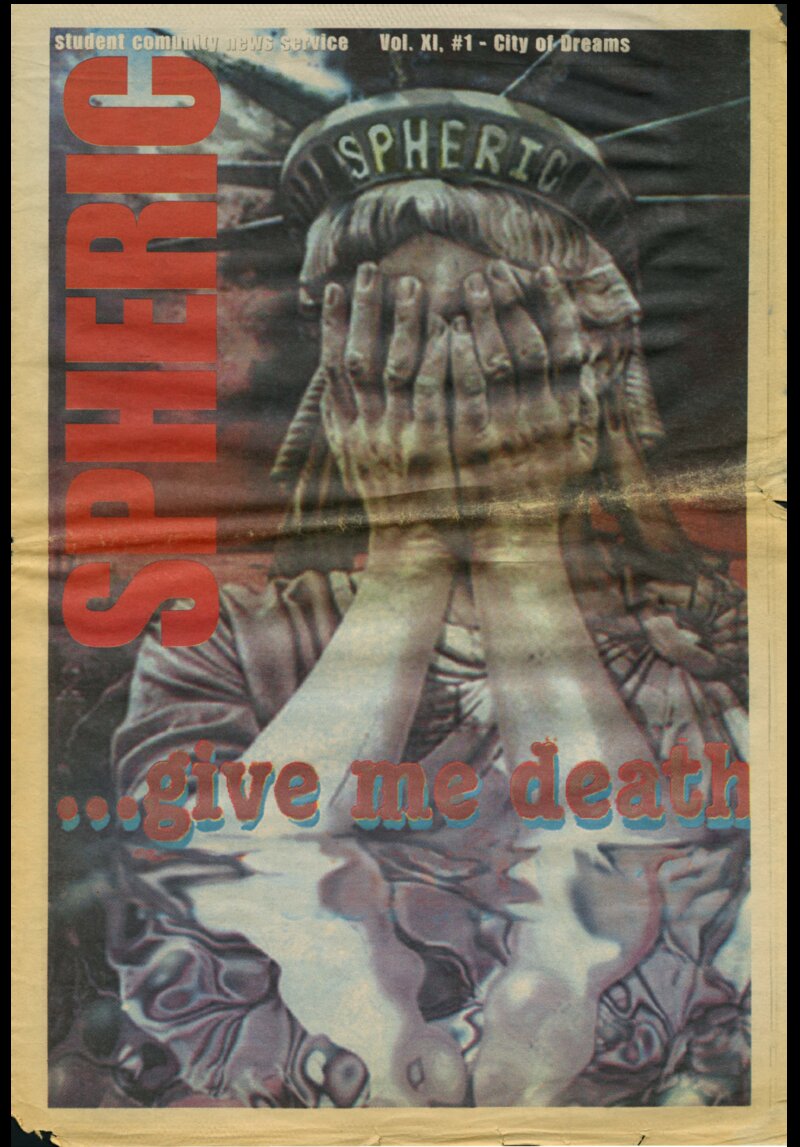
mice § Vol. XI, #1 - City of Dreams
Citibamae The Pawnbroker
CUNY Administration Helps Mega- “Bank Steal Your Mone
A Rob Wallace
n June 1996, the CUNY Board of
Trustees authorized the Univer-
sity Contracting Office to enter
CUNY into the CUNYCard
contract with Citibank and its
subcontractors, MCI, Diebold Incor-
porated, and Digital Equipment Cor-
poration. That decision piggybacked
CUNY upon a contract the State Uni-
versity of New York (SUNY) negotiat-
ed in April of 1995 and signed that
December. The Board's approval con-
signed CUNY to a contract SUNY
administrators negotiated.
The April 1996 contract shows
CUNY’s participation comes at a
price. According to an “Affiliated
Institution Election Agreement” the
contract claims CUNY must sign in
order to participate, “[E]educational
institutions located in the State of
“New York may elect to participate
and take advantage of the Services
provided thereunder, upon (a) writ-
ten approval of such participation by
SUNY, (b); /-con-
cerning the distribution of certain
commissions to be paid in connection
with the Service...” These “certain
commissions” are exemplary of how
CUNYCard will drain money away
from CUNY and its students.
Administrators’ Push-In Robbery
Any student who takes part in
the Citibank portion of CUNYCard
will be socked with a series of fees.
According to a confidential Campus
Procurement Document provided for
each campus’ implementation team,
there are two alternative regimes of
cardholder fees from which campus
administrators may choose for stu-
dents. The first alternative indudes a
$3 a month account maintenance fee
and 10 cents for every ATM charge.
The second alternative elimi-
nates the maintenance fee for student
accounts that receive financial aid
from CUNY. Students would receive a
few free ATM transactions when
their financial aid is deposited. But all
other fees remain and the campuses
accumulate royalties only after $2.50
is siphoned off by Citibank, presum-
ably from the other fees.
The first alternative reveals
much about the flavor of contract
CUNY administrators agreed to for
their students. It provides administra-
tors, not students, with the option to
waive CUNY’s portion of the royal-
ties, 50 cents, from the $3 mainte-
nance charge. Either way, CUNY gets
screwed. If the administration choos-
es to waive its 50 cent royalty, then
CUNY doesn’t get money, one of the
supposed benefits of the CUNYCard.
But if CUNY eo administrators
tors fade a decision that forced stu-
dents to pay more when they didn’t
have to. The contract is written in
such a way that any way administra-
tors choose their royalties, Citibank
takes in $2.50 of the maintenance fee.
The second option, which a
recent New York magazine article on
CUNYCard indicat es many of the
6969 6969 666 666
2LD ORDER:
campuses are choosing, would likely
scalp students at a slower rate. Like
the first option, Citibank is to take out
$2.50 from students, and because
CUNY collects no fees before
Citibank takes its $2.50 cut, it follows
that it would be to the administra-
tion’s advantage to encourage the
extraction of more fees from students
beyond the $2.50 cut-off point.
Other fees appear to be in store
for students who agreed to the
Citibank option of CUNYCard. There
are the standard fees for overdrawing
an account. Another includes a $2.50
service fee charged for dormant
accounts. A May 14, 1996 Citicorp
memo to William Anslow, SUNY
Senior Vice Chancellor for Finance
‘Management, defines dormant
accounts as “cardholder accounts
which show no activity for a consecu-
tive period of three months.”
Why charge $2.50 for these
accounts? According to the Citicorp
memo, “The objective is to stimulate
account transaction activity.” In other
words, the aim of the charge is to
push students into using the ATM
machines, a service for which
Citibank will charge $1 fees.
Moreover, any interest such dor-
mant accounts earn will be taken
from the student accounts and given
to the campus. “Balance earnings, if
any, on such accounts will be paid to
the campus,” reads the memo.
The litany of fees are particularly
disturbing as up until only last year a
part-time branch of Chemical Bank
operated in the basement of Shepard
Hall on the City College campus.
Until 1990, the bank was full-time.
Since 1990 it opened only 8 to 10
times a year to cash students’ Pell
Grants and other student aid checks.
Just last April, the branch was
robbed of at least $600,000 by two
daring bank robbers who pulled off a
push-in robbery early one morning.
The bank was subsequently closed for
good. The kicker about the Chemical
branch is that it cashed student
checks without charge. The state pre-
sumably paid Chemical Bank for the
service. With CUNYCard, the charge
of cashing aid checks will be pushed
off onto students.
We need to ask, Why was the
bank closed? Because of the robbery or
because CUNY terminated its agree-
ment with Chemical knowing full well
CUNYCard was coming in and
Citibank would have exclusive access
to CUNY students? Recall, CUNYCard
has been in development behind
closed doors at CUNY for two years.
Another suspect aspect of the
card’s fees is the terms of the contract
can be re-negotiated. The contract
reads, “At either party’s request... the
parties shall negotiate in good faith a
different Royalty and fee structure.”
According to Mark Piotrowsky of the
Center for Campus Organizing, a
gradual implementation of additional
fees for a similar bank-sponsored ID
card occurred at his alma mater, the
University of Florida.
“Tt quickly became clear it was a
scam to steal money from the stu-
dents. The administration would
force students to get a new card every
few years because they would intro-
duce new features to the card. They'd
charge students $10 each time,” stated
at a recent student orga-
nizing nce held at Brooklyn
College. The technology for CUNY-
Card and SUNYCard was developed
at nearby Florida State University by
the MCI-operated Card Application
Technology Center (CATC). CATC
provided SUNY administrators con-
sulting services for SUNYCard.
The fees are exemplary of the
sleazy nature of the contract. It’s a no-
lose situation for Citibank. The bank
invests practically nothing into the
project. The contract shows the
CUNY campuses need to provide
Citibank and MCI space on campus
without charge to produce CUNY-
Card. The campuses must pay for all
the computer equipment and soft-
ware for the card system, for the
maintenance of the hardware, for the
labor the companies provide to install
the card, for additional card stock for
the card, and other expenses.
CUNY picks up the charges for
the card implementation and gets lit-
tle of the profit. The money CUNY
does take in comes from the pockets
of some of the country’s poorest col-
lege students. “Access and Excel-
lence,” indeed. City College’s motto
now only applies to corporations who
have been provided by administra-
tors access to an excellent way of
making money off the poor and
working class.
Soaking the Fringe Economy
Why does the world’s second largest
bank, with approximately $200 billion
in assets and already raking in about
$1.5 billion a year, want to get
involved in a university whose stu-
dents are poorer than their national
counterparts? Citibank, like its finan-
cial comrades Nationsbank, Bank
America, American Express, and
Western Union among others, have
entered the poverty-making industry.
Sixty million Americans are
basically shut out of conventional
banking venues. Those Americans
must instead engage the services of
pawn shops, check-cashing outlets,
rent-to-own stores, and high interest
mortgage lenders. Citibank is
attempting to tap into this $200-300
billion fringe economy. The bank is in
essence positioning itself as a high-
end pawnbroker. As more Americans
are driven by capitalism into econom-
ic destitution - the New York Times
reports personal bankruptcies have
skyrocketed to 1 in 100 American
families! - the market of individuals
seeking loans balloons. There’s mon-
ey to be made ripping off the bur-
geoning classes of poor and strug-
gling working people.
According to a May 1996 article
in The Nation, the bottom-feeding
The fees are
exemplary of
the sleazy
nature of
the contract.
It’s a no-lose
situation for
finance outlets rake it in from poor
borrowers. Although credit card
holders pay 6 to 8% annual interest,
poor Americans can pony up to 240%
for pawnbroker loans, 300% for a
finance company loan, 20% for a sec-
ond mortgage, and even 2,000% for a
quicky loan from a check-cashing
place. The poor, who are really in no
position to negotiate rates when food
needs to be placed on the table or a
tuition bill must be paid, exist as a
magnificent cash cow for bottom-
feeding finance companies.
Citibank wants to get in on
the action. As tuition increases,
more students seek recourse in
financial aid either from state or
private sources. According to the
1995-6 edition of City Facts, a
compendium of statistics about
City College, 70% of CCNY
undergraduates already receive
financial aid at an average of
$4,559 per student. With these
new fees, “This [card] is taking
money out of poor people's pock-
ets,” says Terrence Podolsky, Day
Student Government Vice-Presi-
dent for University Affairs.
D506 page
SPHERIC
page’ City of Dreams
from pg. 3
Giving Notice
All right, the card sucks.
What are we going to do about it?
“I'm not getting this card and
| advise everybody else not to get
it either,” says Podolsky. “There is
no reason why we need to get this
card,” he adds. This past Decem-
ber CCNY Day Student Govern-
ment passed a resolution against
CUNYCard. The Faculty Senate at
City College also passed a resolu-
tion against the card.
CUNY has already braced
itself for such adverse reactions
from students and faculty. In a
November 19 memo to Vice-Chan-
cellor for Student Affairs Elsa
Nunez, Vice-Chancellor for Legal
Affairs Robert Diaz declares any
students or faculty who refuse the
“card are breaking the law and will
be dealt with accordingly. Diaz
cites the Henderson Rules of New
York State’s Education Law which
declare members of campus com-
munities must present ID to col-
lege officials when requested.
Diaz continues, “Students who
refuse to present their CUNYCard
when requested may be subjected
to disciplinary charges.” Such
charges might include anything
from suspension to expulsion.
Diaz makes no mention of the
type of discipline CUNY has
reserved for faculty who refuse to
comply.
Here on campus? When asked
in an interview by The Campus
what penalties students would
suffer if they did not turn in their
old cards for a new CUNYCard,
CCNY Vice President for Finance
and Management Nathan Dick-
meyer replied, “We have been
told that students that don’t have
the CUNYCard will not be
allowed into the building.”
This begs the question, Who
told City College administrators
that students without CUNYCard
would be denied entrance into
CUNY buildings? Does CUNY
Central at 80th Street dictate secu-
rity policy at CCNY? And, if not,
why is Dickmeyer passing the
buck to some unnamed source?
Clearly, if one or a few students
refuse to give in their old ID’s for the
CUNYCard, they will likely be
swiftly made an example of by
CUNY administrators. Of what
would any concerted effort to
stop CUNYCard from infecting
City College need to be com-
prised?
“The best thing to do is to
keep doing what we've been
doing — try to organize students
and faculty against the card, hold
forums and spread the word
about CUNYCard. That’s what
has made the administration give
pause and delay implementa-
tion,” responds Keeanga Taylor, a
history major. The card's imple-
mentation, previously slated
for March 17, has been post-
poned until next semester. “In
the long run though, we need
to take collective action
against an administration that
declares that if you don’t use
it, then we’re going to dump
you out of the school, we're
going to give you hell if you
don’t comply with a contract
CUNY negotiated with
Citibank without any student
input whatsoever.”
On the possibility of
stopping CUNYCard alto-
gether, Dickmeyer stated in
the Campus interview,
“There are questions about
the choices of Citibank and
MCI... but we cannot elimi-
nate, discriminate against
suppliers other than by sub-
stantive or financial means
To do so is illegal.
The procedures to
choose the supplier is done
at the State level with State
lawyers.” It’s the usual
administration excuse that
“Our hands are tied. There’s
nothing we can do.” But there
are always ways to dump
racist, anti-student, anti-union
companies off-campus. It’s
just that Dickmeyer and oth-
er administrators embrace
Citibank’s agenda and have
no intentions of bouncing
their invited guest.
In fact, the contract allows
for several ways to escape. For
example, a section entitled
“Participation,” proclaims,
“Affiliated Institutions within
the State of New York may
elect, but shall not be required,
to participate in the SUNYCard
System...” Each CUNY campus
then, including City College
alone, can opt-out of the con-
tract if it so chooses
Under the “Termination and
other remedies-SUNY” section
the contract reads, “SUNY may
also elect, at its sole option, with-
out liability, 91) to terminate this
Agreement and its obligation
hereunder, in whole or in part, by
giving Notice...’
Sounds good. Let’s give
them notice: Get out you
racist, thieving bastards!
What these sections of the
contract show is that all
those bleatings from admin-
istrators that there’s noth-
ing we can do to get out of
the contract are really inac-
curate at best, lies at worst.
Summer Program
Radical Trainihg In South AsIan Politics
For Desi Actrists: Training & Workshops
for’ lWeek.in._ August ‘98.
$50 Sliding Scale /Fee. Contact FOIL:
#(718)832-8319 or fpil@vti.net
4a GUT ner, Grane aT
STATES » NIG
Syed Fur 30 a5 Sar
- Q BHF Sms HRS , © tears Crag aigans,
‘> OT? GTS , SR
ey ae
Yaisz
ruci i
b, Grawirat 3 Caer
Weary , Gres: 1,24 30
330 mR
HAAVgr wT
Y Bye cH
PTY Stet
incu:
ws
Bi
Citibamae The Pawnbroker
CUNY Administration Helps Mega- “Bank Steal Your Mone
A Rob Wallace
n June 1996, the CUNY Board of
Trustees authorized the Univer-
sity Contracting Office to enter
CUNY into the CUNYCard
contract with Citibank and its
subcontractors, MCI, Diebold Incor-
porated, and Digital Equipment Cor-
poration. That decision piggybacked
CUNY upon a contract the State Uni-
versity of New York (SUNY) negotiat-
ed in April of 1995 and signed that
December. The Board's approval con-
signed CUNY to a contract SUNY
administrators negotiated.
The April 1996 contract shows
CUNY’s participation comes at a
price. According to an “Affiliated
Institution Election Agreement” the
contract claims CUNY must sign in
order to participate, “[E]educational
institutions located in the State of
“New York may elect to participate
and take advantage of the Services
provided thereunder, upon (a) writ-
ten approval of such participation by
SUNY, (b); /-con-
cerning the distribution of certain
commissions to be paid in connection
with the Service...” These “certain
commissions” are exemplary of how
CUNYCard will drain money away
from CUNY and its students.
Administrators’ Push-In Robbery
Any student who takes part in
the Citibank portion of CUNYCard
will be socked with a series of fees.
According to a confidential Campus
Procurement Document provided for
each campus’ implementation team,
there are two alternative regimes of
cardholder fees from which campus
administrators may choose for stu-
dents. The first alternative indudes a
$3 a month account maintenance fee
and 10 cents for every ATM charge.
The second alternative elimi-
nates the maintenance fee for student
accounts that receive financial aid
from CUNY. Students would receive a
few free ATM transactions when
their financial aid is deposited. But all
other fees remain and the campuses
accumulate royalties only after $2.50
is siphoned off by Citibank, presum-
ably from the other fees.
The first alternative reveals
much about the flavor of contract
CUNY administrators agreed to for
their students. It provides administra-
tors, not students, with the option to
waive CUNY’s portion of the royal-
ties, 50 cents, from the $3 mainte-
nance charge. Either way, CUNY gets
screwed. If the administration choos-
es to waive its 50 cent royalty, then
CUNY doesn’t get money, one of the
supposed benefits of the CUNYCard.
But if CUNY eo administrators
tors fade a decision that forced stu-
dents to pay more when they didn’t
have to. The contract is written in
such a way that any way administra-
tors choose their royalties, Citibank
takes in $2.50 of the maintenance fee.
The second option, which a
recent New York magazine article on
CUNYCard indicat es many of the
6969 6969 666 666
2LD ORDER:
campuses are choosing, would likely
scalp students at a slower rate. Like
the first option, Citibank is to take out
$2.50 from students, and because
CUNY collects no fees before
Citibank takes its $2.50 cut, it follows
that it would be to the administra-
tion’s advantage to encourage the
extraction of more fees from students
beyond the $2.50 cut-off point.
Other fees appear to be in store
for students who agreed to the
Citibank option of CUNYCard. There
are the standard fees for overdrawing
an account. Another includes a $2.50
service fee charged for dormant
accounts. A May 14, 1996 Citicorp
memo to William Anslow, SUNY
Senior Vice Chancellor for Finance
‘Management, defines dormant
accounts as “cardholder accounts
which show no activity for a consecu-
tive period of three months.”
Why charge $2.50 for these
accounts? According to the Citicorp
memo, “The objective is to stimulate
account transaction activity.” In other
words, the aim of the charge is to
push students into using the ATM
machines, a service for which
Citibank will charge $1 fees.
Moreover, any interest such dor-
mant accounts earn will be taken
from the student accounts and given
to the campus. “Balance earnings, if
any, on such accounts will be paid to
the campus,” reads the memo.
The litany of fees are particularly
disturbing as up until only last year a
part-time branch of Chemical Bank
operated in the basement of Shepard
Hall on the City College campus.
Until 1990, the bank was full-time.
Since 1990 it opened only 8 to 10
times a year to cash students’ Pell
Grants and other student aid checks.
Just last April, the branch was
robbed of at least $600,000 by two
daring bank robbers who pulled off a
push-in robbery early one morning.
The bank was subsequently closed for
good. The kicker about the Chemical
branch is that it cashed student
checks without charge. The state pre-
sumably paid Chemical Bank for the
service. With CUNYCard, the charge
of cashing aid checks will be pushed
off onto students.
We need to ask, Why was the
bank closed? Because of the robbery or
because CUNY terminated its agree-
ment with Chemical knowing full well
CUNYCard was coming in and
Citibank would have exclusive access
to CUNY students? Recall, CUNYCard
has been in development behind
closed doors at CUNY for two years.
Another suspect aspect of the
card’s fees is the terms of the contract
can be re-negotiated. The contract
reads, “At either party’s request... the
parties shall negotiate in good faith a
different Royalty and fee structure.”
According to Mark Piotrowsky of the
Center for Campus Organizing, a
gradual implementation of additional
fees for a similar bank-sponsored ID
card occurred at his alma mater, the
University of Florida.
“Tt quickly became clear it was a
scam to steal money from the stu-
dents. The administration would
force students to get a new card every
few years because they would intro-
duce new features to the card. They'd
charge students $10 each time,” stated
at a recent student orga-
nizing nce held at Brooklyn
College. The technology for CUNY-
Card and SUNYCard was developed
at nearby Florida State University by
the MCI-operated Card Application
Technology Center (CATC). CATC
provided SUNY administrators con-
sulting services for SUNYCard.
The fees are exemplary of the
sleazy nature of the contract. It’s a no-
lose situation for Citibank. The bank
invests practically nothing into the
project. The contract shows the
CUNY campuses need to provide
Citibank and MCI space on campus
without charge to produce CUNY-
Card. The campuses must pay for all
the computer equipment and soft-
ware for the card system, for the
maintenance of the hardware, for the
labor the companies provide to install
the card, for additional card stock for
the card, and other expenses.
CUNY picks up the charges for
the card implementation and gets lit-
tle of the profit. The money CUNY
does take in comes from the pockets
of some of the country’s poorest col-
lege students. “Access and Excel-
lence,” indeed. City College’s motto
now only applies to corporations who
have been provided by administra-
tors access to an excellent way of
making money off the poor and
working class.
Soaking the Fringe Economy
Why does the world’s second largest
bank, with approximately $200 billion
in assets and already raking in about
$1.5 billion a year, want to get
involved in a university whose stu-
dents are poorer than their national
counterparts? Citibank, like its finan-
cial comrades Nationsbank, Bank
America, American Express, and
Western Union among others, have
entered the poverty-making industry.
Sixty million Americans are
basically shut out of conventional
banking venues. Those Americans
must instead engage the services of
pawn shops, check-cashing outlets,
rent-to-own stores, and high interest
mortgage lenders. Citibank is
attempting to tap into this $200-300
billion fringe economy. The bank is in
essence positioning itself as a high-
end pawnbroker. As more Americans
are driven by capitalism into econom-
ic destitution - the New York Times
reports personal bankruptcies have
skyrocketed to 1 in 100 American
families! - the market of individuals
seeking loans balloons. There’s mon-
ey to be made ripping off the bur-
geoning classes of poor and strug-
gling working people.
According to a May 1996 article
in The Nation, the bottom-feeding
The fees are
exemplary of
the sleazy
nature of
the contract.
It’s a no-lose
situation for
finance outlets rake it in from poor
borrowers. Although credit card
holders pay 6 to 8% annual interest,
poor Americans can pony up to 240%
for pawnbroker loans, 300% for a
finance company loan, 20% for a sec-
ond mortgage, and even 2,000% for a
quicky loan from a check-cashing
place. The poor, who are really in no
position to negotiate rates when food
needs to be placed on the table or a
tuition bill must be paid, exist as a
magnificent cash cow for bottom-
feeding finance companies.
Citibank wants to get in on
the action. As tuition increases,
more students seek recourse in
financial aid either from state or
private sources. According to the
1995-6 edition of City Facts, a
compendium of statistics about
City College, 70% of CCNY
undergraduates already receive
financial aid at an average of
$4,559 per student. With these
new fees, “This [card] is taking
money out of poor people's pock-
ets,” says Terrence Podolsky, Day
Student Government Vice-Presi-
dent for University Affairs.
D506 page
SPHERIC
page’ City of Dreams
from pg. 3
Giving Notice
All right, the card sucks.
What are we going to do about it?
“I'm not getting this card and
| advise everybody else not to get
it either,” says Podolsky. “There is
no reason why we need to get this
card,” he adds. This past Decem-
ber CCNY Day Student Govern-
ment passed a resolution against
CUNYCard. The Faculty Senate at
City College also passed a resolu-
tion against the card.
CUNY has already braced
itself for such adverse reactions
from students and faculty. In a
November 19 memo to Vice-Chan-
cellor for Student Affairs Elsa
Nunez, Vice-Chancellor for Legal
Affairs Robert Diaz declares any
students or faculty who refuse the
“card are breaking the law and will
be dealt with accordingly. Diaz
cites the Henderson Rules of New
York State’s Education Law which
declare members of campus com-
munities must present ID to col-
lege officials when requested.
Diaz continues, “Students who
refuse to present their CUNYCard
when requested may be subjected
to disciplinary charges.” Such
charges might include anything
from suspension to expulsion.
Diaz makes no mention of the
type of discipline CUNY has
reserved for faculty who refuse to
comply.
Here on campus? When asked
in an interview by The Campus
what penalties students would
suffer if they did not turn in their
old cards for a new CUNYCard,
CCNY Vice President for Finance
and Management Nathan Dick-
meyer replied, “We have been
told that students that don’t have
the CUNYCard will not be
allowed into the building.”
This begs the question, Who
told City College administrators
that students without CUNYCard
would be denied entrance into
CUNY buildings? Does CUNY
Central at 80th Street dictate secu-
rity policy at CCNY? And, if not,
why is Dickmeyer passing the
buck to some unnamed source?
Clearly, if one or a few students
refuse to give in their old ID’s for the
CUNYCard, they will likely be
swiftly made an example of by
CUNY administrators. Of what
would any concerted effort to
stop CUNYCard from infecting
City College need to be com-
prised?
“The best thing to do is to
keep doing what we've been
doing — try to organize students
and faculty against the card, hold
forums and spread the word
about CUNYCard. That’s what
has made the administration give
pause and delay implementa-
tion,” responds Keeanga Taylor, a
history major. The card's imple-
mentation, previously slated
for March 17, has been post-
poned until next semester. “In
the long run though, we need
to take collective action
against an administration that
declares that if you don’t use
it, then we’re going to dump
you out of the school, we're
going to give you hell if you
don’t comply with a contract
CUNY negotiated with
Citibank without any student
input whatsoever.”
On the possibility of
stopping CUNYCard alto-
gether, Dickmeyer stated in
the Campus interview,
“There are questions about
the choices of Citibank and
MCI... but we cannot elimi-
nate, discriminate against
suppliers other than by sub-
stantive or financial means
To do so is illegal.
The procedures to
choose the supplier is done
at the State level with State
lawyers.” It’s the usual
administration excuse that
“Our hands are tied. There’s
nothing we can do.” But there
are always ways to dump
racist, anti-student, anti-union
companies off-campus. It’s
just that Dickmeyer and oth-
er administrators embrace
Citibank’s agenda and have
no intentions of bouncing
their invited guest.
In fact, the contract allows
for several ways to escape. For
example, a section entitled
“Participation,” proclaims,
“Affiliated Institutions within
the State of New York may
elect, but shall not be required,
to participate in the SUNYCard
System...” Each CUNY campus
then, including City College
alone, can opt-out of the con-
tract if it so chooses
Under the “Termination and
other remedies-SUNY” section
the contract reads, “SUNY may
also elect, at its sole option, with-
out liability, 91) to terminate this
Agreement and its obligation
hereunder, in whole or in part, by
giving Notice...’
Sounds good. Let’s give
them notice: Get out you
racist, thieving bastards!
What these sections of the
contract show is that all
those bleatings from admin-
istrators that there’s noth-
ing we can do to get out of
the contract are really inac-
curate at best, lies at worst.
Summer Program
Radical Trainihg In South AsIan Politics
For Desi Actrists: Training & Workshops
for’ lWeek.in._ August ‘98.
$50 Sliding Scale /Fee. Contact FOIL:
#(718)832-8319 or fpil@vti.net
4a GUT ner, Grane aT
STATES » NIG
Syed Fur 30 a5 Sar
- Q BHF Sms HRS , © tears Crag aigans,
‘> OT? GTS , SR
ey ae
Yaisz
ruci i
b, Grawirat 3 Caer
Weary , Gres: 1,24 30
330 mR
HAAVgr wT
Y Bye cH
PTY Stet
incu:
ws
Bi
Title
"Citibank: The Pawnbroker"
Description
This article in the Spheric newspaper from Hunter College investigates the potential exploitation of students and campuses by the proposed CUNY Card. Citibank would get fees from students as part of this proposed ID card that would also be an ATM card, and CUNY would pay for the production and administration of the cards.
Contributor
Subways, Suzy
Creator
Spheric student community news service
Date
1998 (Circa)
Language
English
Publisher
Spheric student community news service
Rights
Copyrighted
Source
Subways, Suzy
Original Format
Article / Essay
Spheric student community news service. Letter. 1998. “‘Citibank: The Pawnbroker’”, 1998, CUNY DIGITAL HISTORY ARCHIVE, accessed September 5, 2026, https://stephenz.tailc22a4b.ts.net/s/cdha/item/60