Source magazine interview with SLAM! Members
Item
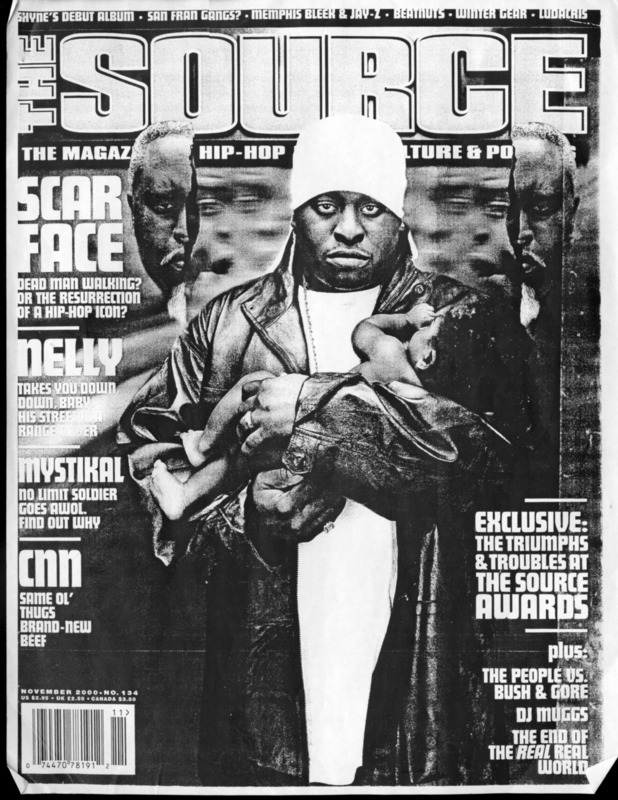
SHVNE’S DEBUT ALBUM - SAN FRA gS? -
NERD MAN WALKING?
DR THE RESURRECTION
oF HIP-HOP ICON?
B,
f
;
be
~
“Oe er
ff
-_—
EXCLUSIVE:
THE TRIUMPHS
cn ef - i oe | | STROUBLESAT |
SAME OL’
THUGS
BRAND-NEW
BEEF
; 4 a PEOPLES.) 3
‘NOVEMBER 2000-NO. 134 } - | ; s BUSH g GORE:
US $2.95 + UK £2.50 » CANADA $3.50
Ae.
iI |
74470°78191""2
S
:
:
:
>
-
:
Hip-hop demanded a place at the table
during the Republican and Democratic
National Conventions. But nobody said
it was gonna be easy. Inside the massive
effort behind the mass protests.
WORDS BY DAN FROSCH
PHOTOGRAPHS BY LAWRENCE DORTCH
ip-hop has always been
about revolution. From
the ever-changing political
rhetoric of KRS-One to the
Black Panther-inspired
poetics of dead prez, rap
music has been our way
of telling the powers that
be how we feel about
shit. Even Jigga’s flossin’
and Dre's gangsta brag-
gadocio can be seen as
small acts of resistance—ways of show-
ing America that cats from the ‘hood can
achieve success on their own terms.
Hence it came as a surprise that hip-
hop was ghost when 45,000 activists,
anarchists and random heads tore up
Seattle last winter. The protestors, mostly
college-age white kids, were outraged
over the World Trade Organization's
alleged disregard for Third World
nations and the environment. Through
civil and not so civil disobedience, pro-
testors demanded that these issues be
placed on the agenda. But during the
massive “direct action” designed to dis-
rupt the WTO's notoriously private pro-
ceedings, there was hardly a Timberland
or cornrow in the crowd of Birkenstocks
and blond hair.
Between November 30 and December 3,
protestors prevented WTO delegates
from entering their meetings. Their sheer
numbers and unpredictability stunned an
overwhelmed police force. All told, pro-
testors caused $2.5 million worth of dam-
age to downtown Seattle, and more than
500 were arrested. More importantly, the
national media ate it up. Cameras cap-
tured everything from roving bands of
protestors dipped in jet-black body suits
to the life-sized puppets some toted.
So while the world wondered what
alternate universe this discontent
emerged from, a few members of the
hip-hop community began organizing for
their own mass protests. For them,
Seattle was an epiphany—a realization
that they were going to have to team up
with some of those wild-ass white kids
if they wanted their causes to get the
same national coverage. They designat-
ed the Republican National Convention
in Philadelphia and the Democratic
National Convention in LA as the battle-
ground. And with the element of sur-
prise gone, their action would have to
be just as choreographed as the con-
ventions themselves.
“We had seen a trend of mostly white
Organizations and white-led move-
ments pulling together the mass
164 THE SOURCE NOVEMBER 2000
“IT'S A LOT TO ASK PEOPLE
TO GET THE S**T KICKED OUT
OF THEM ON PURPOSE."
—RACHEL LAFOREST
From top: DNC delegates; march against
occidental Petroleum; LA protester
demonstrates outside DNC; Limited
support for LAPD.
protests in Seattle,” says Rachel
LaForest, a senior at Hunter College
and a project coordinator for New York
City-based Student Liberation Action
Movement (SLAM). “We felt the peo-
ple targeted by the issues being
brought to the table most were people
of color, and we wanted to make sure
we were represented in Philly.”
Fellow organizer Peter Cheng adds,
“We chose to represent issues that
people of color were already working
with in their communities” like the
prison-industrial complex, the death
penalty and the unjust incarceration of
political prisoners.
In late April, 20. organizers from
SLAM—a small, predominantly Black,
Asian and Latino grassroots organization
that focuses on the criminal-justice sys-
tem—united with 10 other groups to
form the August First Direct Action
Coalition (AFDAC). As the name of the
loosely organized collective suggests,
the first of August would be D-Day. That
meant that the crew would have a little
more than 90 days to pull off a massive
protest in a city determined to avoid the
embarrassment of another Seattle.
SLAM's first step was to recruit foot
soldiers among its members and the
people who occasionally attended their
weekly meetings. “We put together
propaganda that would appeal to our
young people—not just a sheet of
facts,” LaForest notes, pointing to a col-
orful flyer depicting an oversized, dread-
locked activist crouching among cartoon
buildings. One side of the flyer shouts,
“Resist!” The other urges heads to con-
verge in Philly to “confront the US crim-
inal-justice system. ”
SLAM leaders admit it was difficult to
attract interest because Seattle was
perceived by many as a whites-only
protest. And given the everyday bullshit
they endured with five-O, many were
wary of placing themselves in direct
confrontation with Philadelphia's police.
“It's a lot to ask people to get the shit
kicked out of them on purpose,”
Laforest says with a grin. Nonetheless,
SLAM plowed ahead and was able to
recruit about 50 heads.
With images of police beatdowns in
Seattle still fresh, members traveled
from New York to the North Philly
“Convergence Center” for training ses-
sions in civil disobedience. This covered
everything from how to form a blockade
to how to react when the police wilded
out. SLAM also helpdd establish a sepe-
rate “People of Color Convergence
Center” at a nearby church, which
minority activists used to discuss their
concerns about the upcoming protests
amongst themselves.
In June, SLAM’s activity became more
frenzied. There were funds to be raised,
buses to be rented, housing to secure
and press conferences to be planned.
SLAM also sent delegates to Philly to
coordinate with leaders of AFDAC.
But even with all the teamwork, organ-
izers were faced with racial tension.
According to SLAM leader Kai Lumumba,
her dealings with the mostly white group
of protest organizers were affected by
subtle prejudice. “We were working with
a lot of people who weren't aware of
their racism and their privilege,” she
says. “| was trying to make sure that
didn't creep up in the organizing.”
Jacqueline Ambrosini, a lead organizer
for Philadelphia Direct Action Network,
who is white, seconds Lumumba’s
assessment. As a member of the
August First collective, she worked
closely with SLAM delegates. “People
have to question white privilege and
white leadership—more than just mak-
ing room but actual power sharing.
SLAM was amazing because they took
such a powerful leadership role.”
By July 31, downtown Philadelphia was
essentially sealed off from anyone who
FOR REPUBLICANS AND DEMOCRATS,
NATIONAL CONVENTIONS ARE PERFECT
PLACES 10 FLIP THE SCRIPT
The Republican and Democratic
National Conventions have become
elaborate infomercials. They're designed
to entice voters to buy a product that
looks great on TV but invariably has
screws missing when the package
arrives. And if voters don't buy the mes-
sage, there’s plenty of time to create a
new-and-improved one.
Take the Republicans’ 1996 show.
Just four years ago, the Grand Old Party
didn’t mask its anti-people-of-color agenda
Bob Dole was the presidential nominee,
but syndicated conservative commenta-
tor and former Richard Nixon speech-
writer Pat Buchanan was the star. An
unabashed Confederate flag-waver,
Buchanan wrapped his attack on the
“flood of illegals” in the American flag
and American values.
Gone this year is the brown bashing. In
wasn't officially involved with the RNC.
Mayor John Street refused to allow
W
protestors anywhere near the First
Union Center, where Republicans
would nominate George VW. Bush and
Philadelphia would establish itself as a
first-class host.
As a result, AFDAC’s strategy mir-
rored the Seattle protestors’: Interrupt
the convention by preventing RNC dele-
gates from making it to the convention
site. Groups of 15 to 20 would block
routes they expected delegates to be
traveling. Tactical squads would com-
municate with the main Convergence
Center across town. A medic squad
would provide first aid. And a ‘flying’
squad would scurry from protest to
protest, lending reinforcements. Indeed,
SLAM and other August First partici-
pants were ready to rumble. They just
didn't known just how ready Philly cops
were to fight back.
Despite all of the attention to detail,
the August 1 protest didn't go as
planned. A last-minute police raid on the
fact, the Republican National Convention
dais held more color than a Crayola 64-
pack. George P. Bush (George W.'s half-
Mexican nephew) spoke in English and
Spanish about how proud he was of his
uncle. And Colin Powell received a war
hero's welcome when he climbed the
stage, although many in the crowd sat on
their hands when he spoke about the need
for the Grand Old Party to reach out to peo-
ple of color consistently—not just during
election years.
After eight years of Bill Clinton, the
Democrats have made minor moral
adjustments. But in the case of people of
color, their party’s core message remains
the same. In fact, for 2000, Democrats
upped the ante by allowing Harold E. Ford
- Jr., a 30-year-old, two-time Tennessee
congressman, to give the keynote
address. Ford spoke about the conven-
tion's significance for young people of
color, pointing out that “this election Is
more about us, if not solely about us.”
That may be the most important thing to
Convergence Center and the confisca- From top: LA protester rallies come out of both of the infomercials.
-sty| against brutality; cops —MICHAEL DATCHER
tion of thousands of Seattle-style rege a camila: PUnaataind
puppets forced protestors to march Clinton bids farewell.
165
PLANTATION
LULLABIES
HOW THE RNC USED A MODERN-DAY MIN-
STREL SHOW TO ATTRACT WHITE VOTERS
Eleven years ago, Aunt Jemima lost
weight and straightened her hair. But
even with the makeover, her image is
reminiscent of plantation days. And
she isn't the only slave stereotype
used to push products. Images of
Uncle Ben and Rastus, the chef on
_ the Cream of Wheat box, continue to
this day. These caricatures are
employed to symbolically recall a past
when Blacks had to serve whites.
Fortunately, there’s no more min-
strelsy in the new millennium. That is,
if you don’t count this year’s
‘Republican National Convention.
A minstrel show has never looked
better—break dancers, a Black
preacher, a gospel choir, Chaka Khan
and Brian McKnight. They were all
onstage to entertain the predominate-
ly white audience.
Why were these folks on parade?
That's the $6 million question.
Observers speculated that
Republicans were trying to attract
voters of color. After all, Powell
stressed inclusion and the need for
affirmative action (which the party
opposes). But that’s too obvious.
With their record, Republicans
know Blacks and Latinos wouldn't
fall for that ploy.
The GOP had another agenda.
After losing moderate white voters
to Bill Clinton in ‘92, Republicans are
now trying to win them back. These
voters will be a deciding factor
between a Republican or
Democratic president. So, the
Republicans did what they had to
do. They put a few Black faces on
display to prove to white suburban-
ites that George W. Bush is truly a
“compassionate conservative.”
It was a win-win Situation for the
GOP. And what will the Negroes get
in return? Perhaps a chance to serve
in the big house.
—ANN-MARIE NICHOLSON
THE SOURCE NOVEMBER 2000
From top: Protesters light it up;
LAPD out in force; Rep. J.C. Watts
(R-OK) shines at the RNC.
o&
without the attention-grabbing man-
nequins. Even worse, a well-organized,
$10 million police presence stymied the
Organized confusion so crucial to
Seattie’s success.
Although SLAM maintains that the
coalition achieved its mission by hold-
ing up traffic in downtown Philadelphia
for five hours, many dismissed the
RNC protests as ineffective. While
some of the 10,000 protestors
indulged in sporadic acts of violence,
the RNC’s show went on as scheduled.
During the four-day convention, Jake
made some 400 arrests (including one
SLAM participant) on charges ranging
from obstructing a highway to aggra-
vated assault on a police officer. And
the national media portrayed it all as
chaos without cause.
While RNC protestors were being
held for days with sky-high bails, an-
other group of organizers was bracing
for their own showdown with the
Democrats and the LAPD. Although
social justice groups had long let
Democrats off the hook, Seattle had an
indelible effect. Groups like 300-mem-
ber, Cali-based Youth Organizing Com-
munities (YOC) began wondering if the
Democrats were fair game. “The initial
question was why protest the
Democrats? And if we do it, are we
going to get lost in the shuffle?” recalls
YOC leader Luis Sanchez. “We were
also worried about the potential vio-
lence—especially being young people of
color.” Ultimately, according to Sanchez,
the sorry state of education for poor
people of color compelled the predomi-
nantly Latino organization to protest.
So, in April, YOC transformed itself
into the nation’s largest street team,
going into the ‘hoods of South Central,
East LA and Pico-Union to inform peo-
ple about the upcoming protests.
Group members also doled out hun-
dreds of flyers at local high schools and
on city buses.
Then came the music. YOC held two
summer concerts featuring local hip-hop
acts, graffiti exhibitions, speakers and
information booths. Sanchez estimates
that up to 500 heads showed up to
each. “Most people tend to think
protests are boring,” he says. “We try
to use [our] culture as a weapon; it
seems more celebratory.”
Although LA's protestors were rep-
ping causes similar to Philly's, they didn't
duplicate the Seattle model. Instead,
organizers opted for a number of mass
rallies that would take place from
August 5 to the 17th. Major themes
included environmental racism, police
brutality and corporate greed. Instead of
trying to shut the DNC down, organizers
obtained permits. They would rally right
in the parking lot of the Staples Center
where the convention was to take place.
And if all went according to plan, they
would upstage the main event.
YOC, like co-producers of an album full
of cameos, sprinkled their expertise—
and name—throughout most of the
major protests. This included an August
14 march against Occidental Petroleum,
which they accused of abusing
Colombia's U'wa people; an August 15
rally to protest LA Metropolitan Transit
Authority's plan to cut spending on
public buses on which Latinos depend;
and an August. 17 march against the US
Navy military exercises in Vieques,
Puerto Rico.
But a march to the governor's office
on the morning of August 15 would be
their crowning achievement. Despite a
gun-wielding police force aggravated by
anarchists, “Justice for Youth, End the
Racist Setup” would have to go on.
Tensions were sweltering like the Left
Coast sun on the day that YOC had
worked so tirelessly to plan. Two-thou-
sand cops from the LAPD and 2,700
highway patrolmen were on duty. And
the night before, anarchists had wilded
Out at a Rage Against the Machine con-
cert in the Staples Center parking lot.
Police shut down the concert after an
anarchist group attempted to scale a
fence and storm the convention. Cops
blasted them off the fence with rounds
of air-compressed capsules. Then troop-
ers on horseback fired randomly into the
crowd, which spilled into the street.
Meanwhile, small groups of protestors
scorched American flags and screamed
“Fuck the police!” and “Al Gore, corpo-
rate whore!” Only six arrests were
made, but many complained of exces-
sive force. The American Civil Liberties
Union later announced plans to file a civil
rights suit against the LAPD on the
grounds that police targeted members of
the media during the night's unrest.
Understandably, YOC members were
nervous about their 9 A.m. march to
Governor Gray Davis's LA office. “We
were worried after Monday night,”
Sanchez recalls. “Ours was the first
march after that, and we were all people
of color. So we didn’t know how the
[police] would react.” Still, YOC didn’t let
trigger-happy cops deter them.
AS gistto birds darted about over-
aye, ‘
- he “ats
oe At ee
> ar
aah eet) te oe
9” +) 3m 3
ee Ae Pee
o> Sy mak ri « a ee =
Retin Pot 3 rs tes t ak ie
>’ .
Ry >
em | ~ .
0 ~~ “ |
“WE WERE ABLE TO INJECT THE
ISSUES THAT AFFECT PEOPLE OF
COLOR INTO PREDOMINANTLY
WHITE ORGANIZATIONS THAT
“WNEVER REALLY DID WORK WITH
RACIAL JUSTICE." —PETER CHENG
One of Cali’s finest raises a fist in
protest; Anarchists wiid out; cops throw
their weight around.
head, the crowd of 1,000 mostly Latino
high school students set off their two-
hour march to the Governor's office.
Since YOC had a permit for the march
and had alerted LAPD officials of their
route, cops, highway patrolmen and
county sheriffs flanked protestors on
either side, rocking full riot gear. A few
even displayed the air-capsule guns they
toted the night before.
Filling the entire street, the marchers
snaked their way through Downtown. The
hip-hop truck rode alongside the marchers
bumping DMX's “Ruff Ryder's Anthem”
and KRS-One’s “Sound of da Police.”
Just before arriving at Davis's office,
the protestors passed through a mile-
long phalanx of more police. YOC mem-
bers responded by raising their left fists
and quieting the marchers and the
music. The crowd of 1,000 kids com-
pleted their journey in silence with their
fists raised. Police could only watch
through tinted sunglasses.
After reaching the office, YOC dele-
gates delivered their demands to a rep-
resentative of the governor, who was
not there. Po-po made no arrests during
the march, though some 200 arrests
were made during the DNC.
Although YOC has yet to receive a
response from the Governor's office,
Sanchez says that’s besides the point.
“We were there to demonstrate that
this was a group that was a statewide
network,” he contends, “that we were
going to take on people we felt were
threatening educational justice. We
were going to continue to organize
beyond the DNC.”
So what should we make of Philly and
LA? Did SLAM and YOC enlighten the
world to problems that plague the hip-
hop generation? Or did a relative lack of
press coverage—perhaps due to the
peaceful nature of the marches—pre-
vent the two groups from getting their
message to the masses?
Both SLAM and YOC view their
actions as overwhelming victories.
“We were able to inject the issues that
affect people of color into predomi-
nantly white organizations that never
really did work with racial justice. Now,
we have environmental groups dis-
cussing these issues,” explains
SLAM's Peter Cheng.
“It was about networking and creat-
ing a larger movement that goes
way beyond the DNC,” adds Sanchez.
“We showed support for these other
groups, and now they're gonna be
there for us.” o
167
NERD MAN WALKING?
DR THE RESURRECTION
oF HIP-HOP ICON?
B,
f
;
be
~
“Oe er
ff
-_—
EXCLUSIVE:
THE TRIUMPHS
cn ef - i oe | | STROUBLESAT |
SAME OL’
THUGS
BRAND-NEW
BEEF
; 4 a PEOPLES.) 3
‘NOVEMBER 2000-NO. 134 } - | ; s BUSH g GORE:
US $2.95 + UK £2.50 » CANADA $3.50
Ae.
iI |
74470°78191""2
S
:
:
:
>
-
:
Hip-hop demanded a place at the table
during the Republican and Democratic
National Conventions. But nobody said
it was gonna be easy. Inside the massive
effort behind the mass protests.
WORDS BY DAN FROSCH
PHOTOGRAPHS BY LAWRENCE DORTCH
ip-hop has always been
about revolution. From
the ever-changing political
rhetoric of KRS-One to the
Black Panther-inspired
poetics of dead prez, rap
music has been our way
of telling the powers that
be how we feel about
shit. Even Jigga’s flossin’
and Dre's gangsta brag-
gadocio can be seen as
small acts of resistance—ways of show-
ing America that cats from the ‘hood can
achieve success on their own terms.
Hence it came as a surprise that hip-
hop was ghost when 45,000 activists,
anarchists and random heads tore up
Seattle last winter. The protestors, mostly
college-age white kids, were outraged
over the World Trade Organization's
alleged disregard for Third World
nations and the environment. Through
civil and not so civil disobedience, pro-
testors demanded that these issues be
placed on the agenda. But during the
massive “direct action” designed to dis-
rupt the WTO's notoriously private pro-
ceedings, there was hardly a Timberland
or cornrow in the crowd of Birkenstocks
and blond hair.
Between November 30 and December 3,
protestors prevented WTO delegates
from entering their meetings. Their sheer
numbers and unpredictability stunned an
overwhelmed police force. All told, pro-
testors caused $2.5 million worth of dam-
age to downtown Seattle, and more than
500 were arrested. More importantly, the
national media ate it up. Cameras cap-
tured everything from roving bands of
protestors dipped in jet-black body suits
to the life-sized puppets some toted.
So while the world wondered what
alternate universe this discontent
emerged from, a few members of the
hip-hop community began organizing for
their own mass protests. For them,
Seattle was an epiphany—a realization
that they were going to have to team up
with some of those wild-ass white kids
if they wanted their causes to get the
same national coverage. They designat-
ed the Republican National Convention
in Philadelphia and the Democratic
National Convention in LA as the battle-
ground. And with the element of sur-
prise gone, their action would have to
be just as choreographed as the con-
ventions themselves.
“We had seen a trend of mostly white
Organizations and white-led move-
ments pulling together the mass
164 THE SOURCE NOVEMBER 2000
“IT'S A LOT TO ASK PEOPLE
TO GET THE S**T KICKED OUT
OF THEM ON PURPOSE."
—RACHEL LAFOREST
From top: DNC delegates; march against
occidental Petroleum; LA protester
demonstrates outside DNC; Limited
support for LAPD.
protests in Seattle,” says Rachel
LaForest, a senior at Hunter College
and a project coordinator for New York
City-based Student Liberation Action
Movement (SLAM). “We felt the peo-
ple targeted by the issues being
brought to the table most were people
of color, and we wanted to make sure
we were represented in Philly.”
Fellow organizer Peter Cheng adds,
“We chose to represent issues that
people of color were already working
with in their communities” like the
prison-industrial complex, the death
penalty and the unjust incarceration of
political prisoners.
In late April, 20. organizers from
SLAM—a small, predominantly Black,
Asian and Latino grassroots organization
that focuses on the criminal-justice sys-
tem—united with 10 other groups to
form the August First Direct Action
Coalition (AFDAC). As the name of the
loosely organized collective suggests,
the first of August would be D-Day. That
meant that the crew would have a little
more than 90 days to pull off a massive
protest in a city determined to avoid the
embarrassment of another Seattle.
SLAM's first step was to recruit foot
soldiers among its members and the
people who occasionally attended their
weekly meetings. “We put together
propaganda that would appeal to our
young people—not just a sheet of
facts,” LaForest notes, pointing to a col-
orful flyer depicting an oversized, dread-
locked activist crouching among cartoon
buildings. One side of the flyer shouts,
“Resist!” The other urges heads to con-
verge in Philly to “confront the US crim-
inal-justice system. ”
SLAM leaders admit it was difficult to
attract interest because Seattle was
perceived by many as a whites-only
protest. And given the everyday bullshit
they endured with five-O, many were
wary of placing themselves in direct
confrontation with Philadelphia's police.
“It's a lot to ask people to get the shit
kicked out of them on purpose,”
Laforest says with a grin. Nonetheless,
SLAM plowed ahead and was able to
recruit about 50 heads.
With images of police beatdowns in
Seattle still fresh, members traveled
from New York to the North Philly
“Convergence Center” for training ses-
sions in civil disobedience. This covered
everything from how to form a blockade
to how to react when the police wilded
out. SLAM also helpdd establish a sepe-
rate “People of Color Convergence
Center” at a nearby church, which
minority activists used to discuss their
concerns about the upcoming protests
amongst themselves.
In June, SLAM’s activity became more
frenzied. There were funds to be raised,
buses to be rented, housing to secure
and press conferences to be planned.
SLAM also sent delegates to Philly to
coordinate with leaders of AFDAC.
But even with all the teamwork, organ-
izers were faced with racial tension.
According to SLAM leader Kai Lumumba,
her dealings with the mostly white group
of protest organizers were affected by
subtle prejudice. “We were working with
a lot of people who weren't aware of
their racism and their privilege,” she
says. “| was trying to make sure that
didn't creep up in the organizing.”
Jacqueline Ambrosini, a lead organizer
for Philadelphia Direct Action Network,
who is white, seconds Lumumba’s
assessment. As a member of the
August First collective, she worked
closely with SLAM delegates. “People
have to question white privilege and
white leadership—more than just mak-
ing room but actual power sharing.
SLAM was amazing because they took
such a powerful leadership role.”
By July 31, downtown Philadelphia was
essentially sealed off from anyone who
FOR REPUBLICANS AND DEMOCRATS,
NATIONAL CONVENTIONS ARE PERFECT
PLACES 10 FLIP THE SCRIPT
The Republican and Democratic
National Conventions have become
elaborate infomercials. They're designed
to entice voters to buy a product that
looks great on TV but invariably has
screws missing when the package
arrives. And if voters don't buy the mes-
sage, there’s plenty of time to create a
new-and-improved one.
Take the Republicans’ 1996 show.
Just four years ago, the Grand Old Party
didn’t mask its anti-people-of-color agenda
Bob Dole was the presidential nominee,
but syndicated conservative commenta-
tor and former Richard Nixon speech-
writer Pat Buchanan was the star. An
unabashed Confederate flag-waver,
Buchanan wrapped his attack on the
“flood of illegals” in the American flag
and American values.
Gone this year is the brown bashing. In
wasn't officially involved with the RNC.
Mayor John Street refused to allow
W
protestors anywhere near the First
Union Center, where Republicans
would nominate George VW. Bush and
Philadelphia would establish itself as a
first-class host.
As a result, AFDAC’s strategy mir-
rored the Seattle protestors’: Interrupt
the convention by preventing RNC dele-
gates from making it to the convention
site. Groups of 15 to 20 would block
routes they expected delegates to be
traveling. Tactical squads would com-
municate with the main Convergence
Center across town. A medic squad
would provide first aid. And a ‘flying’
squad would scurry from protest to
protest, lending reinforcements. Indeed,
SLAM and other August First partici-
pants were ready to rumble. They just
didn't known just how ready Philly cops
were to fight back.
Despite all of the attention to detail,
the August 1 protest didn't go as
planned. A last-minute police raid on the
fact, the Republican National Convention
dais held more color than a Crayola 64-
pack. George P. Bush (George W.'s half-
Mexican nephew) spoke in English and
Spanish about how proud he was of his
uncle. And Colin Powell received a war
hero's welcome when he climbed the
stage, although many in the crowd sat on
their hands when he spoke about the need
for the Grand Old Party to reach out to peo-
ple of color consistently—not just during
election years.
After eight years of Bill Clinton, the
Democrats have made minor moral
adjustments. But in the case of people of
color, their party’s core message remains
the same. In fact, for 2000, Democrats
upped the ante by allowing Harold E. Ford
- Jr., a 30-year-old, two-time Tennessee
congressman, to give the keynote
address. Ford spoke about the conven-
tion's significance for young people of
color, pointing out that “this election Is
more about us, if not solely about us.”
That may be the most important thing to
Convergence Center and the confisca- From top: LA protester rallies come out of both of the infomercials.
-sty| against brutality; cops —MICHAEL DATCHER
tion of thousands of Seattle-style rege a camila: PUnaataind
puppets forced protestors to march Clinton bids farewell.
165
PLANTATION
LULLABIES
HOW THE RNC USED A MODERN-DAY MIN-
STREL SHOW TO ATTRACT WHITE VOTERS
Eleven years ago, Aunt Jemima lost
weight and straightened her hair. But
even with the makeover, her image is
reminiscent of plantation days. And
she isn't the only slave stereotype
used to push products. Images of
Uncle Ben and Rastus, the chef on
_ the Cream of Wheat box, continue to
this day. These caricatures are
employed to symbolically recall a past
when Blacks had to serve whites.
Fortunately, there’s no more min-
strelsy in the new millennium. That is,
if you don’t count this year’s
‘Republican National Convention.
A minstrel show has never looked
better—break dancers, a Black
preacher, a gospel choir, Chaka Khan
and Brian McKnight. They were all
onstage to entertain the predominate-
ly white audience.
Why were these folks on parade?
That's the $6 million question.
Observers speculated that
Republicans were trying to attract
voters of color. After all, Powell
stressed inclusion and the need for
affirmative action (which the party
opposes). But that’s too obvious.
With their record, Republicans
know Blacks and Latinos wouldn't
fall for that ploy.
The GOP had another agenda.
After losing moderate white voters
to Bill Clinton in ‘92, Republicans are
now trying to win them back. These
voters will be a deciding factor
between a Republican or
Democratic president. So, the
Republicans did what they had to
do. They put a few Black faces on
display to prove to white suburban-
ites that George W. Bush is truly a
“compassionate conservative.”
It was a win-win Situation for the
GOP. And what will the Negroes get
in return? Perhaps a chance to serve
in the big house.
—ANN-MARIE NICHOLSON
THE SOURCE NOVEMBER 2000
From top: Protesters light it up;
LAPD out in force; Rep. J.C. Watts
(R-OK) shines at the RNC.
o&
without the attention-grabbing man-
nequins. Even worse, a well-organized,
$10 million police presence stymied the
Organized confusion so crucial to
Seattie’s success.
Although SLAM maintains that the
coalition achieved its mission by hold-
ing up traffic in downtown Philadelphia
for five hours, many dismissed the
RNC protests as ineffective. While
some of the 10,000 protestors
indulged in sporadic acts of violence,
the RNC’s show went on as scheduled.
During the four-day convention, Jake
made some 400 arrests (including one
SLAM participant) on charges ranging
from obstructing a highway to aggra-
vated assault on a police officer. And
the national media portrayed it all as
chaos without cause.
While RNC protestors were being
held for days with sky-high bails, an-
other group of organizers was bracing
for their own showdown with the
Democrats and the LAPD. Although
social justice groups had long let
Democrats off the hook, Seattle had an
indelible effect. Groups like 300-mem-
ber, Cali-based Youth Organizing Com-
munities (YOC) began wondering if the
Democrats were fair game. “The initial
question was why protest the
Democrats? And if we do it, are we
going to get lost in the shuffle?” recalls
YOC leader Luis Sanchez. “We were
also worried about the potential vio-
lence—especially being young people of
color.” Ultimately, according to Sanchez,
the sorry state of education for poor
people of color compelled the predomi-
nantly Latino organization to protest.
So, in April, YOC transformed itself
into the nation’s largest street team,
going into the ‘hoods of South Central,
East LA and Pico-Union to inform peo-
ple about the upcoming protests.
Group members also doled out hun-
dreds of flyers at local high schools and
on city buses.
Then came the music. YOC held two
summer concerts featuring local hip-hop
acts, graffiti exhibitions, speakers and
information booths. Sanchez estimates
that up to 500 heads showed up to
each. “Most people tend to think
protests are boring,” he says. “We try
to use [our] culture as a weapon; it
seems more celebratory.”
Although LA's protestors were rep-
ping causes similar to Philly's, they didn't
duplicate the Seattle model. Instead,
organizers opted for a number of mass
rallies that would take place from
August 5 to the 17th. Major themes
included environmental racism, police
brutality and corporate greed. Instead of
trying to shut the DNC down, organizers
obtained permits. They would rally right
in the parking lot of the Staples Center
where the convention was to take place.
And if all went according to plan, they
would upstage the main event.
YOC, like co-producers of an album full
of cameos, sprinkled their expertise—
and name—throughout most of the
major protests. This included an August
14 march against Occidental Petroleum,
which they accused of abusing
Colombia's U'wa people; an August 15
rally to protest LA Metropolitan Transit
Authority's plan to cut spending on
public buses on which Latinos depend;
and an August. 17 march against the US
Navy military exercises in Vieques,
Puerto Rico.
But a march to the governor's office
on the morning of August 15 would be
their crowning achievement. Despite a
gun-wielding police force aggravated by
anarchists, “Justice for Youth, End the
Racist Setup” would have to go on.
Tensions were sweltering like the Left
Coast sun on the day that YOC had
worked so tirelessly to plan. Two-thou-
sand cops from the LAPD and 2,700
highway patrolmen were on duty. And
the night before, anarchists had wilded
Out at a Rage Against the Machine con-
cert in the Staples Center parking lot.
Police shut down the concert after an
anarchist group attempted to scale a
fence and storm the convention. Cops
blasted them off the fence with rounds
of air-compressed capsules. Then troop-
ers on horseback fired randomly into the
crowd, which spilled into the street.
Meanwhile, small groups of protestors
scorched American flags and screamed
“Fuck the police!” and “Al Gore, corpo-
rate whore!” Only six arrests were
made, but many complained of exces-
sive force. The American Civil Liberties
Union later announced plans to file a civil
rights suit against the LAPD on the
grounds that police targeted members of
the media during the night's unrest.
Understandably, YOC members were
nervous about their 9 A.m. march to
Governor Gray Davis's LA office. “We
were worried after Monday night,”
Sanchez recalls. “Ours was the first
march after that, and we were all people
of color. So we didn’t know how the
[police] would react.” Still, YOC didn’t let
trigger-happy cops deter them.
AS gistto birds darted about over-
aye, ‘
- he “ats
oe At ee
> ar
aah eet) te oe
9” +) 3m 3
ee Ae Pee
o> Sy mak ri « a ee =
Retin Pot 3 rs tes t ak ie
>’ .
Ry >
em | ~ .
0 ~~ “ |
“WE WERE ABLE TO INJECT THE
ISSUES THAT AFFECT PEOPLE OF
COLOR INTO PREDOMINANTLY
WHITE ORGANIZATIONS THAT
“WNEVER REALLY DID WORK WITH
RACIAL JUSTICE." —PETER CHENG
One of Cali’s finest raises a fist in
protest; Anarchists wiid out; cops throw
their weight around.
head, the crowd of 1,000 mostly Latino
high school students set off their two-
hour march to the Governor's office.
Since YOC had a permit for the march
and had alerted LAPD officials of their
route, cops, highway patrolmen and
county sheriffs flanked protestors on
either side, rocking full riot gear. A few
even displayed the air-capsule guns they
toted the night before.
Filling the entire street, the marchers
snaked their way through Downtown. The
hip-hop truck rode alongside the marchers
bumping DMX's “Ruff Ryder's Anthem”
and KRS-One’s “Sound of da Police.”
Just before arriving at Davis's office,
the protestors passed through a mile-
long phalanx of more police. YOC mem-
bers responded by raising their left fists
and quieting the marchers and the
music. The crowd of 1,000 kids com-
pleted their journey in silence with their
fists raised. Police could only watch
through tinted sunglasses.
After reaching the office, YOC dele-
gates delivered their demands to a rep-
resentative of the governor, who was
not there. Po-po made no arrests during
the march, though some 200 arrests
were made during the DNC.
Although YOC has yet to receive a
response from the Governor's office,
Sanchez says that’s besides the point.
“We were there to demonstrate that
this was a group that was a statewide
network,” he contends, “that we were
going to take on people we felt were
threatening educational justice. We
were going to continue to organize
beyond the DNC.”
So what should we make of Philly and
LA? Did SLAM and YOC enlighten the
world to problems that plague the hip-
hop generation? Or did a relative lack of
press coverage—perhaps due to the
peaceful nature of the marches—pre-
vent the two groups from getting their
message to the masses?
Both SLAM and YOC view their
actions as overwhelming victories.
“We were able to inject the issues that
affect people of color into predomi-
nantly white organizations that never
really did work with racial justice. Now,
we have environmental groups dis-
cussing these issues,” explains
SLAM's Peter Cheng.
“It was about networking and creat-
ing a larger movement that goes
way beyond the DNC,” adds Sanchez.
“We showed support for these other
groups, and now they're gonna be
there for us.” o
167
Title
Source magazine interview with SLAM! Members
Description
This article published in The Source, a national hip-hop magazine, is about SLAM! and includes quotes from SLAM! members: Rachel Laforest, Kai Barrow and Peter Chung. They discuss SLAM! realtions with other activist groups protesting against the Republican National Committee in Philadelphia that year: "We were able to inject the issues that affect people of color into predominantly white organizations that never really did work with racial justice. Now, we have environmental groups discussing these issues," explains SLAM's Peter Chung.
Contributor
Subways, Suzy
Creator
Dortch, Laurence
Froshe, Dan
Date
November 2000
Language
English
Publisher
The Source magazine
Rights
Copyrighted
Source
Subways, Suzy
Original Format
Newspaper / Magazine / Journal
Dortch, Laurence, and Froshe, Dan. Letter. “Source Magazine Interview With SLAM! Members.”, CUNY DIGITAL HISTORY ARCHIVE, accessed September 5, 2026, https://stephenz.tailc22a4b.ts.net/s/cdha/item/891